Home Blog Page 5

Gedling Lotto results: Winning numbers for Saturday, April 25, 2026

There is a chance to win up to £25,000 every Saturday when you play Gedling Lotto.

You just need to match six numbers to win the £25,000 jackpot.

We now publish the winning numbers after each Saturday night.

THIS WEEK’S WINNING NUMBERS (25/04/26)

5 4 4 6 6 6

How does Gedling Lotto work?

Gedling Lotto is a weekly lottery draw that raises money for good causes across Gedling Borough. All good causes supported by the lottery will benefit the Gedling Borough and its residents.

Play the lottery, support Gedling Borough – it’s that simple!

From every £1 ticket you buy, 60p will go to local good causes in the Gedling Borough and improve our community.

Some of the many causes to benefit from the Lotto include:

  • Arnbrook Primary School
  • Arnold Swimming Club
  • Gedling Play Forum
  • Gedling Conservation Trust
  • Lambley Village Cricket Club

You can sign up to play HERE

Police issue warning urging Gedling borough residents to be vigilant over remote access fraud

Police are warning Gedling borough residents to be alert to fraudsters who trick victims into giving remote access to their phones or computers.

Remote access scams tend to start with a browser pop-up appearing on a potential victim’s phone or computer that warns them that their device has been infected with a virus.

It could also be a phone call from an individual claiming to be from their bank demanding they urgently need access to their device to cancel a fraudulent transaction.

The victim is then persuaded to download and connect to a remote access tool that the fraudster says is required for them to deal with the problem.

Once the imposter has gained access to the person’s mobile or computer, they can then access private banking details and steal money.

Kirsty Jackson, a cyber protect and prevent officer at Nottinghamshire Police, said: “While remote access tools can be safe when used legitimately, it’s important to understand that they can be misused by criminals to commit fraud.

“Remember – scammers can’t steal what you don’t share. Never allow remote access as a result of an unsolicited call, browser pop-up, or text messages.

“The consequences of doing so can be devastating and have seen victims lose thousands of pounds.

“That’s why it is important to never grant remote access to anyone who contacts you out of the blue.”

The police team at Report Fraud have now put together a list of tips to help you cut down on the risk of being scammed using remote access

  • only install software or grant remote access to your computer if you’re asked by someone you know and trust, such as a friend or family member, and never as a result of an unsolicited call, browser pop up, or text message
  • remember, a bank or service provider will never contact you out of the blue requesting remote access to your device
  • If you believe your laptop, PC, tablet or phone has been infected with a virus or some other type of malware, follow the NCSC’s guidance on recovering an infected device
  • Protect your money by contacting your bank immediately on a different device from the one the scammer contacted you on
  • Report it to Report Fraud on 0300 123 2040 or via the online reporting hub

East Mids Mayor gives Notts extra £64m for roads after plea for more cash

Nottinghamshire’s roads are set for another £64 million boost after council bosses put in a special request to the East Midlands Mayor.

The council had already been allocated £47m for asset maintenance by the East Midlands Combined County Authority (EMCCA) for 2026/2027, as part of Mayor Claire Ward’s boost for each of the region’s four major councils – Nottinghamshire, Nottingham, Derby and Derbyshire.

Now, after submitting a business case about why they could do with extra funds, Nottinghamshire County Council will receive even more cash, spread over the next three years.

However, speaking to the Local Democracy Reporting Service (LDRS), the Mayor shrugged off suggestions that the authority could get its money earlier than planned.

Documents released this week by the county council showed that it was hoping to get its money sooner in order to avoid needing to take out loans – which would accrue interest on them – to meet their own targets.

County bosses are hoping to accelerate their “highway maintenance programme” to get it done as soon as possible.

But this would require them getting the £20m they’re set to receive for 2027/2028 now – which would require EMCCA approval.

Documents said: “If it is not possible for EMCCA to support the accelerated delivery of their funding allocations, then the council will be required to provide short-term bridging finance arrangements. If this is the case, then this will create budget pressures.”

Asked about this, the Mayor said that she “was not here to run Nottinghamshire County Council”.

She said: “They will get their money but they also know they can plan for the next three years because they’ve got that funding. If they decide that they want to borrow against that longer term income, that’s a matter for them.

“I’m not here to run Nottinghamshire County Council. That is their decision. That is a matter for them how they deliver it. They cannot say that they have not received more than generous levels of funding to fix the roads.”

The extra £64m is solely for Nottinghamshire.

The funding was agreed at a meeting of EMCCA’s transport committee, which is made up of members of all constituent authorities, on April 2,  with no concerns raised about the extra money for the county.

The cash will be split into pots of around an extra £13m for 2026-2027 and pots of between £20m and £25m for the following two financial years.

The announcement comes after the Mayor previously shut down suggestions that a remaining unallocated £19m from the asset maintenance pot should go to Nottinghamshire.

Nottinghamshire County Council’s cabinet member for transport and environment, Councillor Bert Bingham, had asked the question at the previous transport committee meeting in January.

He argued that Nottinghamshire was subject to “underfunding” and a lack of representation in comparison to other EMCCA councils, noting that the £47m allocation was still £35m short of the number he said the county would need to keep the roads in the same state they’re in now.

But the Mayor told the LDRS in February that his plea was “never going to be accepted by anyone else”.

Now, after a full case was presented as to why the county should have more, it appears her position has softened.

It should be noted, however, that the money will not come from the spare £19m that wasn’t allocated, for highway maintenance.

Instead, it will come from a separate pot intended for “communities and neighbourhoods” – for the upkeep of smaller roads, “active travel” assets such as footpaths and bike lanes, and to refurbish pedestrian crossings, traffic signals and barriers.

Ms Ward said: “The council asked me for more money specifically and I worked with them to say: ‘Yes, but you need to show me what more you’re going to deliver for that and you also need to show me how we can use what you do in this area as almost like a test base for the rest of the region.’

“I will hold (the council) to account on it. They’ve told me that they are very pleased. I recently met with (county council leader) Mick Barton who expressed his gratitude for that additional funding and has reassured me that they plan to spend that to improve the roads and get it up to the standards that we want. I think it shows the focus that we have on road improvements.

“It proves my point that if you work with me and make a good case then EMCCA can deliver funding – because it is a priority for me to see those roads improved.”

EMCCA documents revealed that the county council had raised concerns about the standards of its “highway network environment, not just the condition of the highway surfaces.”

They say that the council case was that the money was needed “to deliver a more holistic local highways programme giving wider benefits whilst also creating the opportunity to raise network standards.”

And it confirmed that the approach “will serve as a testbed for the region and be evaluated over the early years of delivery with the potential for wider adoption.”

The proposed cash boost will be brought before EMCCA’s full board of members in June for final approval.


Latest planning applications submitted to Gedling Borough Council

These are the latest applications to have been submitted to and validated by Gedling Borough Council last week.

These applications will now be decided by Gedling borough planners.

1 x double sided D6 display totem (containing digital displays and centre name plate) at St Wilfrid’s Square Shopping Centre
St Wilfrids Square Shopping, St Wilfrids Square, Calverton
Ref. No: 2026/0234

Partial demolition of bungalow. Ground floor extension and renovation. New boundary wall and entrance gates.
599, Mapperley Plains, Arnold
Ref. No: 2026/0232

T1 – pruning works to the tree
Land At West Hollinwood Lane, Calverton
Ref. No: 2026/0233TPO

Straw & Farm Machinery Shed
Ling Farm, Ricket Lane, Ravenshead
Ref. No: 2026/0231

Delivery of a new-build teaching block, external and internal improvement works including demolition of buildings and reconfiguration of car parking to the Leisure Centre.
Carlton Academy, Coningswath Road, Carlton
Ref. No: 2026/0228

Application to discharge conditions 3,4 & 5 relating to Listed Building Consent approval 2025/0775
55 Main Street, Papplewick
Ref. No: 2026/0229DOC

Change of use and extension of existing building to allow for wedding and event space (Sui Generis)
Patchings Farm Art Centre, Oxton Road, Calverton
Ref. No: 2026/0215

Tree T11 (Norway Maple): Proposed removal to as close to ground level as practicable, rather than limb removal only. -Trees T1 and T31 (Ash): Proposed to pollard at the established crown break, with removal of deadwood and limbs affected by Ash dieback.
Burntstump Lodge, Burntstump Hill, Arnold
Ref. No: 2026/0216TPO

Single storey rear and side extension and conversion of existing garage to beauty room
25 Salcombe Drive, Redhill
Ref. No: 2026/0213

First floor extension to side of dwelling.
54, Buxton Avenue, Carlton
Ref. No: 2026/0204

Maple T13 – Remove
Burntstump Lodge, Burntstump Hill, Arnold
Ref. No: 2026/0227TPO5

Outline application for the erection of a detached house in rear garden of detached property ( Adjacent to no 6 Birch Lea)
243 Mansfield Road, Arnold
Ref. No: 2026/0226

True Colours: What Your Brand Palette Says Before You Do

Colour is one of the first things people notice about your brand, often before they read a single word. It works quietly but powerfully, shaping perception, building trust and signalling authenticity. Whether you realise it or not, your colour palette is constantly communicating on your behalf.

Understanding how colour functions as a signal can help you make more intentional design choices and create a brand that feels genuine and consistent.

First Impressions Happen Fast

People form opinions in seconds. Colour plays a major role in those snap judgements, influencing how professional, trustworthy or approachable your brand appears.

Muted tones can suggest sophistication and calm, while bold colours often feel energetic and confident. Neither is right or wrong, but they send very different messages.

If your palette does not align with your brand values, it can create confusion. A luxury brand using overly bright colours may feel less credible, while a playful brand using serious tones may struggle to connect.

Colour Builds Emotional Connection

Colour is closely linked to emotion. Different shades can shape how customers experience your brand.

Blues often feel reliable and stable. Greens can suggest growth or sustainability. Warmer tones like orange and red can feel exciting or urgent. The key is not to rely on generic meanings alone, but to consider your audience.

Consistency is essential. When your colours appear across your website, packaging and printed materials, they reinforce a familiar emotional response. Over time, this builds recognition and trust.

Authenticity Comes From Alignment

Authenticity is not about choosing trendy colours. It is about choosing colours that reflect who you are as a business.

If your brand is rooted in craftsmanship, softer and more natural tones may feel appropriate. If you are innovative and forward thinking, a sharper palette might make more sense.

Customers can sense when something feels forced. A palette chosen purely to follow trends can quickly feel disconnected. When your colours align with your values, they feel natural rather than manufactured.

Colour in the Real World Matters

Digital design is only part of the picture. Your colours need to work just as well in physical formats, from packaging to signage.

Printed materials are particularly important because they make your brand tangible. A well designed business card allows your colour palette to be experienced in a more personal way.

Investing in professional business card printing for your brand ensures your colours are reproduced accurately and consistently, helping maintain the integrity of your visual identity.

Keep It Simple and Cohesive

A common mistake is using too many colours without a clear system. A strong palette is usually built around a small number of core colours, supported by a few secondary tones.

This makes your brand easier to recognise and ensures your visuals remain clean and cohesive. It also makes it easier to apply your colours across different platforms without losing consistency.

Think of your palette as a toolkit rather than a limitation. With the right combination, you can create variety while still staying true to your identity.

In Conclusion

Colour is more than decoration. It is a powerful signal that communicates your brand’s personality, values and authenticity.

By choosing colours that align with who you are and using them consistently, you create a brand that feels cohesive and trustworthy. When your colours speak clearly, your audience is far more likely to listen.

Guide to topping up lost loft insulation

The loft often plays a bigger role in heating your home than you might expect. Insulation can move or wear thin which, over time, can result in rooms taking longer to heat up.

Topping up what you’ve lost doesn’t mean a full overhaul or specialist kit. With a bit of planning and a clear order of work, you can lock more heat inside and make everyday living feel noticeably more comfortable.

Seal gaps first

Openings around downlights, wiring holes, pipe runs and loft hatches let heated air leak straight into cold roof space. You can often spot these areas by darker insulation or dusty patches around openings. A bead of fire-rated sealant around cable entries and a tight-fitting cover over downlights can make a real difference because you stop heat escaping before the new insulation even comes into play. Seal these gaps first so the layer you add actually earns its keep.

Upgrade loft and attic insulation

Lofts lose more heat than you might realise because hot air naturally rises. When insulation has flattened over the years, it can drop well below the recommended depth, which means the warmth you pay for drifts away every evening.

When you top it back up using compatible material, radiator heat stays in the rooms longer and temperatures remain steady. You can measure the existing depth with a ruler and lay new rolls at right angles to old ones, so you avoid cold strips where joists sit lower.

Good-quality loft ladders make access simpler and safer, and they help preserve insulation depth by avoiding unnecessary compression every time you go up.

Don’t ignore walls

Walls account for a large chunk of heat loss, especially in older homes with empty cavities or solid brick. Cavity wall insulation fills that hidden void and slows heat movement through the structure, which helps rooms hold warmth for longer after the heating switches off.

A professional home survey can tell you whether your walls suit this option and prevents issues like moisture build-up that come from guessing.

Insulate pipes and hot water tanks

Bare pipes in the loft bleed heat every minute the system runs. Lagging costs little and takes hardly any time, yet it keeps hot water hotter as it travels to taps and radiators.

Fit snug pipe sleeves and a properly sized jacket around the tank so stored water stays warm between uses, especially overnight.

Use draught-proofing and thermal layers

Small draughts add up across the house even after you deal with insulation depth. Gaps around doors, windows and floorboards let cold air creep in, which cancels out the benefit of your warmer loft. Energy efficient windows and doors can dramatically improve any heat loss but these can be expensive to install.

Draft strips, letterbox brushes and heavier curtains create gentler temperature changes through the day rather than cold snaps every time the wind picks up.

Is Arbitration Worth It for Small Businesses? A Practical Guide 

The prospect of a legal dispute is daunting for many British small business owners. Whether a contract disagreement with a supplier or a conflict with a client abroad, the traditional route through the national courts can feel like an arduous and prohibitively expensive battle. 

Many SMEs are turning to alternative dispute resolution, with arbitration emerging as a frontrunner. But is it truly the best fit for a smaller enterprise?

Lower Complexity Than Court Litigation

One of the most immediate draws of arbitration is that it’s generally more flexible and less formal than the rigid structures of the UK court system.

In a courtroom, you’re bound by strict procedural rules and specific calendars. In contrast, arbitration allows parties to agree on the process, the timeline, and even the location. This flexibility makes it much easier for small businesses to navigate disputes, particularly those involving international partners where differing court systems might otherwise create a confusing jurisdictional tug-of-war.

Costs Can Be Predictable, But Not Always Cheaper

A common misconception is that arbitration is always the budget-friendly option. While it avoids some of the specific fees associated with court litigation, it isn’t automatically low-cost. In arbitration, the parties must pay for the arbitrator’s time and the venue’s administrative costs and expenses, which are essentially covered by the state in a public court.

For smaller disputes, these hidden costs of arbitration can add up quickly. If the value of the claim is relatively low, the arbitrator’s fees might swallow a significant portion of the potential award. It’s vital to conduct a cost-benefit analysis before triggering an arbitration clause to ensure the claim value justifies the expected outlay.

Faster Resolution Can Save Money Long-Term

Where arbitration truly shines for the small business owner is speed. The backlog in the national courts can mean waiting months, if not years, for a final hearing. Arbitration is almost always quicker, which is a massive advantage for a business’s bottom line. 

For an SME, having capital or stock tied up in a long-term dispute can cripple cash flow. A faster resolution means fewer ongoing legal fees and, more importantly, less operational disruption, allowing the leadership team to get back to running the business.

Access to International Arbitration Professionals 

Perhaps the most significant advantage is the level of expertise you can bring to the table. Unlike a court, where you’re assigned a judge who may be a generalist, arbitration allows you to select an arbitrator with specific industry knowledge.

You can also enlist the help of a dedicated team of international arbitration professionals who specialise in cross-border disputes. While this adds an upfront cost, their specific expertise can streamline the entire process. These advisors help small businesses avoid common procedural mistakes that could lead to a case being thrown out, ultimately improving the chances of a favourable and enforceable outcome.

Easier Cross-Border Enforcement

If your business operates internationally, enforcing a UK court judgment in another country can be a bureaucratic nightmare. However, thanks to the New York Convention (an agreement signed by over 160 countries), arbitral awards are widely recognised and relatively easy to enforce across borders. 

For a British small business exporting goods or services globally, this international agreement makes arbitration a much safer bet than relying on the hope that a foreign court will respect a standard British court order. 

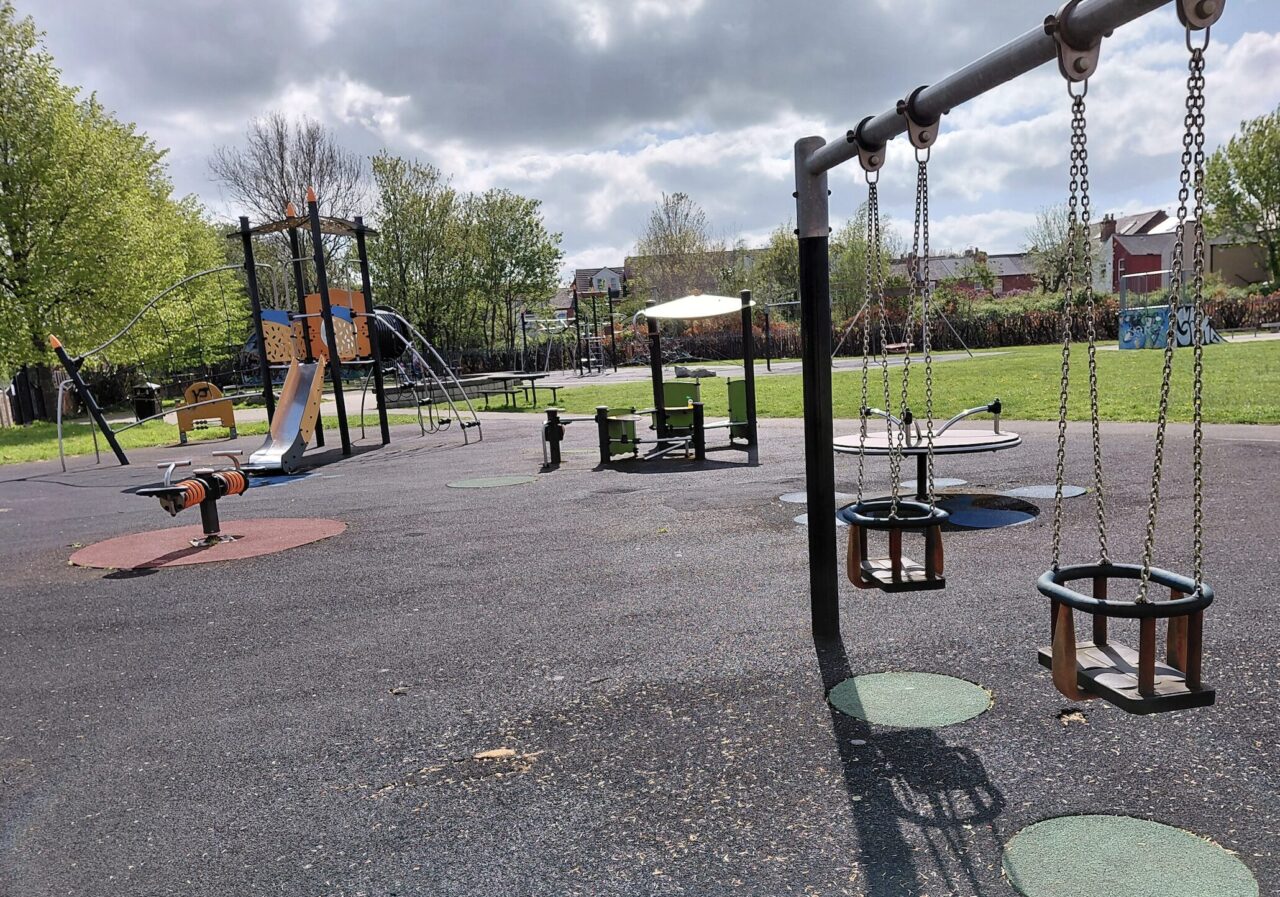
Work set to begin on new £98k play area at Jackie Bell’s Field in Netherfield

Work to create a new £98k play area at Jackie Bell’s Fields in Netherfield is due to start next week.

Construction is expected to take around six weeks to complete and the current play area will close when works begin on April 27.

There will also be a new 25-metre zip line, multi-play climbing units, a wheelchair-accessible roundabout and trampoline, a table tennis table and a chess table. The park will re-open in the summer.

The new and improved development is thanks to funding from FCC Communities Foundation, a not-for-profit business that awards grants for community, conservation and heritage projects from funds donated by waste and resource management company FCC Environment through the Landfill Communities Fund. FCC Communities Foundation will be providing a grant total of £98,000. 

The park as it is today

The funding bid was submitted in collaboration with Gedling Borough Council and a small group of local partners. It included consultations with local children from Netherfield Junior School, young people from the Loco Centre, and local families to gather input on what they wanted to see in the park. 

Councillor Alison Hunt, Ward Councillor for Netherfield is excited that the project is starting to take shape. 

She said: “It’s great to see our vision for this vital community facility moving closer to reality. I would like to thank our small group, Cllr Russell Whiting, NCC Youth Worker Andy Foulds, and Gedling Borough Council’s Parks Development Team for the commitment and enthusiasm they have brought to this project. 

I am also seeking additional funds to support a community graffiti project on the skatepark and teen shelter, and I also hope to enhance the natural space behind the MUGA. 

We are extremely grateful for the funding from FCC Communities Foundation for the play area. We would like to thank the community for their support on this project and feel sure that it will be enjoyed by local children for many years to come.” 

Councillor Viv McCrossen, Portfolio Holder for Climate Change and Natural Habitat said: “This new play area will be a fantastic addition to the Borough, offering a wide range of facilities for children to enjoy. I am delighted that work on the site is now getting underway and that it will soon be available for the community to use. 

I would like to thank the Friends of Jackie Bell’s for working with us on the application, as well as FCC Communities Foundation for providing the funding that has made this project possible.”

For more information about FCC Communities Foundation funding visit www.fcccommunitiesfoundation.org.uk 

Reform spending 81 per cent less on travel expenses

Reform UK spent thousands of pounds less in travel expenses compared to its Conservative predecessors, with officials claiming it was “morally wrong to claim every penny” available.

New figures released on Wednesday (April 22) showed that Reform councillors at Nottinghamshire County Council claimed back £7,289 in travel expenses during the party’s first year in charge of the council.

That is down 81 per cent on the figure recorded by the Tories, who previously ran the council before the 2025 May local elections.

When comparing both parties’ travel claims for the 2025/26 financial year, the Conservatives claimed back £11,889 – that’s £4,600 more than Reform despite having 23 fewer councillors on the authority.

The current make-up of the council sees Reform UK in control with 41 seats out of 66, while the Tories have 18, Labour have four and the independent Nottinghamshire Alliance group holds three seats.

Further data released this week shows 31 per cent of Reform councillors claimed back their travel receipts in 2025/26 compared to 77 per cent of Conservative members.

This comes out at an average of £560.69 per councillor that claimed for Reform and an average of £849.21 per councillor that claimed for the Tories.

Speaking to the Local Democracy Reporting Service, Reform’s finance councillor, Stuart Matthews, said his party did not “claim every penny” for a reason.

He said: “We don’t as a group dispute that anybody can claim expenses.

“All we’re saying is in these tough economic times, the Reform group came in to do things far different – we think sometimes it’s morally wrong to claim every penny you can for expenses.”

Cllr Matthews said his group’s “two biggest takers” were the authority’s chair and vice chair who do “hundreds of miles on civic duties”.

He continued: “We’ve had enough slating about the flags. These [lower] expenses over the next three years would pay for the flags and poles if you think about it.

“I’m not suggesting they’re breaking any rules, but perhaps they’ll think about things in a different way.”

Cllr Matthews said he has not personally claimed any travel back and the four Labour councillors on the authority have not put in travel expense claims either.

The Conservatives have disputed Reform’s claims though, with Cllr Sam Smith, leader of the Tories at the council, saying they were “misleading”.

He said: “The claims made by Reform UK on councillor travel expenses are misleading and lack important context.

“In any workplace – public or private – it’s entirely normal for employees to be reimbursed for necessary travel undertaken as part of their duties. Councillors are no different.

“At a time when fuel prices remain high, it’s reasonable and appropriate that councillors, like workers in any business, can claim back the cost of travelling to carry out their job role.

“While criticising legitimate travel expenses, [Reform] have overseen £75,000 on flags and £40,000 on a council magazine delivered to every home in Nottinghamshire. These costs alone dwarf the travel expenses they seek to attack.”

Cllr Smith continued that travel expenses allow councillors to be “present” and “visible” in the communities they represent.

He added: “Higher travel claims reflect councillors who are out in their communities, attending meetings, supporting residents, and doing the job properly. If others are claiming significantly less, residents are entitled to ask whether that reflects a lower level of on-the-ground engagement.

“This is about priorities. Conservatives believe in supporting frontline representation—ensuring councillors can do the job they were elected to do. Reform’s approach appears to favour headline-grabbing comparisons while diverting attention from their own spending choices.”

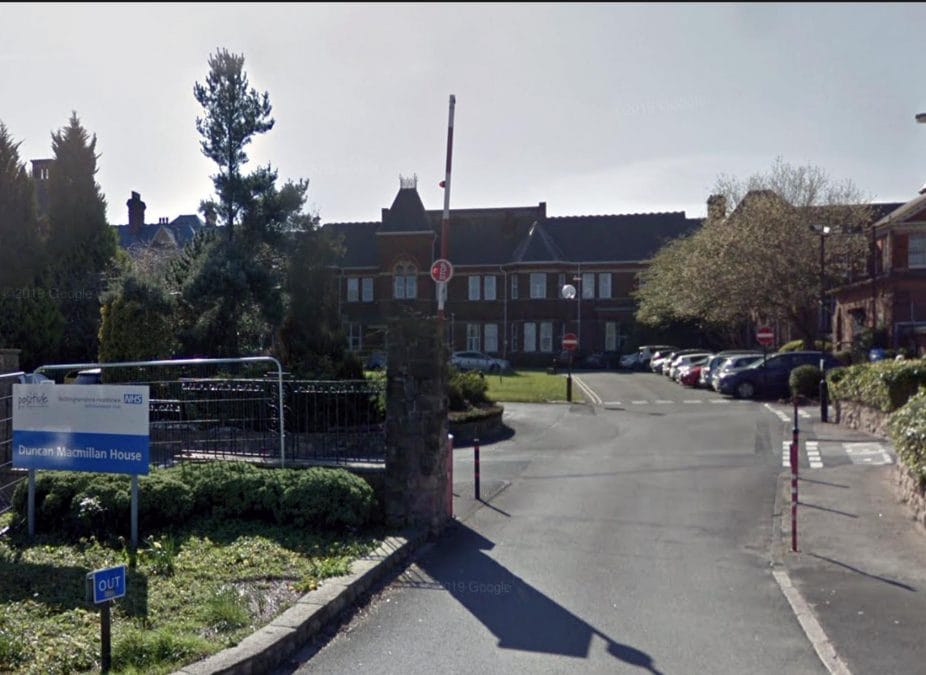
Healthcare trust to replace words ‘he’ and ‘she’ with ‘they’ in updated constitution

All gender-specific language is set to be removed from a Nottinghamshire NHS trust’s documentation.

Nottingham Healthcare NHS Foundation Trust is to make the updates to its constitution, with more than 65 incidences of the words “he” and “she” edited to read “they” as part of the proposed changes.

The move is being made in order to bring the constitution level and compliant with the Equality Act 2010.

Director of Governance Keith Wilshere brought the plan before the trust’s board of directors at a meeting on March 26.

A report, explaining the updates, said: “The constitution has been drafted to be compliant with all the present legislation including the Equality Act 2010, all gender specific references have been removed.”

Nottinghamshire Healthcare’s constitution sets out how the trust is run and is required by law according to the NHS Act 2006.

Sentences changed include descriptions of how working employees can eligibly become a member of the council, rules around elections of governors and rules around telephone and internet voting.

Some parts of the document previously only used male pronouns to describe individuals.

The old version of 8.1 stated: “An individual who is employed by the Trust under a contract of employment with the Trust may become or continue as a Member of the Trust provided:

“He is employed by the Trust under a contract of employment which has no fixed term or has a fixed term of at least 12 months; or,

“He is continuously employed by the Trust under a contract of employment for at least 12 month.”

The new sentences replace “he is” with “they are”.

Other parts of the document previously used “he or she”.

On the validity of a standing candidate, paragraph 14.3 previously said: “The returning officer is to examine each nomination form as soon as is practicable after he or she has received it and decide whether the candidate has been validly nominated.”

It has been changed in order to say “they” instead of “he or she”.

Mr Wilshere told the board: “The audit and risk committee have looked at (the constitution) in a great deal of detail, I can give you an absolute guarantee on that.”

The board unanimously approved the proposals, meaning the plan will now go before the trust’s council of governors on Tuesday, April 28.

A spokesperson for Nottinghamshire Healthcare NHS Foundation Trust said: “It’s good governance practice to regularly review and update all elements of the Trust Constitution so they are in line with current language and practice and reflect any legislative or other significant changes since the previous review.

“This recent review of the constitution has no additional cost attached to it.”