A Netherfield man who was accused of sexually assaulting a young girl in a shop has been jailed.
Matthew Harrison, aged 32, targeted the child as she was shopping with her father at a store in Mansfield Road, Nottingham, at around 4pm on Sunday 16 January.
PICTURED: Nottingham Crown CourtPICTURED: Matthew Harrison was jailed for three years
Harrison, who was working in the store at the time, lured the primary school aged child away from her father under the guise of helping her to find a favourite treat.
In the minutes that followed he twice place his hands on her before nonchalantly leading her back to her father.
Harrison, of Kenrick Street, was exposed when the child later told her parents about what had happened.
A post-arrest search of his home revealed extensive evidence of his sexual interest in young children.
Harrison, whose offending was caught on CCTV, later admitted to two counts of sexual assault by touching.
Appearing at Nottingham Crown Court on Thursday he was jailed for three years and ordered to serve another five years on licence.
He was also made the subject of an extensive sexual harm prevention order which will tightly control his behaviour when he leaves prison.
Detective Constable Kirsty Ford of Nottinghamshire Police, said: “This was an appalling incident that cased considerable upset to the victim and her family. Harrison knew exactly what he was doing on that day and must now live with the consequences.
“As he starts a richly-deserved prison sentence I would like to pay tribute to the victim’s parents for the strength, determination and dignity they have shown through this incredibly upsetting process.
“I cannot stress enough just how seriously we treat these kinds of offences. When they are reported to us we will arrest suspects very quickly, we will investigate and we will do everything in our power to put them before the courts.”
The first election to appoint a new mayor of the East Midlands could take place in May 2024.
This is provided all discussions and negotiations between leaders in Nottingham, Nottinghamshire, Derby, Derbyshire and the Government reach an agreement over a proposed devolution deal.
Council documents confirm the Government expects the first election to take place in slightly less than two years’ time, with the role to be the first of its kind in the region.
HOPEFUL: Cllr John Clarke, leader of Gedling Borough Council, thinks it would be easier to approach a Mayor for future council fundingAMBITIOUS: A Labour councillor recently said she believes Nottinghamshire County Council leader Ben Bradley will consider running for the role of Mayor
It follows ongoing talks about a potential mayoral combined authority covering the four areas, with plans coming as part of new ‘county deals’ for devolution.
Council leaders in the four areas have been in negotiations with ministers in recent months, focusing on six key areas for the potential deal.
These include education and skills, transport, infrastructure, strategic planning, health and the environment.
Leaders expect the negotiations with the Government to conclude by the autumn and a deal to be agreed later this year, in time for the potential mayoral election in 2024.
Documents state this date is the expected timeframe for residents to go to the polls, permitting the Government passes all relevant legislation in the Levelling Up and Regeneration Bill.
If all negotiations and legislation go to plan, it could see billions of pounds pumped into the region and give local leaders more decision-making powers on major projects.
The mayoral post would control a new combined authority, which would include councillors from the county and city councils, with funding to be provided directly to the authority from Whitehall.
The combined authority would also govern about 2.2 million people, making it one of the largest in the country, while the mayor would hold similar responsibilities to Andy Burnham in Manchester.
Documents published by Nottinghamshire County Council state: “The Government’s aim is for a number of devolution deals to be agreed in principle by Autumn 2022.
“This is about peoples’ lives. It could be very good because, instead of bidding to the Government for funding, we will be bidding to the mayor’s office.
Cllr John Clarke, Leader of Gedling Borough Council
“Minister Neil O’Brien MP indicates that the first mayoral election would be likely to be held in May 2024.
“This is dependent on the legislative timescale for the Levelling Up and Regeneration Bill which will enable a new type of combined authority. Our ambition is to secure the earliest possible deal.”
If the mayoral election is held in May 2024, it is likely to take place on the same day as the next General Election.
Councillor John Clarke (Lab), leader of Gedling Borough Council, has been involved in discussions alongside other council leaders in the region.
He told the Local Democracy Reporting Service: “We need to make some serious decisions with this that put faith back into peoples’ minds about local and national government.
“This is about peoples’ lives. It could be very good because, instead of bidding to the Government for funding, we will be bidding to the mayor’s office.
“Hopefully that makes us a damn sight more successful than we have been with the Government in the past.
“I think this is probably one of the best ways we can do this.”
The next set of priorities will be shared next month.
SPEEDING
Identified as a priority because:
Speeding has been identified as an issue in most areas, with local residents and elected members concerned about speeding issues and the dangers associated with speeding offences.
Here’s what Gedling Neighbourhood Policing Teams plan to do:
We are carrying out high-visibility speeding operations across the borough to both catch people speeding, but to also influence drivers and driving habits on our roads. This focus will be carried out by our Reacher and Neighbourhood Teams at highlighted locations across this period to additionally deter poor driving practices, with a number of actions to be considered when speeding and other driving related offences are discovered.
ANTI-SOCIAL BEHAVIOUR
Identified as a priority because:
Anti-social behaviour has a real effect on victims and the community. Often people become repeat victims and require support from the police and partner agencies. We know that anti-social behaviour is a priority for the local community. Anti-social behaviour also leads to other offences such Criminal Damage, Assault and this can lead to lasting harm. Anti-social behaviour in the Gedling Borough is also linked to the use of controlled drugs particularly in open public spaces. Anti-social behaviour affects victim’s quality of life and without intervention of the police or partner agencies this often goes on for an extended period of time. Concerns around ASB are now increasing due to the easing of the COVID19 regulations which means that this will be a priority for the Gedling Borough throughout the next quarter.
Here’s what Gedling Neighbourhood Policing Teams plan to do:
We have identified key areas to target high visibility patrols. We are working together with the Gedling Neighbourhood Wardens to identify and deal with perpetrators. We are also supported by Special Constables who carry out additional patrols during the evenings and weekends when ASB is most prevalent. Schools officers are also providing educational inputs at local academies in order to reduce the likelihood of ASB. We are also working with partner agencies to support detached youth work in the Gedling Borough which will provide diversion opportunities for young people. We are also working together with private and social housing sectors to deal with those who cause nuisance through excessive noise or other behaviour that has a profound effect on victim’s lives. We risk assess repeat victims and ensure that appropriate support agencies are involved where required. We will also carry out patrols linked to drug use in ‘open spaces’ as this does contribute to reported anti-social behaviour in the Gedling Borough.
SHOP THEFT
Identified as a priority because:
There has been an identified increase in Shop Theft which results in financial loss which can have an impact on businesses. In some cases repeat offenders are abusive and threatening towards door staff and have used violence in order to steal. This leads to staff fearing for their personal safety. Shop Theft offenders often travel to the Gedling Borough to commit crime and are sometimes involved in other acquisitive crime. Gedling has several hotspot areas where offences have increased such as the Victoria Retail Park, Carlton Hill and Madford Retail Park.
Here’s what Gedling Neighbourhood Policing Teams plan to do:
We are carrying out patrols in hotspot locations. We are targeting known and prolific offenders by Neighbourhood Policing and Operation Reacher officers working together. We are reviewing reports of Shop Theft in order to identify patterns, trends and to secure any evidence such as CCTV footage. We are working together with the council to introduce a ‘Shop Watch’ scheme in hotspot areas which will see the increased sharing of information and intelligence between the police, partners and local businesses. We are working together with the retail crime lead to carry out early intervention work around known offenders. Gedling is also a pilot area for a collaborative project with the Co-op in order to reduce offences.
Specsavers in Arnold is highlighting the importance of regular eye tests as well as some of the warning signs we can look out for to help detect the condition.
It is estimated that 13.6 million people are in danger of developing type 2 diabetes and 850,000 are currently living with the condition but are yet to be diagnosed, However, if left untreated it can cause damage to the heart, feet, kidneys as well as our eyes, which in extreme cases can lead to vision loss.
To help prevent this from happening Specsavers is highlighting the importance of regular eye tests as well as some of the warning signs we can look out for to help detect the condition.
Vineet Nehra, optometrist director at Specsavers Arnold, says: ‘Diabetes can affect your eyes in many ways and, for some people, it can lead to diabetic retinopathy which, if not treated in time, can lead to sight loss.
‘In its early stages diabetic retinopathy usually doesn’t pose any noticeable symptoms, so an eye test can pick it up before you do.
As diabetic retinopathy is a serious condition it is also important to monitor any changes in your vision and get them checked out by your optometrist. The warning signs include:
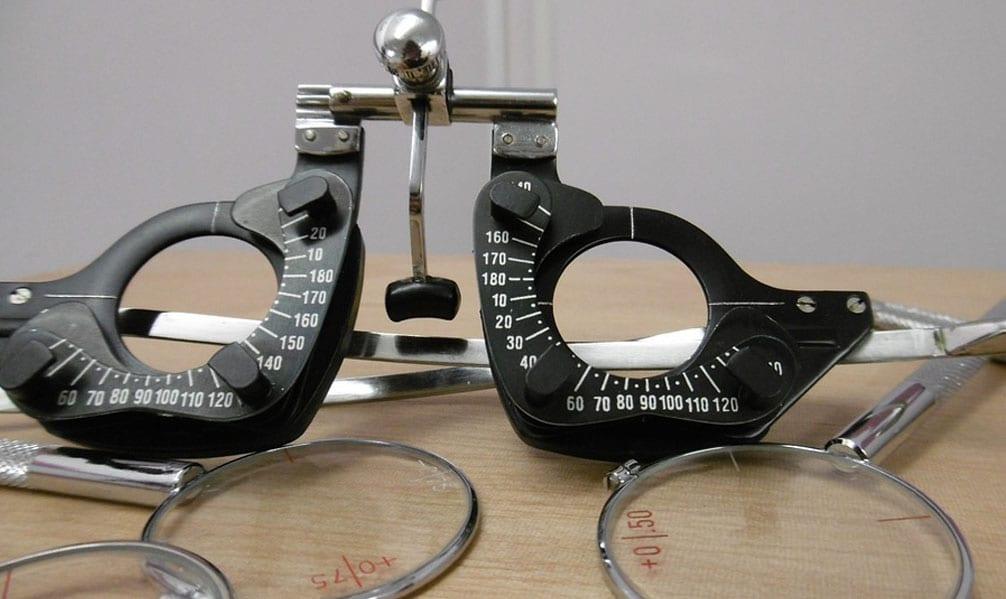
PICTURED: Regular eye tests can help detect diabetes
Persistent floaters – Vineet says: ‘Floaters are spots in your vision and usually look like black or grey specs or cobwebs that drift about when you move your eyes. Most people will experience floaters in their vision at some point in their life – particularly as we reach older age as the jelly-like substance in our eyes becomes more liquid.
‘If you notice more eye floaters than usual, a sudden onset of new ones, flashes of light in the eye or darkness on any side of your vision, you must get it looked at immediately as in some cases it can be a symptom of diabetic retinopathy.’
Blurred vision – ‘Blurred vision can be caused by many things and it is vital you get it checked out,’ says Vineet. ‘Diabetes raises the risk of experiencing diabetic retinopathy where high blood sugar levels damage tiny blood vessels in the eye that sense light which can result in blurry vision. Blurry vision can also be a symptom of diabetes which can resolve when blood sugars start to reduce after diagnosis and starting treatment.’
Difficulty seeing in the dark – Vineet says: ‘As diabetic retinopathy can cause damage to the light sensors in the eye it can lead to dimmer vision, almost as if you’re wearing sunglasses. If you’re struggling to see when it’s dark, it’s an important sign not to ignore.’
Vineet adds: ‘You’re more at risk of developing diabetic retinopathy if you have had diabetes for a long time, have a persistently high blood sugar level, high blood pressure, high cholesterol, are pregnant or are of Asian or Afro-Caribbean background. By keeping your blood pressure, sugar levels and cholesterol levels down you can help reduce your risk and make sure you have regular eye tests too.
Gedling Borough Council papers say a suggested ‘Article 4 direction’ is not going to be adopted by its cabinet next week, despite calls for the order to be brought in by residents, councillors and opposition leaders earlier this year.
The proposed direction would give more power to the authority to restrict existing properties from being converted into HMOs across various parts of the town.
It could involve restrictions on applications to convert properties when they come before the authority’s planning committee.
Currently, applications are not regularly reviewed by councillors and some don’t require planning consent.
Assessments of whether the direction is needed came in response to concerns from residents about the rising number of HMOs in the town – and the potential impact it could have on the community.
These include family homes being removed from the town, a rise in parking issues, drainage problems and fears over potential anti-social behaviour.
A motion submitted by Tory group leader Councillor Mike Adams at April’s full council meeting, which called on the council to investigate whether the direction was required, was given cross-party backing.
Council papers state the survey, which had 111 responses, and a separate residents’ event in March, did raise “valid concerns” on the issue.
However, officers at the Labour-led council have confirmed they will not push forward with the plan and say various concerns raised about the number of HMOs in Netherfield “do not demonstrate [it is] justified”.
PICTURED: Gedling MP Tom Randall, left, and Cllr Mike Adams, right, carried out a survey on HMOs in Netherfield earlier this yearResidents attended a meeting in the town to voice concerns around the increasing number of HMOs in NetherfieldCllr Jon Clarke, leader of Gedling Borough Council, thinks Article 4 is better suited for towns with heavy student areas like Lenton
Cabinet members will be recommended not to push ahead with the Article 4 direction when they meet on June 16.
But the recommendation has led to concerns from Tom Randall MP, who described the council’s stance as “reactive”.
He said: “While the council continues to turn their backs on the community, residents’ roads continue to be heavily congested with more and more parked cars and affordable family homes being taken out of the housing market.
“I urge the Labour-run council to abandon their reactive approach and engage proactively with Netherfield residents, as Mike Adams and I have done so that the voices of Netherfield residents are heard.”
Nottingham City Council and Broxtowe Borough Council have implemented their own Article 4 directions, in Lenton and Beeston respectively, to address the number of family homes being converted for student use.
And Cllr John Clarke (Lab), leader of Gedling Borough Council, believes one of the reasons Article 4 is not right for Netherfield is because it is frequently targeted at student housing.
Cllr Clarke, who represents Netherfield, told the Local Democracy Reporting Service: “Article 4 was designed for heavy student areas like Lenton and in other cities – it’s probably not suitable for what we want in Netherfield.
“Don’t get me wrong, HMOs are not the way to bring society up. I don’t like them and I will try my best to find something to resolve the situation.”
He adds Netherfield’s selective licensing policy, which monitors the standards of private rented homes and requires landlords to pay a fee to ensure their properties are up to scratch, will help to address the issue.
But Russell Whiting, an admin of the Netherfield Against HMO Landlords residents’ group, called on the authority to go further with the selective licensing policy and record how many landlords own HMOs.
Speaking to the Local Democracy Reporting Service, he expressed his disappointment with the council’s plans but said it is “not the end” of residents’ campaigns.
He added: “The report to cabinet states that there is insufficient evidence, but also that the number of HMOs isn’t known.
“Gedling Borough Council has introduced selective licensing in Netherfield but doesn’t record whether properties are private rented or HMOs.
“We’re calling on the council to break down these figures to find out exactly how many HMOs there are in Netherfield. We can’t continue to lose family homes to out-of-town developers interested in making money from our town.”
Gedling Borough Council has agreed to pay a resident £100 in compensation after a complaint was upheld by the Local Government Ombudsman about repeated missed bin collections.
The verdict, listed as maladministration and injustice, found “repeated failures” by the Labour-led authority to ensure a resident’s garden waste bins were collected following several complaints made against the council.
The initial complaint came in July 2020 when the affected resident, listed in reports as Mr D, contacted the authority about two missed garden waste bin collections.
A second complaint was made in September 2021 about further collections being missed, with Mr D stating he was given “different reasons why the bin was not collected”.
These reasons included obstruction of the street, something Mr D “felt was incorrect”, with the authority going on to admit “there were no obstructions causing missed collections on his street”.
The council says it issued two separate apologies to Mr D, including an indication that some service disruptions were caused by Covid-19, and that a waste supervisor would monitor collections from his property on a weekly basis.
The authority also admitted the problem had been with the “briefing of collection crews”, before further complaints about missed collections were submitted in October and November 2021.
These complaints around his concerns with the authority were raised with the Local Government Ombudsman.
After investigations of the case, an Ombudsman inspector upheld Mr D’s complaint and found the council’s handling of the situation had been “poor”.
The inspector recommended the authority should pay the resident £100 in compensation and refund him for his annual garden bin payments in 2020 and 2021.
The council has accepted these recommendations and accepted fault in handling Mr D’s complaints.
Covid cases, staff mental health, stress and back issues were the predominant factors in a higher-than-average level of staff absence at Gedling Borough Council over the last year.
The Labour-led authority has confirmed the number of days lost per employee was almost 25 per cent above target in the 12 months to March 2022, with each employee missing 11.22 days on average.
This was higher than the nine-day target set nationally for local authorities across the country.
Figures for March alone show Covid and isolation periods played a major part in increasing the authority’s figure, with 103 out of a total 386 absences relating to the virus.
Across the whole financial year, sickness and isolation due to Covid-19 accounted for 13.5 per cent of all absences within the organisation.
David Archer, head of human resources performance and service planning on the authority, says the situation with the virus progressively got worse throughout the financial year.
But speaking in the council’s joint consultative and safety committee on Tuesday (June 7), he stressed the council’s absences are not “outstanding” compared with other Nottinghamshire councils.
He said: “At the start of the year, losses due to Covid were fairly small as a proportion, but as the year went on with strains of Covid that were more virulent, absences and days lost began to increase dramatically.
“By the year-end, we lost 103 days out of 386 because of Covid and, as the year went on, it had more and more impact.”
He told councillors there are no proposals to review the target of employee absences because it has been “achievable” prior to the pandemic.
“The hope would be that, as Covid becomes more endemic, we will manage those absences within normal policies,” he added.
“Because, predominantly I suppose, the effect of Covid becomes less and less, we’d expect the days lost because of that to reduce going forwards.”
However, alongside Covid, Mr Archer says back problems and employee stress and mental health issues also caused the 12-month figure to rise.
He told the meeting that the stress “isn’t necessarily work-related” but confirmed there was a “marked increase” in stress and depression cases within the authority.
He added: “It’s probably not surprising when you think about a recent survey showing people thought their mental health had worsened during the last year.
“The absence really levels really do support that feeling, I suppose.”
He told the meeting the authority has an active wellbeing programme to support staff with their mental health, with the organisation also “actively” promoting one-to-one support for staff.
Further training courses took place in April to support staff with their mental health.
“It has been a problem [but] we’ve tried to do things about it and the hope, as we return to a new normal, is things will become calmer,” he said
The back problems, he added, relate to some frontline workers doing manual work in their roles – as well as some staff working from home.
“Proper assessments have been taken for people at home, the concern was some people might suffer from back problems due to unsuitable work stations but that doesn’t seem to be the case.”
Speaking after Mr Archer’s report, Councillor Paul Wilkinson (Lab), who represents Carlton, described the absence figures as “disappointing”.
However, he praised the work of Mr Archer’s team and said he believes the authority is doing what it can to bring absence levels down.
He said: “It is a little bit disappointing but I think we all understand the reasons why [the figure is higher than the target].
“I know [Mr Archer] and his team are doing all they can to keep absences down.”
Twin sisters bought a property on a new development in Arnold – without even seeing the showhouse.
Sophie and Bethanie Beldham, 26, will be the first to move into the Eagles Edge development at Redhill.
Such has been the popularity of the superior-specification 72-home Barwood Homes site, off Mansfield Road, that more than half of the homes were snapped up before the marketing suite was unveiled in late April.
Sophie, a midwife, and Bethanie, a civil servant, got the keys at the end of April and moved into their two-bed home in May.
Sophie, who is originally from Arnold, described why the sisters acted so impulsively in buying their home off-plan at the site, which consists of a mixture of one, two and three-bed houses and one-bed apartments.
“I felt it was a good opportunity – I had been waiting for new-builds to come up in my area that were in my price range. I felt a new-build had lots of benefits.
“I’d been looking on the market for a while and the housing market is really difficult.
“But I felt that once you have put down a deposit on a new-build, you can’t get gazumped.”
Sophie lived at home with her parents before moving in with Bethanie in her rented accommodation, ahead of their purchase.
She added: “I like that the design is open-plan, modern, it’s got a good-sized garden and that it’s on the edge of Arnold – the location is good for walks in the countryside.”
Mandy Soames, sales and marketing director for Barwood Homes, said the speedy sale of the homes was down to high demand combined with a lack of supply.
“We had many people enquiring through our own website as well as that of our marketing agent William H Brown as far back as last autumn,” she said.
“Eagles Edge has been one our most successful developments selling off plan, with nearly 50 per cent reserved or sold before the marketing suite opened in April.
“There is a huge demand for the two-bedroom homes, which are being snapped up as soon as they are released.
“There is a healthy demand for new-builds in this location and our product suits any type of buyer. We have a range of different types of buyers from first-time buyers to second movers and down-sizers.”
Mandy added: “People like new-builds as lifestyle is so important these days. Buying a new home means low maintenance, they don’t want huge gardens that take up all their spare time. Our gardens are just the right size – big enough to enjoy yet small enough to manage. Running costs are also lower due to using modern methods of construction that we use.”
Johanna Tatt, senior site sales executive for William H Brown, said: “These are lovely homes, due to the quality of the build, and they suit so many people on the market, such as down-sizers, first-time buyers and investors, offering a really nice range of properties in a very nice location.”
East Midlands Railway staff will be amongst more than 50,000 railway workers staging a walkout on June 21, 23 and 25 in the biggest strike on the network since 1989.
The union said they were taking the action that is set to cause misery to millions of commuters after negotiations with rail bosses to secure a pay proposal and a guarantee of no compulsory redundancies broke down.
RMT general secretary Mick Lynch said: “Railway workers have been treated appallingly and despite our best efforts in negotiations, the rail industry with the support of the government has failed to take their concerns seriously.
“We have a cost-of-living crisis, and it is unacceptable for railway workers to either lose their jobs or face another year of a pay freeze when inflation is at 11.1pc and rising.
PICTURED: An EMR train at Carlton Station (PHOTO: Gedling Eye)
“Our union will now embark on a sustained campaign of industrial action which will shut down the railway system.
“Rail companies are making at least £500m a year in profits, whilst fat cat rail bosses have been paid millions during the Covid-19 pandemic.
“This unfairness is fuelling our members anger and their determination to win a fair settlement.
“RMT is open to meaningful negotiations with rail bosses and ministers, but they will need to come up with new proposals to prevent months of disruption on our railways.”
Transport Secretary Grant Shapps said:“It is incredibly disappointing the RMT have decided to take action that could drive passengers away from the rail network for good.
“The pandemic has changed travel habits – with 25% fewer ticket sales and the taxpayer stepping in to keep the railways running at a cost of £16bn, equivalent to £600 per household. We must act now to put the industry on a sustainable footing.
“We are working with industry to reduce disruption caused by strike action, but Unions are jumping the gun by announcing this when talks have only just begun. We once again want to urge the unions to come to talks with the rail industry so we can work together to build a better, more modern, passenger-focussed, railway.”
Nottinghamshire Police faced questions about how they are tackling knife crime after more than 100 extra reports were recorded in the space of a year.
Cllr Neghat Khan (Lab), portfolio holder for community safety at Nottingham City Council, asked what was being done locally following a series of stabbings in the city in recent weeks.
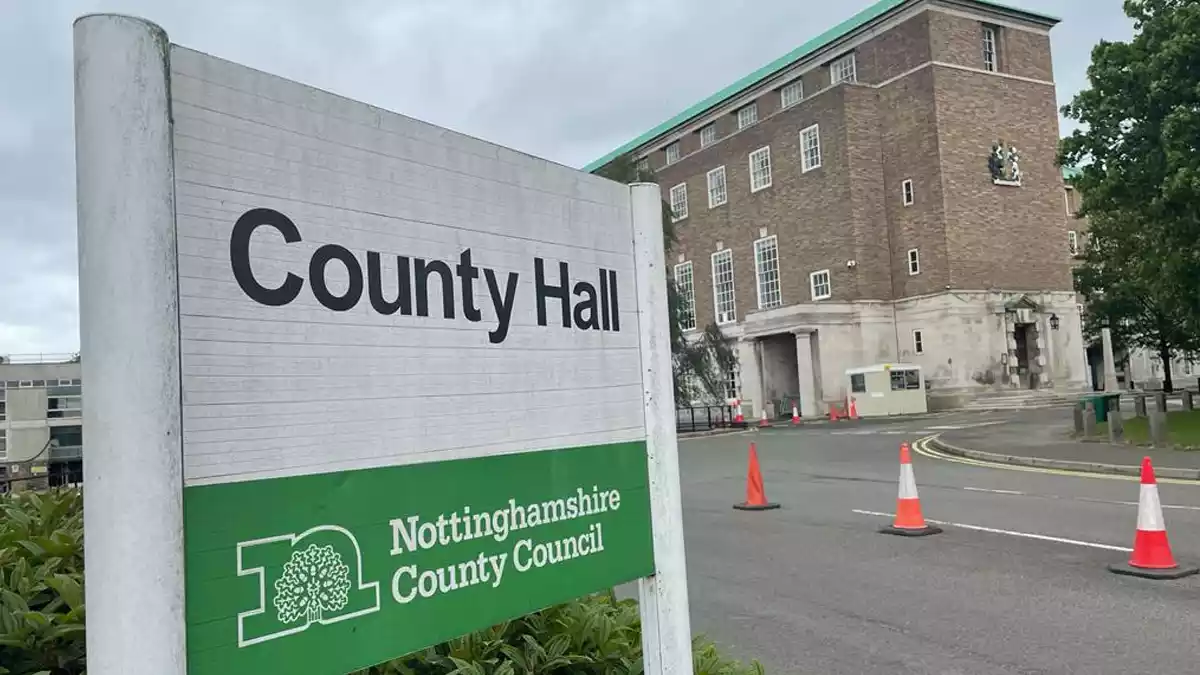
She called for answers from the Police and Crime Commissioner, Caroline Henry, at a Police and Crime Panel meeting at County Hall on Monday, June 6.
In the 12 months to March 2021, Nottinghamshire Police recorded 703 violent knife crime offences. In the 12 months to March 2022, this rose to 809.
Violence with injury also rose from 9,061 to 11,353. This was due to the relaxation of Covid restrictions and the re-opening of the night-time economy, the police said.
A report prepared for the meeting said levels of violent knife crime increased by over 15 per cent over the last year, driven by increases in the latest quarter resulting in a six year high in March 2022.
The policing areas – City Central and City Centre – accounted for the majority of knife crime in early March with occurrences “inflated by multiple victims”.
Several occurrences also appear to be the same group of offenders, the report stated, with over a quarter of offences also being reported as domestic related.
Some of the most recent incidents include the death of Ricardo Cotteral, 33, who was attacked in Broad Street, on Sunday, April 24, just before 2am.
He died a short time later after collapsing in nearby Lower Parliament Street. A number of people have been charged with his murder.
A teenager was also charged with attempted murder after a police officer was stabbed in the buttock after carrying out a stop and search in North Sherwood Street at 11pm on Monday, April 25.
And on Saturday, May 7, a 14-year-old boy was reportedly stabbed twice on Cheapside, off Old Market Square, at 4.10pm. An arrest has been made.
Cllr Khan asked the Police and Crime Commissioner: “As a Nottingham city resident, we have seen six stabbings over a period of eight weeks.
“So, what are you doing to hold the Chief Constable to account with serious violence in the city and what are you doing to manage public perception over this issue?
“When you talk to young people, they say to feel safe they have to carry a knife. How do we move from that perception where they feel they do not have to carry one.”
Mrs Henry responded: “I was disappointed with the amount of knife crime. We are doing a series of things. We have the Violence Reduction Unit and our knife crime teams.
“We are hoping it was a blip. Nationally, there has been an increase too, but I can assure you we are monitoring it closely.”
Chief Constable of Nottinghamshire Police, Craig Guildford said prevention was the key.
He said while there are police officers educating students in secondary schools, there needs to be an increased push around primary schools as well.
He said: “One has to reflect on how far we have come. We are below the national and regional average in knife crime. Every one of those knife crimes is one too many and you are right, when it involves young kids it is concerning.
There has been a rise in knife crime across the areaPCC Caroline Henry was asked why knife crime had risen across Notts by county councillors(PHOTO: LDR service)
“I think in March we saw an increase and we made arrests on nearly all of those jobs and they are working their way through the criminal justice process.
“They are not just all young people but there were a couple involving young people and sadly a couple of jobs where police officers received injuries too.
“The main emphasis is keeping the money in prevention and working with partners and trying to increase the number of cops.
“It is a minority not a majority expressing the view that it is safer to carry because statistically it definitely is not. We need to keep the pressure on what fuels that knife crime in particular the street dealing of drugs.”
Nottinghamshire Police faced questions about how they are tackling knife crime after more than 100 extra reports were recorded in the space of a year.
Cllr Neghat Khan (Lab), portfolio holder for community safety at Nottingham City Council, asked what was being done locally following a series of stabbings in the city in recent weeks.
She called for answers from the Police and Crime Commissioner, Caroline Henry, at a Police and Crime Panel meeting at County Hall on Monday, June 6.
In the 12 months to March 2021, Nottinghamshire Police recorded 703 violent knife crime offences. In the 12 months to March 2022, this rose to 809.
Violence with injury also rose from 9,061 to 11,353. This was due to the relaxation of Covid restrictions and the re-opening of the night-time economy, the police said.
A report prepared for the meeting said levels of violent knife crime increased by over 15 per cent over the last year, driven by increases in the latest quarter resulting in a six year high in March 2022.
The policing areas – City Central and City Centre – accounted for the majority of knife crime in early March with occurrences “inflated by multiple victims”.
Several occurrences also appear to be the same group of offenders, the report stated, with over a quarter of offences also being reported as domestic related.
Some of the most recent incidents include the death of Ricardo Cotteral, 33, who was attacked in Broad Street, on Sunday, April 24, just before 2am.
He died a short time later after collapsing in nearby Lower Parliament Street. A number of people have been charged with his murder.
A teenager was also charged with attempted murder after a police officer was stabbed in the buttock after carrying out a stop and search in North Sherwood Street at 11pm on Monday, April 25.
And on Saturday, May 7, a 14-year-old boy was reportedly stabbed twice on Cheapside, off Old Market Square, at 4.10pm. An arrest has been made.
Cllr Khan asked the Police and Crime Commissioner: “As a Nottingham city resident, we have seen six stabbings over a period of eight weeks.
“So, what are you doing to hold the Chief Constable to account with serious violence in the city and what are you doing to manage public perception over this issue?
“When you talk to young people, they say to feel safe they have to carry a knife. How do we move from that perception where they feel they do not have to carry one.”
Mrs Henry responded: “I was disappointed with the amount of knife crime. We are doing a series of things. We have the Violence Reduction Unit and our knife crime teams.
“We are hoping it was a blip. Nationally, there has been an increase too, but I can assure you we are monitoring it closely.”
Chief Constable of Nottinghamshire Police, Craig Guildford said prevention was the key.
He said while there are police officers educating students in secondary schools, there needs to be an increased push around primary schools as well.
He said: “One has to reflect on how far we have come. We are below the national and regional average in knife crime. Every one of those knife crimes is one too many and you are right, when it involves young kids it is concerning.
“I think in March we saw an increase and we made arrests on nearly all of those jobs and they are working their way through the criminal justice process.
“They are not just all young people but there were a couple involving young people and sadly a couple of jobs where police officers received injuries too.
“The main emphasis is keeping the money in prevention and working with partners and trying to increase the number of cops.
“It is a minority not a majority expressing the view that it is safer to carry because statistically it definitely is not. We need to keep the pressure on what fuels that knife crime in particular the street dealing of drugs.”