Home Blog Page 33

Major UK phone providers agree to crackdown on scam calls and fraud

Britain’s biggest phone networks have joined forces in a bid to put an end to crooks bombarding Brits with cold calls from overseas call centres.

BT, EE, Vodafone, Three, Virgin Media O2, Sky, TalkTalk and Tesco Mobile have signed a new telecoms charter with the Home Office and commit to stopping scammers using fake numbers to impersonate banks and government departments.

They will block foreign call centres from spoofing UK numbers within the next year and roll out new call tracing tools to help police identify scam operations.

The agreement, signed at the BT Tower, comes as the scale of fraud continues to climb.

Figures from UK Finance show that criminals stole more than £629m in the first half of 2025, up three per cent on the same period last year. Investment and romance scams recorded the sharpest increases, with losses of nearly £100m and £20m, respectively.

Under these new measures, calls from overseas will be clearly marked as such, stopping bad actors from disguising themselves behind local or official-looking numbers.

Approximately 96 per cent of mobile users decide whether to answer based on the number displayed, according to government data.

New call tracing technology will also provide police with better intelligence on domestic scam operations. Meanwhile, mobile firms have pledged faster support for victims, reducing response times to two weeks.

Fraud minister Lord Hanson said that the government wanted to make the UK “the hardest place in the world for scammers to operate.”

The Home Office stated that the commitments would also enhance data sharing between networks and law enforcement, enabling regulators to identify which providers are failing to prevent suspicious traffic.

The measures come following a sharp rise in AI-enabled scams, with scammers using software to clone voices and generate deepfake videos.

Nottingham Hospitals declare critical incident as 24 ambulances wait outside A&E carrying patients

Nottingham University Hospitals NHS Trust (NUH) has declared a Critical Incident as a result of sustained pressures across the Trust and in particular the Queen’s Medical Centre (QMC) Emergency Department (ED). 
 
The impact of the pressures caused by a prolonged period of sustained demand, challenges around staffing, flow and discharge in the organisation is resulting in significant waits in ED and admissions to wards, despite tireless efforts from staff across the Trust.  
 
When the incident was called, just after 4pm on Tuesday 4 November, there were 24 ambulances waiting outside of the ED at QMC and large numbers of people in the department.  
 
The Trust has implemented a new Electronic Patient Record (EPR) at the weekend and issues with the technical roll out of the product has added to the ability to manage the current levels of pressure.  
 
The Trust is asking members of the public and patients to carefully consider whether or not they need to attend ED, only attending in an emergency. Those with planned appointments should continue to attend unless told otherwise.  

Andrew Hall, Chief Operating Officer at NUH, said: “Our staff are working tirelessly to care for patients, but the pressure on our services is causing very long waits and this is causing overcrowding in our ED. 

“We know how frustrating this will be to people waiting in the department. Our staff are working as hard as they possibly can to get to them as soon as possible. Unfortunately, some of our colleagues have experienced abuse from people waiting to be treated and we ask that they are treated with kindness and respect.  

“The public can help us by only attending ED in an emergency and carefully considering other options, such as calling NHS111, speaking to a GP and visiting a local pharmacy. 
 
“Our emergency services remain open and the public should continue to come forward as normal in emergency and life-threatening cases – when someone is seriously ill or injured, or their life is at risk. Our aim is to prioritise patients with the highest level of need and ensure that we continue to manage emergency care.” 
 
How the public can help:

  • If your relative is due to be discharged from hospital and needs to be collected, please do so as early as possible. This will help our teams and free up a hospital bed for someone waiting to be admitted. 
  • Only call 999 or attend ED for serious accidents and for life threatening emergencies.
  • Where the situation is not life-threatening, alternative support will be available through NHS111 online or by calling 111.
  • Urgent Treatment Centres (UTC) treat injuries including sprains, strains, suspected fractures, bites, cuts, scalds and other non-emergency conditions. Waiting times are usually much shorter than ED.
  • Pharmacies can help with allergies, constipation, headaches, earaches and many other ailments. Many pharmacies are open and you can find opening hours for your local pharmacy here.
  • Please do not visit your loved ones in hospital if you have any flu or other respiratory illness symptoms – please wait until you are better to visit them.   

Gibbs-White Aims to Halt Manchester United’s Momentum Under Amorim

Prior to Nottingham Forest taking on Manchester United, the match promised to be one of the more intriguing fixtures of the Premier League round. United arrived at the City Ground on the back of three straight league victories under manager Rúben Amorim, and their recent form has drawn widespread attention. Forest, meanwhile, have been determined to turn their own fortunes around amid their managerial change.

One player who has taken notice of United’s resurgence under Amorim is Morgan Gibbs-White who recently praised how United has been resurgent in recent weeks. Amorim’s side has rediscovered intensity, structure, and confidence, taking nine points from their last three matches. Those results included a hard-fought win away at Liverpool, sandwiched between home triumphs against Sunderland and Brighton.

Forest entered the clash as underdogs, and their wider outlook has been the subject of scrutiny. Many top non-UK betting sites currently list them at 11/4 odds for relegation, reflecting an ongoing battle to establish stability in a highly competitive league. Such platforms have become increasingly popular with local fans, thanks to their broad range of markets, quick payouts, and flexible deposit options. However, for Forest fans, those odds need to change fast as the team hopes to pull itself out of the mess before it’s too late.

Forest’s season has been marked by transition. The club has already changed managers twice, parting ways with Nuno Espírito Santo and Ange Postecoglou before settling into a new rhythm under current leadership. Despite those shifts, the team has remained competitive, producing moments of high-energy football but lacking the consistency needed to climb further up the table. The fixture against a rejuvenated United was a key test of their adaptability and belief.

Amorim’s arrival at Old Trafford looks to finally be having an impact. United have looked more cohesive and balanced in recent weeks, blending defensive solidity with sharper attacking transitions. The renewed confidence among his players has brought a sense of optimism that had been missing for much of the previous campaign. His approach has centred on aggressive pressing and intelligent use of possession, allowing the team to recover quickly after setbacks and maintain pressure over 90 minutes.

For Forest, the challenges ahead lie in getting back to the kind of form shown last season. They have already shown they can compete with top sides, having completed the double over United last season, which included a thrilling 3–2 win at Old Trafford in which Gibbs-White featured prominently. Reproducing that intensity will be essential if they hope to derail Amorim’s current run of success.

United’s improvement under Amorim has also sparked discussion about their long-term prospects. With momentum building and confidence restoring slowly since the pitfalls of Amorim’s shaky start and the memories of the Ten Hag era. Their recent consistency has given supporters renewed belief that a return to Champions League qualification is within reach, provided the current form continues through the winter fixtures.

As for Forest, the match represented more than just another league game. It was an opportunity to measure their progress against one of England’s biggest clubs and to signal that they remain capable of competing at a high level despite recent upheavals. Both clubs entered the match facing different pressures, United fighting to sustain momentum near the top, and Forest striving to find stability and confidence after managerial turbulence. 

ARNOLD: Concern Christmas market could ‘conflict’ with regular traders

The organiser of a Christmas market in Arnold has sought to quash a concern that food stalls could conflict with regular business owners in the town centre.

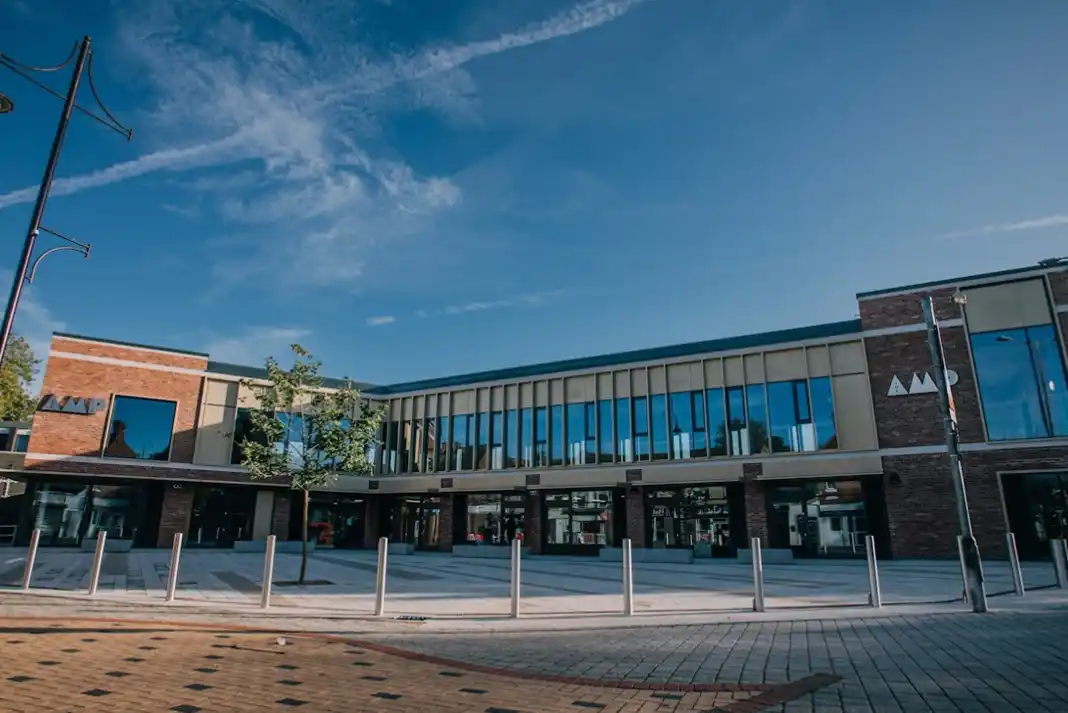
A Christmas market is planned outside The AMP, which opened in 2022 and replaced the old Arnold Market site, towards the end of November and into December.

Organiser Natalee Onyeche has been seeking street trading consent for the market from Gedling Borough Council.

The consent would allow the market to operate on Friday, November 21 from 10am until 7.30pm, and then every Saturday from November 29 until December 20, between the hours of 9am and 3pm.

However at an environment and licensing committee meeting on Tuesday (November 4) a councillor said he was worried food stalls at the market may negatively impact existing businesses in area.

Arnold Christmas Market in 2023

Cllr Martin Smith (Con), a member of the committee, said: “I’m all in favour of the market in principle. But I’m just looking under the description of goods being traded; a variety of traders selling food – and that is the bit that concerns me somewhat.

“We have already got permanent shops in that vicinity selling food and drink and I am concerned this market will conflict with what those people who are there, seven days a week, actually sell.

“I am aware there is another market this lady has organised where there has been a conflict, which may well have been resolved now. But I am concerned about those regular traders. But everything else I am very much in favour of.”

A council officer said five food stalls are currently confirmed for the temporary market, including a chocolate stall, a crepe stall, and a Jamaican food and Indian food stall.

Natalee Onyeche, the organiser, spoke to say the food stalls offered items that were generally not readily available in the area.

“Generally it is a nice mix of food that is not readily available,” she said.

“In the other markets there have always been food and cake stalls, and it has been running for two years now. I haven’t personally had complaints about those.”

Changes were made back in 2012 to allow temporary permission to be granted for street trading in the area, which aimed to give the council better control over what activities and goods were traded to protect existing businesses and market traders now based at Eagle Square.

The streets outside The AMP were changed from a ‘prohibited street’ to a ‘consent street’ as a result.

“This has allowed for Arnold town centre to have craft fairs and a Christmas market over the last few years whilst protecting the interests of the Arnold Market traders,” the council added.

Members of the committee voted to grant the market trading consent, meaning the Christmas market will now go ahead as planned.Concern Arnold Christmas market could ‘conflict’ with regular traders

Around 9,000 people left waiting over 45 minutes to be transferred to A&E across East Midlands

More than 9,000 people across the East Midlands waited over 45 minutes to be transferred from an ambulance to A&E during October.

The striking figure was revealed in an East Midlands Ambulance Service (EMAS) board meeting on Tuesday (4) when discussing the performance of the service.

Pressure on the ambulance service has been growing in recent months, with the average handover time 31 minutes and 37 seconds in July, rising to 35 minutes and 35 seconds in August and being 33 minutes and 39 seconds in September.

Acute hospital trusts across the region have been running a 45-minute ambulance handover scheme since late 2024 and early 2025 in a bid to free up ambulance crews to better respond to more emergencies.

It was introduced at Queen’s Medical Centre (QMC) in Nottingham in December 2024, at Royal Derby Hospital in January 2025, and was implemented at Grimsby Hospital and Scunthorpe General Hospital in February 2025 – it started in Leicester in March.

Thousands of patients across the East Midlands have been left waiting in an ambulance outside A&E longer than 45 minutes this year – but the figure has jumped by 2,500 in a month.

Speaking in the meeting, John Kelly, non-executive director, asked the board “do we know the number for the whole of October?”

Ben Holdaway, director of operations, told the board around 9,000 patients were waiting longer than 45 minutes to be handed over to A&E departments in October 2025.

Thousands of patients across the East Midlands have been left waiting in an ambulance outside A&E longer than 45 minutes this year

This is a jump from 6,500 in September and higher than 7,300 in August, and 6,100 patients both in June and July.

Dozens of EMAS vehicles were recently forced to wait outside Nottingham’s QMC on October 28, where 26 ambulances were counted queuing outside the emergency department bringing patients in.

Mr Kelly continued: “It feels like we have this conversation nearly every month.

“Clearly as an executive team you’re putting as much pressure as you can on the acute trusts to try do something about it before we get to when it’s going to be much worse – we all know it’s coming in the winter. But it’s already getting worse.

“I don’t have any sense of what could or should change so that in three months time it’s [better].”

EMAS chief executive, Richard Henderson, said “elements” of the trust’s winter plan have been working but it would be working “very closely” to make sure extra mitigations were put in place.

In the board’s meeting documents, which provided data for September 2025 – not including October – it says QMC had the most ambulance delays during September, with more than 2,700 hours lost and 32 percent taking longer than 45 minutes.

Across EMAS in September, nearly 4,400 ambulance handovers took longer than an hour, with QMC accounting for nearly a quarter of this with 1,066, followed by Royal Derby Hospital with 769 and Leicester Royal Infirmary at 635.

Speaking earlier in the meeting about general ambulance delays, Jackie Jones, non-executive director, asked the chief executive: “Has anything occurred that has resulted in this sudden [problem] or is this now how we expect it to be over the winter period?”

Mr Henderson responded: “I don’t accept or expect it to be like this and there are different reasons at different hospitals.

“I have spoken personally with a number of senior colleagues and chief executives to understand better the position and what actions are being taken to address this and I don’t believe it is the same issues at the different hospitals.

“But the net impact of that is there are many incidences where our vehicles are queuing and we’re unable to respond to the patients – the longer that takes, the longer it takes for us to be able to respond in the community.”

Oliver Newbould, associate non-executive director, asked what the impact of the delays had on patients waiting in their homes for an ambulance.

Keeley Sheldon, director of quality, said: “We’re monitoring those elements, monitoring professional minimum care standards and the impact of that on patient safety, deteriorations during delay or clinical intervention… there are minimum care standards that are reported on a daily basis.”

Mr Henderson told the board the Midlands is “more problematic” for ambulance handover delays and that focus must be given to improving timings in the larger acute hospital trusts so that other hospitals do not end up with large amounts of deflected “unplanned” demand.

Nottinghamshire Hospice in Mapperley celebrates CQC success and invests in next generation of care 

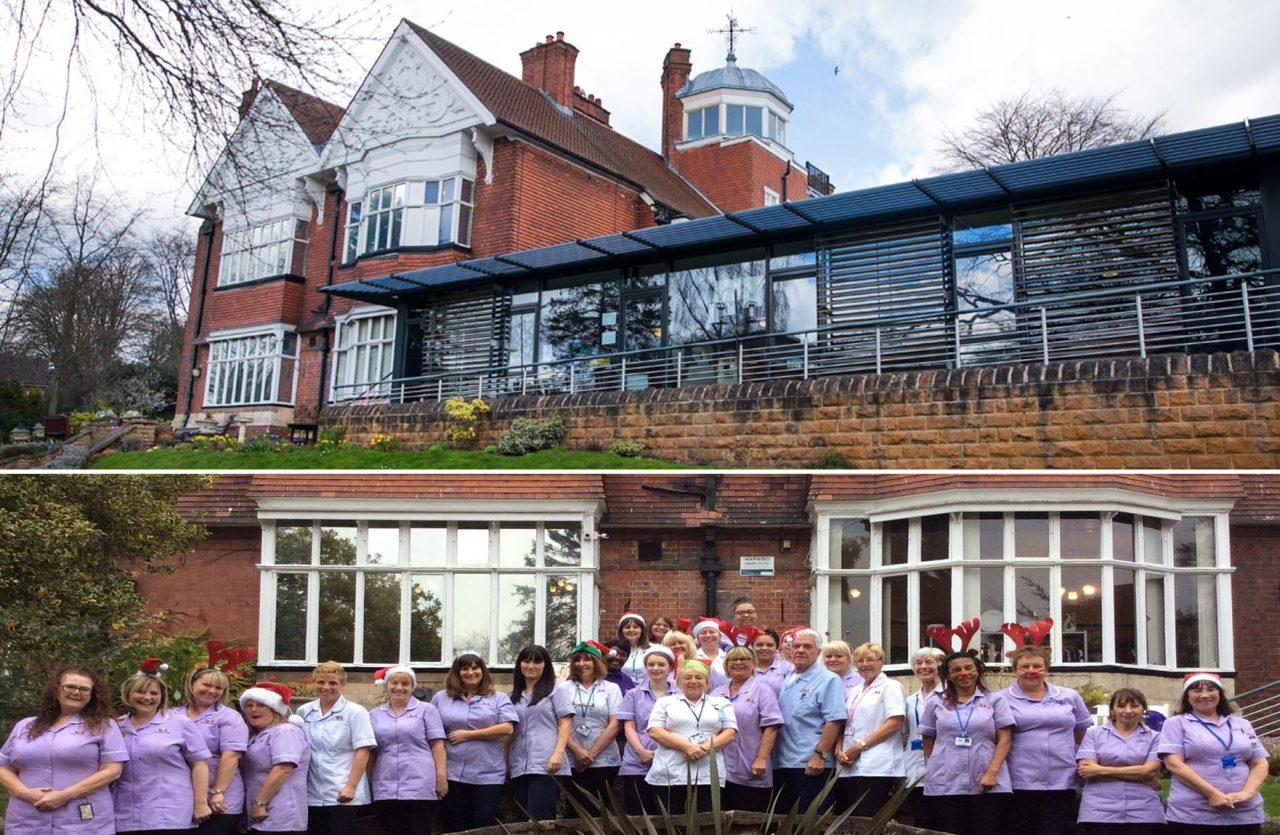
A hospice based in Mapperley is celebrating after being rated ‘Good’ overall in its latest inspection by the Care Quality Commission (CQC), the independent regulator of health and social care in England. 

The inspection recognised Nottinghamshire Hospice’s compassionate, person-centred approach, commitment to supporting people at the end of life, and the strong sense of teamwork among staff and volunteers. CQC inspectors praised staff for going above and beyond to ensure patients and their families receive dignified and responsive care. 

Last year, Nottinghamshire Hospice supported over 2000 patients and families across Nottinghamshire, offering at-home care, group wellbeing sessions, and emotional support and counselling. 

Leanne Porter Healthcare
CQC inspectors praised staff for going above and beyond for patients and their families

Notts-Hospice-Home-Team
The inspection recognised Nottinghamshire Hospice’s commitment to supporting people at the end of life, and the strong sense of teamwork among staff and volunteers

An excerpt from the report read: “Staff treated patients with compassion and kindness, respected their privacy and dignity, and took account of their individual needs. We observed that patients and families were at the heart of everything staff did.” 

In addition to the strong CQC result, Nottinghamshire Hospice has recently expanded opportunities for people wishing to begin a career in care. The hospice now offers on-the-job training for new care assistants, including those without previous qualifications, helping them gain essential skills, experience and confidence while working alongside the clinical team. 

Palliative Care Assistant Lisa Barlow joined the hospice six months ago. When she applied for a role at the hospice, she didn’t expect to hear back. 

“I didn’t think I’d hear anything because I didn’t have the qualifications, but the hospice offered me the chance to train on the job. The support here is second to none and everyone’s so welcoming and friendly. I’ve never worked anywhere like this in my life.” 

For Lisa, it’s the personal connections that mean the most. 

She said: “When I first met one patient’s daughter, she wasn’t sure she could leave her mum with me. I was still in training, shadowing one of the Registered Nurses. I told her, ‘I’ll look after your mum just like I look after mine, I can’t do any better than that.’ After that, she completely trusted me. That’s what care is all about.” 

Rachel Hucknall, CEO of Nottinghamshire Hospice added: “We’re so proud of our team and the care they provide. This rating reflects the passion and dedication that every member of staff brings – especially our new care assistants, who are learning and growing with such commitment.” 

Roadworks and closures planned for Gedling borough this week

Take a look at the roadworks and closures scheduled for Gedling borough’s roads for the week beginning November 3.

Make sure to plan your journey and check before your travel as these planned works could affect you. 

Church Drive, Arnold
09 November
Road closure for Remembrance parade
Responsibility for event: Nottinghamshire County Council

Main Road, Gedling
09 November
Road closure for Remembrance parade
Responsibility for event: Nottinghamshire County Council

Mansfield Road, Daybrook
09 November
Road closure for Remembrance parade
Nottinghamshire County Council

Nottingham Road, Daybrook
09 November
Road closure for Remembrance parade
Responsibility for event: Nottinghamshire County Council

Sir John Robinson Way, Daybrook
09 November
Road closure for Remembrance parade
Responsibility for event: Nottinghamshire County Council

Main Street, Calverton
09 November
Road closure
Remembrance parade

Mansfield Lane, Calverton
09 November
Road closure for Remembrance parade
Responsibility for event: Nottinghamshire County Council

Breck Hill Road, Woodthorpe
08 November
Roadworks, Delays likely for road closure
Responsibility for works: National Grid


Carlton Hill, Carlton
09 November – 09 November
Roadworks and delays likely due to lane closure
Responsibility for works: Severn Trent Water

High Street, Arnold
06 November – 12 November
Roadworks, Delays likely
Responsibility for works: Cornerstone Telecommunications Infrastru

Nottingham Road, Burton Joyce
06 November
Roadworks, Delays likely
Responsibility for works: Severn Trent Water

Brookfield Road, Arnold
05 November – 07 November
Roadworks, Delays possible
Responsibility for works: Severn Trent Water

Craster Drive, Arnold
04 November – 05 November
Roadworks, Delays possible
Responsibility for works: Severn Trent Water

Mapperley Orchard, Arnold
04 November – 05 November
Roadworks, Delays possible for carriageway repairs to replace kerbs after the junction
Responsibility for works: Nottinghamshire County Council

Martins Hill, Carlton
07 November – 11 November
Roadworks, Delays possible
Responsibility for works: Openreach

Nottingham Road, Ravenshead
08 November
Roadworks, Delays possible
Responsibility for works: Nottinghamshire County Council

Southdale Road, Carlton
06 November – 08 November
Roadworks, Delays possible
Responsibility for works: Openreach

Nottinghamshire Venues Announce Games Nights Inspired by The Traitors

Fans of the hit TV show, The Traitors, can rejoice, as numerous venues in Nottinghamshire are now hosting games nights that give you the chance to wear the iconic green cloaks. If you’ve always thought you could have done better than the faithful on screen, or if you have always thought of yourself as being a good traitor, then there are numerous places you can go to try and put your skills to the test.

Fully Interactive Events that are Inspired by the Hit TV Show

In these interactive events, every guest is a player. When you arrive, you will be assigned a role, whether that is a Deceiver, who has to sabotage the group, or a Dedicated, who has to try and root out the traitors before you are eliminated. 

Guests are first seated in groups of six or eight, with table-based challenges to try and recreate the games as seen in the TV show. These could be logic games, puzzle games, or bluffing games. People will also have to compete for clues, as well as prizes. After each game, guests rotate to meet new players on different tables. The aim is to eliminate players whom you suspect, with votes cast anonymously.

light people table luxury
Photo by Tima Miroshnichenko on Pexels.com

The tension builds across different rounds, but if a Deceiver is caught, then the round resets, leading to more theatrics and dramatic reveals. Venues across Nottinghamshire are encouraging people to wear cloaks to add to the atmosphere and to keep players in character. The events take place on Fridays, with new dates announced after each event. Two venues that are partaking right now include the Cross Keys and Prince Rupert in Newark. You’ll need to pay the fee, which is £20 a person.

Why Do People Love Traitors so Much?

A lot of people love Traitors because there’s a strong element of strategy when trying to work out who is a traitor. Some people decide to take a more strategic approach, like in chess, finding out what moves they can make and how that exposes them. Others prefer to make moves as seen in games like blackjack. In this casino game, the odds are mathematical. You have to decide whether to hit, stand, double down, or split, based on what the dealer shows, and what’s in your own hand.

As seen in Celebrity Traitors, some people like to use mathematics to decide how many traitors there are, to deduce whether someone in their friendship group could be one, so they can cast votes accordingly. Other people like to take inspiration from games like Mafia, where people have hidden roles, but they aren’t limited to just two, like in Traitors. Either way, the fact that there are so many ways to play is one of the many reasons why the show is such a success, and why local venues have adopted the format for themselves. Traitors isn’t the only bluffing game out there either, as many games have adopted this format over time. This shows how much appeal it has from a strategy point of view, but at the

Police arrest man ‘driving suspiciously’ moments after burglary in Ravenshead

Police have arrested a suspect in connection with a burglary in Ravenshead after spotting a car being driven suspiciously moments after a break-in.

Officers were searching in the area following reports of a burglary in Kirkby Road, Ravenshead, at 8.25pm on Saturday (1).

The residents were out at the time but internal cameras picked up intruders inside their property and the victims called 999.

Police arrested a suspect in connection with a burglary after spotting a car being driven suspiciously (PIC: Notts Police)

Burglary
The man was also arrested in connection with a burglary in Rushcliffe

Operational Support officers observed a car parked at the junction of Kirkby Road and Little Ricket Lane.

When they approached, the car immediately drove away, so it was followed and pulled over a short time later.

Officers detained a man who was inside the car and seized a mobile phone and a two-way radio.

The suspect was arrested on suspicion of the Ravenshead burglary, as well as an earlier break-in at Cropwell Road, Radcliffe-on-Trent.

A 33-year-old man has been arrested on suspicion of two burglaries and has since been bailed with strict conditions while investigations continue.

Detective Constable Aisha Grainger, of Nottinghamshire Police, said: “We believe these two burglaries are linked so the officers on patrol deserve great credit for responding efficiently and detaining a suspect.

“The investigation is now being progressed by detectives and extensive CCTV, door-to-door and forensic inquiries are ongoing.

“We believe the public could also assist as the break-ins took place early in the evening when people may have been out and about.

“Anyone who was in either of these locations on Saturday evening and spotted anything suspicious, or has any relevant dashcam or other footage, should get in touch without delay.”

Anyone who can assist should call 101, quoting incident 686 of 1 November 2025, or Crimestoppers anonymously on 0800 555 111.

Lanterns after dusk

Walking home at dusk can say more about a place than any glossy brochure.

A street where café lights stay on after five, where a junior team walks past in muddied kit, where the bus still feels safe — that is a town with a heartbeat. People sometimes think “night-time economy” means only loud venues and neon signs.

In smaller communities, it is gentler: libraries running late sessions, bowls clubs hosting quizzes, churches opening warm spaces, and corner shops that remember faces. Even talk of soft2bet or “the digital sector” feels far away unless it connects back to these ordinary moments.

There is a growing sense that local life should not switch off after tea. That doesn’t mean chasing big-city trends. It means giving residents reasons to linger a little longer and feel welcome as daylight fades. On the economic side, hospitality needs steady footfall; on the social side, teenagers need somewhere to go that isn’t a bus shelter; on the safety side, eyes on the street matter. Digital work plays a quiet role here too — from click-and-collect orders that justify late opening to online-first employers that let people live local and earn global. Even in consumer tech, platforms like Soft2Bet show how regulated, design-led companies build careers that are not tied to a single postcode. The interesting bit is how that kind of opportunity loops back into the high street after dark.

Local energy after dark

The magic of evenings isn’t the big event. It’s the predictable small habits. A craft group that meets every Thursday. A school hall that becomes a badminton court at six. A micro-cinema night in the community centre with subtitles on and the kettle ready. When people can rely on these anchors, they plan their week around them. Reliability beats spectacle.

That reliability has a few ingredients. Lighting that actually works and feels warm, not harsh. Timetables that line up so the last bus does not leave before choir practice ends. Clear information in one place — not posters flapping on six different noticeboards. It also helps to think about “last mile belonging”: the final ten minutes between a venue and the front door. If the walk back is pleasant, evenings grow all by themselves.

High street revival by habit not hype

Plenty of high streets chase novelty. The better pattern is small businesses quietly coordinating and sharing customers. It can look like this:

  • A bookshop runs a reading circle on Wednesdays and lets the café next door pre-sell hot drinks to anyone with a ticket.
  • A barbershop keeps two late chairs on Fridays, then points the last slot to the chip shop that stays open until nine.
  • A bakery posts the next-day leftover schedule, and the sports club collects it after training for a pay-what-you-can table.

None of this requires a festival budget. It requires talking and timing. The point is to teach residents that “there is something nice on most nights, even if small.” When that message settles in, footfall stops being a guess and becomes a rhythm.

A useful twist is the “pocket late night.” Rather than stretching everything to 10pm, businesses pick one weekday to stay open until 8pm and tell everyone that Thursday is the night. Shoppers know when to come. Volunteers know when to help. The bus company knows when to add a run. A single shared late night is easier to sustain than seven half-hearted ones.

Grassroots sport and quiet pride

Evenings belong to sport as much as to shops. Floodlit five-a-side, netball on the school courts, running clubs that loop around well-lit paths — these things knit strangers together. They also generate tiny economies: the takeaway that times its fresh dough for whistle-time, the corner shop that stocks tape and water, the taxi firm that knows three pitches by heart.

There’s a social payoff too. When teenagers have purpose built into the week, the town centre feels calmer. When parents linger to chat after training, the car park becomes safer by being ordinary. It is not complicated sociology. It is habit forming space. The trick is to keep it inclusive. Sessions for beginners. Football nights where boots can be borrowed. Clear sign-ups that don’t require mysterious WhatsApp invites. Pride grows from welcome, not from walls of silverware.

The digital layer locals ignore

It’s tempting to treat “digital” as somewhere else, but it lives under every evening decision. Residents check maps, book slots, and browse menus. Traders compare suppliers, schedule staff, and manage orders. Community organisers juggle RSVPs and risk assessments. Quietly, the places that thrive after dark are the ones that treat online tools like a public utility, not a gimmick.

Two principles help:

  • Fewer links, more clarity. One page that lists this week’s late openings beats twelve scattered posts.
  • Meet people where they scroll. A simple weekly post pinned on a local Facebook group or a council-hosted “What’s On This Week” page is enough if it is always up to date.

Local employment in digital industries matters too. When more households have remote-friendly work, weeknight life benefits. People with flexible hours can coach youth teams. Designers can help a café fix its menu boards without charging agency rates. Those who build careers in regulated online sectors — whether fintech, creative studios, or consumer platforms — spend their earnings close to home. The loop completes when wages earned in headsets and code translate into real-world coffee, tickets, and takeaways at 7pm.

What actually turns momentum into change

Towns do not need dashboards to feel progress. A handful of simple measures tell the story well enough:

  • Lights on later. Count shopfronts still lit at 7.30pm on a Thursday each month.
  • Safe routes. Walk the three most used paths and note broken bulbs, poor sightlines, or puddles that force people into the road. Fix two a month.
  • Regular faces. Track recurring groups using public space after six — choirs, clubs, study circles. Help the flaky ones become reliable.
  • Quiet corners filled. Identify two underused venues and trial low-cost uses for six weeks — chess tables, board-game nights, open studios.

Momentum is fragile, so expectations should be modest. Some weeks will be cold and empty. That is fine. It is the pattern that matters. Keeping the calendar steady through winter often unlocks a lively spring. Residents learn that the town will show up for them even on flat days, and they repay it when the light returns.

A gentle rule for night life

The most resilient places follow a simple rule: slow, friendly, and safe beats loud, flashy, and short. People want routine they can trust, faces they recognise, and spaces that feel like an extended living room. The job is not to invent a brand. It is to stitch together the thousand small fibres already here — shopkeepers who know names, coaches who bring spare gloves, librarians who learn which lights feel cosiest.

In that cloth, technology is thread, not pattern. It helps a bakery forecast demand. It lets a pottery studio sell extra seats for an evening class. It gives local workers options so they can coach on weekdays and spend money where they live. And when online-first employers grow — whether they build games, manage platforms, or design tools — the benefits land on pavements and in community halls, not only on screens.

The outcome is not a nightlife district. It is a neighbourly dusk. A place where the kettle is still warm at eight, trainers squeak on polished floors, and the walk home feels like a small celebration that tomorrow will offer something again. That is how a town stays bright, even after the sun clocks off.