“Despite repeatedly being told no, Daniel Kennington forced his victim to have sex with him.
“That removal of consent meant his actions amounted to rape, which is an incredibly serious offence that can destroy a person’s life.
“Kennington will have been aware that what he’d done was wrong, but always denied it and maintained this lie, in a bid to avoid any punishment.
“Thankfully, he was unsuccessful on that front, as a jury managed to see through the made-up stories he told during his trial.
“They reached that verdict after listening to all the details about the incident – evidence the victim herself therefore had to relive as well.
“While she showcased real bravery and strength in reporting her ordeal and waiting for the case to go through the courts, Kennington did the complete opposite.
“His cowardly decision to compound his crime by lying about what happened caused his victim further pain, so we’re pleased to see he’s now been sent to prison for his actions.
“I hope Kennington’s conviction empowers other survivors of rape or sexual abuse to feel able to come forward and report what happened to them.
“If you’ve gone through something like this, please reach out to us. You will be listened to and supported, while we’ll do everything in our powers to investigate and get you justice.”
Risk is an inherent part of daily life. We take risks as we cross busy streets, invest in new ideas, speak up in meetings, or place a bet. These choices may seem minor, but they reveal how much risk influences our lives. Risk is ingrained in how we think and act.
But why do we do it? What drives people to take chances, and how does it influence our decision-making? In this article, we’ll explore the science and psychology behind risk-taking.
Everyone takes risks. It’s part of how our brains work. When we start a new job or talk to someone new, our brain releases chemicals like dopamine and adrenaline. These make us feel good and excited. It’s the brain’s way of rewarding us for being brave.
Long ago, risks helped people survive. Those who explored, hunted, or tried new things were more likely to find food and stay alive. That’s why risk-taking is still part of us today. Over time, this behavior became hardwired into our brains.
But not all risks are equal. Feelings play a big part in risk-taking. People may take dangerous risks when they’re angry, scared, or upset. But if someone feels curious, confident, or knows what they want, they usually take better, more careful risks. Understanding if a decision is made by emotion or reason can make all the difference.
Several studies have shown that risk tolerance also varies by age, gender, and even how much control a person feels in their life. In short, risk is not just random. It’s a mix of brain signals, past experiences, and emotional states.
Modern-Day Risk: From Extreme Sports to Gambling
Today, people take risks for many reasons. Some chase excitement. Others hope for big rewards. Many are driven by curiosity or a desire to break out of routine. Social media has also made risky behavior more visible and, in some cases, more desirable.
When we see others skydiving, trading crypto, or starting new businesses, we’re more likely to consider it ourselves. Some risks are about thrill. Others are about trying to change your life. Whatever the goal, modern risk-taking is often a mix of emotion, influence, and personal drive.
Here are the top five modern risk-taking activities:
Skydiving: The thrill of freefall pushes people to face fear.
Entrepreneurship: Risking time and money to build something new.
Gambling: Chasing wins in casinos or online platforms.
Career changes: Leaving security behind to follow passion.
Gambling as a Psychological Case Study
Gambling is one of the best ways to study risk. It shows how our brains react to winning, losing, and not knowing what will happen. When someone places a bet, the brain releases dopamine. This rush keeps players engaged, even when they experience a loss.
Behavioral economists explain this using the concept of “variable rewards.” Unlike fixed outcomes, gambling offers inconsistent wins, which the brain finds highly stimulating. That’s why people often chase losses or play longer than planned.
Laws and traditions also matter. Some countries have strict gambling laws, while others are more relaxed. Understanding the importance of the legal gambling age in different places sheds light on how each country controls risk in online casinos. These rules protect young or vulnerable players and help define safe gambling behavior.
Terms like psychology of gambling, gambling behavior, and reward systems in gambling all point to one thing: gambling is a powerful window into human risk-taking.
Without risk, there would be no progress. Every breakthrough, whether scientific, creative, or social, came from someone willing to take a chance. Risk pushes the brain to think differently, fix problems, and learn from mistakes. That’s why it often leads to new ideas and inventions.
People grow when they push past their comfort zones. Risk forces decisions, sparks creativity, and helps build resilience. Think of entrepreneurs who launch bold startups or inventors who test unproven ideas. Their willingness to act despite uncertainty often yields significant rewards.
Let’s take a look at three ways risk stimulates growth:
Promotes new thinking: Solving unfamiliar problems trains the brain.
Builds resilience: Failure teaches lessons that success cannot.
Encourages innovation: The fear of risk often fuels preparation and planning.
Who Takes More Risks?
People don’t take risks the same way. Age, gender, and lifestyle all play a part. Teenagers take more risks because their brains are still developing, and they want to be accepted. Business owners often take planned money risks to help their companies grow. Older people are usually more careful, especially about health and money.
Here’s a quick look at how different people take risks:
Group
Risk Level
Common Risk Area
Teenagers
High
Social, physical
Entrepreneurs
Very high
Financial, career
Gamblers
Moderate-high
Financial, psychological
Older adults
Low
Health, safety
Managing Risk in a Healthy Way
Risk isn’t always bad. It just needs to be managed. The key is to distinguish between smart risks and reckless ones. Smart risks are planned and measured. They have a clear goal and a backup plan in place. Reckless risks, on the other hand, are driven by impulse or emotion.
If you want to take chances without putting yourself in danger, here are some simple steps to follow:
Know the downside.
Set limits.
Use data or advice.
Pause before action.
Conclusion
Risk is part of life. It drives growth, sparks ideas, and teaches valuable lessons. From gambling and business to relationships and personal goals, taking chances helps us move forward. But not all risks are worth it. The goal is to balance courage with caution. Understanding why we take risks and how to manage them helps us make better choices and turn uncertainty into opportunity.
In today’s fast-paced digital world, organisations across the UK are under increasing pressure to modernise their operations, improve efficiency, and deliver value faster. Digital transformation is no longer a choice—it’s a necessity. However, achieving it successfully can be complex, especially for businesses that rely on outdated systems or siloed data. This is where Microsoft Power Platform steps in as a game-changer.
Microsoft’s Power Platform combines four key services: Power BI, Power Apps, Power Automate, and Power Virtual Agents. Together, they empower organisations to streamline processes, improve productivity, and enhance customer experiences. Whether it’s creating custom apps to manage inventory, setting up automated email alerts, or generating real-time reports, businesses can now do it all within a single, integrated environment. For firms aiming to automate workflows with Power Platform, the benefits extend beyond just saving time—they’re about reshaping how work is done across every department.
Understanding Power Platform’s Core Strength
At the heart of Power Platform’s appeal is its low-code approach, which democratises digital development. Unlike traditional software platforms that require complex coding and technical skills, Power Platform allows employees—even those with minimal IT experience—to create functional, scalable solutions. It integrates smoothly with Microsoft 365, Azure, Dynamics 365, and hundreds of other apps and data sources, allowing a seamless flow of information.
Power BI, for example, enables users to turn raw data into clear, interactive dashboards. These visual insights can influence business decisions in real-time, helping teams identify trends, track KPIs, and reduce operational inefficiencies. Meanwhile, Power Apps allows quick development of tailored mobile or web applications suited to any department’s needs—without writing a single line of code.
Driving Automation and Efficiency
Power Automate is often seen as the engine of workflow transformation. With it, organisations can automate repetitive, time-consuming tasks that otherwise eat into valuable staff hours. From processing invoices and routing approvals to sending alerts and syncing data between platforms, Power Automate significantly reduces human error and speeds up operations. For example, a local authority in the UK used Power Automate to reduce paperwork delays in their housing application process, cutting turnaround times by 60%.
This type of automation is especially important in today’s hybrid work environment, where remote teams need tools that work across devices and time zones. By integrating AI and robotic process automation (RPA), businesses can handle large-scale operations more accurately and cost-effectively than ever before.
Enhancing Customer Engagement with AI
Power Virtual Agents enables organisations to create intelligent chatbots that can interact with customers 24/7. These bots are not just basic query tools—they use AI and natural language processing to understand customer intent and provide accurate responses. Businesses can deploy them across websites, Microsoft Teams, and other communication channels to answer FAQs, process simple requests, or escalate complex issues to human agents.
In the retail sector, for instance, Power Virtual Agents can handle product inquiries, manage returns, and even guide customers through a personalised buying journey. This not only improves the customer experience but also frees up staff to focus on higher-value interactions.
Real-World Impact: UK Businesses Leading the Way
UK-based organisations are already seeing substantial benefits from embracing Power Platform. A prominent NHS trust used Power Apps to build a mobile COVID-19 symptom checker, enabling real-time staff health tracking. Similarly, a manufacturing company in the Midlands used Power BI to monitor production performance, identify downtime patterns, and increase overall output.
These success stories show that Power Platform isn’t limited to big tech firms. Small and mid-sized businesses, government departments, and non-profits can all leverage its capabilities without needing large budgets or specialist teams. It levels the playing field, allowing everyone to benefit from digital innovation.
Scalability and Security with Microsoft Backbone
Security is a major concern when adopting new technologies, especially when handling sensitive data. Power Platform is built on Microsoft’s trusted cloud infrastructure, ensuring enterprise-grade security, compliance, and governance. Businesses have full control over user access, data sharing policies, and audit logs, helping them meet GDPR and other regulatory requirements.
Moreover, the platform is scalable, which means as your business grows or your needs evolve, your digital tools can evolve with you. You can start with a simple internal app or dashboard and scale up to enterprise-level automation or customer-facing bots as needed—all within the same ecosystem.
Final Thoughts
Digital transformation doesn’t have to be overwhelming or expensive. With the Microsoft Power Platform, businesses of all sizes can take meaningful steps toward modernising their processes and improving efficiency. From smarter decision-making with Power BI to rapid app development with Power Apps and intelligent automation with Power Automate, the possibilities are endless.
“We’d appeal to anyone who recognises the man in this picture to please get in touch with us.
“We suspect he and another man were responsible for breaking into this café and taking cash from within that didn’t belong to them.
“This incident has understandably left the owners of this business very upset, so we’re keen to track down anyone involved.
“If you have any information at all that could assist us in doing this, we’d ask that you please get in touch with the police, so that we can take action.”
Information can be reported to the police by calling 101, quoting incident 25000291455 of 20 May 2025, while Crimestoppers can also be contacted anonymously on 0800 555 111.
A documentary charting the lives of black miners who worked at Gedling Colliery is being shown to mark Gedling Windrush 2025.
The special screening of Skin & Coal will take place at The Bonington Theatre on Thursday, June 19 at 7pm and is free entry. It will be hosted by local historian Dr Norma Gregory, whose work focuses on Black British industrial heritage.
The documentary shares the voices of Black British coalminers who worked at Gedling Colliery, underground and on the surface, which is now Gedling Country Park, as well as other pits in Doncaster and Leeds during the 1980s.
It explores working-class life in the East Midlands and the North through stories of labour, community and survival in one of the most dangerous industries of the time.
After the film, there will be a Q&A with special guests, a networking session, and a chance to view the Digging Deep Black Mineworkers’ Heritage Exhibition. Attendees can also speak with heritage professionals about careers and projects in the sector. The first 50 guests will receive a free Windrush industrial heritage poster.
Councillor Kathryn Fox, Portfolio Holder for Life Chances and Vulnerability said: “We are incredibly proud to be screening this powerful documentary that brings to life the story of the black mineworkers who worked at the former Gedling Colliery and nearby pits.
“It’s important that we recognise the contribution of Black British workers to our local and national history. I hope people across Gedling will come along to this free event and enjoy the brilliant speakers we have, and I would like to thank Dr Gregory for the work she has done, working with Gedling Borough Council, to make this event happen.”
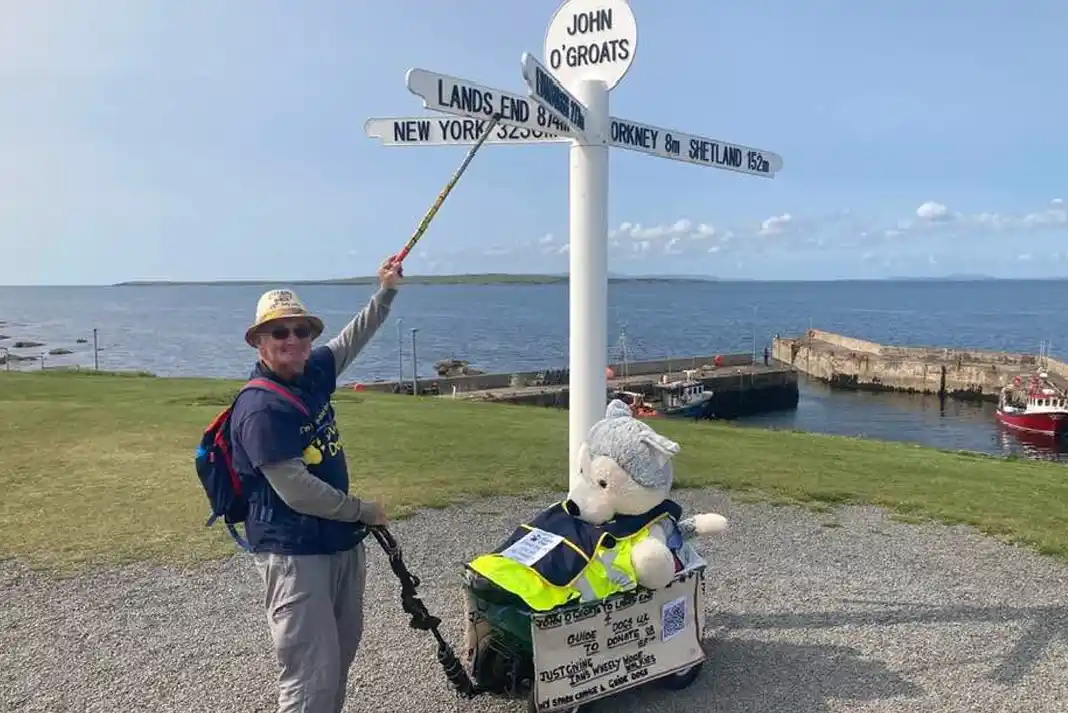
A 70-year-old man from Bestwood Village will be spending the next seven weeks pulling a wheelbarrow from John o’Groats to Land’s End in aid of sight loss charity Guide Dogs.
Ian West set off on his solo walking challenge from John o’Groats on Sunday (8) and hopes to reach Land’s End in Cornwall by Monday, July 28.
Ian will be pulling a wheelbarrow along the route, which was presented to him by the community of Bestwood Village, as a thank you for the voluntary work he does litter picking and maintaining local garden areas.
Inside the wheelbarrow will be a giant toy dog, which Ian has named Izzy, and he hopes that passers-by will throw their loose change in as he walks through towns and villages.
Ian aims to pass through his hometown of Bestwood village on July 7.
Ian said: “My brother is going blind and has been diagnosed with Macular Degeneration.
“Ever since he was diagnosed, I’ve supported Guide Dogs with all my fundraising challenges.
“I’m really looking forward to this challenge and can’t wait to get walking again.
“As with my other challenges, I’m funding the whole thing myself, so that all the funds raised can go directly to Guide Dogs.
“Give me a wave or stop for a chat if you see me walking past and, if you can, either throw some loose change into my wheelbarrow or donate online to support this wonderful charity.”
Ian has previously undertaken various walking challenges in aid of Guide Dogs, including walking over 600 miles (965km) to every Premier League football ground, walking the entire coast of Britain and walking from Nottingham to Portugal.
With the money he raises, Ian hopes to name a guide dog puppy, having already named three puppies, Banjo, Albie and Neptune, via the charity’s Name a Puppy scheme.
Kim Hutchings, Community Fundraising Manager for Guide Dogs, covering Nottinghamshire, said: “Ian is an incredible fundraiser who has worked tirelessly to raise thousands of pounds for Guide Dogs over the years.
“We wish Ian the best of luck with his latest walking challenge and look forward to cheering him on along the way.”
Europe has many excellent countries for business and Switzerland is one of them. The country brings in thousands of entrepreneurs and investors each year because of its reliable government, excellent infrastructure, easy-going taxes and robust bank network. If you wish to do business globally, setting up a swiss ag or a swiss gmbh is a logical path.
Here, we are going to cover company formation in Switzerland, outlining various legal structures, how to register, required costs, taxes involved and compliance.
Why Choose Switzerland for Company Formation?
Screenshot
Switzerland provides a reliable and competitive environment for companies. Here are some reasons to start your business there:
Stable legal and economic framework
Low corporate tax rates in many cantons
Excellent international reputation
Strong financial privacy and asset protection
Skilled and multilingual workforce
Efficient government and regulatory services
Whether you’re forming a holding company, trading business, or startup, Switzerland is an ideal base for global operations.
Swiss AG vs. Swiss GmbH: Understanding the Difference
Commonly, you will face the decision of choosing between a Swiss AG (Aktiengesellschaft) and a Swiss GmbH (GesellschaftmitbeschränkterHaftung) when forming a business in Switzerland. Each has its own characteristics and legal requirements.
Here’s a comparative overview:
If you’re planning for international trade, partnerships, or anonymity, a swiss ag is recommended. For smaller businesses and startups, a swissgmbh offers simplicity and cost-efficiency.
Step-by-Step Company Formation Process
Setting up a company in Switzerland involves several legal and administrative steps. Below is a general process for both AG and GmbH formations:
1. Choose the Company Type
Decide between a Swiss AG or Swiss GmbH based on your goals, size, and capital.
2. Select a Unique Company Name
The name must be distinct and follow local naming rules. It should also include “AG” or “GmbH” in the name, depending on the structure.
3. Define Company Purpose
Specify your business activities, which will be included in the Articles of Association.
4. Open a Capital Deposit Account
Open a temporary bank account in Switzerland to deposit the initial capital. This capital will be frozen until the company is registered.
5. Draft and Notarize Legal Documents
Prepare the required incorporation documents and have them notarized, including:
Articles of Association
Declaration of incorporation
Acceptance of board members or managers
Proof of capital payment
6. Register with the Commercial Registry
Submit the notarized documents to the Commercial Register in the relevant Swiss canton. Once approved, your company is officially established.
7. Post-Registration Tasks
Register for VAT (if applicable)
Set up accounting and bookkeeping
Open a regular business bank account
Register with the social security system (for hiring employees)
Legal Requirements
Screenshot
To operate legally, your Swiss company must meet certain compliance obligations:
Requirement
Details
Registered Address
Must have a legal Swiss address
Swiss Resident Director
At least one director must reside in Switzerland
Accounting & Auditing
Required annually; AGs may need external audits
Corporate Governance
Hold annual general meetings and maintain records
Swiss Tax System: What to Expect
Switzerland offers competitive tax rates that vary by canton and company type.
Tax Type
Approximate Rate
Federal Corporate Tax
8.5% on profit after tax
Cantonal/Communal Tax
2% to 16% (varies by location)
VAT
7.7% standard, 2.5% reduced
Withholding Tax (Dividends)
35% (may be reduced via treaties)
Certain cantons like Zug and Lucerne offer very low corporate tax rates, making them highly attractive for incorporation.
Costs of Company Formation
Here’s an approximate breakdown of expenses for forming a company in Switzerland:
Item
Swiss AG
Swiss GmbH
Share Capital
CHF 100,000
CHF 20,000
Notary & Legal Fees
CHF 2,000–5,000
CHF 1,000–3,000
Commercial Registry Fees
CHF 600–800
CHF 600–800
Accounting Setup
CHF 1,500+
CHF 1,000+
Total Setup Cost
CHF 104,000+
CHF 23,000+
Benefits of Swiss Company Ownership
Owning a Swiss company can offer a wide range of strategic advantages:
Global Reputation: Swiss entities are viewed as stable and reliable worldwide
Asset Protection: Strong legal safeguards for owners and investors
Tax Efficiency: Access to favorable international tax treaties
Banking Access: Open accounts with leading global financial institutions
Scalability: Swiss AGs especially allow for easy investor entry and stock issuance
Common Questions
Q1: Can foreigners open a Swiss company?
Yes, foreigners can fully own Swiss AGs and GmbHs. Only one Swiss-resident director is required.
Q2: Do I need to visit Switzerland to form a company?
Not necessarily. Many formation services allow remote incorporation using a power of attorney.
Q3: What sectors do Swiss companies work well in?
There are many successful finance, technology, manufacturing, pharmaceutical and trading companies in Switzerland.
Professional Assistance Simplifies the Process
Forming a company in Switzerland involves legal paperwork, regulatory understanding, and compliance. You should definitely talk to someone who understands the laws in your state or a professional who provides entity formation services.
If you wish to set up your business legally and easily, look into https://swisscompanyformation.com which supports the entire process with step-by-step guidance, legal advice and can provide a nominee director.
Conclusion
Creating a swiss ag or swiss gmbh helps international entrepreneurs and investors in many ways. Because the business climate, safety of legal matters and powerful economy are strong in Switzerland, many big companies choose to set up there.
Whether you go for an AG or a GmbH will be influenced by the size of your initial capital, the privacy you require and your business targets. Proper planning and having expert support by your side ensures your company has a strong beginning no matter the approach you use.
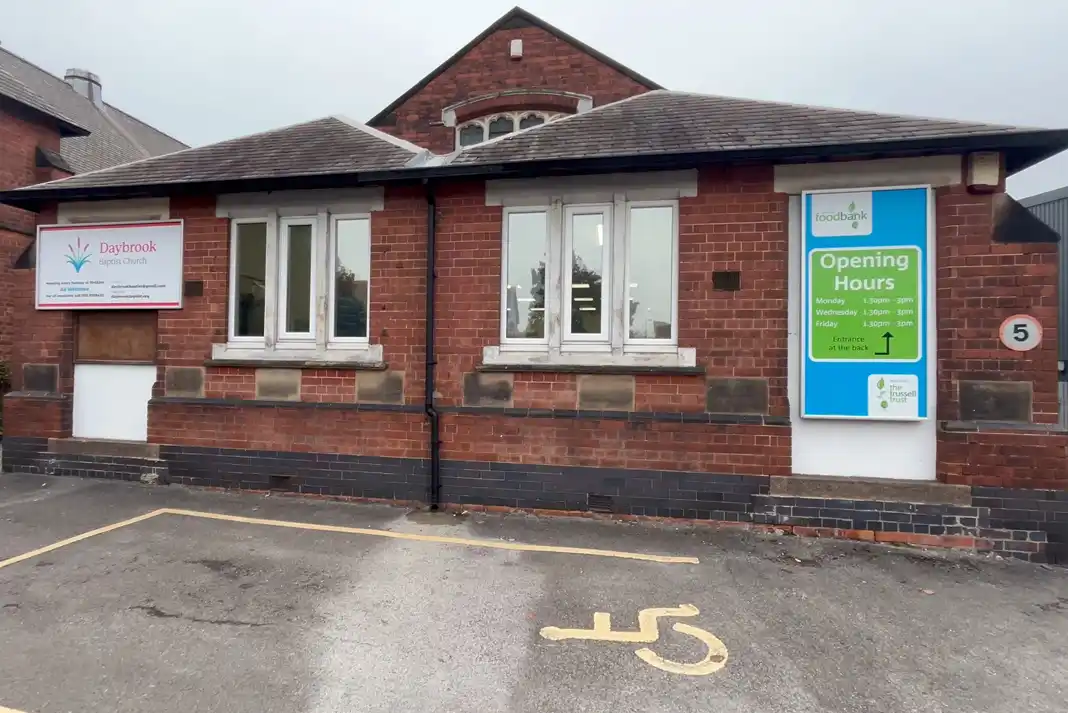
Arnold Foodbank needs your help. As the cost of living continues to bite and effect people, the charity are in the position where donations are shrinking but demand continues to increase.
Food donations to Arnold Foodbank have dropped by 20% and they had to buy more stock last year than in the previous five years combined.
These are what they are appealing for:
Tinned Fish
Squash/Juice
Tinned Fruit and Rice Pudding/Custard
Tinned Veg – carrots,sweetcorn and peas
Toiletries (toothpaste, deodorant, shampoo and toilet rolls)
Soup
Coffee Chocolate & Snacks
UHT Milk In fact anything except pasta, baked beans, pulses and rice
A spokesman for the foodbank also shared the news that bags and trolleys were also needed.
They said: “We are also always in need of carrier bags, ‘Bags for Life’ and if anyone has any shopping trolleys, they no longer require, we would be very grateful for those too.”
You can make donations to the foodbank at the following places:
A Strictly Come Dancing legend will be sharing stories about the hit show at a charity event in Woodborough next month.
Cancer Research UK Woodborough has partnered with Woodborough Hall to host An Evening with Ian Waite on Wednesday, July 2.
Organisers say those who buy tickets will enjoy a drinks reception on arrival and canapés in the interval, ‘all whilst raising money for a great cause’.
Ian will be discussing all things Strictly along with his time in Australia and his upcoming tour.
A spokesman for the venue said: “Come and spend a cozy evening with Ian Waite, where you can watch him share stories, dance moves, and maybe even a few laughs!
Ticket price includes a donation to Cancer Research UK.