Home Blog Page 723

MARC WILLIAMS: Minnows relish Nations League and chase bigger stages

0

Mapperley-based sports writer Marc Williams shares his own opinions and thoughts on national footballing topics.

Jadon Sancho had just scored his second goal of the night – England’s fifth of a commanding first half – against Kosovo at Southampton’s St. Mary’s stadium on September 10 when I started having doubts.

The Borussia Dortmund starlet, signed for around £8m from Manchester City in 2017, slotted home from close-range after frightening work down the left by Raheem Sterling.

However, as he wheeled away in celebration, positively gesturing toward the Three Lions badge and thanking former club-mate Sterling for his contribution, I could not help think about the torment that the visiting Kosovans were experiencing every time England streamed forward.

In hindsight the game did not end up as bad as the half-time score suggested.

Eccentric Swiss manager Bernard Challandes and his men arrived on the south coast unbeaten, and had notably dismissed the Czech Republic 2-1 three days prior as they made the journey from capital Pristina sitting second in the group.

Second half strikes from Valon Berisha, adding to his earlier effort to give his side a shock lead after only 34 seconds, and a penalty from Vedat Muriqi brought Kosovo within two but they ultimately succumbed to a relentless, yet extremely gifting, England.

Nevertheless, despite the minor comeback, and certainly making for an entertaining game for the neutral, they were always second best against Gareth Southgate’s World Cup semi-finalists who tallied their nineteenth goal (prior to games against the Czechs and Bulgarians later on) in just four European qualifiers.

Since they played their first competitive international football match in September 2016, Kosovo have gone on an unbeaten run of fifteen games, with their most significant result coming against the Czechs. Impressive.  

They are, at the time of writing, currently 120th in the World Rankings according to FIFA and lie in and around countries such as Tajikistan (119th), Namibia (121st) and, the closest other European nation, Lithuania (130th).

However, whilst I have no have no fear about them propelling themselves up through the rankings given their performances to date and undoubted ability, other teams in that so-called bracket of minnows don’t, and never will, have that luxury.

Therein lies my doubts.

Kosovo may be an anomaly, but I look at similar teams at the lower-end of things, San Marino, Andorra, the Faroe Islands, amongst many others, and question whether they actually enjoy it. Enjoy being placed in a group with two or three of Europe’s elite and getting beat, quite comprehensively, most, if not all, of the time.

With no disrespect to the aforementioned, they are never going to reach the glitz and the glamour of a European Championship or a World Cup at this rate, so should they even try? Should they even bother?

My answer is yes, but I really think the governing bodies of football ought to really look at the format in which is currently being implemented throughout qualification. Whether it does actually benefit the so-called ‘lesser’ nations, or if it’s simply just a ploy to ensure the big boys secure a guaranteed six points as they stick five, six, seven and more past a self-employed window cleaner or a postman before sealing their qualification under often non-combative circumstances.

Whilst the big dogs of world football rub their hands in glee after seeing their names drawn alongside the microstates, you would be forgiven for thinking that the unknown, (often) part-timers would be demoralised and embarrassed following a customary drubbing against the celebrities. Or would they?

The argument is two-fold. I have proposed this question in the past and the outcome remains inconclusive, though I really think one should ask themselves the same question should they ever get to that position.

One the one hand, some of these players may look forward to their qualifying games against the major nations; irrespective of the result. They get to come toe-to-toe with the world’s best every year. Who cares if they lose? Anything else is a bonus.

However, some may think the opposite and would want the shot of competing at the final of a World Cup or European Championships. Surely, as international footballers, they aspire to play on the biggest stage – not to just make up qualifying numbers as cannon fodder.

Representing your country is an honour, and I know a lot of people, playing in and around the non-league and professional circuit, who have proudly turned out for their country – whatever their level.

Previously, I’ve played with a Zimbabwean international and defended against a striker who travelled to the British Overseas Territory of Montserrat, a tiny Caribbean island, to compete in World Cup qualification in 2011 and who remains their top scorer to this day.

An old school friend currently plays for Sheffield United and was recently called up for Ryan Giggs’ Wales squad and made his debut in a friendly away in Albania a month later.

But what is the common theme between the three examples above, and the tens of thousands of players turning out in a similar capacity?

They’re all playing against those of a comparable level.

However, the same can’t be said for the Sammarinese, Andorrans or Faroe Islanders et al., and I believe that’s where the current process needs to be investigated and an alternative considered.

I understand that the domestic leagues in all those countries isn’t fantastic and is often played in front of 50 of the most dedicated locals and their pets, but can they really say that the most memorable time of their footballing lives would be to get thumped 13-0 (San Marino-Germany, 2006), 6-0 (Italy-Liechtenstein, March 2019) and 9-0 (Belgium-Gibraltar, October 2019)?

Whilst some of the above teams may be improving – slowly – and that making the trips to these countries would look good in their passports, my personal thoughts are that these players wouldn’t agree. I think they want the chance of reaching a major tournament and rightly so.

In a sport that is increasingly becoming dominated by psychology, mental health and everything else with it (for all the right reasons, may I add), I have the opinion that these players would fare far better, as people and domestic footballers, without the tradition of being sent for five goals plus. They’re just not going to learn anything being hammered, regardless of who they face.

I don’t often like comparing football with other sports, but I think Rugby Union is an exception and football, the game I’ve played since I was eight, really has a lot to learn from their oval-shaped ball counterparts.

Aside from the fact that Rugby’s well-known respect (for the game, players and officials), spirit and desire is undoubted, they also have a tournament qualifying system that football could really learn from.

I’m sure someone more experienced can go through the ins and outs of their qualification process, but the crux of it all is that it offers the lesser-known teams a chance to compete with the likes of perineal powerhouses New Zealand, South Africa and England. They may even go on and beat them.

How it works is that those automatic qualifiers from the 2015 World Cup (12), via a regional/geographic tournament (6) and via a play-off or repechage (2) ultimately make up the twenty team tournament every four years.

The Rugby world rankings compose of 105 teams, with New Zealand leading the charge. However, their regionalised qualification allows the lower-quality teams to face each other, rather than rub shoulders with the tier one nations in a meaningless qualifying game that would eventually see them feel deflated, demoralised and pointless at the end of a mauling (excuse the pun).

There are fewer spaces at Rugby’s most prestigious tournament, yes. Though it still offers teams propping up the world rankings a realistic chance to qualify for, and have a chance of reaching, the main stage. They won’t win it (unless they have Claudio Ranieri in charge), but what an occasion for the country, players and their families. Just look at Japan’s upsetting the odds against Ireland and Scotland recently – what a tournament they had.

So what can be done? Lots. Can it work for football? Absolutely.

The UEFA Nations League was proposed in late-2013 and was finally introduced to Europe in 2018 when Portugal won the inaugural tournament following their 1-0 win over The Netherlands on some soil.

Just after preliminary discussions to set-up such a competition, then-UEFA general secretary and current FIFA president Gianni Infantino, backed by incumbent UEFA president Aleksander Čeferin, stated that one of the benefits of the Nations League would be to help the less glamorous associations arrange games and offered a back door to Euro 2020.

Right, it’s looking good for the minnows. Let’s progress.

Following England’s exciting run in the World Cup a year earlier, they competed the third place play-off slot with Switzerland and won 6-5 on penalties to claim third place. Not bad.

Though, if you’re anything like me, it was seemingly more difficult to stay awake in a game that was merely a formality but, bewilderingly, had manager Southgate rejecting that notion adding ‘it would be little more than a practice session’, citing how individuals have the ‘opportunity to impress’.

Rubbish. 

Yes, I agree, every single player should give blood, sweat and tears when representing their country. But come on, Gareth. Let us be realistic. No England player wanted to be there, the atmosphere was bleak and the outcome really was one of ‘great – now let’s move on’.

Throughout the entire tournament, it felt like everyone was playing a series of glorified friendlies. Stupid.

Afterwards, the consensus of the Nations League was mixed and mostly utmost confusion in regards to its format. Even as we near the second Nations League in 2020, most still can’t quite work it out. Why are teams being promoted and relegated again?

I initially doubted the Nations League of 2018-19 and, in fact more players from the England World Cup squad in Russia had questions hanging over them as a result of the meaningless third place game in front of just 16,000 people in Guimarães.

Even the celebrations of the winning Portuguese seemed subdued and unwanted, which makes me think that they can take it or leave it, quite honestly, if given the choice.

But I think it works. However, it should only continue to work for the weaker sides.

I believe the higher-ranked nations should be withdrawn and left out of it. They already have a chance at qualifying for major tournaments – why add a series of games for those already competing at the highest level and whom are already competing for tournament qualification?

How the players perceived their first Nations League remains to be seen, but, to me, it is wholeheartedly unnecessary as a fan, but to the plucky underdogs, it’s a more realistic chance of fulfilling most childhood dreams. So let’s leave it to them.  

There is already a huge ongoing argument that Premier League players that they’re ‘tired’ all of the time in the most competitive league worldwide. Unsurprising when they’ve travelled half way around Europe for games that lack any real purpose, no?

The Nations League is split up into 4 sections (Leagues A-D) with League D being for the less glamourous teams that Infantino referred to when justifying the competition’s introduction.

Based on rankings, the likes of San Marino, Gibraltar, Andorra and Armenia competed with other lower ranked teams ranging from Azerbaijan and Kazakhstan. A perfect scenario that backs up the idea of allowing the lowest 16 ranked UEFA members to compete for an illustrious place in European Football’s primary international competition.

Nations League

Source: Wikipedia – 2018-19 UEFA Nations League D

It gets even better when you realise that League D will be allocated one of the four remaining Euro 2020 places.

That being said, it remains horrendously confusing and, as things stand, teams have already been eliminated from the competition and cannot qualify directly to the main tournament or to the play-offs. These include San Marino, Andorra and Latvia, whilst Malta, Liechtenstein and the Faroe Islands may qualify directly but cannot advance to the play-offs. What, why?

Who knows? But what we do know is the usual suspects, whilst still getting beat quite comprehensively every time they face someone half-decent in the main World Cup and European Qualification pathways, are getting their fair crack and results are improving.

In the latest qualifiers for the 2020 European Championships, San Marino lost 9-0 away in Belgium (10 October) and even their game against an extremely mediocre Scotland side, easily swept aside by Russia in their first of two autumn qualifiers, failed to ease things as they lost by six at Hampden Park three days later.

The Faroe Islands lost again when they hosted Romania and Luxembourg succumbed to Cristiano Ronaldo’s 700th career goal in Lisbon as they went down, too. Malta were also humbled by Sweden in Valetta losing by four.

The only against-the-grain result from the weekend was Andorra’s win over 10-man Moldova. However, and without taking anything away from Koldo Alvarez’s men, even that was their first European Championship qualifying win in 21-years after losing their previous 56 – a run stretching back to 1998.

But in the Nations League, it offers a stark difference in stories.

With the possible exception of San Marino, Andorra have drawn games, Moldova and Faroe Islands have won games and the likes of Armenia and Gibraltar have a chance of qualifying for a major European competition. It’s how it should be.

I’m sure turning up against Cristiano Ronaldoand co., Spain’s very own galacticos and France’s Premier League-laden squad is an extremely exciting prospect, but when you find yourself down 6-0 down at half time against Belgium, these players must be tired turning up realising what lies ahead of them.  

Alas, something has to be done.

There has to be an intervention from the organisers to take a serious look at this and query whether it will be worth putting these sides in the same qualifying group as one another all of the time and actually give them a fathomable chance of making it to a major competition – and not just through a puzzling Nations League competition. It needs to be consistent across the board. World Cup and all.

To work in conjunction with that proposition, the bigger nations should then be grouped together, based on their world rankings, making for a more enthralling and exciting set of international fixtures. How many of us actually tune in to watch England romp home against a minnow where the outcome becomes a crystal clear after only half an hour? It’s uninteresting and pointless. Even their 6-0 win over Bulgaria in the most recent set of European Qualifiers was boring, despite being completely overshadowed by the latest in eastern-Europe’s racism saga.

It also makes you wonder whether Southgate’s boys would actually benefit from playing those of the same calibre, given how every time England reach a major tournament, they trip up against those of quality, simply because we’re not tested against them in a competitive setting – it’s a constant inevitability which we should be ashamed of.

Over to you, Messrs Infantino and Čeferin…

You can contact Marc on email (marcusa.williams5@hotmail.co.uk) or follow on Twitter @ichbinmarc_

Lambley residents thanked for their patience by police as vehicle that left road is recovered following overnight crash

Police have thanked people in Lambley for their patience as they recovered a vehicle that had left the road following a crash.

Officers were called out during the early hours of Saturday (October 26), following reports of a road traffic collision in the Park Lane area of Lambley.

When they arrived at the scene, they conducted a lengthy search, and later found the vehicle more than 25 feet off the roads edge, lodged between a fast-flowing dyke.

IMAGE: Notts Police

Officers managed to navigate down the ditch to ensure nobody was trapped within the vehicle, before conducting a recovery operation.

IMAGE: Notts Police

This meant that there was large disruption to motorists and residents in the Lambley area until around midday the same day.

A spokesman for Nottinghamshire Police said: “We would like to thank everyone for their patience who was affected by this incident, and also thank the local farmer who assisted in the clear-up and recovery operation by utilising his JCB digger.”

A 33-year-old female from Burton Joyce was arrested on suspicion of drink driving and has been released from custody under investigation.

Young fighters shine for Phoenix ABC

National junior champion, Sinead Willbye, 14, travelled to Hayes, in London, to take on another national champion Lavinia Ghia, of Northolt ABC.

Sinead produced a fantastic performance against a very good and awkward opponent. She was given the win on a points decision.

Three boxers traveled to Doncaster. First up was 12-year-old Kurzon Haywood, who boxed a much taller opponent and struggled to get going. Kurzon pushed hard right till final bell but lost on a points decision.

Frances Power,14, boxed in her fourth contest but produced her best performance to date and landed some very strong and accurate shots.

Last up was Kory Harkin who as been out since March with two injuries. He boxed the Yorkshire champion on his home show. Kory came out flying, giving is opponent a standing eighth count. After that, Kory used his great boxing skill and won on a points decision. Kory was also awarded boxer of the night.

In Derby, twins Harry and Charlie Potts boxed against two home fighters. Harry started slow in first round but second and third landed some great shots and avoided wrestling with is opponent. Harry lost on a points decision but can very proud of is performance.

Next up, Charlie was in a great contest with both boxers giving everything and at the end Charlie was awarded to decision.

Mario Charalambous , 13, travelled to Peterborough in his first contest in a year. Mario put in a very strong performance against a very good opponent. Mario took the win on a points decision.  

New memorial unveiled in Arnold park for man who saved thousands of lives with clean water system

A memorial statue was unveiled yesterday in Arnold for an engineer who pioneered a clean water system that saved thousands of lives.

Thomas Hawksley, who was born in Arnot Hill House in 1807, created a pressurised water system which improved sanitation in cities and towns across the country.

The memorial was unveiled in Arnot Hill Park by the Deputy Mayor of Gedling along with direct descendants of Mr Hawksley at the special ceremony yesterday (October 25).

Hawksley was born in Arnot Hill House, which is in the grounds of the park.

The new statue in Arnot Hill Park

The funding for the new statue was provided by Severn Trent Water, who agreed to provide £10,000 after meeting with Vernon Coaker MP and the Deputy Leader of Gedling Borough Council Cllr Michael Payne to discuss better flooding provisions in the borough.

Leader of Gedling Borough Council, Councillor John Clarke said: “Many people may not have heard of Thomas Hawksley before today but they will have benefitted from his fantastic work as a water engineer.

 TRIBUTE: Pictured with the new statue is Adam Boucher, Operations Manager Severn Trent Water, left, and Richard Janes, Sculptor

“Today, we take clean water for granted but it was because of people like Thomas Hawksley that we have it. This memorial will be a fitting tribute to his excellent work and we are delighted that members of his family could be here today to see it.

“I would like to thank Severn Trent Water for providing the funding for this memorial and to everyone involved.”

Richard Janes who designed the memorial said: “The memorial takes its inspiration for the style of Victorian memorials and architecture that Hawksley would have known and designed himself. It uses engineering techniques and materials that Thomas Hawksley would have been familiar with but also uses new modern techniques to create a contemporary sculpture as a memorial to this giant of Victorian Engineering.”

Adam Boucher, Area Operations Lead for Severn Trent, said: “This is a fantastic project that we’re absolutely delighted to be a part of. Clearly, as a water company, we owe a huge debt to Thomas Hawksley which is why we’re so happy to be involved and to support the memorial.”

What is ‘gaslighting’? Our resident psychotherapy columnist Elaine Bond explains more about this form of emotional abuse

We have all read about gaslighting and how it affects us. But what exactly is it?

It is based on the plot of a 1938 play called “Gaslight”. In this play, a husband attempts to convince his wife that he is going insane by changing small things in their home and then telling her she is mistaken. The title is based on the fact that the husband dims the lights in their home and pretending nothing has changed. So, the wife doubts herself. His motive? To find the jewels which are hidden in the attic that belonged to a woman he has murdered. The more she doubts what she sees and hears, the easier it is for him to do what he wants, and ultimately he wants to get her sectioned so that he can search the house in peace.

Today we know gaslighting as a form of emotional abuse,  such as when someone makes us question our experiences which then really impacts our self-confidence. We lose the ability to question our abuser (yes, they are abusers) as they challenge and change our perceptions of their abuse. We end up scared, confused and manipulated.

The damage caused by gaslighting is huge, as we lose our sense of self, we have no confidence in what we say, do or think, so we cannot make decisions without referring to others, and mostly that will be the abuser. Constantly second guessing ourselves leads to low self-esteem, we cannot trust our view of the world and then finally we become dependent on the abuser.

Gaslighting has some key stages. The abuser is subtle and clever, so we do not notice what is happening straight way. In fact, the abuse is often so subtle it is way down the line before we realise just how much we doubt ourselves. Gaslighting starts with lies and exaggeration or generalising issues with us without facts, just statements like ‘you know I don’t like it when you wear that dress as it’s just not you’. The next stage is repetition and repeatedly we will hear these subjective comments about us.

At this point we may challenge the abuser and that’s when the attacks are doubled and get worse. Out and out lies will be told to ensure we doubt ourselves. Blame, denial and misdirection will all be used until we are confused and doubt what happened.

PICTURED: Chales Boyer and Ingrid Bergman in Gaslight

Eventually we are worn out, riddled with doubt, fearful and confusion turns into anxiety. We doubt our self, our perceptions and even our reality.

So, then we are dependant and used by the abuser as they have all our power and we are now unable to move without them. Of course, this is just to get us to do whatever the abuser wants us to do.

To keep us there, the abuser will occasionally be nice, kind and considerate which leads us to believe that they are not that bad. This is purely to keep us in a state of doubt ‘She is not that bad, it must be me overreacting’.

Gaslighting is easiest in relationships, as the constant contact and ability to lie and deceive makes it easy to do. But It is also used in workplaces, families and friendships.

Some key signs that we may be the victim of gaslighting are –

We say sorry a lot and are constantly apologising as that is easier that standing our ground. But this give our abuser an easy life as they never have to take responsibility for their actions.

We find ourselves obsessed with our faults, whether that is in our character, body, intelligence or personality. We start to ‘know’ we are faulty, and we feel a lot of shame about ourselves. Our abusers have ensured that we believe no one will want us.

PICTURED: Gedling-based counsellor Elaine Bond

Our self-esteem is so low that we believe we deserve to be treated badly and we don’t deserve happiness or good things. As a consequence of this, we turn down opportunities to meet friends or family and have a good time because we believe we don’t deserve it.

We feel like a disappointment, not just to the abuser, but to others and most importantly to ourselves. We are not good enough at anything.

We make excuses to others about the abuser’s behaviour,  by rationalising that “t’s not them it’s us”. In fact, we won’t hear a bad word said about them, we believe they are perfect.

We know we are ‘too sensitive’ and we ‘overreact’ but it’s a flaw and we should stop creating our own problems.

Our bodies tell us what we don’t believe and we tense up around the abuser. The emotional abuse has created an anxiety response that is out of our control. Our fight/flight response is activated as we prepare to be gaslighted again.

Coming out of a gaslighting relationship is hard and we need the support of people who care about us,. especially those who have told us they don’t like the way we have been treated.

We need to be defiant, trust ourselves and if we did not put the cereal in the fridge and the milk in the cupboard – don’t get up and check it. Trusting our own version of reality is key and being angry is okay.

Let go of what you want the relationship to be and the magical thinking that we now have. ‘If I try hard enough, she will love me again’. We need to find our logic and look at what we are doing in this relationship.

We also must remember who we were before and realise the changes that we have made are completely unreasonable.

Finally, we must accept we will never ‘win’ with an abuser as their narcissistic personality will not let you ever have the upper hand. To fully recover we have to leave.

Emotionally abusive people are usually charming and great manipulators  so we need to strong and aware of what they are capable of as we leave them behind.

Colwick beauty therapy expert scoops top spot in regional industry awards

A Colwick beauty therapy expert is celebrating after scooping a top regional industry award last week at a glamorous event in Birmingham.

Suzy Rose saw off stiff competition to be named Beauty Therapist of the Year at the Midlands Beauty Industry Awards last Sunday (October 20).

The young entrepreneur runs Beauty by Suzy Rose and has a salon in the village.

Suzy was one of hundreds of professionals from across the region’s beauty sector gathered on at The Holiday Inn Birmingham Airport to celebrate their success.

The awards showcased doctors, dentists, aesthetic clinics, hair and beauty teams and spas amongst other that take care of our appearance with innovative treatments and services.

PICTURED: Suzy Rose was named as Beauty Therapist of the Year at the Midlands Beauty Industry Awards last week

Suzy told Gedling Eye: “This is the first award I’ve been nominated for, and just to be nominated would have been a blessing. I have put in so much work and so glad its finally paying off.

“To even be nominated was one thing, but to be crowned the Best Beauty Therapist out of the whole of the Midlands really gives me such pride. I cant wait for my business to grow further with a training academy in the works so I can pass on my beauty experience and knowledge to others. This award will only be the start of great things to come from Beauty by Suzy Rose”

Irfan Younis, CEO of the event organisers Creative Oceanic, said: “The beauty sector plays a vital role in the country’s economy and enhances the local community by employing hundreds of staff.

“The winners reflect the creativity and talent that flows within the profession. These specialists inspire others when it comes to the big and competitive world of beauty.

“It is important to acknowledge these specialists for their hard work and let them know that their dedication to making people beautiful doesn’t go unnoticed.

“We would like to congratulate all finalists and winners for their achievements and we hope that they will keep up their amazing work.”

You can find out more about ‘Beauty by Suzy Rose at her Facebook page: https://www.facebook.com/beautybysuzyrose/

Cheers! Drinkers in Gedling borough will get extra time to toast war heroes as pubs extend opening hours for VE Day

Drinkers in Gedling borough are to be given extra time to raise a toast to Britain’s war heroes next year.

The Government has announced plans to extend pub licensing hours across England and Wales to mark the 75th anniversary of VE Day.

Under the proposals, pubs, clubs and bars in the borough which are licensed to trade until 11pm will be allowed to open until 1am on both Friday, May 8 and Saturday, May 9, 2020.

The news follows the decision to move the early May bank holiday in 2020 from Monday, May 4 to Friday, May 8 to make the 75th anniversary of VE Day a public holiday.

Pub opening hours are being extended to mark VE Day

The occasion will see celebrations and community events across the country to remember the contribution of British, Commonwealth and Allied Armed Forces personnel and all those citizens who contributed to the war effort and safeguarded the home front.

Home Secretary Priti Patel said: “VE Day is a landmark day in our history. Extending licensing hours will pave the way for commemorative events across the UK, so we can pay tribute to the courage and determination of the millions who fought for our freedom or supported the war effort at home.

“The extension of pub opening hours will be subject to a short consultation with partners including the police, licensing authorities, industry, community groups and veterans organisations.”

Past national occasions where the government has extended licensing hours have included the Royal Wedding in 2018, the Queen’s 90th birthday in 2016, the 2014 World Cup, the Queen’s Diamond Jubilee in 2012 and the Royal Wedding in 2011.

Volunteer group who combat social isolation receives cash boost from owner of Gedling Homes

0

A scheme which seeks to improve the social lives of vulnerable people in Gedling borough has received a welcome cash boost from a local housing group.

The Jigsaw Homes Group – which owns Gedling Homes – has awarded the SPRIING (Social Prescribing Reducing Isolation In Gedling) project £14,180, to help ensure their survival.

The project, which is staffed by volunteers, helps vulnerable people in the area find social groups and activities to suit their needs.

SPRIING also provides small grants to local groups to ensure their survival and also provide social opportunities for people in the area who may be experiencing social isolation and loneliness.

PICTURED: Volunteers for SPRIING

The money was donated to the project through the Jigsaw Rewards scheme, which allows Gedling Homes tenants to decide which local causes should receive sums from the community cash pot.   

Councillor Henry Wheeler praised Jigsaw for their cash award.

He said: “We’re very proud to be a part of this fantastic scheme that helps some of our most vulnerable residents. Loneliness and isolation for older people can be devastating to their health and this project has done a brilliant job of getting more people together and to address this ongoing problem. We would like to thank our officers, Jigsaw Homes and all the volunteers who are involved; you are improving peoples’ lives.”

Karen Sands, Head of Independent Living and Corporate Lead for Gedling Homes, added: “The SPRIING project offers real meaningful opportunities to older people who find themselves alone and isolated by providing forums to make contact with other likeminded people, develop friendship groups and reignite interests in activities, which for all of us makes our lives richer.”

Man from Arnold locked up for raping child following international FBI and police investigation

A 22-year-old man from Arnold has been locked up for 12 years after pleading guilty to the rape of a child.

Joshua Hibbett, of Oakington Close pleaded guilty to a total of 14 charges, including the rape of a child and taking, making, possession and distribution of indecent images of children.

Officers from Nottinghamshire Police were first made aware of Hibbett following a FBI investigation into a Russian file sharing website used to exchange indecent images of children.

In February 2018, the FBI obtained a federal search and seizure warrant to trace a particular user who was encouraging other users to trade indecent images of children. The user was subsequently found to reside in the United States.

During the FBI investigation, multiple emails associated with activity on the Russian file sharing website were found. The username of ‘Joshua Hibbett’ was linked with two email addresses that had corresponded with the suspect from the United States.

The FBI found the email address with the username Joshua Hibbett was linked to a person who lived in the United Kingdom.

A collaborative investigation from Lincolnshire Police and Nottinghamshire Police found Hibbett to be living in Nottingham.

PICTURED: Joshua Hibbett

On Wednesday 19 December 2018, Nottinghamshire Police attended a property in Oakington Close and interviewed Joshua Hibbett. He was arrested on suspicion of the making and distribution of indecent images of children.

During the search of the property, a number of digital storage media devices were seized including a mobile phone and a laptop. Both were subsequently found to contain evidence relating to Hibbett’s offending.

Most of the images appeared to have been downloaded from the Russian website originally investigated by the FBI. The images had been placed into a folder called “Secret” found in Hibbett’s gaming folder.  

It was also found that Hibbett had created some of the images himself and shared them with the website. 

He was sentenced to serve 12 years in prison at Nottingham Crown Court on Thursday 24 October 2019.  

Detective Constable Andrew Taylor, from Nottinghamshire Police, said: “This has been a disturbing, shocking case and I am proud of the hard work of officers in the Paedophile Online Investigation Team based within Nottinghamshire Police as well as the FBI to bring Hibbett to justice.

“I’d also like to praise the young survivor for their bravery and courage in coming forward. Their strength throughout this case has been nothing short of incredible.”

Man arrested on suspicion of burglary in Gedling

0

An 18-year-old man has been arrested on suspicion of burglary in Gedling.

He is also being questioned in connection with three other reported burglaries in Rushcliffe.

Nottinghamshire Police said they received an initial report of burglary of a house in George Road, West Bridgford on October 9, 2019.

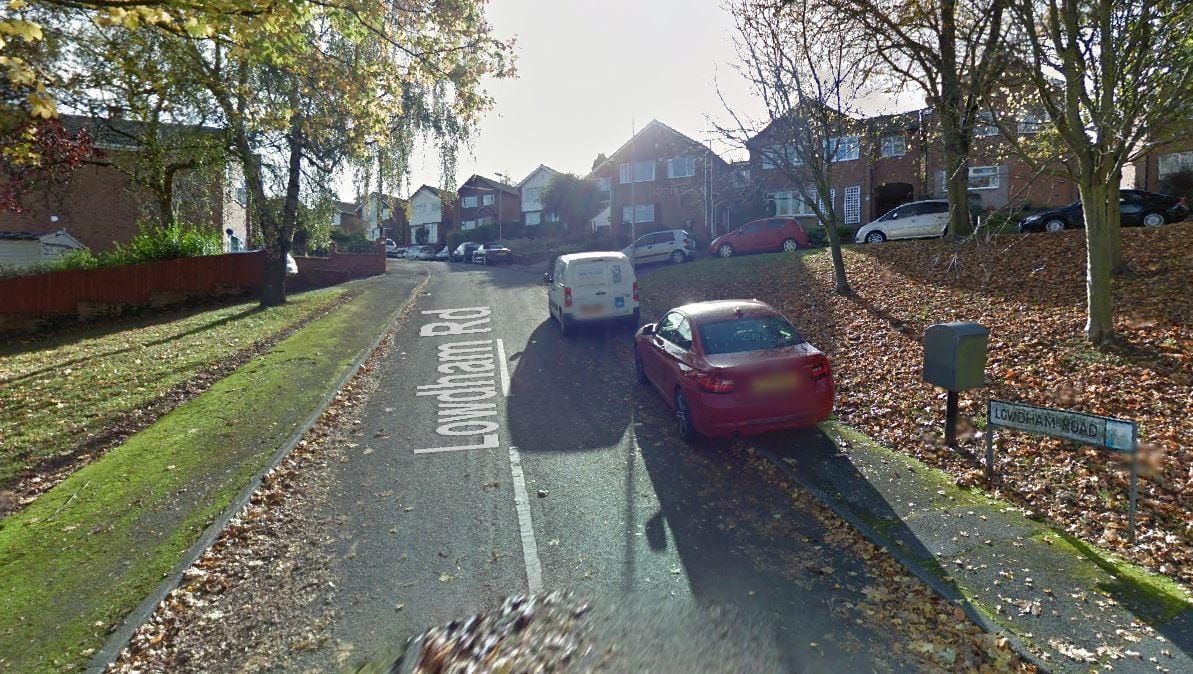
A further three burglaries in Melton Road and Patrick Road, West Bridgford, and Lowdham Road, Gedling, took place between October 9 and 17 and are believed to be linked.

Detective Sergeant Charlotte Henson, of Nottinghamshire Police, said: “Burglary is an incredibly traumatic crime for people to go through and Nottinghamshire Police investigates all reports thoroughly.

“If you have any information about the incidents above, please contact 101 and quote reference number 78 of 17 October 2019.

“If you have been a victim of burglary, please contact us as soon as possible so that we can take the necessary steps to catch those responsible.”