This list contains only the roadworks considered to be most likely to cause delays on key routes as well as those involving road closures and temporary traffic lights.
The list is not exhaustive and does not feature some minor or emergency repairs that come up after publication.
Other roadworks may finish or start before schedule or be cancelled altogether.
All information is from Highways England, local authorities and utility companies.
People struggling with debt across Gedling borough will now be given 60 days to get their finances back on track without debts piling up, worrying letters or enforcement action, under a new government scheme.
The scheme – knows as ‘Breathing Space’ – gives people protections from their creditors for 60 days, with most interest and penalty charges frozen, and enforcement action halted. Those struggling will also receive professional debt advice to design a plan which helps to get their finances back on track.
The protections will also be available for people in mental health crisis treatment – for the full duration of their crisis treatment plus another 30 days.
Joanna Elson CBE, chief executive of the Money Advice Trust, the charity that runs National Debtline and Business Debtline, called the launch of the scheme ‘a major milestone’.
She said: “We are pleased to be supporting the launch of the Breathing Space scheme, which is a major milestone in improving the help available to people struggling with debt.
“Breathing Space will provide a powerful incentive for people in debt to seek free debt advice – with vital protections from interest, charges and creditor action to give people the time and space they need to begin to deal with their financial difficulty.
PICTURE: Deposit Photos
“Free debt advice has never been more important than in helping households to recover from the impact of Covid-19 – and Breathing Space will strengthen our ability to help people at this crucial time. We look forward to playing our role in making the scheme a success.”
John Glen, economic secretary to the Treasury, said: “We’re determined to tackle problem debt, but it is incredibly hard to get your finances back on track when your debts are piling up and you’ve got creditors at the door.
“This scheme will give people a breathing space from charges, distressing letters and bailiff visits, so they can tackle their problem debt with support from a professional debt advisor.
“And to help people going through a mental health crisis, which is too often linked to financial problems, we’re bringing in stronger protections lasting beyond the end of their crisis treatment.”
Breathing Space can be accessed by contacting a professional debt advisor, or by an approved mental health professional for someone in a mental health crisis.
Most debts will qualify for the scheme, including credit and store cards, personal and payday loans, overdrafts, utility bills, rent and mortgages arrears and government debts like tax and benefits.
Universal Credit overpayments will be included in the Breathing Space scheme from day one and Universal Credit advances and third-party deductions will be included on a phased basis as early as possible after the policy starts.
The Treasury said the scheme will also benefit creditors, with more than £400m in extra debt repayments expected in the first year of the scheme, as people are supported to get their payments back on track.
Martin Lewis, founder of MoneySavingExpert.com and the Money and Mental Health Policy Institute, added: “Debt is far more than just a financial issue. It’s a major cause of relationship breakdown, can hugely diminish people’s well-being, and sadly leaves 100,000s at risk of taking their own lives.
“That’s why Breathing Space is so important. It’s a win-win-win; for individuals who get their finances back on track, creditors who’ll recoup more cash in the long run, and the economy as there will be less financial catastrophe.”
On Thursday, May 6, people across Gedling borough will head to the polls to have their say on who represents them on Nottinghamshire County Council.
Elections for the council take place every four years and all 70 seats will be contested across the county.
People visiting polling stations will be asked to wear a mask – unless they have a valid exemption, take along their own pen or pencil and adhere to social distancing.
Councillors on Nottinghamshire County Council are responsible for making decisions on running services in Gedling borough, which include education, transport, planning, parks, leisure, fire and public safety, social care and waste management.
Who was elected on to Nottinghamshire County Council following the 2017 election?
Pauline Allan (Labour) Stuart Bestwick (Conservative) Kevin Doyle (Conservative) Tadeusz Jone (Liberal Democrat) Paul Key (Independent) Jim Norris (Green Party) Michael Payne (Labour) Jason Stansfield (Liberal Democrats) Don Strickland ( Independent)
Arnold South
John Clake (Labour) Andrew Ellwood (Liberal Democrat) Michel Flor-Henry (Conservative) Helen Greensmith (Conservative) Jim Stuart (Green Party) Robert Swift (Liberal Democrat) Michelle Welsh (Labour)
Calverton
Richard Blinstone (Green Party) Maggie Dunkin (Liberal Democrat) Boyd Elliott (Conservatives) Mike Hope (Independent) Sabbir Hossain (Labour)
Carlton East
Mike Adams (Conservative) Nicki Brooks (Labour & Co-Operative Party) John Flynn (Liberal Democrat) Paul Manington (Green Party)
Carlton West
Ged Clarke (Conservative) Jim Creamer (Labour) Andrew Dunkin (Carlton) Charlie Godwin (Gedling) Errol Henry (Labour) Paul Hughes (Liberal Democrat) Rosey Palmer (Green Party)
Newstead
Chris Barnfather (Conservative) Matthew Spurr (Labour) John Sutherland (Ravenshead) Barbara Vince (Green Party)
Will my normal polling station be in use?
Make sure you check the location of your polling station before setting off as you may need to go to a different place to vote this year. You can check this on your poll card or at wheredoivote.co.uk You must vote at your polling station – you cannot vote at another station.
Will much be different in my polling station due to Covid-19?
You must not attend the polling station if you have symptoms of COVID-19 or have been asked to self-isolate due to a positive test or contact tracing. You can still cast your vote by applying for an emergency proxy before 5pm.
A face covering must be worn inside the polling station unless you are exempt.
Please bring a pen or pencil to mark the ballot paper. Pencils will also be available in the polling station and will be sanitized after each use.
There will be restrictions on the number of voters admitted to a station at any one time.
Social distancing will be enforced while queuing and throughout the voting process. Please adhere to any one-way systems, floor markings, signage, and any instructions from polling station staff.
Hand sanitizer will be provided upon entry and exit of the polling station. Voting booths, pencils, door handles and frequently touched surfaces will be cleaned regularly.
There will be a clear perspex screen to protect staff and voters at each voting table
These measures may mean you have to queue or wait for longer than usual to be able to cast your vote. Try to avoid busy times if you can, like before and after work, after the school run and lunchtime.
Gedling Eye will be covering the local election throughout the weeks leading up to May 6 and also be covering the results as they happen on Friday, May 7.
Parents in Gedling borough may now be able to save a small fortune on the cost of school uniform thanks to a new law.
The Children’s Society estimates parents spend an average of £337 on uniform for each child at secondary school, and £315 for kids at primary school.
But a new law passed last week will mean schools across Gedling borough and England will have to comply with legally-binding guidance aimed at ensuring uniforms are affordable.
The Bill also includes measures on encouraging second-hand uniform, schools’ arrangements with suppliers, and ensuring parents have access to clear information about uniform policies.
Their was cross-party support for the new law, which recognised the costs parents face for school uniform, particularly for branded items, and the statutory guidance will tell schools to consider high street alternatives.
School uniforms are important in establishing the right ethos in a school. They also help to improve behaviour and a sense of belonging and identity. But we want to be sure they are affordable for parents.
This new law will help to save families money and ensure the cost of a blazer or shirt is never a barrier to accessing the best possible education.
The new law, introduced as a Private Members’ Bill by Mike Amesbury MP and given Government backing, enables the Government to set statutory guidance for schools to consider about costs for uniforms.
The Department will publish the statutory guidance in the autumn this year, which will focus on ensuring costs are reasonable for families of all backgrounds and giving parents the best value for money.
It will also advise schools to make sure that when they take up contracts with uniform suppliers, they are competitive and transparent in order to keep costs down.
The Government is committed to ensuring no family is deterred from applying to a school due to the costs for its uniform. Once guidance is published, schools will be required by law to consider it when developing their uniform policies.
Mark Russell, Chief Executive of The Children’s Society, said: “We are thrilled this new law has passed and we thank Minister Gibb and the Department for Education for their support. This legislation will be vital in ensuring that school uniforms become more affordable for families across the country.
“Young people told us back in 2014 that high-priced school uniforms had a huge impact on their ability to make the most of their education. We hope this new law will make children feel more equal to their classmates and make life easier for struggling families.”
An Extinction Rebellion protestor blocked a road in Mapperley earlier today (May 1) in a bid to ‘make politicians take notice of the climate crisis’.
Risking her life, 72-year-old Pippa McKeith, began her protest at 11am by sitting in the road at the top of Woodthorpe Drive on Mapperley Top.
Ms McKeith said “I know this will annoy those people I’m holding up and I’m so sorry – but I want politicians to wake up and take notice of the climate crisis.
“How come Prince Philip and David Attenborough have been talking about our impact on the natural world for decades yet governments are still ignoring what they’ve been saying?”
The Government’s own Committee on Climate Change said in its latest report [1] that the government has failed on 17 out of 21 of it’s own ‘progress indicators’, and that just two of 31 key ‘policy milestones’ have been met since Parliament declared emergency.
Ms McKeith, who lives in the Arboretum, added “I’m frustrated, I’m angry, and I’m frightened. I’m sitting in the middle of the road because I’m terrified that not enough is happening. I’ve signed petitions, I’ve written letters; I just don’t know what else I can do!”
PICTURED: Pippa McKeith protesting in Mapperley
Extinction Rebellion protestors also stopped traffic in Nottingham city centre and West Bridgford earlier this morning as part of a UK-wide ‘Rebellion of One’ protest involving 200 members of the action group.
A spokesman for the group said: “Greta Thunburg showed that one person can make a difference, and this is what the 200 sitters across the UK in 49 different cities are trying to do as part of the “Rebellion of One”.
“With lockdown lifting, and despite the new protest laws, concerned citizens have today resumed action against against what the Prince of Wales Corporate Leaders Group called the UK Government’s inadequate plans to tackle the climate crisis.”
The group have also been protesting this week outside County Hall in West Bridgford ahead of the May 6 election.
Care home residents in Gedling borough will be able to leave the home to make visits outdoors and not have to self-isolate for 14 days afterwards, the government says.
From Tuesday, May 4, residents on trips out must be accompanied by either a member of staff or one of their two nominated visitors and they must follow social distancing throughout.
They cannot meet in groups or go indoors, except for the use of toilets, and public transport should be avoided where possible.
Residents must be accompanied by either a care worker or nominated visitor and follow the government guidelines of washing hands regularly, keeping social distance and remaining outside, in line with step 2 of the roadmap.
The changes come as the data shows cases continuing to fall meaning it is now much safer for care home residents, who are among the most vulnerable to Covid-19, to leave their homes. Keeping visits outdoors will ensure any risk is minimised as much as possible.
Pensioners in care homes had been forced to self-isolate if making a trip outdoors
Prime Minister Boris Johnson said: “We know how challenging this time has been for care home residents, so I am pleased that they can now leave their homes to reunite with their loved ones outdoors.
“With the data continuing to head in the right direction and as restrictions ease, it is my priority to keep increasing visits for residents in the coming weeks in a safe and controlled way.”
Minister for care, Helen Whately said: “I know residents and their families have found the restrictions on trips out of care homes incredibly difficult. This is one more step towards getting back to normal, while protecting care homes from the continued risk of Covid-19.
“As part of this interim update before the next stage of the roadmap, care home residents will also be able to leave to spend time outdoors. I know this has been long-awaited for those who haven’t had a chance to enjoy trips out. I look forward to encouraging more visiting and trips out in future as we turn the tide on this cruel virus.”
The latest flyover video from the council shows progress made over March and April on roundabouts, earthworks, drainage and raising ground levels.
Work constructing the four-arm roundabout close to the old Gedling Colliery Yard is now almost complete with kerb laying works now finished and much of the surfacing material laid.
Further north, the five-arm roundabout which will link the GAR to Arnold Lane also nears completion.
Ground levels have been brought up to level meaning that construction teams will soon be able to begin placing down the road construction layers.
At Burton Road, you will see that landscaping works along the verges have begun, and 3.8km up the road utility service diversions and drainage works have continued at the new junction on Mapperley Plains.
Gedling House Woods
The construction site next to Gedling House Woods may look narrow in the video compared to other areas of the site, but the road itself will actually be wider at this section and will feature a crawler lane.
It’s all intentional to preserve as much of the woodland as possible, and most recently on site, construction teams have finished installing 650 soil nails to support the steep slope between the GAR and Gedling House Woods.
The new road, which is part of a £40 million scheme, is set to open in the autumn of 2021.
It is being introduced to ease traffic issues through Gedling village and serve the new Chase Farm housing development.
The 3.8km single carriageway will link the A612 Trent Valley Road and Nottingham Road to Mapperley Plains – running parallel with the A6211 Arnold Lane.
Voters across Gedling borough questioned local council candidates on Thursday (29) evening on their plans to combat climate change if elected on 6 May.
The issue remains especially important to electors in the borough who are surrounded by areas of natural beauty such as Sherwood Forest and the nearby Peak District.
The event was chaired by the chair of the Friends of Gedling House Woods – Frank Knowles.
Labour’s incumbent councillor, Jim Creamer, is hoping for re-election to the Carlton Hill ward.
He was joined by the Liberal Democrat candidate for the same ward, Paul Hughes.
Margret Vince of the Green Party is standing for a seat representing Newstead.
All eight Conservative candidates, and those standing as independents, had prior commitments.
No candidate downplayed the issue of climate change, Mr Hughes stating that it – as well as resulting biodiversity loss – is the “greatest long term threat to mankind”.
“We must take urgent action”.
Ms Vince agreed, calling it the “biggest threat to humanity”. The issue should be “informing all County Council policies”.
She claimed that neither Conservative nor Labour councillors had done enough thus far to combat overall harm to the planet, suggesting that Green Party representatives would “hold them to account”.
Mr Hughes called for Nottinghamshire County Council to immediately declare a climate emergency, stating that the Coronavirus pandemic gives us an opportunity so as not to return to “the old normal”, building on the reduced carbon emissions seen during lockdown.
Mr Creamer emphasised how councils should “lead by example”, ensuring a “healthy, clean, and safe” local environment.
Moreover, he claimed that the Conservative’s current commitment for net zero emissions by 2030 was not initially voted for by them and was put forward by Labour initially.
Also urging the council to declare an emergency, Ms Vice expressed her concerns regarding the underlying reasons for the climate crisis, namely a “profit based economy” and “reckless consumerism of the environment”.
Also a common feature of the candidates’ aims was the electrification of the main midlands rail line.
Ms Vince said that this was “a long time coming” as she also voiced her opposition to HS2 and the planned expansion to East Midlands Airport.
Moreover, the consensus was that pensions must be diversified from fossil fuel sources.
An audience member lamented, “I hate the fact that my pension is ruining my grandchildren’s future”.
Another attendee added that she thought that this could be mitigated if the government would be yet “more positive about green investment”.
In addition, most candidates suggested that changes needed to be implemented at the site of the Ratcliffe-on-Soar incinerator.
Mr Hughes denounced it as a “very messy way of generating energy”.
Ms Vince similarly highlighted how the process was “not great for air quality”, and raised concerns about the road transport required in order to transport waste with which to “feed the beast”.
Much of this burnt material could also be recycled.
Local recycling as a whole would be made a lot easier, all candidates said, if existing closed centres were reopened, Mr Hughes calling the council’s Veolia contract “nothing short of a disaster”.
Ms Vince suggests the implementation of wind turbines or solar panels on the incinerator site whilst preserving its trademark towers.
Whilst Mr Hughes agreed, however, Mr Creamer raised concerns about the council’s sway over a private company.
This is despite his preference for it “not to be there”. In some ways, “it’s nothing to do with us”, but he would “sooner have incineration than landfill”.
Uniper runs the power station site and submitted plans for a new incinerator worth £330m in September 2020.
On electric vehicles, all candidates called for more charging points in all council managed car parks, with Ms Vice stating that they should be made a standard feature of all new building developments.
Mr Creamer also suggested that they should be provided in the staff car parks of local businesses.
Hydrogen vehicles, on the other hand, are not a flawless solution, professed the candidates. The hydrogen manufacturing process produces carbon in turn.
A public information campaign was agreed upon by all candidates to this effect, informing firms as to what positive changes they can implement.
This also applies to schools, candidates agreeing that council officers should liaise with comprehensive establishments and academies in order to create informative activities and organise speakers which would convince the next generation of the planet’s perilous state and what they could do to help.
Mr Creamer would like to see children “telling their parents what they’re doing wrong”.
Notwithstanding Mr Creamer’s admission that Gedling is “not exactly cycle friendly” being a “little on the hilly side”, another common aim was to improve and add to the region’s cycling infrastructure.
Ms Vince suggested more showers in work places for those travelling to work via bicycle.
Lower speed limits were also proposed by all, lowering overall emissions and making local parks safer to visit.
There is good news for those seeking Covid-19 jab appointments locally in Gedling borough.
Earlier this week, residents in the borough had been angered after discovering all appointments for the Covid jab were only available 20 miles away, with no option to book one locally on the new NHS appointment system.
When using the previous Swiftqueue system people requiring a jab could book a slot at the Richard Herrod Centre in Carlton. But since Swiftqueue was replaced by a national NHS appointment booking system, jab appointments were only available in Derby, Sheffield and Leicester.
Following complaints from residents, Gedling Borough Councillor Henry Wheeler contacted chief executive of Nottinghamshire Healthcare NHS, Dr John Brewin seeking a resolution.
People were being vaccinated at the Richard Herrod Centre in Carlton
Mr Brewin said he was ‘aware of the issue’ and had good news to pass on regarding local appointments.
Mr Brewin told Councillor Wheeler: “Over the last two weeks our programme has hit its peak for vaccine second doses, hence we have had to prioritise our appointment slots for these.
“There have therefore only been a very small number of slots available for first doses. Hence your constituents have been offered appointments further afield.
“Nottingham was a few weeks behind other counties at the start of the vaccine programme, hence this issue is not the same elsewhere.”
Mr Brewin added: “The good news is that this peak is passing and we will have significantly more first dose appointments from next week and onwards.
“It also looks promising for longer term vaccine supply and hopefully we will be able to avoid such situations in the future.”
Councillor Henry Wheeler said: “I am really pleased that this situation will be resolved and from next week significantly more local appointments will become available”.
“Local residents shouldn’t be forced to travel long distances to get an appointment”.
Co-op stores in Gedling borough will today begin removing their ‘bags for life’ from sale.
The bags are expected to be gone completely by the end of the summer, once stock runs out.
Jo Whitfield, chief executive of Co-op Food, said: “Increased use of bags for life has led to a sharp rise in plastic use.
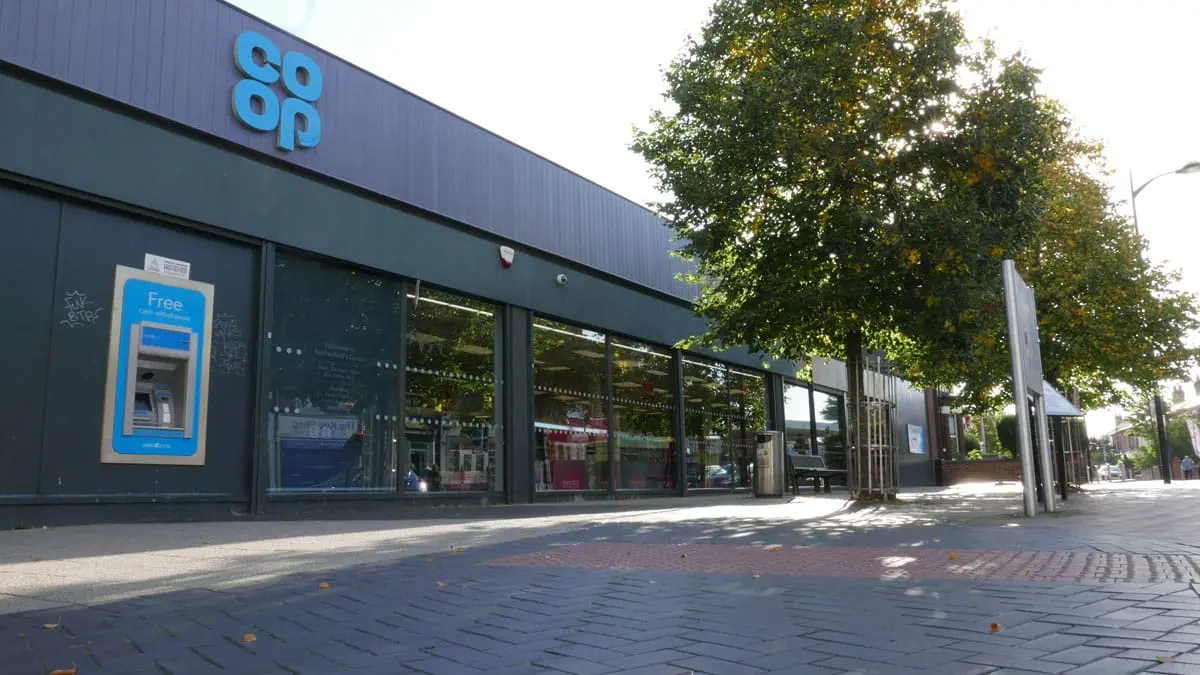
PICTURED: The Co-op store on Netherfield (PHOTO: Neil Slack Photography)
“With over 1.5 billion bags sold each year by retailers, this remains a massive issue for our industry as many shoppers are regularly buying so-called bags for life to use just once and it’s leading to a major hike in the amount of plastic being produced.”
The Co-op is now calling for ‘greater transparency’ around the tracking of the impact of the carrier bag levy.
Ms Whitfield said: “We believe that it should be mandatory for all retailers to report on the sales of all of their reusable bags, not just single-use bags.
“Right now, Co-op is the only major retailer to report on all of the bags it sells. This policy would enable a fuller understanding on the impact of the levy and its true effect on shopping behaviours when customers are making decisions at the tills.”
The price of single-use plastic bags will double next month to 10p.