Home Blog Page 5

NCT launches £2 evening bus fares as summer nights heat up

Summer’s here, the evenings are stretching out, and getting around Notts at nighgt just got cheaper for everyone in Gedling borough.

NCT is rolling out a brand new £2 Evening Single fare — meaning heading out after work or making last‑minute plans won’t hit your wallet quite so hard.

Launching Sunday 21 June, the new ticket cuts the cost of a standard single from £3 to £2 during evening hours, knocking a third off the usual price. It’s designed to make spontaneous nights out, meet‑ups and after‑dark exploring easier than ever.

The fare is valid from 7pm until the last bus, every night, and can be bought with cash, contactless, or through the NCTX Buses app. It covers the entire NCT network, so whether you’re off for dinner, catching a show, or just fancy a wander while the sun hangs around a bit longer, you’re sorted.

NCT says the move aims to boost evening travel and support Nottingham’s bars, restaurants and venues at a time when many are feeling the pinch.

“We’re slashing the price of an evening journey by a third,” said Anthony Carver‑Smith, NCT’s Head of Marketing & Projects. “It’s ideal for making the most of the lighter summer nights, especially as the hospitality sector faces cost pressures.”

He added that a return trip after 7pm will now cost just £4 — a tidy saving compared to an all‑day ticket — and hopes the lower fare will encourage more people to hop on board.

Alex Flint, CEO of It’s in Nottingham, welcomed the move: “Nottingham is known for its vibrant nightlife and brilliant city centre venues. But with people cutting back on socialising, businesses are feeling it. Affordable, reliable public transport is key to keeping the city buzzing.”

The most common development disputes and how to avoid them

Development disputes rarely emerge without warning. In most cases, the conditions that lead to conflict are present from the earliest stages of a project, such as in the contracts, the planning assumptions, or the relationships between neighbouring landowners. Understanding where disputes most commonly arise is the first step towards preventing them.

  1. Planning Delays and Regulatory Challenges: Managing Uncertainty Early

Planning has become one of the most significant sources of risk in UK development. As Urbanist Architecture’s 2026 analysis of planning delays highlights, only around 20% of major applications are decided within the statutory 13-week timeframe, meaning delays are the norm rather than the exception. Changing environmental obligations, stakeholder objections, and the ongoing reforms to the National Planning Policy Framework add further layers of uncertainty. Developers who treat planning as a linear process rather than a dynamic one tend to be caught out. Proactive engagement with local planning authorities, early environmental assessments, and realistic programme contingencies reduce the risk of costly disputes arising from planning-related uncertainty.

  1. Construction Delays and Contractual Disputes

Contract disputes are among the most common and most expensive forms of conflict in UK development. Disputes over extensions of time, liquidated damages, variations, and contractor performance frequently arise when contracts are drafted without sufficient precision or when notice requirements are not followed. As Construction Management’s review of legal developments for 2025 notes, the rate of construction disputes rose noticeably in 2024, driven partly by contractor insolvencies and supply chain instability. Clear contract drafting, rigorous project management, and strict compliance with notice obligations are the most effective tools available to parties seeking to avoid this category of dispute.

  1. Rights of Light, Easements and Neighbouring Landowner Claims

Securing planning permission does not end a developer’s exposure to legal challenge. Neighbouring landowners may have rights of light, the benefit of restrictive covenants, or easements that a proposed development would interfere with, and these claims can emerge well into a project’s construction phase. Many of these issues sit at the intersection of planning policy and real estate law, meaning developers must consider both public and private legal rights before construction begins. Early technical assessments, rights of light insurance, and direct engagement with neighbouring parties can prevent disputes that would otherwise escalate into injunctions or damages claims.

  1. Resolving Disputes Before They Reach Court

When disputes do arise, litigation is rarely the most efficient solution. Adjudication offers a fast, binding outcome particularly suited to construction disputes. Mediation preserves commercial relationships and allows parties to reach pragmatic solutions that a court could not impose. Expert determination is well suited to technical disagreements over valuation or defects. Developers recognise that investing in early dispute resolution mechanisms, and selecting the right one for the nature of the conflict, protects both the project programme and the relationships that underpin future opportunities. The best disputes are those that never happen. Getting the foundations right, legally, contractually, and

Why growing businesses shouldn’t ignore their bookkeeping

As a business grows, so does the complexity of managing its finances. What was manageable on a spreadsheet with a handful of transactions a month becomes considerably harder to maintain accurately as turnover increases, headcount rises, and financial obligations multiply. Bookkeeping is rarely the most exciting part of running a business, but neglecting it is one of the most reliable ways to undermine growth.

  1. Bookkeeping provides the financial visibility needed to grow

Accurate, up-to-date records give business owners a clear picture of where money is coming from, where it is going, and what the trajectory looks like. Without that visibility, it is easy to misread the health of a business, such as confusing revenue with profit, or missing a cash flow problem until it becomes a crisis. As transaction volumes grow and revenue streams diversify, the margin for error narrows. Businesses that maintain clean financial records can spot trends early, identify underperforming areas, and respond to changes in their financial position before they become significant problems.

  1. Accurate financial records support better business decisions

Every significant business decision, like hiring a new member of staff, investing in equipment, or expanding into a new market, depends on having reliable financial information. Decisions made on the basis of incomplete or outdated records carry real risk: budgets get miscalculated, cash flow gets overestimated, and growth plans get built on assumptions rather than facts. Up-to-date bookkeeping removes that uncertainty. It gives owners and managers a credible, current picture of what the business can and cannot afford, making planning considerably more reliable.

  1. Staying compliant becomes more important as businesses scale

Growth typically brings additional financial responsibilities. Payroll obligations, VAT returns, corporation tax filings, and employee expenses all require accurate underlying records to be handled correctly. Errors at this stage can result in penalties, interest charges, and unwanted attention from HMRC. The introduction of Making Tax Digital for Income Tax, which comes into force from April 2026 for sole traders and landlords earning above £50,000, adds further compliance requirements, including quarterly digital reporting, that make organised, consistent bookkeeping more important than ever.

  1. When to consider professional support

There are clear signals that a business has outgrown managing its finances internally. Increasing transaction volumes, multiple revenue streams, VAT registration, or simply having no time to keep records up to date are all indicators that internal capacity is being stretched. According to research cited by Barclays in a March 2026 press release, UK small businesses lose an average of 24 working days per year to financial administration, the equivalent of working 13 months for 12 months’ pay. That is time most growing businesses cannot afford to spend on administrative tasks rather than strategy, sales, or operations. Professional bookkeeping services for growing businesses help reclaim that capacity while making sure that records remain accurate, compliant, and genuinely useful for decision-making.

Strong bookkeeping is the financial foundation on which sustainable growth is built. Businesses that treat it seriously from an early stage are better placed to scale confidently, manage compliance, and make decisions they can trust.

Knife‑wielding dealer locked up after brutal 1am Daybrook street attack

A Nottingham drug dealer has been locked up after stabbing a man in the chest during a late‑night row in Daybrook over a debt.

Police raced to Cornwall Road at around 1.45am on April 3, 2025 after reports of a street fight. They found a man in his 20s bleeding from a stab wound and suffering a collapsed lung. He was rushed to hospital for emergency surgery.

Detectives quickly identified 21‑year‑old Marshall Williams‑Handley as the knifeman.

When officers raided a property in Daybrook the next day, they seized the clothes he’d worn during the attack — along with wraps of Class A drugs and a dealer’s list stuffed inside a bag.

PICTURED: Marshall Williams‑Handley

Williams‑Handley, of Taylor Way, Nottingham, was later arrested and charged. He denied stabbing the victim but was convicted of wounding with intent and possessing a knife after a trial in December. He also admitted dealing heroin, crack cocaine and cannabis.

At Nottingham Crown Court today (11), he was handed an extended sentence of ten‑and‑a‑half years.

Detective Constable Michaela Williams said the violence erupted after a fallout “about drugs”.

She added: “The incident escalated when Williams‑Handley produced a knife and stabbed the victim in the chest. He required emergency surgery and continues to suffer both physically and psychologically.

“Williams‑Handley was dealing drugs on the street and carrying a weapon he was clearly prepared to use. As we so often see, the presence of a knife turned this into something far more serious.

“The offender is fortunate his victim wasn’t even more seriously hurt. We know people in the area witnessed the incident and were understandably concerned. I hope this sentence shows how seriously we treat violent crime.”

Residents to have their say about where hundreds of homes could be built near their villages

Hundreds of homes could soon be built in leafy and rural areas across Gedling borough – and residents can have their say.

Gedling Borough Council passed through its evolving draft local development plan on Wednesday, June 10, which will now be sent off for examination by the government.

The plan has outlined areas that could be used for thousands of properties.

All local authorities responsible for providing housing, or land for housing, use something called the ‘standard method’ for calculating the need in their areas.

With extra pressure on authorities from the Labour Government to boost housing targets, this number for Gedling is 638 homes per year – a total of 11,484 new homes needed over its local development plan period to 2043.

With existing housing allocations in the borough and various housing developments either currently under construction or with planning permission, this large number drops down to 6,045 new homes needed by 2043.

Cllr Andy Meads said the plan would result in an extra [potential] 15,000 cars on the road every morning.”

To achieve this, the authority has been working to find suitable land where these several thousand homes could be built and has now narrowed the areas down, with a particular focus on as many homes as possible being part of Nottingham’s urban sprawl.

But some allocations are bigger than others, and could result in rural villages and parts of towns growing by several hundred homes.

Residents are invited to have their say during a six-week consultation period from June 22 to August 3.

The parts of the borough with the largest proposed housing allocations are:

  • Land south of Lime Lane, near Dorket Head and Red Hill – 925 homes
  • Top Wighay Farm site near Hucknall and Linby – 880 more homes added to the existing development under construction
  • Silverland Farm on Ricket Lane, Ravenshead – 750 homes
  • Mapperley Golf Course – 750 homes
  • Mapperley Plains East – 650 homes
  • Teal Close extension, near Stoke Bardolph – adding 500 homes to the existing development under construction
  • Park Road, Calverton – 500 homes added to the existing development that is under construction

Other smaller allocations include:

  • New Farm, Mansfield Road, Redhill – 375 homes
  • Westhouse Farm, Bestwood Village extension – 300 homes added to the existing development that is under construction
  • Mansfield Lane, Calverton – 170 homes added to the existing planning permission for the area
  • Willow Farm extension – adding 140 homes to the existing development that is under construction
  • The former Sherwood Academy, Gedling – 125 homes
  • Kighill Lane, Ravenshead – 120 homes added to the existing allocation
  • Land west of Nottingham Road, Ravenshead – 50 homes

Concerns have already been brewing over certain sites being used for housing, where existing flooding, parking and infrastructure problems mean some residents fear their areas will not ‘cope’ with an influx of people and cars.

Councillor Jane Allen (Con) said Calverton was at “just about saturation point” and there was “awful strain on [the] village” with parking issues, traffic congestion, long GP waits and flood risks.

She also felt like “an accident is waiting to happen” in the congested car parks in the centre and that her village was ‘losing its character’.

Regarding Mapperley Golf Club and the former Gedling School site,  Councillor Andrew Ellwood (Lib Dem) said “we’re not talking about the loss of a couple of fields of turnips and cabbages, but vital leisure and recreational facilities” and called for part of the school site’s land to be retained for community use.

One resident, Nigel Woolley, asked the council in Wednesday’s meeting: “Why do the council think it is a good idea to build houses on Mapperley golf club site given the cost of mitigating flood risk, which was apparently a significant factor [in scrapped plans] in 2011 when this was last considered? Explain now why this is viable?”

Councillor Roy Allan (Lab) reiterated that the developing plan was based on a “settlement hierarchy”, where as much as possible is aimed to be near the main and built-up Nottingham area, where detailed assessments of the golf club site were not available in the past.

Cllr Allan stated the proposals would mean the borough would “still have 74 per cent greenbelt land”.

Cllr Andy Meads (Ind) said: “Anyone that uses Carlton Hill, Mapperley Top, Daybrook Square, Redhill island, the roads around Bestwood, Papplewick, Linby, Large Farm traffic lights, in the morning knows how congested these roads are now and this plan means an extra [potential] 15,000 cars on the road every morning.”

According to Cllr Kyle Robinson-Payne (Lab), he has spoken with multiple residents, particularly young families, who say they want to stay in Gedling but there “isn’t enough housing”.

He added the draft development plan is protecting residents from “speculative developments”, as it informs housebuilders where they can build and stops them proposing sites that are not suitable.

He urged residents and councillors to “please bring forward” any extra evidence they have that Mapperley Golf Club is not suitable for housing.

You can have your say here: https://gedling.inconsult.uk/system/home

REVEALED: ‘Excessive’ spending of more than £17,000 on chauffeurs by the region’s mayor

The spending of more than £17,000 on chauffeurs by the region’s Labour mayor has been dubbed “excessive, shocking, eyewatering and unjustifiable” by opposition parties.

This follows extensive work into the amount of money spent by Claire Ward, East Midlands Mayor, on chauffeurs since March 2025.

Data published by the East Midlands Combined County Authority shows that in the 13 months from March last year to April 2026, Ms Ward has spent £17,733 on chauffeurs described as “luxury, executive, premium and high-end”.

In March this year, we reported on data for March to August 2025, with no further data available at that time, showing £1,508 spent on chauffeurs.

Following this, in May,reporters successfully lobbied for the remaining data up until February 2026 to be published, showing a further £7,820 on chauffeurs.

Now data for March and April 2026 has been made available showing a further £8,405 on chauffeurs for Ms Ward in those two months alone – nearly as much as the previous year combined – totalling £17,733.

This is more than eight months worth of wages – before tax – for the lowest paid workers at the four councils which form the combined authority.

Here are the rates for the lowest paid employees at each of the four constituent councils which make up the combined authority:

The new data includes 14 different payments for chauffeurs, with the lowest being £330 and highest being £990.

Ms Ward has an annual salary of £93,000 and can also claim expenses.

Previously, the combined authority detailed the company name of the chauffeur, namely Pinnacle, in Stapleford, and Blacklane, in the USA, but it no longer specifies a company – merely listing the incorrectly spelt “chauffer”.

For the third time Ms Ward has been asked to respond on her use of chauffeurs she has chosen not to do so, with a statement provided by a spokesperson for the combined authority instead.

The statement details the need to make efficient use of time, retain safety and to attend meetings across a broad geographical area – covering a combined 1,900 square miles.

It says Ms Ward does also make use of her personal car and public transport, with various claims also made on the Government procurement card for parking fees.

Political parties across Derbyshire and Nottinghamshire have made clear that while there are security and time constraints to contend with, the amount of expenditure on chauffeurs by the politician with the region’s public transport brief is too much and, at best, not a good look.

Councillor Alex Dale, Conservative opposition leader on Derbyshire County Council, said: “While the Mayor has an important role to carry out across a large region, a spend of more than £17,000 on chauffeur-driven travel in just 13 months strikes me as very excessive. 

“Residents rightly expect elected representatives to provide value for money, particularly at a time when many families are feeling the squeeze from the rising cost of living. 

“I struggle to see how this level of spending can be justified and why travel by car or public transport, like everyone else, hasn’t been considered in these cases.” 

Councillor Lucy Care, Liberal Democrat group leader on Derby City Council, said: “It seems a lot. I would like to know more about the purpose of the journeys and whether those journeys could have been taken by more sustainable modes of transport. 

“She is supposed to be supporting cycling and public transport use. It would be good that as far as possible she is leading herself in doing that.

“There can be good reasons for needing to be driven somewhere. She is obviously a high-profile person and if she is doing a public role she needs to be accompanied, but how many of these visits were needed for the job, how many were for publicity purposes and for how many could she have been accompanied on public transport?”

Councillor Rachael Hatchett, speaking on behalf of the Green Party group on Derbyshire County Council, said: “I appreciate that Mayor Claire’s time is precious and I also appreciate there are security considerations in her travel, but it means that the Mayor is isolated from the realities of everyday life for public transport users and I would urge her to improve our bus network so people have better options than using their cars, especially at a time of high fuel costs.

“It would be good to see Mayor Claire mixing public transport with her use of chauffeur-driven cars.”

Councillor Teresa Cullen, Broxtowe Alliance member of Nottinghamshire County Council, said: “I do not understand. Unless she has lost her driver’s licence, why does she need to be taken everywhere by chauffeur? That is a shocking amount of money to claim for a chauffeur.

“I can’t see any justification for it. I am not the Mayor and I don’t have to cover the whole of the East Midlands, but I have been a councillor since 2015 and I have never claimed any expenses, let alone for a chauffeur to take me anywhere.

“When I was Mayor of Broxtowe I refused to have a taxi or a chauffeur to take me anywhere because I thought it was a waste of public money.

“I do think it is a waste of money. That is an eye-watering sum of money to spend on chauffeurs. That sum of money could have paid for something that could have made a difference.

“In my county council ward in Beeston Central and Rylands we have got a real problem with our bus service, run by a charity, who simply do not have the money to run it efficiently, so people are constantly contacting me to say their bus hasn’t turned up and can’t get to doctor’s appointments or to work.

“£17,000 would have probably been enough money to make that bus service – the 18 bus route from Stapleford to Nottingham, run by Nottingham Community Transport – efficient for a year and that is what is at stake. It is shocking.”

Cllr Cullen, who travels across Nottinghamshire in her councillor role and also as chief executive of a charity, said: “It isn’t a waste of my time. I have Bluetooth and can have conversations and it is a great time to consider things while concentrating.

“For £17,000 you could probably employ somebody as an actual driver.

“You can get across Nottinghamshire and Derbyshire by train and you can work easily on a train and it is more efficient than the back seat of a car.”

Cllr Stephen Reed, deputy leader of the Reform UK administration on Derbyshire County Council, said: “The Mayor was elected by the people of Nottinghamshire and Derbyshire and it is up to her in her role as Mayor how she spends their money.”

A combined authority spokesperson said: “EMCCA is a large regional authority covering a population of 2.2 million people. 

“The Mayor of the East Midlands, as a significant elected figure in the region, is expected to represent the region at a range of meetings, events and engagements with external partners and stakeholders across its geography, with a particular emphasis on attracting new investment into the region and supporting the local economy whenever possible. 

“Travel arrangements are considered on a case-by-case basis, taking into account operational requirements, efficiency, safety, confidentiality and the ability to work while travelling. 

“While we make every effort to arrange engagements in the same area where possible, there are occasions when the Mayor is required at multiple meetings and events in different parts of the region on the same day. 

“On those occasions, using a driver allows the Mayor to use travel time productively for calls, briefings, meetings and correspondence rather than spending several hours behind the wheel. 

“The Mayor also uses public transport and her own vehicle where appropriate, with travel arrangements determined by the requirements of any given day.

“All expenditure is subject to the authority’s governance processes and is assessed to ensure it is necessary, proportionate and represents value for money. Spending is published regularly in the interests of transparency.”

Carlton councillor continues push for fourth River Trent road crossing after six‑year campaign

A Carlton councillor is ramping up calls for a long‑discussed fourth River Trent road crossing, urging political leaders to “take the politics out of it” and finally get the project moving.

Mike Adams, Carlton East councillor on Nottinghamshire County Council, says he has written to East Midlands Mayor Claire Ward asking her to fund the long‑proposed crossing, which he argues is essential to easing congestion across Gedling borough and beyond.

He has also contacted Nottinghamshire’s MPs, urging residents to remind them to “build the bridge” whenever they have contact with them.

Adams says he has spent more than six years campaigning for the project and claims several milestones have already been secured, including:

  • £1 million feasibility funding from Nottinghamshire County Council
  • Regional approval for the feasibility study through the East Midlands Combined County Authority
  • Backing for a Colwick‑to‑A46/A52 route, after opposing alternative locations
  • Long‑term lobbying to keep the scheme on the agenda
  • Public pressure on local leaders to prevent delays

He argues the crossing is vital to reducing traffic pressure in the area and says cross‑party cooperation is now needed to get the bridge built.

“There’s more to do,” he said. “Let’s build the bridge for the good of Nottinghamshire.”

New owner shares update on plans for historic Lakeside site near Arnold which has been renamed Hawksley Tower

One of the borough’s most striking Victorian buildings is getting a new life — and a new name — after being snapped up by wedding venue operator Best Day Ever Venues.

The Grade II* Listed Bestwood Pumping Station in Arnold, formerly known as Lakeside Nottingham, has been acquired by the group and will reopen as Hawksley Tower, a nod to the building’s original designer, Victorian civil engineer Thomas Hawksley.

The 1873 Gothic revival landmark — complete with a Venetian-style tower, grand hall, ornamental lake and nearly six acres of parkland — is considered one of the East Midlands’ most extraordinary historic sites.

Ben Reeves, owner of Best Day Ever Venues, said the team had “been aware of this building for some time” and intends to act as “custodians worthy of its national significance”.

The company already runs six wedding venues across the Midlands, many of them listed buildings, and has built a reputation for restoring heritage sites with care.

Specialist heritage architects CTD Architects have been appointed, and a pre‑application submission to Gedling Borough Council is expected shortly. Reeves said the group is committed to working “openly and transparently” with the council, Historic England and the local community.

Knights, the legal and professional services group, advised on the acquisition.

Best Day Ever Venues says its goal is to breathe life back into the site and welcome couples to the newly reimagined Hawksley Tower once planning and listed building consents are secured. More details on the development programme will follow as the process progresses.

Locals can follow the project’s progress or register interest at: https://www.bestdayever-venues.co.uk/hawksley-tower-wedding-venue

From ski slope to social hub: The heritage of the Richard Herrod Centre

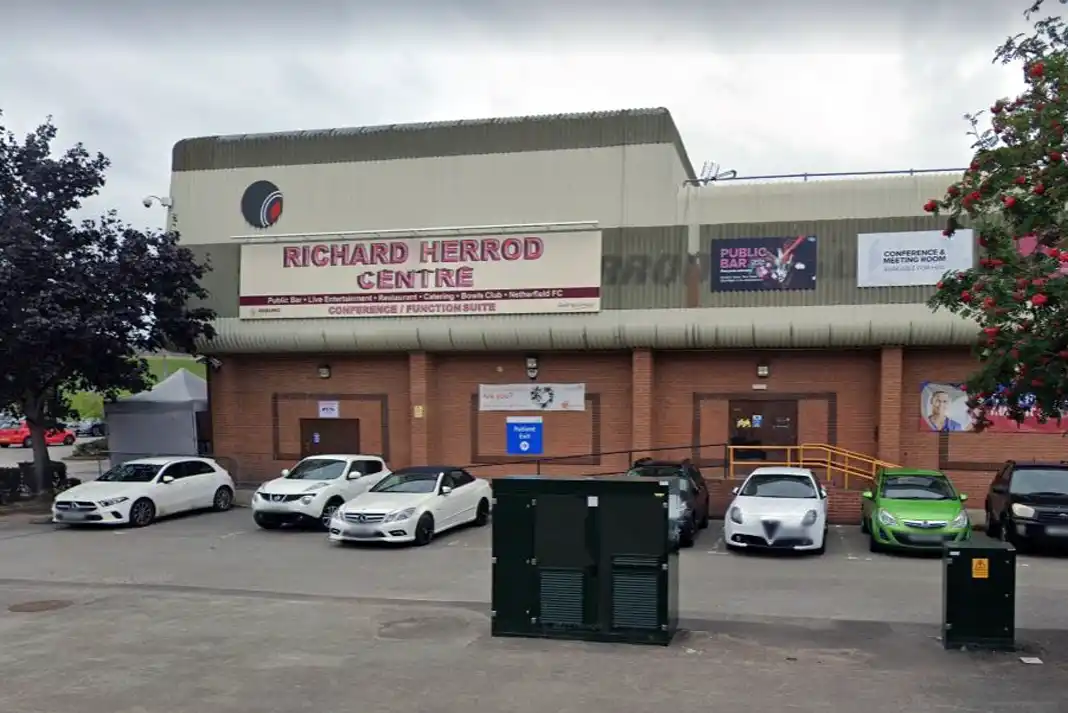
The Richard Herrod Centre stood for decades as one of Carlton’s most recognisable community landmarks. More than a leisure venue, it became a social anchor — a place where generations gathered to play, celebrate, compete, and connect.

The centre was named in honour of Richard Herrod, a long‑serving local Conservative councillor and former Mayor of Gedling, whose commitment to public service shaped much of the borough’s civic life. Built during a period of rapid community development, the centre was designed to provide Carlton with a modern, multi‑purpose leisure and social facility.

One of the most distinctive features associated with the site was the dry ski slope, constructed in the late 1960s. At the time, it was among the earliest dry slopes in the country, boasting a 20‑metre vertical drop and later extended to 80 metres. For many local families, it became a cherished part of childhood — a place for birthday parties, ski lessons, and, in snowy winters, improvised sledging on tea trays. Though popular for decades, the slope eventually closed in the 1990s after falling into disrepair.

PICTURED: The dry ski slope at Carlton’s Richard Herrod Centre pictured back in 1995 (PHOTO Abi Daisy)

In 1987, the Gedling Indoor Bowls Club moved into the Richard Herrod Centre, beginning a long and successful association. Over the years, the club grew to more than 300 members and became nationally recognised as a centre for disability bowls, hosting competitions and supporting inclusive sport long before it became a mainstream priority.

The centre’s large function rooms and bar made it a focal point for community life. Weddings, anniversaries, birthday parties, charity events, live music nights, and civic gatherings filled its calendar. Many staff members worked there for decades, becoming familiar faces to generations of local residents.

A Centre that adapted to its times

Richard Herrod Centre
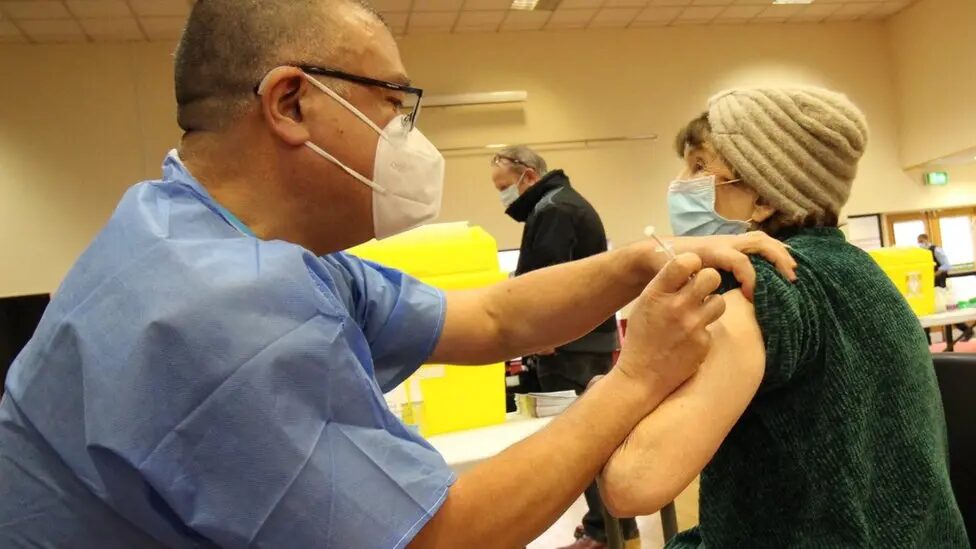
PICTURED: The Richard Herrod Centre in Carlton was used to vaccinate people in Gedling borough.(PHOTO: Gedling Eye)

The Richard Herrod Centre continually evolved to meet the needs of the community. During the COVID‑19 pandemic, it served as both a foodbank distribution point and a vaccination centre, demonstrating its enduring role as a place of public service.

England’s deputy chief medical officer came to the centre to give out Covid-19 jabs. Professor Jonathan Van-Tam had been helping to administer the vaccine in his spare time. Photos were shared of him wearing scrubs at the centre.

For many residents, it was the place where life’s milestones were marked and memories made. Parties were held here and councillors and politicians were elected and defeated.

Controversy, Consultation, and Closure

In the 2020s, Gedling Borough Council proposed demolishing the centre as part of wider redevelopment plans to create a new leisure and community hub Called Carlton Active.

The announcement sparked strong community reaction. Members of the bowls club, local residents, and long‑time users argued passionately for its preservation, emphasising its importance to older people, disabled residents, and those who relied on it for social connection.

The indoor bowls provision was initially considered in proposals for Carlton Active but was later ruled out due to “affordability, design and deliverability risks”, according to council documents.

Members of the bowls club launched a petition in 2025 urging the council to reconsider its plans and retain indoor bowling as part of its redevelopment.

However, an assessment of the plans concluded that the incorporation of a bowls hall would “necessitate the reduction of removal of other essential elements of the leisure centre” and was not considered a “financial viable and sustainable model”, the documents said.

Despite these campaigns, the decision moved forward. The centre closed on April 30, 2026, marking the end of an era.

In its final weeks, staff organised farewell events, created a memory wall filled with photographs, and opened the snooker and pool tables for free as a gesture of thanks.

For many in Carlton and Gedling, the Richard Herrod Centre will always be remembered not simply as a building, but as a place where the community came together — a landmark woven into the social fabric of the area.

Latest planning applications submitted to Gedling Borough Council

These are the latest applications to have been submitted to and validated by Gedling Borough Council last week.

These applications will now be decided by Gedling borough planners.

Demolition of existing conservatory and construction of garden room on same base with an additional section to ‘fill in’ between existing utility. An increase of space of 5.9 sq M. See drawings for detail.
4 Briar Gardens, Calverton
Ref. No: 2026/0372

Replacement of existing single storey side extension with a two storey side extension. Removal of existing chimney. Bathroom window alteration.
16, Brackendale Avenue, Arnold
Ref. No: 2026/0366

Proposed Rear Extension and Pairing of Cottages to Form One Larger New Dwelling
29, Church Lane, Linby
Ref. No: 2026/0361

Ground floor side extension with the removal of existing garages.
6, Towes Mount, Carlton
Ref. No: 2026/0362

Removal of existing jet wash and air/water units, erection of jet wash bays, plant room, air/water and vacuum units, locker hub, and associated forecourt works.
Morrisons, 4 Victoria Park Way, Netherfield
Ref. No: 2026/0364

Lawful development certificate for change of use from B8 to B2 (General Industrial) and B8 (Storage and Distribution).
1A, Darlton Drive, Arnold
Ref. No: 2026/0359

Discharge of condition 5 (drainage) of planning permission: 2023/0607.
92, Carlton Hill, Carlton
Ref. No: 2026/0360DOC

Non-material amendment to application 2025/0763 to change the lean-to pitched roof to the front extension to a flat roof and removal of rooflights.
54, Southcliffe Road, Carlton
Ref. No: 2026/0357NMA

Proposed garden room extension
19B Church Street, Arnold
Ref. No: 2026/0358

Single Storey Rear Extension. All meterials to match existing.
77, Church Drive, Daybrook
Ref. No: 2026/0354

Single storey rear extension
79, Southcliffe Road, Carlton
Ref. No: 2026/0353

Proposed detached single garage to rear garden
30, Main Street Linby
Ref. No: 2026/0349

Straw and Equipment Shed
Ling Farm, Ricket Lane, Ravenshead
Ref. No: 2026/0343

Discharge of conditions 10 (Biodiversity Gain Plan) and 12 (Habitat Management Plan) of planning permission 2025/0702
Nottinghamshire Fire And Rescue Headquarters, Bestwood Lodge Drive, Bestwood
Ref. No: 2026/0341DOC

Pollarding of oak tree to 4.5 metres in height.
85, Bestwood Lodge Drive, Bestwood
Ref. No: 2026/0337TPO

Application for Permission in Principle (PiP) for proposed residential development of a minimum of 1 dwelling and a maximum of 2 dwellings.
314 Spring Lane, Lambley
Ref. No: 2026/0345

Discharge of Condition 4 (Precautionary working method statement), Condition 5 (Species enhancement plan), Condition 5 (Biodiversity gain plan reflecting the off site metric), Condition 6 (Revised biodiversity net gain report), Condition 7 (Biodiversity gain plan reflecting the off site metric) of planning permission 2025/0923
1A, Whittingham Road, Mapperley
Ref. No: 2026/0342DOC

Remove existing conservatory, construct single storey flat roof rear extension
30, Deer Park Drive, Bestwood
Ref. No: 2026/0350

The application is submitted in respect of a single storey side extension to the existing dwellinghouse at the site and a proposed detached, single-storey outbuilding within the location shown coloured purple on the block plan submitted in support of this application.
High Pastures, Bank Hill, Lambley
Ref. No: 2026/0338

Conversion of two existing ground floor retail units into one retail unit. Conversion of one existing flat into two flats
1 Willow Road, Carlton
Ref. No: 2026/0334

TO RETAIN (RETROSPECTIVE) SINGLE STOREY SIDE AND REAR EXTENSION
8, Elm Drive, Carlton
Ref. No: 2026/0326

Proposed single storey front extension and proposed dropped kerb across the full frontage with re-grading of the front garden to create new parking area
10, Dover Beck Drive, Woodborough
Ref. No: 2026/0319

Environmental Impact Assessment (EIA) Screening Opinion
Land At Chase Farm, Former Gedling Colliery Adjacent To Arnold Lane And Land Off Lambley Lane, Gedling
Ref. No: 2026/0329EIA

Solar canopy
Notts Fire And Rescue Service, Nottinghamshire Fire And Rescue Headquarters, Bestwood Lodge Drive, Bestwood
Ref. No: 2026/0327

The installation of a single timber gazebo, approximately 5 metres in width, on the Key Stage 1 playground within the existing school site.
Burton Joyce Primary School, Padleys Lane, Burton Joyce
Ref. No: 2026/0305

Demolition of existing garages and erection of New build comprising of 2×4 bed units solar panels to rear roofs, rooflights to roof and conservatory to plot 2
1 Ernest Road, Carlton
Ref. No: 2026/0269

Proposed ground floor side extension
1 Worrall Avenue, Arnold
Ref. No: 2026/0266

C3 Dwelling conversion into C4 HMO with Internal Alterations and Loft Conversion with Dormer and Rear/Side Extensions. Refer to Submitted Plans. C3 Dwelling conversion into C4 HMO with Internal Alterations and Loft Conversion with Dormer and Rear/Side Extensions. Refer to Submitted Plans.
39, Chandos Street, Netherfield
Ref. No: 2026/0177

C3 Dwelling conversion into C4 HMO with Internal Alterations and Loft Conversion with Dormer and Rear/Side Extensions. C3 Dwelling conversion into C4 HMO with Internal Alterations and Loft Conversion with Dormer and Rear/Side Extensions. Refer to Submitted Plans.
37, Edwin Street, Daybrook
Ref. No: 2026/0176

Free standing garden room, placed at end of garage in back garden.
4, Wansbeck Close, Arnold
Ref. No: 2025/0800