


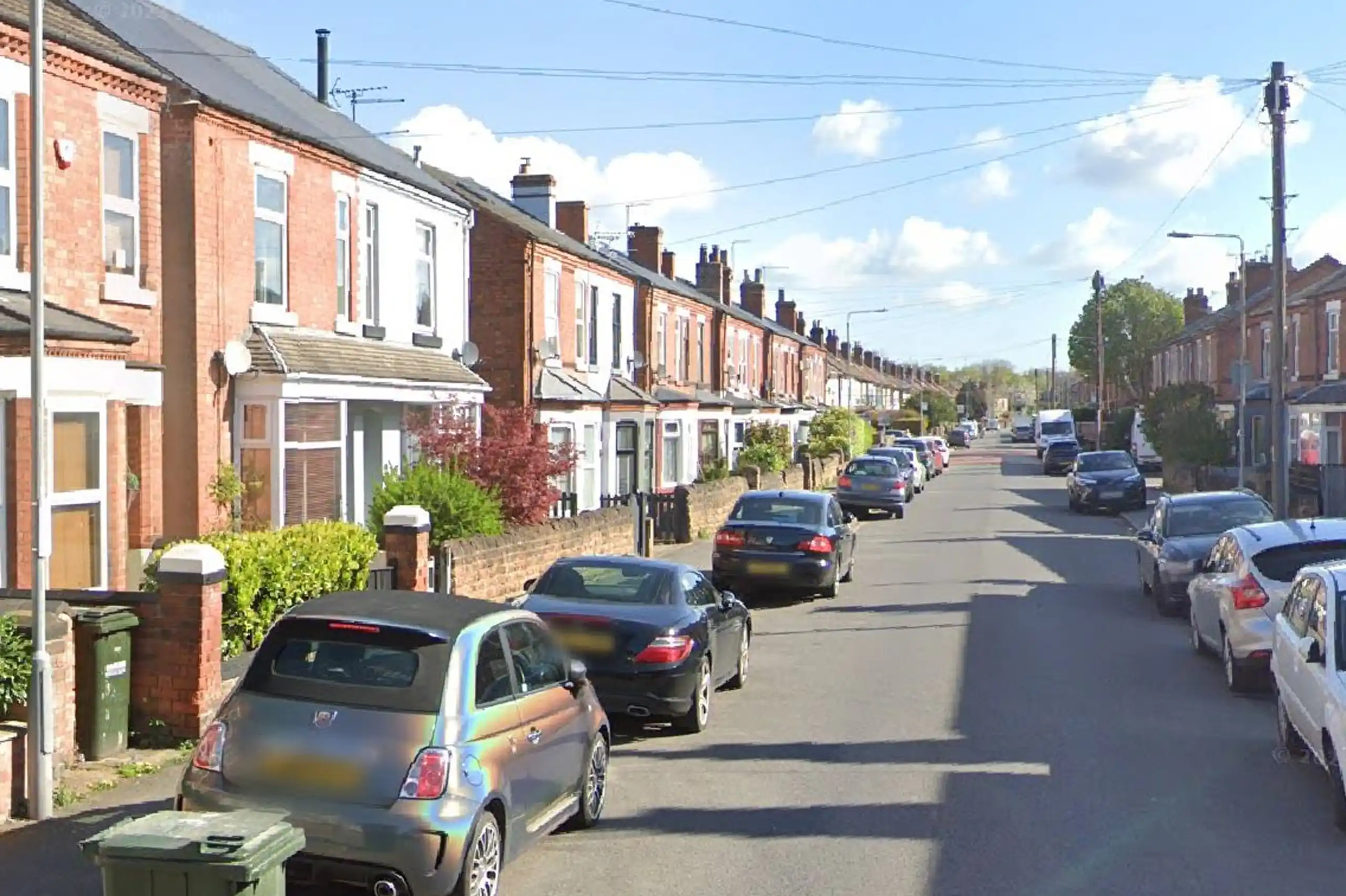

A Nottinghamshire road known for being a HMO hotspot could benefit from tighter planning rules from next year.
Chandos Street in Netherfield is currently lined with Houses in Multiple Occupation (HMOs), garnering past complaints from residents and local councillors that the road is crammed with cars, is losing its community feel and that Netherfield is seeing “urban cramming”.
Figures from Gedling Borough Council released in January this year show that out of the 3,120 properties in Netherfield, the authority said it is “aware” that 36 of these are HMOs – that’s about 1.15 per cent of the total housing in the ward.
But the council may not be aware of smaller HMOs – which comprise six or fewer bedrooms – which usually do not require planning permission and fall under ‘permitted development’, unless developers plan on extending or altering the structure.
The authority’s leader, John Clarke (Lab), said in a September 2025 cabinet HMOs in Netherfield were “spreading” and were “spreading significantly”.
Calls for the continued review of the concentration of HMOs in Gedling was made by Labour’s Councillor Alison Hunt in January 2026, as well calls to implement a potential ‘Article 4’ Direction.
Article 4 Directions allow councils to withdraw permitted development rights for HMOs across a defined area, meaning smaller HMOs would require planning permission and would allow resident consultation.
Now, the authority has confirmed an Article 4 Direction could be in force on Chandos Street, Ashwell Street and Beech Avenue by early 2027 – but this is “currently being finalised”.
Other authorities, such as Nottingham City Council and Broxtowe Borough Council, have introduced these onto certain roads to help curb over-saturation of this type of accommodation in particular areas.
Cllr Hunt, who represents the area on Gedling Borough Council, said she has been “fighting for this” for a few years and says she knows of 10 HMOs already present on Chandos Street, with others located on roads nearby.
She said: “I was a lonely voice for a long time… [the authority’s leader] has got on board – I’ll just keep going.
“It’s a very tolerant, live-and-let-live community, we all look out for each other… there were times in my life I would have killed for a room in a HMO.”
Cllr Hunt says she is not against HMOs, but the “concentration” of them in certain areas and roads can present issues and has even suffered damage to her own home from a HMO conversion next door.
Earlier this month, we spoke with couple Marilyn and Heinz Haverkamp, aged 79 and 82, who had been left with damp and ceiling cracks from their neighbouring property on Chandos Street being converted into a HMO.
While any damage incurred to properties through these works tends to be covered by a party wall agreement, residents can be left confused by what they’re signing up for, just like in the case for the Haverkamps.
These agreements are legally binding for properties that share a wall and outline what work is to be done, how it will be done, and offer protection to the party whose property may be damaged by the works, including provisions for compensation.
Cllr Hunt said: “It took me a whole day to get my head around [the party wall agreement] – but it’s important people have one.”
A spokesperson for Gedling Borough Council said: “The council will publish and consult on the Article 4 Direction within the next month and is required to notify the Secretary of State that the direction has been made.
“The direction must be confirmed by the Council having regard to any representations received.
“Should the direction be confirmed it is expected to be in force at the beginning of 2027.”
When these directions are brought in by an authority, there can be a leniency period after implementation, which allows for developers who have already begun developing a smaller HMO, under previous permitted development right, to continue.
More details over the potential for an Article 4 Direction to be implemented on the three Netherfield roads will emerge at a later date.