A dangerous driver who tore through Nottingham streets at almost 100mph before being boxed in by armed police in Woodthorpe has been jailed for two years.
Riyan Ahmed, 21, led officers on a dramatic pursuit in the early hours of August 7 after refusing to stop for police in New Basford.
The chase began when officers spotted a suspicious Volkswagen Polo travelling along Perry Road. But when police activated their blue lights, Ahmed put his foot down and sped away.
During the pursuit, the disqualified driver reached speeds of 95mph, more than double the speed limit on parts of the route, and drove on the wrong side of Valley Road, putting other road users at risk.
The chase came to an end after Ahmed struck a kerb while turning onto the A60 Mansfield Road, damaging one of the Polo’s tyres.
Police seized the opportunity to move in and box the vehicle in at the junction of Mansfield Road and Albemarle Road in Woodthorpe, bringing the dangerous pursuit to a safe conclusion.
Officers rushed from their vehicles and arrested Ahmed at the scene.
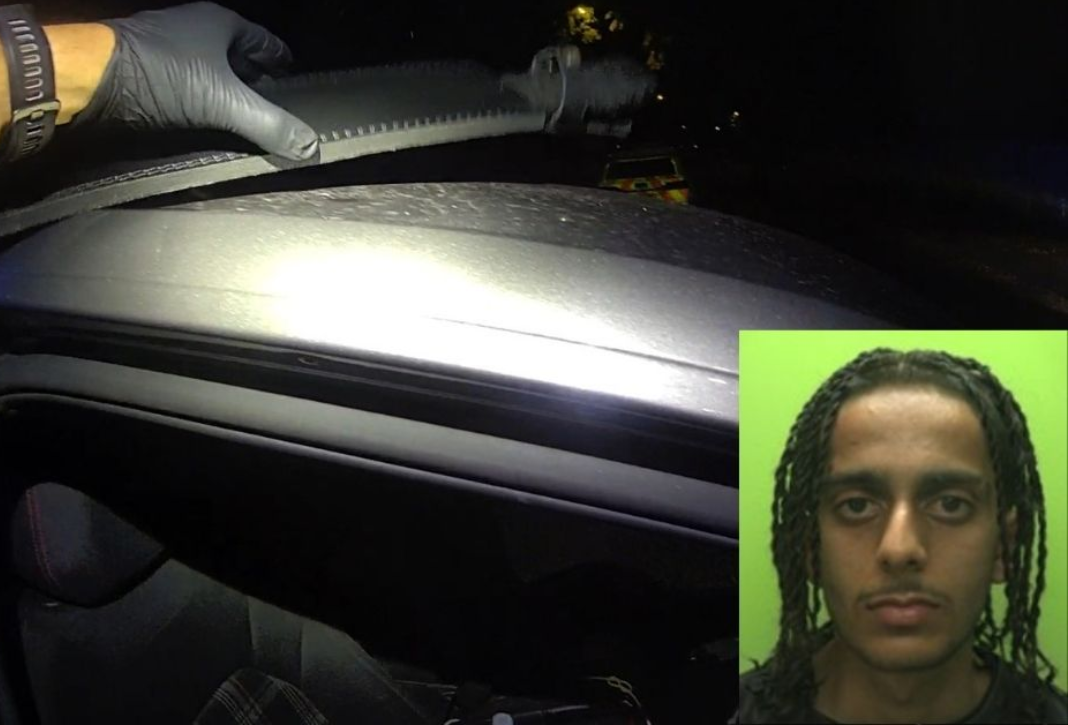
A subsequent search of the car uncovered an even more alarming discovery, with a machete found in the footwell of the vehicle.
Ahmed, of Glamis Road, Nottingham, later admitted dangerous driving, possessing a knife in a public place, driving while disqualified and driving without insurance.
Appearing at Nottingham Crown Court on September 1, he was sentenced to a total of two years behind bars.
PC Ryan Bullick, of Nottinghamshire Police, said: “This was an appalling display of driving that put the lives of multiple road users in danger.
“When we pursue speeding and dangerous drivers in this way, our primary concern is always for the safety of the general public and all those involved in the pursuit.
“Thanks to the professionalism and training of all the officers and control room staff involved, the vehicle was brought to a safe stop and Ahmed was arrested.
“We also discovered he was driving around with a machete in the footwell of the car, and this weapon was seized and destroyed.”
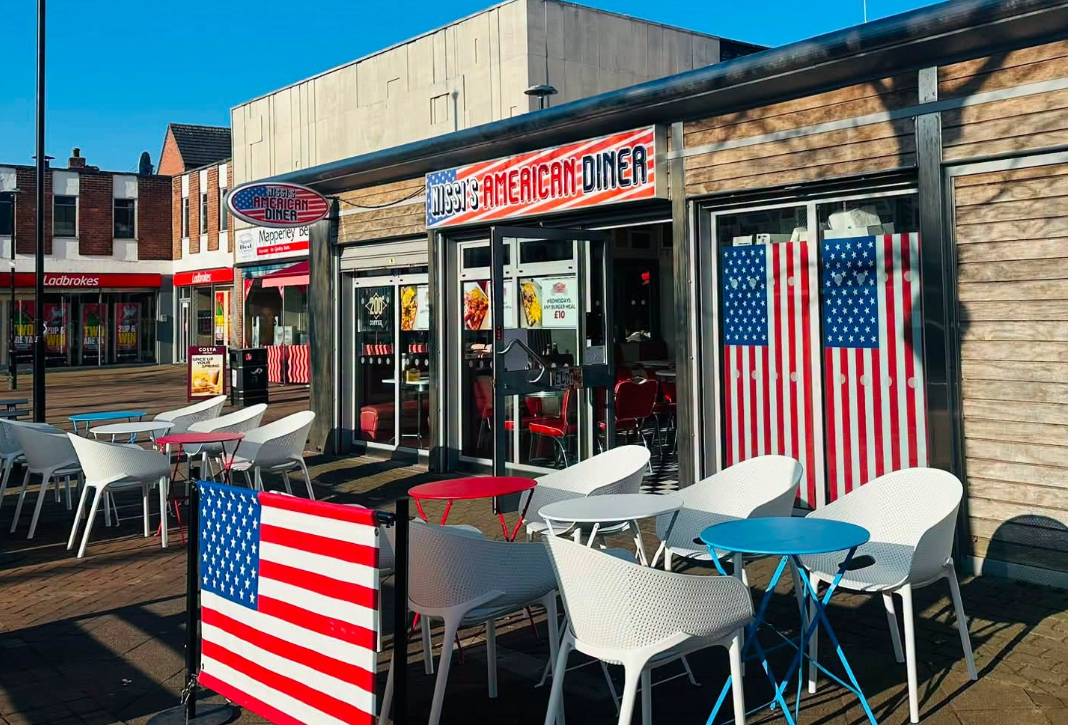
A Mapperley eatery is set to close its doors later this month after seven years in business.
Nissi’s American Diner owner Beckie announced the decision in an emotional message to customers, revealing the restaurant’s final trading day will be Sunday, September 20.
The closure marks the end of a journey that began with just £200 and saw the business grow from a home-based venture to a pub operation, then a town-centre takeaway, before finally establishing itself as a diner on Mapperley Top.
Beckie said she had activated a break clause in the business’s lease and felt it was the right time to “step back, have a rest and do something different”.
Reflecting on the success of the business, she thanked the thousands of customers who had supported the diner over the years.
She said: “It’s been more than what I ever imagined. I just want to say thank you to every single customer who has come through our doors or ordered online throughout the years and supported this little business.”
The owner also paid tribute to loyal customers who had helped brighten difficult days.
“On bad days, the customers have made us smile without knowing it. Me and the staff appreciate you all. Thank you,” she added.
Special thanks were also given to members of staff Leah, Marni and Sienna, who Beckie praised for their hard work and dedication.
Despite describing the decision as painful, Beckie said she believed it was the right move for the future.
She encouraged customers to visit over the final two weeks to enjoy one last meal and say farewell to the team.
“I hope we’ll be busy so I can give the staff a nice cheeky bonus to use going forward from us all,” she said.
Nissi’s American Diner will continue trading during its final fortnight with opening hours of Wednesday to Saturday from 10am to 8pm and Sundays from 10am to 2pm.
The diner will close permanently on Sunday, September 20.
Understanding the moneyline, spread, and total gives bettors a foundation for following NFL markets. Going beyond those basics requires more attention to what is happening around each matchup.
Player availability, coaching decisions, recent performance and game conditions all add context to the numbers posted before kickoff. No single statistic explains an NFL matchup on its own. Bettors get a clearer picture by examining several factors together and understanding what each one actually says about the game.
Look Beyond the Final Score
A final score tells bettors who finished ahead and by how much, but it doesn’t explain how the game developed. Two teams with identical records might have reached that point through very different performances.
Efficiency statistics provide more detail. Third-down conversion rate shows how consistently an offense extended drives. Red zone performance adds context to scoring opportunities. Turnovers, sacks and yards per play reveal other parts of a team’s performance that the final score leaves out.
The quality of the opponent matters as well. Scoring 30 points against one of the league’s strongest defenses provides different context from producing the same total against a struggling unit.
Recent games deserve the same careful treatment. One unusual result doesn’t automatically establish a trend. Looking across several performances helps distinguish a recurring pattern from a single exceptional Sunday.
Understand What the Betting Line Represents
NFL betting lines provide a starting point for comparing the two teams. Bettors who already understand the basic markets can focus on how those numbers relate to the matchup.
The spread gives one team a points handicap for betting purposes. The moneyline prices each team’s side of the matchup without a point spread. The total establishes a number for the combined scoring by both teams.
Those markets shouldn’t be treated as exact predictions of the final score. Sportsbooks update prices as new information and betting activity enter the market, so the available number can change between its initial posting and kickoff.
Bettors looking to Learn how to bet on NFL games can start with these market fundamentals before adding information about injuries, matchups, and recent performance. Understanding what a line represents makes the additional game analysis easier to put into context.
Check Player Availability and Expected Roles
An injury report becomes much more useful when bettors consider the player’s role rather than simply counting how many names appear on it. Losing a starting quarterback has different implications from missing a rotational player.
NFL injury reports use specific participation and game status designations. Practice participation during the week gives information about a player’s preparation, while the final game status provides another update ahead of the matchup. Bettors should still check the latest information closer to kickoff because circumstances change.
The expected workload deserves attention too. A running back returning to the lineup does not automatically resume the same number of carries. Teams sometimes adjust rotations, snap counts and responsibilities based on personnel and game circumstances.
The same principle applies to replacement players. Rather than focusing only on the missing starter, bettors can examine who takes over the role and whether the offense or defense needs to adjust around that replacement.
Study How the Teams Match Up
Season averages provide useful context, but NFL games are played between specific opponents. That makes matchup analysis an important step beyond simply comparing each team’s overall statistics.
Start with how each offense prefers to operate. A team built around the running game presents a different challenge from an offense that relies heavily on passing. The opposing defense’s strengths and weaknesses help determine where those styles intersect.
The line of scrimmage deserves particular attention. Pass protection, pressure and rushing efficiency influence how comfortably an offense operates. A quarterback facing consistent pressure often encounters a very different game environment from one working from a clean pocket.
Personnel matters too. Receiver depth, secondary availability and defensive front rotations all affect individual matchups.
These comparisons provide context rather than a guaranteed explanation of what happens next. Football remains dependent on execution, and the matchup helps bettors understand where important battles are likely to occur.
Put Home Field, Travel and Rest Into Context
Location is easy to identify on an NFL schedule, but home field is only one part of the scheduling picture. Travel and preparation time also deserve attention before game day.
A team returning from a long road trip faces a different weekly routine from one playing consecutive games at home. International games create another set of logistical considerations because teams travel farther and adjust their schedules accordingly.
A Sunday game followed by a Thursday game creates a short week, while a bye removes a regular-season game from that week’s schedule. These details should not automatically override stronger football evidence. Instead, they belong alongside information about personnel, team performance, and the opponent.
Treating every road game or short week identically misses that context. The practical question is how the schedule interacts with the specific teams and circumstances involved.
Compare the Opening and Current Numbers Carefully
Following how a betting market changes before game day provides another layer of information. A spread, total or moneyline price available earlier in the week might differ from the number posted closer to kickoff.
Injury news, lineup information, betting activity and other developments can all coincide with market movement. Bettors should therefore avoid assuming that one factor explains every adjustment.
Comparing earlier and current numbers still provides useful context. It shows how the available market has developed and highlights when a bettor is evaluating a different price from the one initially posted.
This is also where current information matters most. An analysis based on an older line might no longer describe the market available on game day. Checking the current number keeps the football analysis connected to the actual betting market.
A Better Game Day Picture Comes From Context
Going beyond basic NFL betting markets doesn’t require turning every matchup into a complicated statistical exercise. The goal is to understand what information adds meaningful context and what a single number leaves unexplained.
Recent efficiency, player availability, matchup characteristics, scheduling, weather and market movement each describe a different part of the game. Looking at them together gives bettors a more complete view before kickoff.
The strongest game day preparation starts with understanding the market, checking current information, and separating meaningful football context from assumptions that the available evidence does not support.
Commercial buildings don’t maintain themselves. Whether it’s crumbling render on a city-center office block or a blocked downpipe on a multi-storey retail unit, repair and maintenance work in Leeds demands safe access to height that can be put in place quickly—and scaffold tower hire fits squarely into that planning.
Getting workers up high is only part of it; the real challenge is doing that within tight site constraints, without turning the area below into a hazard for staff or the public. Scaffold towers are modular, mobile, and quick to assemble, which makes them a natural fit for the busy, varied environments Leeds contractors work in day after day. If you’re a site manager, a building owner, or a maintenance contractor, understanding what scaffold tower hire actually brings to a project will sharpen your planning on every job. The right access solution cuts both your risk and your overall project time—and that’s easy to see once you’ve used one.
Why Scaffold Tower Hire Makes Commercial Repairs Faster and Safer
Commercial repair work in Leeds can involve window replacement, facade repairs, roofing work, cladding, and other tasks that require safe access at height. For commercial renovation work that involves different heights and access points, scaffold tower hire in Leeds for commercial building projects gives contractors the flexibility to use tower setups suited to different areas of the site. This makes it easier to match the access equipment to the specific demands of the project. It can also help teams work more efficiently when different parts of the building require different working heights or platform sizes.
Scaffold towers can be assembled where they are needed and moved to another part of the building as work progresses. This can help reduce delays on projects where teams need to complete several repair or maintenance tasks across different areas. They also provide a stable platform for operatives, tools, and materials, which can make work at height more practical than using ladders for longer or more involved tasks. For commercial contractors, choosing the right tower can support both safer access and a more efficient workflow on site.
Access to Hard-to-Reach Areas Without Delay
One of the most persistent headaches on commercial maintenance jobs is access lag, the gap between arriving on site and actually being able to work safely at height. Ladders create that lag because they’re only suitable for the briefest tasks and don’t give you a stable platform for tools, materials, or two workers operating side by side. Scaffold towers close that gap fast. You erect them at the exact point of work, adjust the height to match the area you need to reach, and your operatives step straight onto a firm, level deck. That matters especially on Leeds’ commercial properties where facades can be uneven, ground conditions vary, and neighboring structures leave limited room to maneuver. Modern aluminum towers have adjustable base plates and a range of outrigger configurations, so an angled pavement or a narrow service lane doesn’t stop your team from setting up safely. And because the tower moves on castors when needed, repositioning along a long facade takes minutes rather than the half-day a fixed scaffold would take up. You stay productive from the first hour.
Reducing Work Stoppages on Active Commercial Sites
Active commercial sites—offices, retail premises, and warehouses still in use—can’t simply shut down for a maintenance job. Tenants and businesses need to carry on, which means your access equipment has to fit around them. Scaffold towers are compact enough to set up in a specific zone, leaving the rest of the site running. You can cordon off a single bay, complete the work, dismantle the tower, and move on without disrupting the broader site for days at a stretch. Fixed scaffolding doesn’t offer that. It locks in a large footprint for the duration of the contract, often blocking access routes, deliveries, or car park spaces in ways nobody planned for. A scaffold tower, by contrast, arrives on a standard van, takes up minimal storage space when it isn’t in use, and can be hired for exactly the days your project demands, no more. For Leeds maintenance contractors working under tight commercial leases and client pressure, control over site impact is genuinely worth sweating over.
Types of Maintenance Work: Scaffold Towers Support in Leeds
Scaffold towers aren’t one-trick equipment. Across Leeds, commercial maintenance teams use them for a wide range of repair tasks, and the common thread is the need for a stable elevated platform that can be positioned precisely and moved as the work progresses. Knowing which jobs benefit most from tower hire helps you plan your hire period accurately and avoid paying for access equipment that sits idle.
Facade Cleaning, Repairs, and Repointing
Brick and stone facades on Leeds’ commercial buildings take a beating from the region’s weather. Repointing, crack repairs, and high-pressure cleaning all demand close, sustained contact with the wall surface—something a ladder can’t provide safely for anything beyond a couple of meters. A scaffold tower lets your operative stand at a comfortable working height with both hands free, tools within reach, and enough room to move laterally without climbing down and relocating every few minutes. Repointing is particularly well-suited because the work is slow and methodical; your operative needs a stable deck, not a precarious foothold. Facade cleaning requires similar access but also needs the platform to carry the weight of a pressure washer alongside the worker. Scaffold towers are rated for these combined loads when you select the right configuration. On heritage commercial buildings in Leeds city center—of which there are many – the precision a scaffold tower provides is also far less likely to cause incidental damage than rushed ladder work.
Roof Maintenance and Guttering Work
Guttering repairs and roof-edge maintenance are among the most common commercial call-outs in Leeds, particularly after autumn and winter when debris accumulates and joints fail. Both tasks put operatives at or near the roofline, which is where fall risk peaks. A scaffold tower positions your team just below the eaves at a height you can set precisely, with guardrails on three sides of the working platform to stop a stumble from becoming a serious incident. The truth is, you don’t need a full roof scaffold for most guttering jobs. A single tower, repositioned along the building perimeter as work progresses, covers a typical commercial terrace or retail unit efficiently. Flat-roof inspections and minor repairs also benefit because a tower gives safe access to the roof edge without the operative needing to walk on exposed surfaces unnecessarily. So on jobs where height is the main variable and the work itself is relatively contained, tower hire is often both the safest and most cost-effective access choice Leeds maintenance contractors have available.
How to Choose the Right Scaffold Tower Setup for Your Project
Choosing the wrong scaffold tower configuration wastes time and money. It isn’t just about picking the tallest option; the shape of your site, the nature of the repair, and the load your team needs the platform to carry all feed into the right decision. Getting this right at the planning stage means fewer surprises on site.
Matching Tower Size and Configuration to Your Repair Scope
Scaffold towers come in a range of platform heights, widths, and load ratings, and the first step is mapping those specs to your actual job. A simple guttering repair on a single-storey commercial building calls for a very different configuration than a sustained facade repointing job on a four-storey office block. Platform height is the most obvious variable; you need your working deck at a height that puts the repair area comfortably in front of your operative, not overhead. Width matters too: narrow towers suit tight alleys and restricted footpaths, but broader platforms are better when operatives need to work side by side or carry bulkier materials up to height. Load rating is something contractors sometimes underestimate — you need to account for the weight of your operative, their tools, and any materials or equipment on the deck at the same time. Check the manufacturer’s rated load for the specific tower configuration you hire, and don’t exceed it. Ground conditions matter too; soft or uneven surfaces require appropriate base plates and outriggers to keep the tower stable throughout the job.
Working with Leeds Hire Companies to Plan Installation
A good hire company does more than drop off equipment. Honestly, the conversation you have before delivery often determines how smoothly the job runs. When you explain your project scope, they can recommend the right tower height, suggest appropriate accessories such as stabilizers or stairway frames, and flag any site-specific factors that might affect setup. Be specific when you make your inquiry: give them the working height you need, describe the ground surface, mention any overhead obstructions, and say whether the tower needs to move frequently during the job. That information lets them match the right specification to your project from the start. It’s also worth asking about delivery lead times, particularly for larger commercial jobs in Leeds where you may need multiple towers or a longer hire period. Many hire companies offer next-day delivery for standard configurations. But don’t overlook the training question: all operatives who assemble and use a scaffold tower should hold a valid PASMA (Prefabricated Access Suppliers’ and Manufacturers’ Association) certificate, confirming they understand safe assembly, inspection, and use. A reputable hiring company will flag this as a standard requirement rather than leave it to chance.
Conclusion
Scaffold tower hire gives commercial maintenance teams in Leeds a fast, flexible, and safe way to reach heights across a wide range of repair tasks—from facade repointing to guttering work to roof-edge inspections. The ability to erect a stable working platform quickly, move it as the job demands, and dismantle it without disrupting the broader site makes towers the practical choice for most commercial maintenance contracts. Choosing the right configuration from the start and working closely with your hiring company to plan the setup correctly will determine how smoothly the job runs. For most contractors, the question isn’t really whether to hire a scaffold tower—it’s making sure you hire the right one for what your specific project actually needs.
A major new housing development on the outskirts of Nottingham has taken a big step forward after 66 homes were snapped up in a £15 million deal ahead of construction being completed.
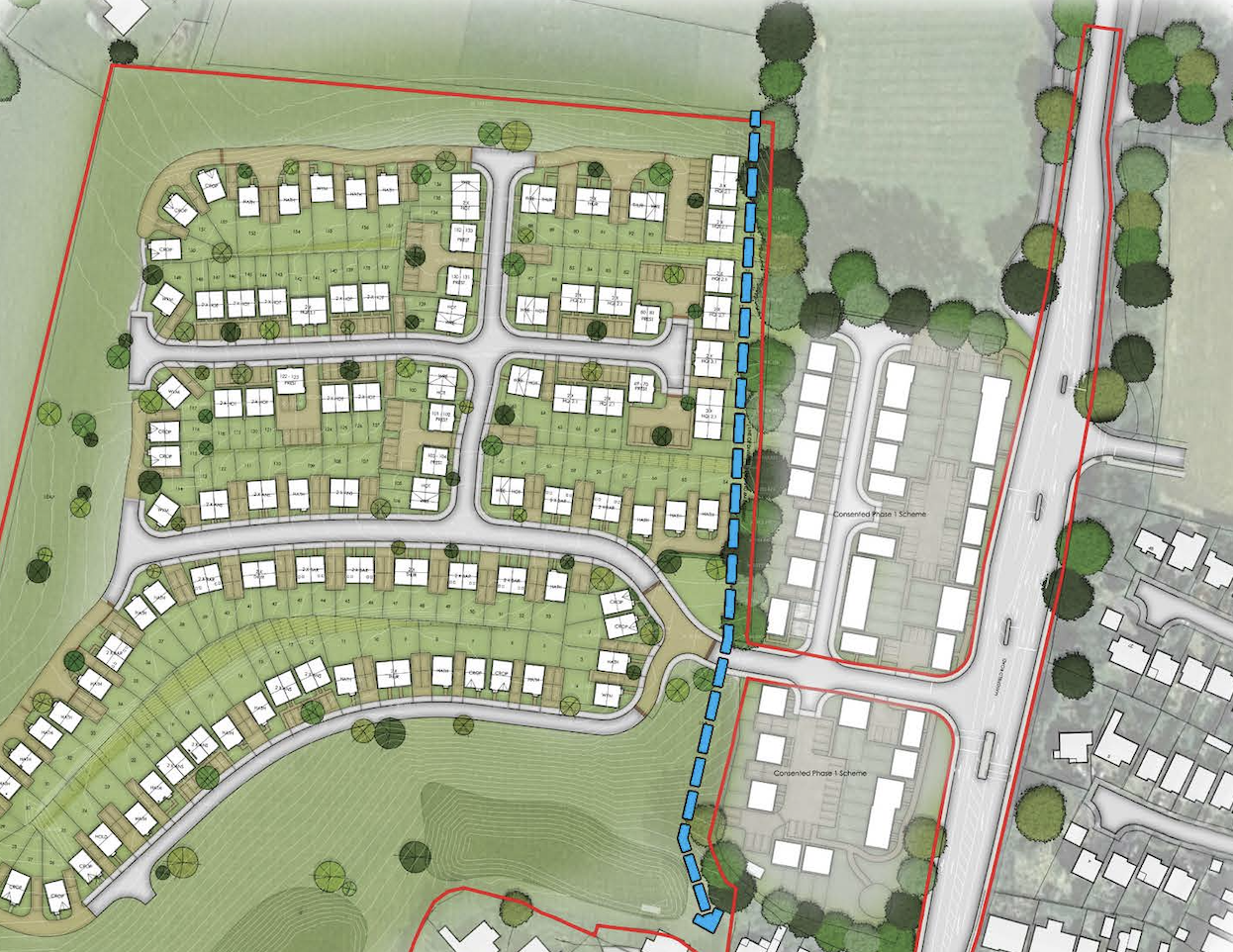
Cameron Homes has forward sold the properties at its £40 million Hawksley Rise development in Redhill to social housing provider emh Group, helping to accelerate building work before the public sales launch next year.
The deal covers 66 family homes, including 28 two-bedroom houses, 32 three-bedroom properties and six four-bedroom homes.
The properties will be offered for social rent and shared ownership, with the first residents expected to move in during early 2027.
The agreement marks the first partnership between Staffordshire-based Cameron Homes and emh Group, which manages around 20,000 homes across Nottinghamshire, Derbyshire and Leicestershire.
Elliott Lawley, Senior Land Manager for Tara Group and Cameron Homes, said the deal would help tackle the region’s growing need for affordable housing.
He said: “Deals like this are exactly what the government is seeking in order to deliver the 90,000 affordable homes required across the UK each year.
“We are very pleased to be working with emh Group to help meet local demand for family homes for social rent and shared ownership.”
The Hawksley Rise scheme is Cameron Homes’ biggest ever land acquisition since the company was founded in 1994.
The 17-acre site off the A60 Mansfield Road was granted planning permission for 144 homes by Gedling Borough Council earlier this year.
Groundworks are already underway, with 78 homes set to be released onto the open market when a sales office launches in early 2027.
As well as new housing, the development will include more than five acres of public open space and a children’s play area.
Chris Jones, Executive Director of Housing and Development at emh Group, said: “We are thrilled to announce this strategic acquisition, which will see 66 wonderful new family houses made available to local people who need them most.
“We’ve selected the Hawksley Rise development because it’s so well located for community facilities, schooling and transport.”
The homes will feature solar panels and electric vehicle charging points, while plans also include new wildlife habitats, an attenuation pond, and bird and bat boxes to boost biodiversity.
The development’s name pays tribute to Victorian engineer Thomas Hawksley, who was born in nearby Arnold and played a key role in developing Nottingham’s historic gas and water supply networks.
Cameron Homes is currently building more than 200 homes across 11 sites and has a pipeline of around 1,000 properties planned for future developments.
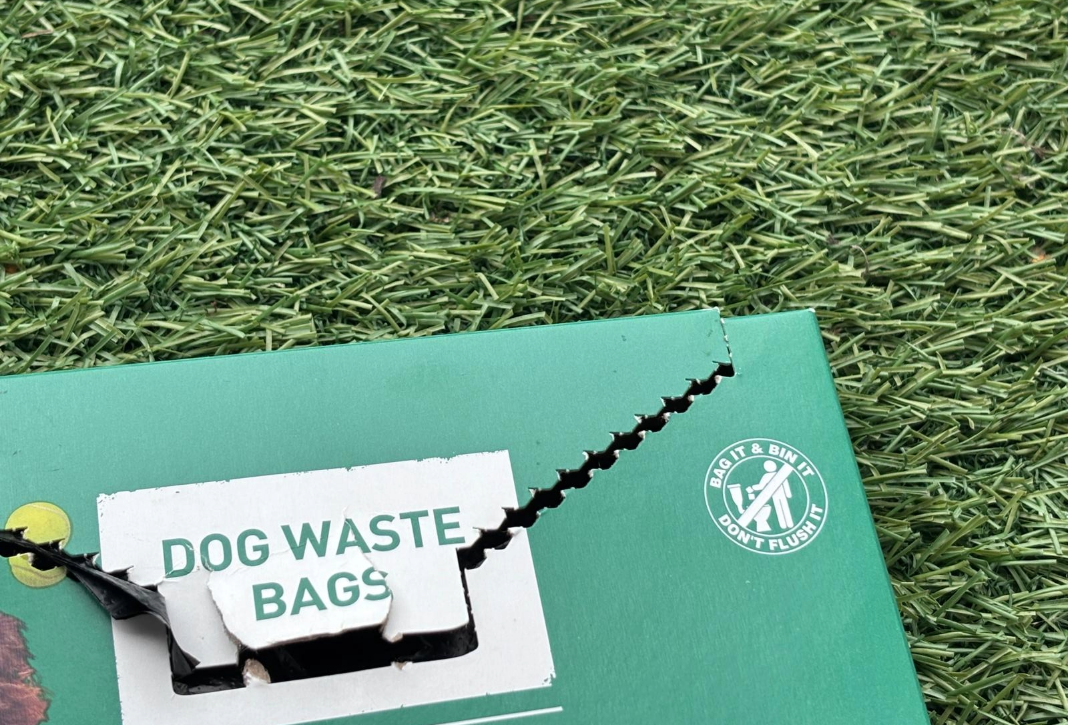
A Nottinghamshire council could trial dog waste bag dispensers at its country park in an effort to tackle dog fouling offences.
Gedling Borough Council’s cabinet met on Thursday (September 3) where members were asked to approve an extension on the current Public Spaces Protection Order (PSPO) for dog fouling for another three years.
The current borough-wide PSPO for dog fouling offences is due to expire in October this year but councillors agreed to a three-year extension on it.
Speaking during the meeting, Mike Avery, Director of Place at the council, said dog mess offences have been “frequently reported” across the borough each year, with a “significant” number in the last three.
In the 2023/24 financial year, there were 185 reports, increasing to 193 for 2024/25 and in 2025/26 there were 93 reports up to January 29, 2026.
As part of the extension, councillors also agreed to keep the Fixed Penalty Notice charge at £100 for any dog fouling breaches, payable within 14 days.
Councillor Viv McCrossen (Lab), Portfolio Holder for Climate Change, Parks and Environmental Health at the authority, said it was “completely irresponsible” not picking up after dogs and floated the idea of introducing dog waste bag dispensers at existing dog bins in the borough.
She said: “We’re twinned with quite a lot of European cities and in European cities they tend to take a more proactive way of dealing with this issue.
“It costs the council a little bit more but ultimately if it’s about getting dog muck off the streets, parks, in terms of health of our community, actually having on dog bins a dispenser – that we trial – where we put [biodegradable] dog bags in there, on the dispenser, where the bins are, at a small cost.
“To see whether that would improve the environment. We could argue people should be carrying these bags, but ultimately what we want is a cleaner community and I’m quite happy to think a small expenditure might make a big difference.
“They do it in European cities, I don’t know why we can’t do it here.”
Council leader, John Clarke (Lab), said Gedling Country Park is sometimes “filthy” with dog mess.
He said: “I’m thinking of [Gedling] County Park, we’ve spent all that money [on it], it’s a beautiful place, people love it, yet we go up there and it’s filthy sometimes with dog mess everywhere, so if we could trial [the dispenser] there?”
Mr Avery said officers will take the idea back to the “relevant teams” to consider, where it will be assessed whether it is a viable option, before reporting back to the cabinet.
Councillors also pushed for better education and signage to remind people of the environmental and health dangers of leaving dog waste on the ground.
Cllr Henry Wheeler (Lab) said the authority could help raise awareness to a rare, but serious, infection called Toxocariasis, which can have damaging impacts on people, particularly toddlers and young children.
Toxocariasis is an infection caused by small worms sometimes found in dog, cat and fox waste.
It is not caught from fresh animal waste, rather caught from the soil or sand that has contained the worm eggs for a few weeks or months – meaning young children playing in parks and open spaces are at risk.
Though most people who happen to swallow the worm eggs that cause toxocariasis do not become ill, it can cause serious problems, such as difficulty breathing or loss of vision if the worm eggs hatch and the larvae spread in your body.
Cllr Clarke added: “The things you can get from [dog mess], particularly children, who can be blinded. I think we need to be as hard as that… the idea about putting some photos up, it needs something there to remind people how dangerous this action is.
“We’re not anti-dog, we’re just for better health and people treating our areas with some respect.”
Mr Avery also informed councillors that the authority was looking at bringing in a potential new PSPO, which would require pet owners to be able to show they have the means – dog waste bags – to pick up after their pets.
This would have to be consulted on and brought back to the cabinet before being implemented.
Police have arrested a suspect in connection with a house burglary carried out in Mapperley last month.
The homeowner contacted police after returning to find a rear window had been smashed and the Westdale Lane West property had been ransacked.
Multiple laptops, a MacBook, smartwatch, headphones and a games console were among the items reported missing, along with various pieces of jewellery.
The break-in was discovered when the owner returned home around 5pm on August 20, with the burglary believed to have taken place around an hour or so before that.
Police made an arrest in Clifton. PHOTO: Notts Police
Officers attended a house in Clifton on Tuesday (1 September) morning to make an arrest.
A 59-year-old man was subsequently located inside the address and arrested on suspicion of burglary.
Detective Constable Ken Tinley, of Nottinghamshire Police, said: “The victim in this case was understandably left very upset by what happened, so we’ve been determined to track down whoever was responsible.
“On that note, we can now confirm that a suspect has been located and arrested, which is obviously positive news, although we have unfortunately not yet been able to return all of the stolen items.
“As such, our inquiries are still very much ongoing, so we’d ask anyone who might know anything about this break-in, or the potential location of the stolen property, to please contact us immediately.”
Any information can be reported to the police directly on 101, quoting incident 536 of 20 August 2026, while it can also be passed on anonymously to Crimestoppers via 0800 555 111.
There have been fresh calls for more transparency about the government’s decision to reshape the county’s local authorities.
Nottinghamshire is heading for its largest boundary shake-up in 50 years, after the government confirmed in July how the area’s nine councils would be merged to create two new unitary authorities.
By 2028, sections of Broxtowe, Gedling and Rushcliffe will become part of an enlarged Nottingham city area to form a new unitary authority and a second unitary authority will cover the rest of the county – ending the existing two-tier structure.
Councillors have been debating and criticising the government’s Local Government Reorganisation (LGR) plans since their announcement in 2024, with concerns about potential service impacts, local representation, and the public consultation itself.
These criticisms became more robust this year, when Rushcliffe Borough Council, in a joint effort with Broxtowe Borough Council, appointed a lawyer to assess whether a judicial review on Nottinghamshire’s LGR decision had the “potential to succeed”.
The lawyer ultimately concluded that an application for review was more likely to fail than to succeed.
Judicial reviews involve a judge reviewing the lawfulness of a decision or action made by a public body, but can only be launched to challenge the way a decision was made, rather than the rights and wrongs of a decision.
Now, it appears a legal challenge over Nottinghamshire’s restructure could still happen, with the Reform-led Nottinghamshire County Council writing to the government to seek clarification on the basis for its LGR decision for the county.
The council has issued a ‘Pre-Action Protocol’ letter, which is a procedural step within the judicial review process that aims to get more information about a decision and address any problems before considering further legal proceedings.
The authority says it previously wrote to the government to get insight into the rationale for their LGR decision, including relevant evidence, but this request was “refused”.
In a statement, council leader Mick Barton said: “Transparency regarding the decision-making process is essential given the significance of the proposals and the implications for residents and communities across Nottinghamshire and Nottingham.
“This is why we have taken this action to seek clarification of the reasoning, evidence and rationale behind the Secretary of State’s decision, so we have a clear understanding of how the decision was reached.”
The leader added that once the council receives the information and evidence from the government, it will consider whether to move forward with a full judicial review.
Labour’s restructuring decision has also caused concerns at the lowest tier of local government.
Greasley Parish Council and Broxtowe Borough Council have written to the government to express their “profound” concern about the Greasley parish area being split between the two councils’ boundaries.
The parish council was formed in 1894 and is one of the largest parishes in Nottinghamshire, encompassing Giltbrook, Greasley, Moorgreen, Newthorpe and Watnall.
Under LGR plans, Watnall falls under the new wider Nottingham unitary authority, where the rest of the parish will come under the new county unitary.
This means around one quarter of the existing parish, Watnall, could be left unparished under LGR, which is around 1,500 properties – meaning they could lose the parish-level democratic representation they currently have.
Louise Turgoose, parish clerk, told the Local Democracy Reporting Service (LDRS), said: “I came into this job wanting to help people. To think that potentially a third of our residents could be without help and potentially left on their own is horrible to think about, and the implications for our staff members.
“It’s about losing that representation, there would be a lack of representation for people that live in the area, work in the area, who want to see the best for the area – where decisions about Watnall would be made at a much higher level in Nottingham.”
The parish council currently maintains the area’s sports and community centre along with facilities such as allotments and parks.
Ms Turgoose says in an effort to “preserve” the representation of those living in Watnall, both authorities are calling on the government to retain the whole of the Greasley parish area within the county unitary by amending the proposed boundary changes.
If this cannot be achieved, the councils say they would like the parish council to continue representing all its areas under LGR – regardless of whether Watnall technically falls under the new wider Nottingham unitary – or ensure similar representation can be given in future, potentially under a new Watnall parish.
Broxtowe Borough Council leader Milan Radulovic (Brox Alliance) told the LDRS that the current boundary problem could create a “huge hole” in the parish council’s finances.
He said: “Greasley is a historic parish council, the area dates back to the Domesday Book, it’s historically important.
“To break it up in this way would, in my opinion, be completely wrong, unfair, and it’s done undemocratically without support from local people.
“Removing 1,500 properties – look at the financial implications. All the money raised would be lost. It creates long-term doubt about the viability of running the leisure centre.”
The Ministry of Housing, Communities and Local Government was contacted for comment.
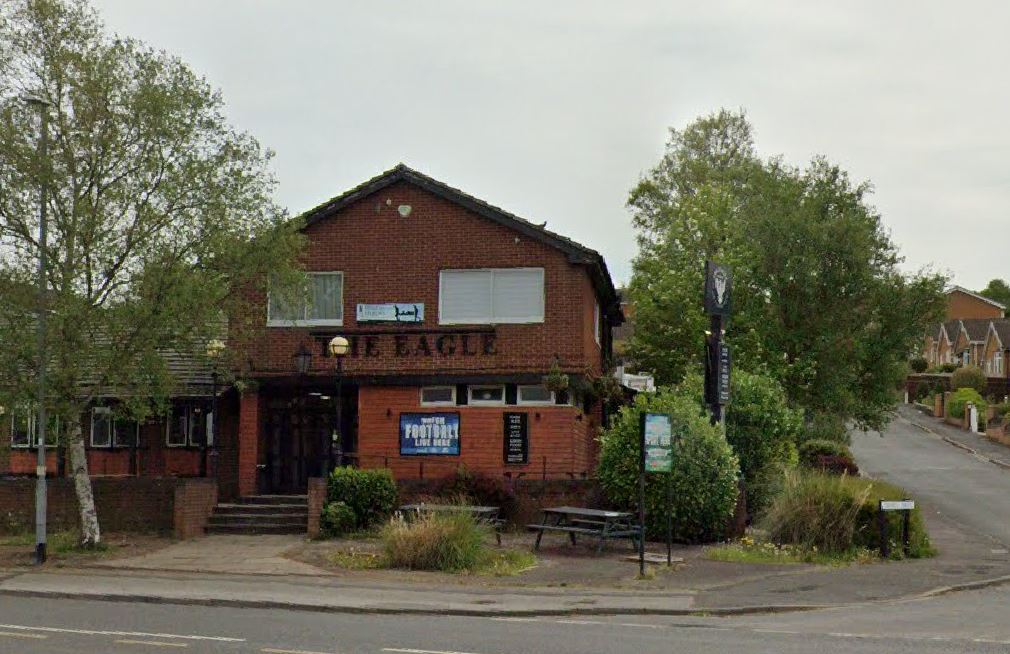
Supermarket giant Tesco says it has ‘no plans’ to take over a former Arnold town pub after the go-ahead to turn the space into a shop.
The former Eagle pub, in Howbeck Road, Arnold, closed down earlier this year after almost 50 years.
It had faced uncertainty in the past, including a sudden closure in May 2024, before reopening.
Following its 2026 closure, it was listed for sale, seeking offers around £550,000.
In March this year, plans were submitted to Gedling Borough Council to change the use of the empty space from a pub into a shop unit, impacting the ground floor only and leaving the upstairs residence unaffected.
This has now been approved by the authority, meaning the empty pub will be turned into a shop, but documents have never stated which business or retailer intends to take over the space, describing them only as the “proposed end user” and that they would submit separate plans for signage in future.
A former landlady previously said the pub had been purchased by a supermarket chain.
Back in April Borough Council leader, John Clarke (Lab), said the “street” rumours circulating was that Tesco could end up moving in.
Tesco already had – and has – a presence on the road. In May 2023, the Tesco Express in Howbeck Road – just opposite the former Eagle pub – closed down.
The spot was then replaced by One Stop – which is owned by Tesco – where the convenience store has remained ever since.
We asked Tesco on Wednesday (September 2) whether it had plans to move its brand, including One Stop, into the former pub.
Tesco confirmed on Wednesday that it had ‘no plans’ to open a Tesco Express store on site.
More recent planning documents have called the proposal a “convenience store”, but so far, no other application for the address has been submitted to indicate which business wants to take over the site.
The future of the new shop will likely be unveiled at a later date once a separate application is submitted for signage.
Documents say the proposed opening hours for the shop would be 8am to 8pm, Monday to Saturday, and 10am to 4pm on Sundays and bank holidays.
A Carlton primary school has benefited from a major £946,000 investment as part of a wider programme of improvements being carried out across Nottinghamshire schools this summer.
Standhill Infant School has received a brand-new boiler system along with an energy-efficient air source heat pump, upgraded heating systems, new ceilings and modern lighting ahead of the new academic year.
The work forms part of Nottinghamshire County Council’s School Building Improvement Programme, which has seen more than £15 million invested in projects at 25 schools during the summer holidays.
County councillors visited the Carlton school during the break to see the improvements taking shape before pupils return to classrooms this week.
Councillor James Walker-Gurley, Cabinet Member for Economic Development and Asset Management, said: “It’s fantastic to see how our investment is taking shape to help benefit this school.
“This work, as well as the dozens of other projects happening over the summer, is also supporting a wide range of local SMEs through our supply chain. This helps us to keep money within the local economy and support family-run businesses across Nottinghamshire.”
Among the firms involved in the project is Arnold Electrical, a family-run company which has been serving Nottinghamshire since 1994.
Partner Paul Goulding said the company was proud to be helping improve facilities for local children.
“At Arnold Electrical, we’re incredibly proud to be involved in this project and it’s particularly rewarding to contribute to projects that directly benefit local schools and the wider community,” he said.
“This contract has provided valuable work for our team and allows us to continue investing in our skilled workforce while supporting the next generation through improved educational facilities.
“Seeing our work make a tangible difference to the environment where children learn and develop is something we take great pride in.”
The Standhill scheme was designed, delivered and cost-managed by Arc Partnership, a joint venture between Nottinghamshire County Council and SCAPE.
Across Nottinghamshire, improvement works worth more than £15 million have been taking place at 25 schools over the summer break as part of ongoing efforts to improve learning environments for pupils and staff.