A man has been charged after a stolen car was allegedly driven through red lights, the wrong way around a roundabout and into multiple vehicles after a break-in in Arnold.
Police were called to Middlebeck Drive at around 10pm on Saturday after reports of a burglary, where keys to a Volkswagen had been taken and the car stolen from outside a property.
Officers quickly launched a search and spotted the vehicle just minutes later as it travelled through Sherwood towards Nottingham city centre.
As police followed, the driver was seen swerving across the road, driving the wrong way around a roundabout and ignoring a set of red traffic lights.
The vehicle also collided with more than one car before eventually coming to a stop in the Forest Fields area.
A suspect was arrested shortly afterwards.
Shaun Noone, 40, of Saltburn Road, Bilborough, has since been charged with burglary, dangerous driving, aggravated vehicle taking, failing to provide a specimen for analysis and criminal damage.
He appeared at Nottingham Magistrates’ Court on Monday, where he was remanded into custody.
Noone is due to appear before Nottingham Crown Court on October 5.
Detective Sergeant Josh Carvell, of Nottinghamshire Police, said: “The officers involved in this incident did a great job locating the vehicle as quickly as they did and ensuring nobody came to harm.
“Their actions ultimately resulted in us being able to return a stolen car to its rightful owner, before charging and remanding a suspect for a series of serious offences.”
Van owners will soon have to book before visiting Nottinghamshire’s recycling centres as the council moves to tackle suspected trade waste abuse costing taxpayers millions.
Under the new rules, starting on January 2, 2027, residents using vans must reserve a slot online before arriving at a recycling centre.
Drivers will also have to re-register their vehicles and will be restricted to six visits a year.
Meanwhile, larger vehicles including Luton vans, box vans, flat-bed trucks and any vehicle weighing more than 3.5 tonnes will no longer be allowed on site.
The changes are part of a Nottinghamshire County Council crackdown on waste believed to be coming from businesses rather than households.
Trade waste is banned at recycling centres, but council figures suggest it could be putting major pressure on the county’s sites.
Data from 2024/25 shows Nottinghamshire handled 70% more garden waste, 75% more plasterboard, 86% more rubble and 63% more wood, chipboard and MDF than neighbouring Derbyshire.
The extra waste is estimated to have added £1.6 million to disposal costs.
From January 2027, van users will have to choose from one of three recycling centres operating on a daily rota. Each site will be available to van drivers every four days.
Anyone turning up without a booking will be refused entry.
The council says visitors will start receiving leaflets this autumn explaining the changes and how the new booking system will work.
Councillor Bert Bingham, Nottinghamshire County Council’s Cabinet Member for Transport and Environment, said the move was designed to protect services for local residents.
He said: “Our recycling centres are for Nottinghamshire residents to dispose of their household waste, and we have a responsibility to ensure they are used fairly and efficiently.
“Residents have told us their concerns about trade waste abuse at our recycling centres and we’re acting on this to improve the experience of visiting one of our sites.
“The amount of certain types of waste being brought to our sites could suggest that trade waste is placing increasing pressure on our centres, leading to residents being turned away and creating higher disposal costs.
“By introducing a booking system for vans and limiting the number of visits each year, we can better manage demand, tackle abuse and help ensure our recycling centres remain accessible and sustainable for residents to use.”
Motorists across Gedling Borough are being urged to plan ahead as a series of roadworks, closures and traffic restrictions are scheduled over the coming weeks.
A number of schemes affecting Gedling, Arnold, Carlton, Woodthorpe, Ravenshead, Calverton, Colwick and Lambley are due to get under way, with some roads set to close completely while improvement works are carried out.
Among the most significant disruptions will be closures on Chesterfield Avenue in Gedling, Westcliffe Avenue in Gedling, Longdale Lane in Ravenshead and Woodthorpe Drive in Woodthorpe.
Works beginning on September 8
Several schemes are due to start on Monday, September 8, including:
Carlton Hill, Carlton (September 8-10) – Roadworks under traffic control by Severn Trent Water.
Spring Lane, Lambley (September 8) – Installation of a new street lighting column by Nottinghamshire County Council.
Church Drive, Ravenshead (September 8) – Roadworks under traffic control by Severn Trent Water.
Works beginning on September 9
A particularly busy period starts from September 9, with several road closures and maintenance schemes planned.
Gedling
Chesterfield Avenue (September 9-10) – Road closed for large-scale carriageway patching works. Works are being carried out by Nottinghamshire County Council.
Freda Avenue (September 9-10) – Diversion route in place to accommodate the Chesterfield Avenue closure.
Besecar Avenue (September 9-10) – Traffic control in place while a bollard is reinstated outside properties on the street.
The Heyes (September 9-11) – Road marking refresh works.
Vernon Crescent (September 9-11) – Road marking refresh works.
Colwick
New Vale Road (September 10-14) – Virgin Media works under traffic control.
Calverton
Manor Road (September 10-11) – Severn Trent Water works under temporary traffic control.
Ravenshead
Mansfield Road North (September 10) – Installation of a loop radar by Nottinghamshire County Council.
Works beginning on September 11
Gedling
Westcliffe Avenue (September 11-14) – Road closure for major carriageway patching works.
Stanhope Road (September 11-14) – Diversion route for the Westcliffe Avenue closure.
Major disruption from September 14
Some of the borough’s biggest schemes are scheduled to begin on September 14.
Ravenshead
Longdale Lane (September 14-18) – Road closure for surface dressing and streetworks.
Nottingham Road (September 14-26) – Road closure for streetworks.
Mansfield Road North (September 14-26) – Carriageway resurfacing works and temporary parking restrictions.
Kirkby Road (September 14-26) – Diversion route linked to the Nottingham Road closure.
Redhill
Mansfield Road (September 14-25) – Lane closure for works being carried out by ESP Electricity.
Gedling
Lorimer Avenue (September 14-15) – Severn Trent Water works under temporary traffic control.
Woodthorpe
Tunstall Road (September 14-15) – Openreach works under traffic control.
September 15 road closures
Several one-day closures are planned in Carlton and the surrounding area on September 15.
Carlton
Buntings Lane – Road closure for streetworks.
Carnarvon Grove – Road closure for streetworks and separate Severn Trent Water works.
Cavendish Road – Diversion route for Carnarvon Grove closure.
Wheatley Drive – Carriageway patching and preventative maintenance works.
Woodthorpe
Woodthorpe Drive (September 15-17) – Road closure for patch repairs, with diversion routes in place.
Arnold
Mapperley Plains (September 15-16) – Street lighting fault repairs and maintenance.
Queens Bower Road (September 15) – Repairs to the central reservation following collision damage.
Mansfield Road / Woodthorpe Drive junction
September 15-17 – Lane closure to support the Woodthorpe Drive road closure and associated works.
Motorists are advised to allow extra time for journeys and seek alternative routes where possible while the works are taking place. Many of the schemes are being carried out by Nottinghamshire County Council as part of its highway maintenance programme, while others involve utility companies including Severn Trent Water, Openreach and Virgin Media.
Gedling Borough Council confirmed its share of council tax will rise by 2.998% for 2026/27 — an extra £5.82 a year on a Band D property, taking the borough’s portion to £200.32 — as councillors approved the budget in March. It’s a modest figure on paper, but it lands on top of a year of national insurance changes, energy costs and grocery inflation that have already squeezed household budgets across Nottinghamshire.
That kind of cumulative pressure changes how people spend on the things that used to be automatic, and it’s exactly the mindset behind why licensing status has become the first thing worth checking before spending on any online entertainment. Comparisons of the best UK online casinos compiled by Bookies.com, an independent authority on the licensed UK market, are built around a straightforward licensing checklist rather than which site pays the biggest bonus — because for a Gedling household deciding whether an online casino night is worth the money this month, that distinction is the difference between spending on something accountable and spending on something that isn’t.
Streaming subscriptions get reviewed. Takeaway nights get spaced out. And for the roughly one in five UK adults who gamble online in some form, entertainment spending gets scrutinised the same way,not necessarily cut, but chosen more deliberately. That scrutiny is overdue, and it’s arguably been missing from how a lot of consumers approach gambling specifically, compared with how carefully the same households now compare energy tariffs or supermarket loyalty schemes.
It’s worth being specific about what a UK Gambling Commission licence actually guarantees, because the term gets thrown around loosely by operators who want the credibility without necessarily meeting the full standard. Under the Commission’s remote gambling technical standards, licensed operators must publish and independently verify the return-to-player percentage on every game, monitor it on an ongoing basis, and allow customers to set deposit limits or self-exclude via schemes like GamStop at any point. None of that is optional extra-mile stuff — it’s the baseline for holding a licence at all, and it’s the reason unlicensed sites operating outside UK jurisdiction remain a genuinely worse bet even when their marketing looks similar on the surface.
There’s a second layer worth understanding too: licensed operators must keep customer funds completely separate from their own operating capital, so that a company running into financial trouble can’t touch player balances to cover its own bills. That single requirement has protected UK players from exactly the kind of operator collapse that’s wiped out customer balances in less regulated markets abroad. It sounds like small print, but it’s arguably the single most consequential difference between a licensed UK site and an unlicensed alternative offering superficially similar odds or games.
For Gedling residents weighing up where the next few pounds of discretionary spending goes, that’s arguably a more useful frame than the headline council tax number itself. A £5.82 annual rise won’t change many household budgets on its own, but it’s part of a pattern this borough has seen before — housing pressure, tightening council services, and residents increasingly asking where their money is actually protected, as our coverage of the 2026/27 budget process explored earlier this year. The same instinct that makes someone query a bailiff letter or a council tax bill should also make them check whether a betting site is licensed before depositing a penny.
None of this is an argument against spending on entertainment; it’s an argument for spending on entertainment that’s accountable when something goes wrong. If a game malfunctions or a withdrawal is delayed, a UKGC licence means there’s a formal complaints process and, ultimately, an ombudsman route to escalate to if the operator itself won’t resolve things fairly. An unlicensed site offers none of that, no matter how generous its offer looks on the landing page or how quickly it processes a first deposit.
Gedling isn’t unique in feeling this squeeze; most of the East Midlands is having the same conversation about budgets this autumn, from Arnold to Carlton to Netherfield. But it’s a useful reminder that the boring parts of consumer protection — licensing, fund segregation, RTP disclosure — matter more, not less, when the pounds in a household budget are being counted more carefully than they were even two years ago. Support is available for anyone who feels their gambling has become a problem rather than entertainment, through BeGambleAware and GamCare, and GamStop remains the fastest route to a national self-exclusion if that’s ever needed.
The decision puts the brakes on Local Government Reorganisation (LGR), which would have seen parts of Gedling, Broxtowe and Rushcliffe merged with Nottingham City to create a new unitary authority, while the remainder of the county formed a second council.
Gedling’s Labour MP Michael Payne welcomed the announcement, saying he had repeatedly raised concerns over the process with ministers.
Mr Payne said: “I welcome the Secretary of State’s decision today to pause and review the proposed Local Government Reorganisation for Nottingham and Nottinghamshire.
“I raised this issue directly with Andy Burnham shortly before he became Prime Minister, making clear my concerns regarding the process, the need for decisions to stand up to any legal challenge, and that the voices of local communities must be heard.”
The MP said he had also raised the issue in the House of Commons in July and was pleased ministers had listened to concerns surrounding the reorganisation plans.
“For me, this has always been about a simple principle: putting the people of Gedling first and doing what is right for Gedling’s future,” he said.
Mr Payne added that during the review period he would seek assurances local residents, councillors and community representatives would be listened to before any future decisions are made.
“Local government reorganisation is a huge change. It affects how decisions are made, how services are delivered, and how our communities are represented. It must therefore be shaped by the people who know those communities best.
“I welcome the pause. Now we need a proper review, genuine engagement, and a process that listens.”
PICTURED: Gedling’s Labour MP Michael Payne welcomed the announcement
Meanwhile, Nottinghamshire Conservatives hailed the move as a major victory for their campaign against the proposals.
Cllr Sam Smith, Conservative leader of the opposition at Nottinghamshire County Council, said the Government’s decision had brought plans for a Nottingham City expansion “to a halt”.
He said: “From day one, Conservatives have fought against City takeover plans at every level while Reform have constantly voted in favour of Gedling and Broxtowe joining the failing Labour City Council.
“We Conservatives have warned that the Government’s Local Government Reorganisation plans, supported by Reform, was a blatant political stitch-up, designed to boost Labour’s city tax base at the expense of well-run boroughs and districts.”
Cllr Smith argued residents in areas including Gedling, Broxtowe and Rushcliffe had opposed the proposals and pointed to petitions signed by thousands of people calling for the plans to be scrapped.
“This is a clear Conservative victory for the people of Nottinghamshire,” he said.
“Residents faced the real prospect of paying more for poorer services, while hundreds of millions of pounds of key assets, such as County Hall, were set to be handed over to a failed and bankrupt Labour-run Nottingham City.”
Cllr Smith said Conservative campaigners would continue pressing the Government until the proposals were “finally thrown out for good”.
Cllr Mike Adams, Conservative Group Leader on Gedling Borough Council and Nottinghamshire County Councillor for Carlton East, said the climbdown followed months of determined opposition from Conservative councillors, residents and local campaigners who argued that Labour’s “super councils” would weaken local identity, remove accountability and risk costing taxpayers more, not less.
“Labour never put this reorganisation in their manifesto,” he said.
“They tried to abolish familiar councils, postpone elections and impose boundaries that local people did not want.
“Conservative councillors have fought this every step of the way — in council chambers, in Parliament through our MPs, through petitions and on the doorstep.”
“In Nottinghamshire we warned that splitting the county and swallowing parts of Gedling into an expanded city would strip residents of local voice and hand over assets paid for by county taxpayers. We asked people to speak up. They did. Today the Government has had to stop.”
The Government’s decision follows legal advice that has prompted a wider review of local government reorganisation plans across England, with Nottinghamshire among 14 areas where decisions are being paused while further consideration takes place.
The move also means local elections are expected to go ahead in May 2027 on existing council boundaries while the review is carried out.
Plans to dramatically reshape Nottinghamshire and expand the city are set to be paused by the Government.
Nottinghamshire had been heading for its largest boundary shake-up in 50 years following the Labour Government’s announcement in December 2024 for Local Government Reorganisation (LGR).
However that plan is now set to be paused by officials following new legal advice.
LGR had meant that by 2028, places like Nottinghamshire would have their multiple councils re-shaped and merged to create new unitary authorities, abolishing the two-tier local government structure in some areas, which sees council services split between lower and upper-tier authorities.
In July 2026, the government confirmed its decision for Nottinghamshire, where sections of Broxtowe, Gedling and Rushcliffe would be merged with Nottingham to form one unitary and a second unitary authority would cover the rest of the county.
Labour’s shake-up plans have been shrouded in criticism since they were first announced, with concerns the LGR process was being ‘rushed’ through and for potential service impacts, local representation and the public consultation itself.
Three of Nottinghamshire’s councils have even floated a judicial review attempt on the LGR decision, which involves a judge reviewing the lawfulness of a decision or action made by a public body. This can only be launched to challenge the way a decision was made, rather than the rights and wrongs of a decision.
Rushcliffe Borough Council, in a joint effort with Broxtowe Borough Council, previously appointed a lawyer to assess whether a judicial review on the decision had a “potential to succeed” – the lawyer ultimately concluded that an application for review was more likely to fail than to succeed.
In late August, the Reform-led Nottinghamshire County Council wrote to the government to seek clarification on the basis for its LGR decision for the county, issuing a ‘Pre-Action Protocol’ letter – this is a procedural step that can iron out any problems before considering further legal proceedings.
However, it appears the wider shake-up of English councils will likely be paused – including for Nottinghamshire – with some areas even having their decisions withdrawn, after new legal advice.
It is understood 14 areas, including Nottinghamshire, will have their decisions paused after legal advice has suggested the decisions be reviewed.
It is also understood the government will say the local elections in May 2027 will go ahead on existing council boundaries.
The potential move comes after new Prime Minister, Andy Burnham, told parliament last week he was ‘prepared to look at local government reorganisation’.
At least eight councils have launched, or were considering launching, legal challenges over their LGR decisions, opposing the government’s choice of boundaries for the new unitary authorities.
The 14 areas where LGR could be paused while a review is carried out are:
Derby and Derbyshire
Devon, Plymouth and Torbay
East Sussex and Brighton
Gloucestershire
Hertfordshire
Kent and Medway
Lancashire, Blackburn with Darwen and Blackpool
Leicester, Leicestershire and Rutland
Lincolnshire, North Lincolnshire and North East Lincolnshire
Nottingham and Nottinghamshire
Oxfordshire and West Berkshire
Staffordshire and Stoke-on-Trent
Warwickshire
Plans for LGR in Essex, Hampshire, Norfolk and Suffolk have been withdrawn following new legal advice.
Decisions for Cambridgeshire and Peterborough, and West Sussex, have not yet been made, with these areas being considered alongside the wider review.
Communities Secretary, Angela Rayner, is expected to inform Parliament later on Monday (September 7) on its decision to pause the process.
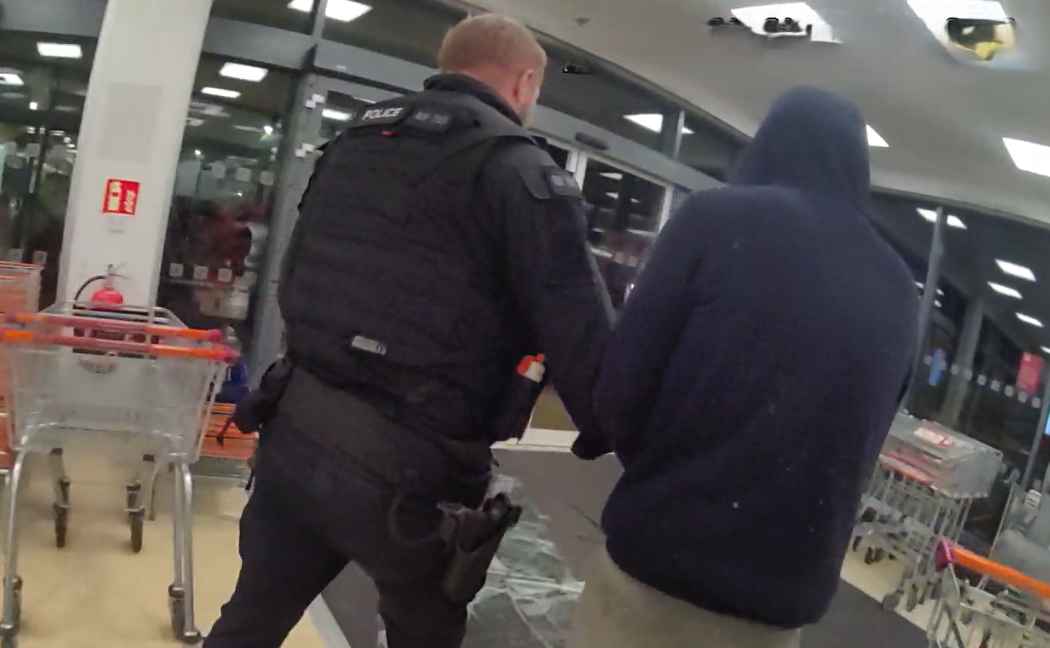
A suspected burglar was arrested within minutes after smashing his way into a supermarket during an early morning break-in.
Police were called to Sainsbury’s in Arnold just before 4.15am on Friday after reports that a man was using a metal rolling cage to smash through the store’s glass entrance doors.
Officers raced to the supermarket on Sir John Robinson Way and quickly found a scene of chaos inside, with numerous bottles of alcohol smashed across the floor.
A 32-year-old man was detained at the scene and arrested on suspicion of burglary and criminal damage.
But the arrest led officers to another unsolved break-in.
After taking the suspect into custody, police discovered he was also wanted in connection with a burglary at Sainsbury’s Local in Wheeler Gate, Nottingham city centre, just days earlier.
That incident happened in the early hours of Tuesday, when an intruder allegedly forced open a door before stealing cans of energy drink and meat products.
The man was then further arrested in connection with the city centre break-in.
He said: “The officers who responded to this incident did a great job getting there so quickly and detaining a suspect.
“Commercial burglaries like this can cause great disruption and distress to those who work in the shops targeted, while also having a negative impact on the wider community.
“While nothing was ultimately taken in this instance, there were multiple examples of damage being caused within the building by the time officers arrived.
“Having identified and arrested a suspect when they did, the response officers in attendance also linked them to a separate break-in at another shop, so it was a good piece of police work all-round.”
Police have released an image of a man they want to speak to after two electric bikes were stolen from a shared house in Mapperley.
The bikes were taken from a communal area inside a property on Querneby Road sometime between 2.30am and 4.20am on June 29.
The burglary happened while the occupants were asleep.
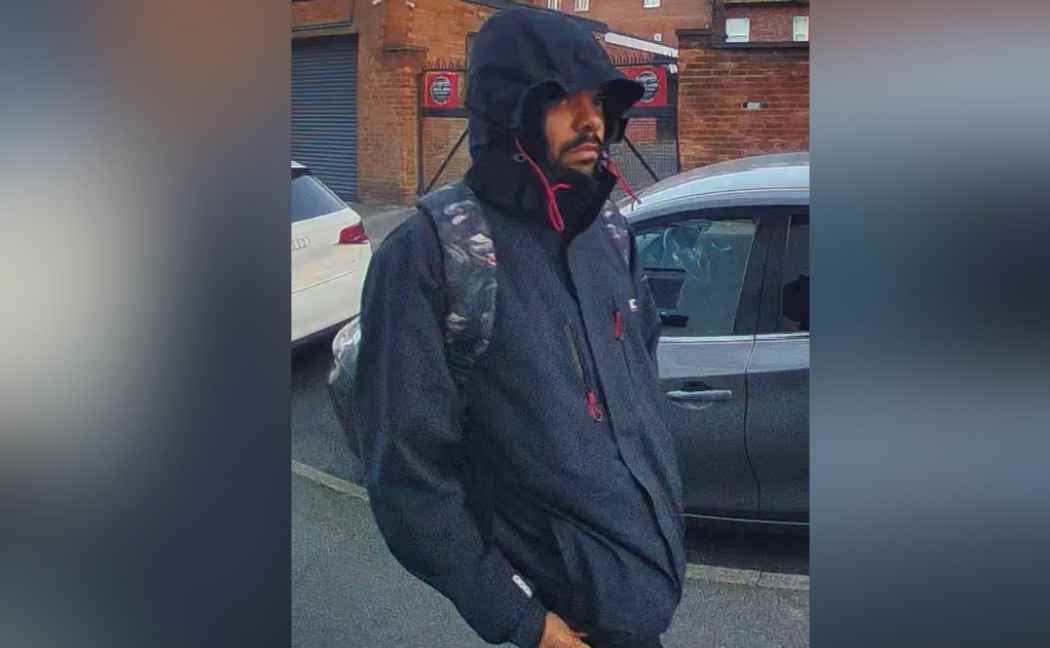
Officers have been investigating the break-in and have now issued a photograph of a man they believe could help with their inquiries.
Detective Sergeant Alana Scott, of Nottinghamshire Police, said: “Two valuable e-bikes were stolen during this break-in, so we’re obviously keen to return them to their rightful owners.
“We also want to track down whoever was responsible for this burglary, which happened in the early hours of the morning while the occupants were asleep.
“We are keen to speak to the man pictured, as we believe he may be able to assist us with our ongoing inquiries.
“We would ask that he comes forward, and anyone who recognises him gets in touch with police.”
Anyone with information is asked to call Nottinghamshire Police on 101, quoting incident 366 of June 29, 2026.
Information can also be passed anonymously to Crimestoppers on 0800 555 111.
A 13-year-old boy was knocked unconscious and left with facial injuries after being attacked in Carlton.
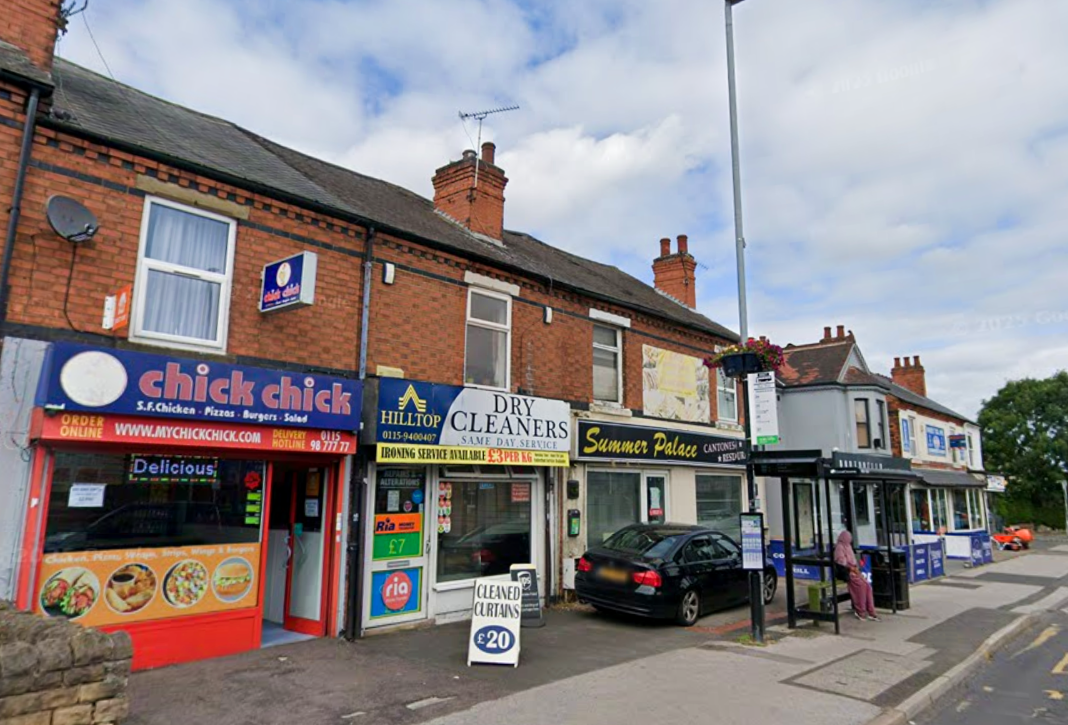
The youngster was assaulted by another teenager and a man near the Chick Chick takeaway on Carlton Hill at around 8.30pm on August 6.
Police said the victim was briefly knocked unconscious during the attack and suffered cuts, bruising, and swelling to his eye and nose.
A 15-year-old boy and a 35-year-old man were later arrested on suspicion of assault occasioning actual bodily harm. Both have since been released on bail while investigations continue.
Officers are now urging anyone who witnessed the incident, or who may have captured footage of it, to come forward.
Police Constable Taya Penny, of Nottinghamshire Police, said: “Despite the arrests, we want to hear from anyone who witnessed this assault, or has any recorded dashcam, doorbell, CCTV or mobile phone footage which could assist.
“A young boy has suffered some nasty facial injuries so I’d urge anyone who can help to get in touch.”
Anyone with information is asked to call Nottinghamshire Police on 101, quoting incident 834 of August 6, 2026. Information can also be passed anonymously to Crimestoppers on 0800 555 11
Drivers in Gedling borough are being warned to expect roadworks and temporary disruption as a series of major highway improvement schemes get underway across the borough this month.
Nottinghamshire County Council has unveiled its latest programme of highway works for September, with seven major resurfacing projects scheduled across Gedling as part of a record £181.25 million investment in Nottinghamshire’s roads.
Among the roads set to benefit are sections of the A60 Mansfield Road in both Ravenshead and Arnold.
The resurfacing schemes form part of the council’s wider Highway Capital Maintenance Programme, which aims to improve road conditions, reduce the risk of potholes and keep traffic moving more efficiently across the county.
Alongside the resurfacing work, crews will continue carrying out surface dressing and micro-asphalt treatments on roads throughout Nottinghamshire. These preventative measures help extend the life of road surfaces by sealing cracks, improving grip and preventing water damage that can lead to potholes.
Additional repairs are also planned in Gedling borough. Patching teams using the council’s specialist JCB Pothole Pro machines will carry out repairs on Church Street in Lambley and Wighay Road in Linby.
Highways teams are also scheduled to undertake improvement works on Chesterfield Avenue and Westcliffe Avenue in Gedling, as well as Wheatley Drive and Buntings Lane in Carlton.
The latest programme follows the completion of resurfacing works on Gedling Road in Arnold and Church Road in Burton Joyce. Earlier repairs were also carried out on the A60 Mansfield Road and Nottingham Road between Papplewick and Ravenshead.
Councillor Bert Bingham, Nottinghamshire County Council’s Cabinet Member for Transport and Environment, said: “We are continuing to make significant progress in improving roads across Gedling with major resurfacing schemes planned for September alongside a range of additional repairs and preventative maintenance works.
“This year’s record highways investment has enabled us to tackle more roads than ever before. By the end of July, we had completed almost 100 road surface improvement schemes, and many more are planned before the end of the year.”
He added: “I’d like to thank residents for their patience and understanding while these important improvements are carried out.”
The council says its year-round maintenance programme will also continue, including drain and gully cleansing, tree inspections and other road repairs.
Residents can view the latest roadworks schedule and updates via the county council’s highways website. Motorists are advised that planned dates may change depending on weather conditions and operational requirements.