Home Blog Page 116

UK slot game developers lead the charge in gaming innovation 

Online gaming has grown over the last couple of years, with slots being a favorite source of entertainment for many. Standing at the frontline in this surge of the gaming world are UK-based developers of slot games, while driving the growth of this burgeoning industry, these developers have set a new standard for creativity and innovation at the same time. 

The UK has rapidly become one of the hubs in developing online slots, with its developers pushing the boundaries of what games can deliver. But why are these UK developers leading this charge in innovative slot gaming?

The Creative Edge of UK Developers

The UK is renowned for its rich history of creativity, which truly finds a place in the slot game industry; starting from small studios to big names like Microgaming and Playtech, the developer’s philosophy relies on the approach of keeping things original in every game’s design, that is, the games should be entertaining to play, with catchy graphics and an appeal in the storylines. Their approach goes beyond simple spin-to-win mechanics, offering players an immersive experience.

The UK slots are very varied; while classic three-reel slots do still exist, in more modern UK creations one can find more recent mechanics like cascading reels, bonus rounds with complex premises, and even interaction of sorts. This has kept the market fresh and competitive, placing the UK developers high within the context of the global slots scene.

The Integration of Technology in Slots

Tech development has changed online gaming completely, and UK developers have been ready to implement their work with every new trend. They use HTML5 widely because it allows games to work properly on most devices without losing their quality; now many of them are trying to create games using VR and AR for more impressive features.

RNGs guarantee fairness, while blockchain is in place for secure and transparent transactions; now, with AI and machine learning added to the mix to offer games based on player preference, developers in the UK are always trying to up their level of creativity about what is possible in online slots.

Focus on User Experience and Engagement

UK developers have realized very vividly that players want more than just fancy graphics; they want to be engaged, kept entertained, and rewarded. This has given rise to the development of many themed and storytelling slots that make players feel like they are on some kind of adventure, rather than merely spinning reels.

The history of golf traditions

Golf is like a lot of sports in that it has a lot of traditions that can seem quite odd to the outside world. But, most of these traditions have a grounding in history and when you learn where they came from, and the reasons for their existence, they make a little more sense. From terms like mulligan and dormie to the use of caddies and the buying of rounds of drinks after sinking a hole in one, it pays to have some idea of their origins or uses.

Betting

It isn’t uncommon for players to have a friendly wager when stepping out on the course. And, commercial betting on the sport also continues to increase. It is popular around the world, with major events taking place in the US, Europe, and Australia.   

A betting sites not on GamStop in the UK, players can bet on a wide range of sports, from golf to rugby.Punters can also use offshore platforms to enjoy in-play betting for golf tournaments, meaning they can place wagers as competitions and games are being played out in real time. 

18 Holes

The first golf events were held in Scotland when courses were only made up of 5 or 7 holes. One early exception was St Andrews. There were ten holes at St Andrews and players would play ten of the holes giving a round consisting of 22.

In 1764, the course combined four short holes to create two. Players still repeated ten holes, though, which gave a round of 18 holes. Other courses soon followed suit, leading to the 18-hole golf courses we are used to today.

Golf fans from all over the world visit Scotland every year to play on this legendary course, which helps to contribute to the country’s lucrative golf tourism sector. International tour operators alone bring in 50,000 golfers to the country every year. 

The 19th Hole

Another long-standing golfing tradition is for players to enjoy a drink or two after a round. It isn’t clear exactly when this started, but one of the oldest known clubhouses still being used today is the Golf Tavern at Bruntsfield Links in Scotland. It opened and has been used as a 19th hole since 1852. The pub even supplies clubs to keen players who want to play a round.

Drinks Are On You

Nobody knows when this tradition started, but it can lead to a bitter-sweet celebration for some players as players who manage to sink a hole in one are expected, according to tradition, to buy a round of drinks in the clubhouse. Some believe that the tradition started in order to prevent false claims of holes in one. Who would falsely claim to have scored an Ace if they then had to buy a round of 20 whiskies?

Fore

It is likely that the use of the word “fore” originates from the days of having forecaddies. Forecaddies would walk the course ahead of the player, looking for lost balls and identifying their placement. As such, the forecaddie was at risk of being hit by the next player’s shot.

Today, the shout of “fore” is used whenever a player hits a stray ball that risks hitting another player or spectator on the course, to avoid potential injury. 

Caddies

When it comes to caddies, the first recorded use was way back in the 17th Century. The future King James VII of Scotland had somebody carry his clubs and find his balls on the course, rather than doing it himself, during the first international golf contest.

The advent of electric golf carts and other technologies means caddies are less popular now, but professional golfers still use them, and caddies typically earn a share of the prize money the player takes home.

Removing The Hat

At the end of a round of golf, it is customary for the players to shake hands. Before doing so, they should remove their hats. The practice of removing hats stems far beyond golf, however, and is considered a sign of politeness or sportsmanship.

Today, some players choose to tip their caps rather than shake hands, and the fist bump has also become more acceptable on the course. Regardless of the method, this show of sportsmanship is considered important and is expected from all players.

Gimmie

The gimmie is commonly used terminology and is most often experienced in casual golf between friends, although not in proper competition. Generally, a gimmie is offered by other players, and it is down to their discretion as to the distance and regularity that they are offered, but a gimmie is usually only given when the shot lands a foot or two short. It is considered good etiquette to accept a gimmie when it is given.

Dormie

Dormie stems from the Latin word “dormir”, which means to sleep. A player is said to be dormie when they are ahead by as many shots as holes are remaining. So, if you are 6 up with 6 to play, you are dormie. It refers to the fact that the dormie player is in a position where they can relax and not stress about their play as much.

However, players have gone on to lose after being dormie, so you should definitely avoid sleeping.

Mulligan

Many clubs and people lay claim to being or knowing the origin of the term mulligan: a word that is used when a player retakes their first shot because they hit a disappointing or wayward drive. Most of the claims centre on one man – David Mulligan, who was a hotelier who played at the St. Lambert CC in Montreal.

Depending on the story you believe, the term came from a single impetuous choice to retake a shot, the fact he was allowed a second attempt because of being shaky from the drive to the course, or because he rushed to the course after waking up late one day and was allowed to take his first shot, that he skewed due to tiredness. The term breakfast ball is also used in the U.S. for a similar retaken shot.

The Dress Code

The dress code that is in place at most courses and during most tournaments dates back to the first games of golf played. Players were expected to wear collared shirts, trousers, and golf shoes as a market of respect for the sport while also ensuring that players looked the part while on the course.

Former betting trade body CEO joins Nottingham Forest board

Michael Dugher, former CEO of the Betting and Gaming Council (BGC), has joined the board of Nottingham Forest Football Club, marking a pivotal career development and a strategic acquisition for the club. Dugher led the BGC from 2020 to earlier this year, a tenure during which he became known for his expertise in government relations, regulatory compliance, and corporate governance. His leadership was defined by efforts to promote responsible gambling practices while fostering collaboration between the betting industry and key stakeholders. Dugher’s appointment brings this wealth of experience to Nottingham Forest at a time when strong governance and strategic direction are crucial for the club’s growth in a highly competitive football landscape.

BGC was formed in 2019 intending to better the UK’s gambling industry standards. Today, gamers have plenty of safe online casinos to choose from, like the ones listed in Joe Hernandez’s best UK online casinos list. These sites attract and maintain gamblers through lucrative bonuses, loyalty rewards, and cutting-edge user experiences. This competition has driven rapid innovation and a customer-centric approach, creating an environment where understanding market trends and consumer behaviour is paramount. Dugher’s leadership at the BGC placed him at the heart of this competitive ecosystem, providing him with a deep understanding of how businesses can thrive by enhancing customer engagement while adhering to strict regulatory frameworks.

The BGC was pivotal during a transformative period for the gambling industry. They led efforts to implement higher standards of responsibility and sustainability within the sector, focusing on consumer protection and promoting best practices. This role required balancing the commercial interests of the betting industry with societal concerns, a dynamic that aligns well with the challenges faced by football clubs engaged in sponsorship and partnerships with betting companies. Nottingham Forest could benefit greatly from Dugher’s ability to manage these competing priorities, ensuring ethical practices while optimising commercial opportunities.

The appointment also underscores Nottingham Forest’s ambition to solidify its standing in the Premier League, where they currently sit sixth on the EPL table. The club has made significant strides on the pitch, but its long-term success hinges on effective governance and financial sustainability. Dugher’s expertise in navigating complex regulatory landscapes will be invaluable as the club strengthens its commercial operations. With the football industry under increasing scrutiny for its relationship with betting companies, his experience will ensure that Forest can maximise commercial opportunities while adhering to evolving ethical standards.

Nottingham Forest’s decision to bring Dugher on board is emblematic of a broader trend in football, where clubs are seeking to integrate professionals with diverse industry expertise into their leadership. The intersection of football and the betting industry has grown significantly in recent years, driven by sponsorship deals, technological collaborations, and fan engagement initiatives. Dugher’s background positions him to effectively bridge these worlds, potentially unlocking new revenue streams for the club while maintaining a focus on integrity and social responsibility.

This move also highlights Nottingham Forest’s proactive approach to navigating the evolving regulatory environment surrounding gambling sponsorships in football. Recently, there has been increasing pressure from advocacy groups and policymakers to reduce the visibility of betting advertisements in sports, citing concerns about their broader societal impact. Dugher, who has had a deep understanding of these issues since his time at the BGC, is uniquely equipped to help Nottingham Forest adapt to these challenges. His insights could prove instrumental in shaping the club’s response to potential changes in legislation and public sentiment.

Furthermore, Dugher’s appointment reflects his personal ties to Nottingham Forest. As a lifelong supporter of the club, he brings not only professional expertise but also a deep passion for its success. This combination of personal and professional investment is likely to enhance his contributions to the board. His commitment to the club aligns with Forest’s broader vision of building a robust governance structure that can support sustainable growth both on and off the pitch.

The timing of this appointment is significant, given Nottingham Forest’s ongoing efforts to establish itself as a stable Premier League presence. Competing at the highest level of English football requires more than just on-field performance; it demands a well-run organization capable of leveraging commercial opportunities, managing risks, and fostering community engagement. Dugher’s background in stakeholder engagement and strategic planning will play a crucial role in helping the club achieve these objectives.

Overall, Michael Dugher’s transition from the betting industry to football governance highlights the increasingly interconnected nature of these sectors. His appointment represents a step forward for Nottingham Forest as it seeks to balance the demands of modern football with its historical and community values. By integrating his expertise into the club’s leadership, Forest aims to position itself as a model of responsible and innovative football management.

History of Nottingham’s Racecourse and its Ladies Day

Nottingham Racecourse, with its rich history and exciting modern developments, continues to be a prominent destination for horse racing fans. Dating back to 1773, racing in Nottingham began at the site known as ‘Nottingham Forest’, but by the end of the 19th century, the racecourse had moved to its current location at Colwick Park. Over the years, Nottingham Racecourse has earned its reputation as one of the most prestigious venues for flat racing, drawing attention not only for its history but for the incredible racing action that continues to unfold on its turf.

In the 1960s, a major turning point occurred when the site was purchased by Nottingham City Council, and an ongoing lease agreement was signed with Racecourse Holdings Trust. This ensured the future of the racecourse and its development into a modern and thriving venue. The course underwent significant changes over the years, particularly in 1996 when it became solely a flat racing venue, after being a dual-purpose course that hosted both flat and National Hunt racing. This shift allowed Nottingham to refine its tracks and attract top-tier horses, paving the way for major events and fixtures.

From then till now and always, there has been a growing trend of those interested in horse racing, as Nottingham stands as a proud example of the sport’s rich history. Even history can go online, as a long-standing tradition like horse betting, which is part of any horse racing history, follows its fans to the digital world. This growing interest in online horse racing analyses and opinions has become a staple for casual fans and serious punters looking to get an edge in their betting choices. For those new to the sport or looking for insights into the latest racing trends, it’s always beneficial to check out horse racing tips from Racing Tipster, where racecourse enthusiasts can get a deeper understanding of the horses, jockeys, and tracks that could lead to profitable betting strategies, particularly during major events like those at Nottingham. 

The course’s history is steeped in remarkable moments, such as when legendary jockey Stan Mellor became the first National Hunt jockey to win 1000 races aboard Ouzo. Additionally, future Grand National winner Timmy Murphy’s victory in Nottingham’s final jumps race in 1996 marked the end of an era for National Hunt racing at the venue. This move towards flat racing opened the doors for the track to focus on classic hopefuls, with horses like Sir Henry Cecil’s Oh So Sharp winning her Maiden race at Nottingham before going on to secure the Fillies Triple Crown.

Modern trends in horse racing are becoming increasingly evident at Nottingham, and the racecourse continues to make strides in innovation and accessibility. One of the biggest recent developments is the enhanced facilities available to racegoers. The addition of two flat tracks, specifically designed for the early and late parts of the season, improves ground conditions and allows for better race preparation. This focus on quality has earned Nottingham Racecourse accolades, including the Racehorse Owners Association’s Gold Standard in 2014 for its exceptional facilities.Last but not least, Lady’s Day is set to return to Nottingham Racecourse in May 2025, which exemplifies the combination of tradition and modernity that the racecourse brings to the community. The event has become a significant social highlight in Nottingham, attracting fashion-conscious attendees and bringing the excitement of horse racing to life. The atmosphere on Lady’s Day is electric, with racegoers dressed in their finest attire, enjoying the races and the après-racing entertainment. With its Premier Enclosure offering exclusive access to a private viewing area and a vibrant party atmosphere after the races, Nottingham’s Ladies Day has become an unmissable event for both racing fans and socialites alike.

CARLTON: Council and LTA serve up tennis court refurbishments at Carlton park

Gedling Borough Council and the Lawn Tennis Association (LTA) have announced a partnership to invest in and refurbish public park tennis courts at Conway Park in Carlton.

The site will be fully renovated to create four new accessible public tennis courts, with an investment of £152,000 helping ensure that quality facilities are available for the local community. 

The project is part of a £30million nationwide investment by the UK Government and LTA Tennis Foundation, delivered by the LTA, to refurbish public tennis courts across Great Britain, and open up the sport to many more people. This investment will see thousands of existing park tennis courts in poor or unplayable conditions brought back to life for the benefit of communities across the country through renovation works, and improved court accessibility with new gate-access technology and booking systems. Over 2,500 courts have been completed so far as part of the project.

Park tennis courts are vital in providing opportunities for children and adults to get active, delivering significant physical and mental health and wellbeing benefits to participants. Accessible facilities in parks are particularly critical to opening up the sport to those from lower socioeconomic backgrounds and women and girls.

The investment will be made up of £113,00 from the UK Government and LTA Tennis Foundation, with £39,000 also be invested by Gedling Borough Council thanks to funding secured from the UK Shared Prosperity Fund (UKSPF).

Alongside the investment, Gedling Borough Council will also work with the LTA to deliver a range of activity across the park sites. This will include weekly organised Barclays Free Park Tennis sessions for all ages, playing levels and experience where equipment is provided, meaning that people will not need someone to play with or their own racket. Local Tennis Leagues will also provide friendly, sociable, opportunities to get active through local competition.  

Once the renovations are completed all courts and sessions at all sites will be available to book online via the LTA website:https://www.lta.org.uk/play making it far easier to find and book a courtor activity.

Work on sites has recently begun and aims to be completed, with the courts re-open for play by Spring 2025.

Councillor Henry Wheeler, Portfolio Holder for Lifestyles, Health, and Wellbeing at Gedling Borough Council, said: “We are pleased to be working in partnership with the LTA to refurbish the tennis courts at Conway Park in Carlton and improve accessibility for local people with the addition of four new courts and a range of park activities to promote this exceptional sport.

By improving the quality of these public facilities, we are encouraging increased participation so that more people can enjoy the benefits of playing tennis, which contribute to improved physical and mental health. This funding represents a valuable investment in the health and wellbeing of our local community and will offer better opportunities for everyone, helping to create a healthier, more active borough.”

Scott Lloyd, LTA Chief Executive, said: “We are delighted to be working with Gedling Borough Council to improve their park tennis facilities and provide more opportunities for people to pick up a racket and get active.

“This investment from the UK Government and LTA Tennis Foundation will mean that courts will be available for people to use for years to come. We will also be working closely with the council to ensure that the local community has a range of accessible opportunities to get on court, ensuring that we open up our sport to many more people.”

Arrest after pupil is allegedly attacked with hammer at Arnold school

A teenage boy has been arrested following an assault at an Arnold school.

Officers were called to Redhill Academy, Arnold, shortly after 9.45am on Monday (20 January) after a pupil suffered a head injury.

The victim had allegedly been hit with a hammer.

He was taken to hospital for treatment and his injuries aren’t believed to be life-altering.

A 15-year-old boy was arrested at the scene on suspicion of causing grievous bodily harm and possession of an offensive weapon.

He remains in police custody.

Sergeant Richard Craig, of Nottinghamshire Police, said:

“We treat all reports involving weapons and violence with the utmost seriousness.

“A suspect has been arrested and we are now working to understand exactly what happened.”

Gedling school goes more than £1million over expansion budget after ‘large amount’ of asbestos found

A major expansion to a Gedling school went more than £1 million over its budget after asbestos was found in parts of older buildings being remodelled.

Carlton le Willows Academy in Gedling has undergone major construction works since 2020 to meet the increasing demand for local school spaces, creating an extra 300 spaces for students.

The expansion, which has already been completed in October 2024, involved a new two-storey building with 20 new classrooms and facilities.

But new Nottinghamshire County Council reports reveal the final project costs went £1,180,053 over budget.

This comes after a “large amount” of asbestos was uncovered in the original building, which had to be safely removed.

Asbestos poses little risk if it is intact, but can release dangerous fibres when the material is disturbed. It was commonly used in construction up until the 1980s and was fully banned in the UK in 1999.

Once broken up and released into the air, the material can cause heart and lung problems if inhaled, and all forms of asbestos can cause cancer.

The council report reads: “This [the extra building work] was due to inappropriate construction methods used in the original building which were not uncovered until some demolition and strip out works had been completed, and a large amount of asbestos which again, was not revealed until a substantial amount of stripping out had been completed.

“In addition to the amount of asbestos to be reasonably anticipated in a building such as this, previous contractors had left asbestos on-site from previous works.”

The county council asked the academy to admit more year seven pupils from September 2022, a request which was made before the project’s completion.

Additional classroom space was needed, costing an extra £200,000.

The further increase in funding, which has now been approved, brings the total cost of the school’s expansion to £15 million.

In addition to new classrooms, the expansion provides a state-of-the-art performance space, a dining hall, office space and a new main reception which has united the previously split site by linking the East and West buildings.

The second and final phase of the development, which was carried out entirely by Clegg Construction, includes a conversion of the previous dining area and  assembly hall into additional teaching space.

A new car park with just under 100 spaces has also been constructed as part of the project.

Carlton le Willows Academy has been contacted for comment.

County Council say they are “cramming” in pothole repairs before April

Nottinghamshire County Council is “cramming” in its road repairs before the next financial year and pushing for longer-term fixes after harsh winters.

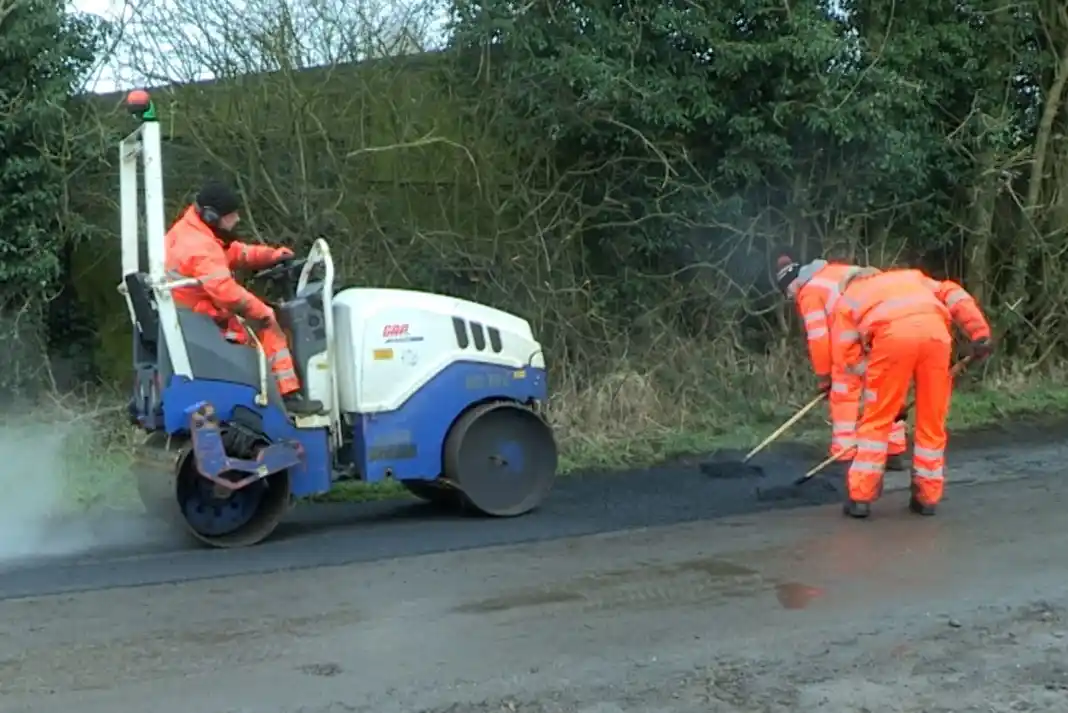
Via East Midlands – the organisation which repairs roads for Nottinghamshire County Council –  were recently in Blidworth, to resurface a damaged road.

Repair workers were using Micro Asphalt, which is a type of resurfacing that creates a new protective, waterproof layer and is designed to produce long-lasting results to roads with limited disruption.

The shift to this approach follows previous criticism from residents and opposition councillors about temporary repairs using ‘Viafix’ – which fills holes, rather than replacing road surfaces.

The council pledged to move away from this approach and to a “right repair, right first time approach” in around 2023.

And in this financial year, which ends in March, the council says it has invested around £66 million in its highway repairs.

In the first half of 2024/25 there have been more than 25,000 pothole repairs, 48,761 highway inspections, 48,475 gullies cleaned and 3,983 streetlights repaired.

Lee Wright, Construction and Maintenance Operative at Via East Midlands, said: “From my skill level, repairs [should last] five to 10 years at least so it’s a permanent repair its not just a quick repair.”

Councillor Sam Smith (Con), leader of the council, also attended the repair work and said longer-term patching is being done “more than ever before”.

He said: “Rather than tar out of a bag in emergency repairs, that only last a few rainfalls, we want to move away from that.

“[Micro Asphalt] makes the road smoother, they last longer than the temporary repairs and also residents like to see it as well- it’s their priority, its our priority.”

Cllr Smith added the council is “cramming” in its road repairs until the end of the financial year in March.

He said: “We’re getting our teams out to as many places as possible. It slowed down a bit because of the frost in recent weeks.

“I would want to see the same, if not more, funding into the roads [in the next financial year].”

One way potholes form is when water gets underneath the tarmac, expands when it freezes and forces the tarmac out which creates a hole.

Winter is often the worst time of the year for potholes appearing, and the council leader urged people to report them using the MyNotts app.

However he said there may be temporary repairs before permanent work takes places.

He added: “Residents are encouraged to log potholes on the MyNotts app or on the website, once we’re aware of it we’ll come out.

“If we have to do a temporary repair just to keep it safe so tyres on cars don’t pop, then we will do but then we’ll come back and do the more long-term patching repair.”

National fish stocks gets much-needed boost as more than half a million are produced by Calverton Fish Farm and released into waters during 2024

It’s been a successful year for Calverton Fish Farm, with owners Environment Agency revealing over half-a-million fish were bred for release into rivers and still waters across England to help boost fish populations.

In 2024, the fish rearing unit produced and stocked 510,488 fish into waterways around the country – an increase of 6.5% on the previous year when 478,937 were bred and stocked.

In addition, just under two million advanced reared larvae were also stocked out into the wild. 

Richard Pitman, Fish Farm Technical Specialist at the National Coarse Fish Rearing Unit said:  “The work of our national fish farm is funded by income from rod licence fees, so it’s great to see we are continuing to produce strong and healthy fish needed for restocking and recovery. 

Fish from Calverton fish farm in Devon
Thousands of fish from Calverton Fish Farm have been released into rivers and waters across England (PHOTO: Environment Agency)

“Occasionally a helping hand is needed to restore the natural balance following a pollution incident or decline, or to create new fisheries and opportunities for anglers. The annual national restocking programme is funded by income from rod licence sales and usually takes place in the winter.

“We take great care in ensuring that every fish is fit for purpose when stocked out into the wild. During their 18 months at the farm, the fish are fed live natural food, they encounter a range of flora and fauna and are trained in flowing conditions while being grown in the earth ponds.  

“Winter is a good time to introduce the fish into rivers, as the water temperatures are low and this minimises any stress on the fish, giving them the best possible survival rates. It enables them to acclimatise to their new surroundings, ahead of their spawning season in the spring.”

The spawning season was challenging in 2024 due to the increased rainfall and cool temperatures during the spring.

Richard continued: “This made locating and obtaining sufficient broodstock at the optimum time difficult. These conditions also impacted the start of our second-year production cycle. With the storms and reduced temperatures experienced through April and into May, live food production and pond advancement was reduced causing a knock-on effect to the stocking programme.

“Despite the challenging start in 2024, the team at Calverton showed their dedication and commitment throughout the growing season to produce an increase in fish production compared to last year. Their diligence has resulted in over half a million, high quality, fit for purpose fish, being released into the wild throughout England.”

Fish also play a critical role in sustaining a river’s finely balanced eco-system, so the wider natural environment also gets a boost from restocking.  

Council approves plans to introduce car parking charges at Gedling Country Park

Gedling Borough Council leaders have today approved plans to introduce car parking charges at Gedling Country Park.

The council’s Cabinet confirmed that all revenue generated from the new parking charges will be reinvested directly into the maintenance, upkeep, and development of the award-winning park.

Cabinet members discussed the plans at their meeting on 9 January, following a public consultation.

The feedback received has helped shape the proposals, which includes the introduction of a £2 daily parking fee to be implemented in Spring 2025, and a permit system for regular visitors, as well as for members and volunteers of the Friends of Gedling Country Park group.

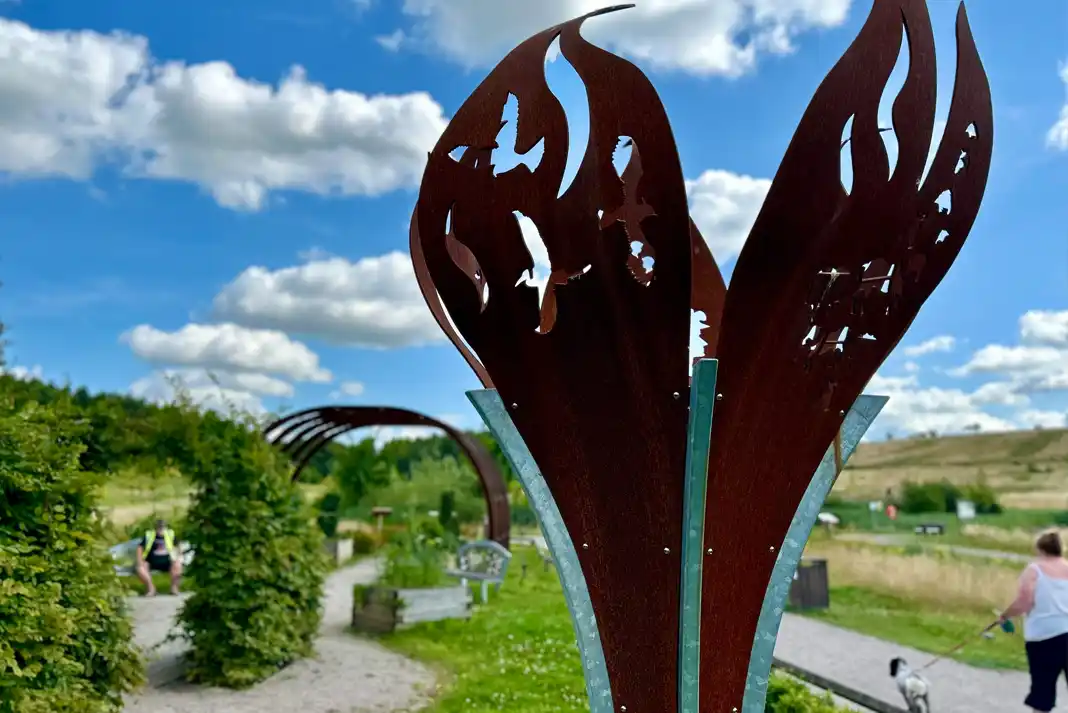
Photo of Gedling Country Park
PICTURE: GBC

The council has confirmed that cashless payment options will be an additional convenience for users, not a replacement for traditional cash payment methods.

While visitors will be able to pay using a mobile app or card at selected machines, cash payments will continue to be accepted across all car parks.

The parking charge is expected to generate up to £200,000 annually, which will be used exclusively to ensure the park remains one ofNottinghamshire’s best-loved green spaces.

Funds will go towards essential maintenance, such as repairing potholes in the upper car park, and broader park improvements to benefit the community and visitors.

Councillor John Clarke MBE, Leader of Gedling Borough Council, said: “This is about reinvesting in Gedling Country Park to ensure it remains one of the best parks in Nottinghamshire.

“Every penny raised from these charges will go directly back into maintaining and improving this important space. This funding will secure the future of our flagship park for the thousands of people that visit every year.

“We are proud of Gedling Country Park and we are committed to keeping it in top condition for everyone to enjoy.

“We’ve also listened to feedback and are making sure that payment options are flexible and accessible. Whether visitors prefer to pay by cash, card, or app, they’ll have a choice. We think this is a fair and reasonable step to sustain the park’s future.”

Gedling Borough Council said that the £2 daily charge ‘remains competitive’ with other country parks in the region.

They said charging hours will run from 8am to 6pm, ensuring early morning and late evening visitors can still enjoy the park at no extra cost.

Gedling Country Park is accessible by public transport, and parking at the nearby Lambley Lane car park will remain free.