Home Blog Page 58

Councilor calls for ‘national change’ after second Traveller encampment in Carlton

A Gedling borough councillor says ‘national change’ needs to happen with Traveller encampments after a local park was used twice this summer.

Traveller caravans were spotted on the cricket field in Jubilee Park on Burton Road, Carlton, again this past week – the group has since moved from the spot, leaving on Tuesday, August 19.

This comes not long after the park had to be closed for inspection and cleaning following a Traveller encampment in June 2025.

At the time, Gedling Borough Council secured a court order requiring the Travellers to leave the park by midday on June 20.

Mike Adams
Cllr Adams said security for the park should be increased

Trent Valley Borough councillor Mike Adams said he first became aware of the second encampment at the park on Friday, August 15 after a resident contacted him. He said the lock to the gate to the patch had been broken.

Cllr Adams said security for the park should be increased, but “national change” to legislation for Travellers needs to happen to allow councils the “immediate ability” to ask such groups to leave sites.

He said: “Whenever the borough council has [dealt with this issue], the [Traveller group] has found another way to get through the gates.

“A lot of gates are used by people who cut the grass, so they have to be there. It seems whatever measures [are in place], there does seem to be a way to get through them again.

“It’s hard to prevent access, it needs national change to legislation. They seem to park up, then an order gets issued and once it goes through they can be evicted.”

Cllr Adams added that by the time a court order goes through there is already “a lot of damage” to the space.

Once Traveller groups leave a site, councils clean up the space – sometimes having to decontaminate the patch.

Cllr Adams says “remains of [human] excrement” have been found in bushes in such incidents.

A Facebook post as part of a Gedling community group said the human waste was “particularly bad around the seats at the back which overlook the [cricket] field and in the overgrown area behind them where the wildlife carving is”.

Cllr Adams added: “These places are parks, it’s where kids are playing – it’s revolting.”

“Our teams work incredibly hard after the event. It’s not fair on the residents who use the park and those who clean up after them.”

Fellow Trent Valley councillor, Sam Smith said: “The concern is the mess they leave behind. It costs councils loads of money to put a portaloo in, checking the kids [in the Traveller group] have an education.”

He said the council needs to look at “alternative solutions” to prevent a similar occurrence as “whatever they’ve done so far isn’t working” adding: “Put boulders in the way of the access, diggings bunds, strengthening the locks – the council needs to look at those options now and I hope they do so.”

A Gedling Borough Council spokesperson confirmed: “The site has now been vacated [August 19] following a swift response from the council and Nottinghamshire Police.

“The council will now arrange a clean-up of the site and are investigating what measures can be taken to prevent further encampments on this site.”

They also confirmed the cost of the current clean-up was approximately £1,000.

The Ministry of Housing, Communities and Local Government was contacted for comment.

Residents in Stoke Bardolph attend drop-in session to voice concerns about future housing development on surrounding green belt land

Concerned residents in Stoke Bardolph attended a drop-in event last week to voice their concerns about future housing development on surrounding green belt.

are rallying to defend their treasured Green Belt land against proposals from Labour-led Gedling Borough Council to earmark key green spaces for housing development.

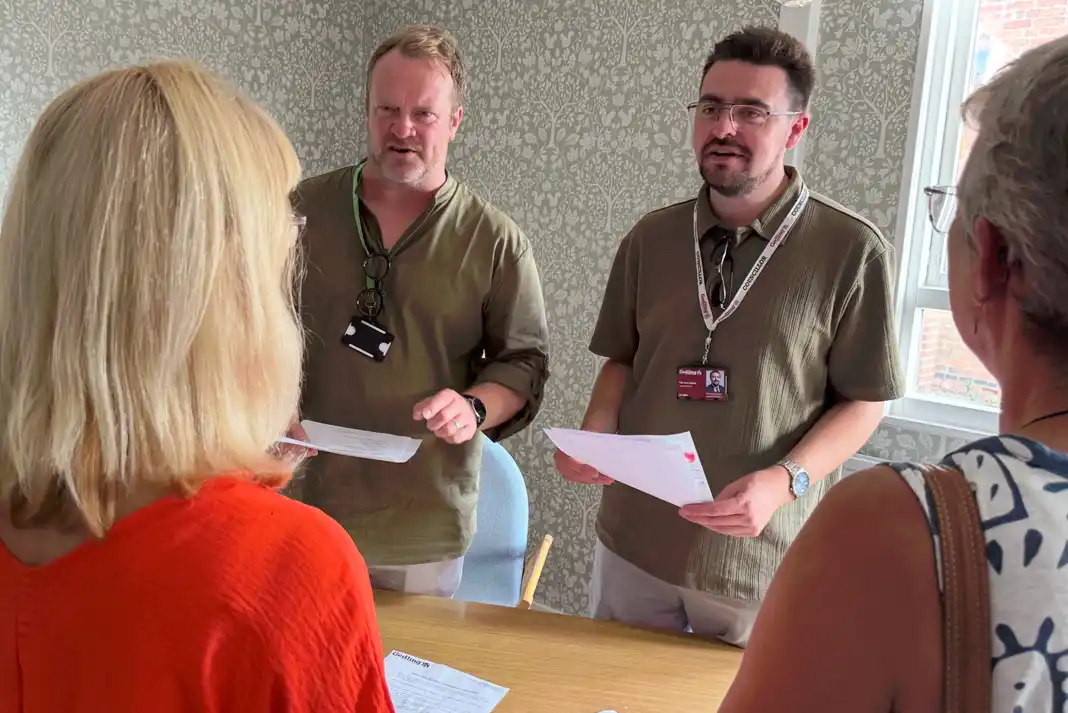
The growing opposition was made clear at a well-attended Local Plan drop-in session organised and hosted by Stoke Bardolph’s Conservative Councillors, Sam Smith and Mike Adams, last night. The session gave local people a chance to review the Labour Council’s draft Local Plan and raise their concerns about the threat of overdevelopment in cherished Green Belt areas across Stoke Bardolph, Burton Joyce, Rivendell, and Gedling.

The controversial proposals come in the wake of the Labour Government increasing Gedling Borough’s annual housing target by 45% – to 631 homes per year. In response, Gedling Borough Council has published a draft Local Plan that identifies several new housing sites, including sensitive Green Belt locations.

Speaking at the event, Cllr Sam Smith who represents Stoke Bardolph, Burton Joyce, Gedling and Rivendell on Gedling Borough Council said: “The Green Belt is more than just open land – it’s a vital buffer that protects our communities from overdevelopment, flooding, and the loss of local wildlife. Labour’s plans would rip up that protection and replace our green spaces with concrete. Residents are rightly angry and worried, and we stand firmly with them in opposing this destruction.”

Cllr Mike Adams, who also serves as the area’s Nottinghamshire County Councillor, added “Building on these sites would damage local biodiversity, increase flood risk in lower-lying areas, and rob families of access to nature and countryside. Once these green spaces are gone, they’re gone for good. We’re encouraging everyone to take part in the consultation and tell the Labour Council loud and clear: hands off our Green Belt.”

Among the proposed development areas:

• Extension of the Rivendell estate into Stoke Bardolph (Plan A2)

• Housing along Nottingham Road, Bridle Road, and Orchard Close in Burton Joyce (Plan A7)

• Development on the former Severn Trent farm site behind St Luke’s Church in Stoke Bardolph (Plan A12)

A public consultation on the draft plan is now open. Residents can view and object to the proposed sites via:gedling.inconsult.uk/connect.ti/GLDPIO

For more information and updates on the campaign to save Gedling Borough’s local green spaces, visit:www.savegedlingsgreenspaces.co.uk

Celebration event planned to mark 10th anniversary of Gedling Country Park opening

An event is being planned next month to celebrate 10 years since Gedling Country Park first opened.

Gedling Borough Council are holding the event to mark a decade since the transformation of the former Gedling Colliery site into one of Nottinghamshire’s most cherished green spaces.

Since opening its gates in 2015, Gedling Country Park has welcomed over two million visitors.

The park, which had been left derelict and unsafe for over 20 years following the closure of the pit now offers 580 acres of open space, wildlife habitats, accessible walking trails and panoramic views.

Friends of Gedling Country Park and staff from Gedling Borough Council at the commemorative stone in Gedling Country Park

Since opening the park has grown over the past 10 years to include a visitor centre and café, play areas, memorial gardens and viewing platforms that showcase the beauty of the surrounding countryside.

To celebrate this milestone, the council is inviting people to join them for a free event at the park filled with environmentally themed activities, interactive music workshops, community stalls and opportunities to learn more about the park’s history and future. The event will take place at Gedling Country Park on Saturday, September 6 2025, from 11am to 3pm.

The celebration is being organised in partnership with the Friends of Gedling Country Park, whose volunteer work has helped to develop the park over the past decade, raising thousands of pounds for benches, memorials and other improvements to the park.

Councillor John Clarke MBE, Leader of Gedling Borough Council, said:“Gedling Country Park is a shining example of what can be achieved when a community comes together with a shared vision.

“From its roots as a colliery to its rebirth as an award-winning park, it has become a place of pride, reflection and recreation for thousands of residents and visitors.

“I’m delighted to celebrate this 10-year milestone and thank everyone who has contributed to its success. Here’s to the next decade of growth and enjoyment.”

Knife carrier jailed after stabbing victim in chest through car window in Arnold town centre

A knife carrier who stabbed a man through a car window in the chest in Arnold has been jailed.

The victim attended the Queen’s Medical Centre with a deep wound to his chest around 1.30am on March 8 2025.

He chose not to engage with police but doctors confirmed the injury had been caused by a knife and detectives began an investigation.

CCTV inquiries revealed the victim’s car had arrived in Front Street, Arnold, around 12.40am and he and another man attended a bar for a short period of time before leaving as part of a larger group.

Connor Gladwin left the bar a short time later and footage showed him spot the victim’s car and walk towards it

A man later identified as Connor Gladwin left the bar a short time later and footage showed him spot the victim’s car and walk towards it.

Shortly after 1am Gladwin was seen speaking to the victim before thrusting his arm through the car window twice.

After an altercation with a number of other people Gladwin folded an object in his hands and walked away.

Gladwin, aged 23, was identified as the offender from the CCTV footage and this was confirmed when a forensic examination found his fingerprint on the victim’s car.

Gladwin, of Hungerhill Road, Nottingham, was jailed for a total of three years and nine months at Nottingham Crown Court on Monday (18).

He had earlier pleaded guilty to committing grievous bodily harm without intent and possession of a knife in a public place.

Detective Inspector Julian Eminson-Ferry, of Nottinghamshire Police, said: “Tackling knife crime is a priority for the force so any report of a stabbing is treated with the utmost seriousness.

“The victim chose not to engage with officers but following this incident we used all the investigative tools at our disposal to identify Connor Gladwin as the offender and arrest him.

“Anyone who chooses to leave their home carrying a knife is putting themselves and others at greater risk.

“Our efforts to seize these weapons and bring knife carriers to justice continues alongside our attempts to educate young people about the risks involved.”

Littering fine charge more than doubles in Gedling borough

People caught littering in Gedling will now be hit with a more-than-doubled charge of £150 after the council approved an increase to the fine.

Documents released by Gedling Borough Council on Saturday (August 16) show the charge for a Fixed Penalty Notice (FPN) for littering will now increase from £65 to a minimum of £150 in an effort to put residents off the offence and to generate more income.

If the fine is paid within seven days of being issued, this would reduce to £100.

The £65 charge had remained unchanged since 2019 but, in 2023, the government increased the maximum fines for littering from £150 to £500.

The council’s documents say the previous lower fine was “relatively low” compared to other local authorities in the country, saying council officers view a fine less than £150 as not representing a “sufficient deterrent” from littering.

Broxtowe Borough Council is one authority that chose to increase its littering fine to the maximum of £500 from April 2025.

Responding to this difference, Gedling’s documents read: “It is felt, at this time, that this level of financial penalty is disproportionate to the offence.

“It is also possible that setting the level too high will lead to a higher rate of non-payment and therefore a larger burden on the council’s legal department to prosecute.”

Increasing littering FPN charges allows councils to generate more revenue for environmental agents, which then gives them more income that they can use to help tackle littering in their areas.

Council papers say: “Setting the FPN level at a more reasonable and
proportionate amount of £150 helps ensure that the Environmental
Enforcement Agents Contract is economically attractive and viable for a
contractor to take on as they don’t charge a fee to the Council.

“It also ensures that the council benefits from the percentage share income [of five per cent].”

The council cannot yet say what this income will be used on, but it will be used to “bolster” existing public services such as street cleaning and litter removal.

For households with lower incomes the higher fine may have a “disproportionate impact” on their disposable income, where the council says payment plans could be offered.

The maximum fine for littering in Rushcliffe Borough and Newark and Sherwood is also £150, with early payment figures of £80 and £75 respectively.

Where Would You Go With a Windfall? A Traveler’s Ultimate Bucket List

0

It’s the kind of freedom that sparks the question: how would you travel if you won a Powerball jackpot or received some other kind of windfall?

With platforms like Lottoland making it easier than ever to participate in lotteries from around the globe, this is a question many people ponder.

Imagine waking up in a silk-swathed overwater bungalow, sipping a local coconut brew as the sun paints the Indian Ocean gold. The world stretches before you—no budgets, no rush hours, just infinite possibilities. An upward trend in record lottery prizes reflects how global participation fuels larger jackpots, making these life-changing windfalls an increasingly tangible dream for many.

I’ve always been the kind of person who scribbles destinations in the margins of notebooks. Sometimes it feels a little mad—do I really need to chase the northern lights in Iceland just because I saw one photograph? Probably not. Yet that itch, that mix of curiosity and wonder, is hard to shake.

Would I island-hop through the Maldives? Heck yes. Would I trek the Inca Trail to Machu Picchu? Most definitely. But, I’ll admit, there’s something deeply satisfying about discovering hidden gems closer to home, too.

Off the Beaten Path

Sure, the Taj Mahal is on everyone’s list (it draws more than eight million visitors a year), but India alone deserves its own epic tour. With 43 UNESCO World Heritage Sites, our own backyard is a treasure trove of history and culture. Picture gliding down Kerala’s lush backwaters in a houseboat, the breeze flitting through coconut palms—or losing yourself in the silence of Ladakh, with snow-capped peaks reflecting in icy lakes.

Ever paddled through the mangroves of the Sundarbans at dawn? It’s surreal. And yes, you might get a little wetter than planned—but that’s half the fun, right? I’ve lost count of the times a spontaneous Kerala escapade left me grinning like a schoolkid—those little surprises are pure gold. Magic indeed, truly.

Global Icons & Grand Adventures

Let’s talk bucket-list icons: The Maldives, that paradisiacal archipelago, topped a global bucket-list survey for an astonishing 121 countries. Imagine stepping off a seaplane onto powder-white sand—no wonder people dream about it.

Then there’s the Serengeti safari where elephants amble like they own the place; the Great Barrier Reef’s kaleidoscopic corals; or the Northern Lights shimmering above the Arctic Circle. Each experience is a pulse-quickening invitation to feel tiny in the best possible way.

A Touch of Royalty

If luxury beckons, consider retracing the Silk Road via a palace-on-wheels—India’s Maharajas’ Express or Palace on Wheels. Velvet drapes, private butlers, dining under starlit skies near Jaipur’s Amber Fort—this isn’t your average train journey. It’s like stepping into a bygone era, when travel was an art form. In my opinion, the thrill of a single night aboard beats any five-star hotel stay. (Yes, I said it.)

Beyond Destinations

Here’s the thing: a dream trip isn’t just about ticking boxes. It’s about feeling that small sigh of amazement when you stumble into a tiny café in Lisbon’s Alfama district or the chill of wind on your face as you cycle through Vietnam’s rice paddies. What if I told you that sometimes the best days are unplanned detours? It’s true.

Before you jet off on your own version of paradise, remember this: stay active and healthy while traveling. And when you finally return—richer not just in memories but in stories—you’ll know exactly where you want to head next.  

Where would you go first if money were no object? Drop a comment below and tell us your wildest dream itinerary.

For social share:

Unleash your inner adventurer and discover how to travel the world with no limits. From hidden gems in India to global icons like the Maldives, this article explores dream itineraries and the ultimate travel freedom, with a little help from a windfall, like a prize from Lottoland.

From Bingo to Blockchain: A Nostalgic Look at Gedling’s Gaming Transformation

Gedling has seen its gaming culture changed dramatically, from lively bingo halls and neon-lit arcades to the digital frontier. This retrospective offers a journey through the borough’s play spaces and poker-faced transitions.

From Local Halls to Global Platforms

Gambling in Gedling has undergone a remarkable transformation, from communal bingo nights in local halls to solitary online sessions powered by sophisticated tech. What once was a neighbourhood pastime now lives on through mobile apps and borderless platforms. This transformation reflects broader changes in how leisure, risk, and reward are experienced today.

As digital platforms began to dominate, a new layer emerged beyond UK-regulated betting options. While those old venues may be gone, the digital era has introduced betting sites not on GamStop, accessible globally and operating outside traditional UK systems. These platforms, not subject to the UK Gambling Commission’s restrictions or self-exclusion schemes, offer an alternative for users seeking fewer limits or broader game selections. For Gedling residents, this move represents more than technological progress, it underscores the changing geography of gambling, where players can bypass local norms with a tap or a click.

Long before this modern change, Gedling’s gaming story began in far humbler settings, with paper cards, mechanical machines, and a community gathered in laughter and anticipation.

1. Origins: Bingo and Working‑Class Leisure

Bingo emerged in Britain after the Betting and Gaming Act of 1960, which legalised large cash prizes and sparked a rise in purpose‑built halls and repurposed cinemas across the country. In Gedling’s old suburbs, Arnold, Carlton, Netherfield, villages and local towns hosted their own bingo venues. These quickly became social hubs, blending local charm with communal entertainment.

By the late 1960s and into the 1970s, these halls hosted “eyes down” sessions and “house” games that drew crowds of working‑class locals. Bingo was more than gambling, it was weekly community theatre, ritual, and camaraderie.

2. The Golden Era: Arcades and Prize Bingo

As the late 1970s and 1980s unfolded, arcades and mechanised bingo proliferated. Games like electromechanical prize‑bingo and coin‑op amusements were staples in entertainment centres. Prize Bingo, found in arcades, merged slots and bingo concepts, becoming popular in seaside resorts and leisure arcades across the UK. Gedling’s own arcades featured these machines, combining blinking lights with the thrill of chance, a companion to the bingo subscriptions of older players.

By the 1990s, independent arcades shared suburban strips alongside small bingo clubs. These venues offered quick games and instant‑win thrills, even as traditional bingo saw declining attendance.

3. Decline of the Halls: Regulations, Taxes, and Online Rise

From 2005 onward, bingo halls across the UK began to decline sharply: from nearly 600 nationwide in 2005 to under 400 by 2014, and around 260 by May 2023. In Gedling borough, council records showed around six amusement arcades and 13 betting shops operating as of ~2010. Local halls shuttered due to rising taxes, the smoking ban, and competition from online gaming.

Meanwhile, arcades changed toward redemption games, amusement machines, and low‑stake prize slots, marking the end of an era for traditional bingo and classic coin‑op halls.

4. Betting Shops and Competitive Bookmaking

Betting shops, legalised off‑course by the same 1960 Act, flourished in British high streets. Clusters of bookies served local horse racing fans and football punters, reflecting the wider national trend of betting shops becoming everyday fixtures.

These shops coexisted with remaining bingo halls into the early 21st century, but their growth highlighted a cultural movement: from communal bingo to solitary bets, from bingo cards to betting slips.

5. Modern Era: Digital Platforms and Online Bingo

By the late 2000s and early 2010s, online bingo had firmly established itself in the UK’s digital entertainment landscape. These platforms replicated the social atmosphere of traditional clubs through chat features and themed rooms, while offering the convenience of remote access. For many former bingo hall regulars in Gedling, it became a natural next step, swapping paper cards and dabbers for screen taps and digital tickets.

6. Hybrid Spaces and Niche Revival

Today, Gedling’s gaming scene is a hybrid of small pubs with fruit machines, charity lotteries, and online communities. Occasional local fundraisers, community raffles, and local council‑backed causes, such as Gedling Lotto, keep grassroots gaming alive. While the big halls are gone, the memories persist: faded velvet curtains, bingo dabbers, and weekly wins.

7. Digital Habits and the Psychology of Play

As technology reshaped everyday life, it also reshaped how people played. In Gedling and beyond, gambling stopped being an event and became an ever-present option, always accessible via smartphones and apps. This change wasn’t just about convenience; it changed the pace, privacy, and psychology of gambling.

Digital interfaces introduced faster gameplay cycles and real-time betting features, which altered how risk and reward were experienced. Unlike the social pacing of a bingo night or the ritual of visiting a betting shop, online play often became solitary and instant. Notifications, autoplay, and cashback incentives further gamified the process, blurring the line between entertainment and compulsion.

8. From Nostalgia to New Norms: What It Means for Gedling

Gedling’s journey from bingo halls to arcades to online play mirrors the national moving forward of UK gambling: once tightly regulated, predominantly public and social spaces, now an app or website away. Traditional venues offered community and physicality; today, digital platforms offer round‑the‑clock access and personalised experiences, but at the cost of local social gatherings.

9. The Cultural Fabric: What Gaming Meant to Gedling

In Gedling’s heyday, gaming wasn’t merely about winning, it was woven into the borough’s social fabric. For older residents, Thursday night bingo was as much about gossip and community as it was about numbers and dabbers. Many recall venues like the Carlton Bingo Club or makeshift games in local halls run by volunteers. These spaces acted as informal town squares, where people shared their lives between calls of “Legs Eleven” and “Two Little Ducks.”

Stories passed down include lucky charms, birthday wins, and even marriage proposals during half-time intervals. The arcade scene, too, brought together teenagers in shared pursuits of ticket jackpots and high scores on “Pac-Man” and “OutRun.” The culture wasn’t just about the games, it was about gathering.

10. From Ladbrokes to Laptops: The Rise of Online Bookmaking

The late 2000s also marked the tipping point in another area: traditional betting shops gave way to mobile sportsbooks. Bookmakers like William Hill and Coral launched websites that allowed Gedling punters to bet on football, greyhounds, cricket, and even politics from their phones.

The progress happened as fixed-odds betting terminals (FOBTs), controversial machines in high street shops, came under scrutiny. FOBTs led to significant losses for some users and were eventually capped at £2 maximum bets in 2019, under pressure from advocacy groups and MPs.

These changes reduced in-shop traffic and nudged more bettors online, where limits were looser and games more varied. The transition changed betting from public to private, a cultural transformation reflecting broader changes in leisure consumption.

11. Community Gaming in the Digital Age

Despite the digital drift, elements of community gaming still persist in town. Charity raffles at church fêtes, quiz nights in local pubs, and the council-supported Gedling Lotto preserve the idea of gaming for good. With tickets priced at £1 and proceeds supporting local causes, the lotto echoes the social utility of bingo clubs.

There’s also been a niche revival of analogue games: community board game nights and retro arcade pop-ups in Nottingham have drawn residents eager for nostalgia. This analogue renaissance is partly a reaction to digital saturation, a yearning for tangible, shared experiences.

12. Gamification in Unexpected Places

Interestingly, the idea of “gamification”, applying gaming mechanics to non-gaming environments, has crept into daily life in Gedling. Local schools use platforms like ClassDojo to incentivise behaviour with points and badges. Fitness centres run leaderboard challenges. Even recycling initiatives reward consistent participants.

While not gambling, these systems adopt game logic, rewards, levels, competition, and demonstrate how gaming culture now permeates everyday settings in subtle ways.

13. Gambling Policy and the UK Digital Divide

On a national scale, gambling regulation has struggled to keep pace with technology. The 2005 Gambling Act, intended to modernise oversight, quickly became outdated. In Gedling and similar boroughs, this led to a patchwork experience: while local councils could regulate physical venues, they had no jurisdiction over digital platforms, especially those not licensed by the UK Gambling Commission. For players looking to circumvent UK self-exclusion or explore alternate odds, these sites offer freedom but come with fewer protections. 

14. Gedling’s Generational Gap in Gaming

One interesting trend is the divergence in how generations engage with games. Older residents remember bingo as a social escape; newer users often encounter gambling through mobile games, esports, or influencer-promoted betting apps.

Virtual economies and in-game features like loot boxes, mystery rewards purchased within video games, have added layers of complexity and excitement to modern play. While these mechanics have prompted broader conversations about transparency and player awareness, they also reflect how gaming today blends entertainment, strategy, and online interaction.

This generational divide doesn’t signal a decline, it signals expansion. What began in local clubs and bingo halls now stretches across platforms, genres, and communities. From console gamers to casual app users, Gedling’s gaming culture continues to advance, bridging age groups through shared curiosity, even if not always through shared formats.

15. Crypto and Blockchain and New Frontiers in Play

As the digital landscape expands, so too do the tools and technologies that shape gaming. Concepts like blockchain-based gaming, decentralised casinos, and tokenised rewards are beginning to enter the public conversation, even in areas like Gedling, where traditional gaming roots run deep.

These platforms introduce novel ideas: provably fair mechanics using public ledgers, player-owned assets via NFTs, and smart contract-powered payouts. While not yet mainstream, they offer a glimpse into how gambling and gaming could expand, more personalised, decentralised, and transparent.

For mobile-first generations, these systems may eventually become familiar territory. While adoption varies, what’s clear is that Gedling’s gaming journey is still unfolding, open to innovation, but shaped by a long-standing appreciation for fairness, fun, and community.

16. Memory, Meaning, and Moving Forward

The memory of gaming is inseparable from personal stories: a grandma who never missed a Wednesday night bingo, a dad who played fruit machines at the chippy, or a brother who hit big on an accumulator bet. These narratives shape how locals view both risk and reward. As Gedling moves forward, the borough has the opportunity to reflect on these legacies, to build future gaming policies and platforms that balance accessibility, safety, and community value.

Conclusion

Gedling’s gambling development speaks to broader changes in leisure culture: from Housey‑Housey and bingo nights to fast-paced arcs, and finally to sophisticated online platforms. Physical venues may have closed, but their legacy lives on in memories, photographs, and local stories shared in groups like the Gedling Village Local History Society.

As the borough embraces digital trends, reflecting on the past offers wisdom: the communal buzz of bingo halls, the excitement of prize arcades, and the importance of balanced leisure, lessons that may shape how Gedling navigates the future of gaming responsibly.

What Betting, Gaming, and Streaming Say About Modern Free Time

Once upon a time, free time meant sitting down with a paperback, heading to the pub, or catching whatever was on the telly. Now? It’s just as likely to involve a screen, a swipe, or a strategy. From quick mobile games to weekend-long Twitch marathons, how we relax has shifted, and quickly too.

This shift isn’t just about technology. It’s also about accessibility and personal preference. Digital entertainment offers flexibility, something more people value in their time off. Whether it’s esports, casual streaming, or placing a bet on your favourite team, these activities offer instant engagement. Platforms like Ufabet Trackmaven are part of this growing digital mix, catering to users who want a seamless, all-in-one hub for entertainment and interactivity.

Photo by Yan Krukau

The Blurring Lines of Entertainment

We no longer need to block out hours to unwind. Instead, we find small moments to engage. Waiting for the bus? That’s enough time for a mobile card game. Got half an hour after dinner? That’s a couple of Twitch streams or even a quick virtual poker round.

What’s interesting is how the lines are starting to blur between passive entertainment, like watching TV, and interactive options, like live betting or multiplayer games. People don’t just want to be entertained. They want to participate. Online platforms have picked up on this, offering a hybrid experience that blends watching, playing, and even competing.

Casual and Competitive: The Sweet Spot

One of the reasons digital leisure works so well today is that it meets people where they are. Some just want to chill. Others thrive on a bit of competition or a chance to test their instincts. Sites that offer real-time odds, sports betting, or arcade games give both types of users something to dive into.

This trend is especially visible in the rise of esports viewership. Even those who don’t play can get involved by spectating or predicting outcomes. It’s not just about fandom. It’s about being part of something as it happens. And thanks to the mobile-first design of most platforms, that’s possible from anywhere.

Screen Time as Social Time

It’s easy to assume that gaming or betting alone is a solitary act, but that’s not the full picture. Many people use these platforms to stay connected. Whether it’s chatting with other players in a game lobby, watching a live stream together, or sharing odds in a group chat, there’s a social layer to this digital downtime.

Streaming platforms and interactive games make it easy to feel part of a wider group, even when you’re relaxing at home. For some, logging in becomes part of their social routine. It’s no longer just something to do when you’re bored. It’s a shared experience.

Convenience Is King

Why has digital entertainment taken off so fast? Because it’s easy. There’s no need to download clunky software or wait for updates. Most games and betting platforms are fully mobile-optimised. You can log in on a break, while commuting, or during a quiet evening in.

And let’s face it, convenience matters. People are more likely to return to platforms that let them engage quickly, enjoy short bursts of fun, and pick up where they left off. That’s the sweet spot modern services are aiming for, and it’s working.

Why This Matters

Looking at these trends isn’t just about what we’re doing to pass the time. It also gives us insight into what we value. We want things that are fast, easy, social, and engaging. We want to feel a part of something, even if it’s digital. And more than ever, we want to shape our own downtime, not have it shaped for us.

For businesses and platforms, understanding this shift is huge. It’s not just about offering games or streaming services. It’s about offering experiences that match modern habits. And for everyday users, it means there are more ways than ever to spend your free time, whether you’re in the mood for quick fun or deep immersion.

Photo by Yan Krukau

Final Thoughts

Digital entertainment isn’t replacing traditional leisure. It’s just offering more options. It’s giving people more control over how, when, and where they relax. Betting, gaming, streaming—they’re all just pieces of a bigger picture. One where leisure is flexible, fun, and increasingly interactive.

And in the end, maybe that’s what modern free time is all about: not tuning out, but tuning in on our own terms.

Premier League 2025: Who Will Be the Main Contender for the Title This Season?

The Premier League 2025/26 season kicks off on August 16, and the race for the title is already heating up.

Last season, I was glued to a pub TV, cheering as Liverpool clinched the crown, but Manchester City’s comeback and Arsenal’s depth kept it tight. With a £11.67 billion betting market buzzing and even new casino sites UK offering special football promos,

I’m itching to see who’ll dominate this time. Liverpool, City, Arsenal, Chelsea, and Newcastle are the bookies’ favorites, but who’s the main contender? Let’s dive into the transfers, tactics, and odds to find out who’s got the edge for 2025/26.

The Premier League Title Race: A Fierce Battle

The Premier League’s a rollercoaster, with Liverpool’s 2024/25 title (10-point lead) ending City’s four-year reign. Arsenal’s three straight runner-up finishes and Chelsea’s Club World Cup win show it’s anyone’s game. I tossed a £20 bet on Arsenal last year via Discowin Casino’s app, and their fight to the final day had me on edge. The transfer window (June 1-10, June 16-September 1) saw £2.86 billion spent, setting up a blockbuster season. With UKGC’s £150 checks keeping my bets safe, let’s break down the top contenders.

Top Contenders for the 2025/26 Title

Liverpool: Defending Champions

  • Key Transfers: Florian Wirtz (£100m), Milos Kerkez (£40m), Jeremie Frimpong (£29.5m)
  • Manager: Arne Slot
  • 2024/25 Form: Champions, 17 wins, 5 draws, 1 loss, Mohamed Salah’s 21 goals

Liverpool’s title defense is stacked. Wirtz’s creativity fills the gap left by Trent Alexander-Arnold’s £10m Real Madrid move, while Salah’s 21 goals and 14 assists make him a Golden Boot favorite. Their 10-point 2024/25 lead shows dominance, but back-to-back titles are rare. I’m betting they’ll stay top, but their Club World Cup run might tire stars.

Manchester City: Rebuilding for Glory

  • Key Transfers: Rayan Cherki (£20m), Tijjani Reijnders (£30m), Omar Marmoush (£60m)
  • Manager: Pep Guardiola (contract to 2027)
  • 2024/25 Form: Third, no trophies, Erling Haaland’s 19 goals

City’s third-place finish stung, but their £289m transfer splurge, replacing Kevin De Bruyne, signals intent. Cherki and Marmoush add flair, and Rodri’s return from injury is huge. Pep Lijnders’ counter-pressing tweaks could spark a 6-0 Ipswich-style rout again. They’re my pick if they gel fast.

Arsenal: The Hungry Chasers

  • Key Transfers: Martin Zubimendi (£65m), Kepa Arrizabalaga (£5m), Benjamin Sesko (pending)
  • Manager: Mikel Arteta
  • 2024/25 Form: Second, Champions League semi-final, 61.6 xG

Arsenal’s three runner-up finishes fuel their fire. Zubimendi’s midfield steel and Sesko’s potential 20 goals address their scoring woes. I backed them last season, and their 90-point potential is scary. If Arteta rotates better, they could finally end their 2004 title drought.

Chelsea: The Dark Horse

  • Key Transfers: Jamie Gittens, Joao Pedro, Lautaro Martinez (£42m)
  • Manager: Enzo Maresca
  • 2024/25 Form: Fourth, Club World Cup champs

Chelsea’s youth-focused squad, with Cole Palmer and Nicolas Jackson, won the Club World Cup. Gittens and Martinez add firepower, but their young average age (24) needs consistency. They’re a sneaky bet for a top-two finish, especially after their 2024/25 form.

Newcastle United: The Rising Threat

  • Key Transfers: None major, but retained Alexander Isak
  • Manager: Eddie Howe
  • 2024/25 Form: Fifth, EFL Cup winners, Isak’s 22 goals

Newcastle’s EFL Cup broke a 65-year trophy drought. Isak’s 22 goals and Howe’s tactics make them contenders. I bet on them for a top-four spot last year-they’re close but need depth to challenge.

Contender Snapshot

TeamKey PlayerManager2024/25 ResultOdds to Win
LiverpoolMohamed SalahArne Slot1st Place9/5
Manchester CityErling HaalandPep Guardiola3rd Place7/2
ArsenalMartin ZubimendiMikel Arteta2nd Place5/2
ChelseaJamie GittensEnzo Maresca4th Place10/1
NewcastleAlexander IsakEddie Howe5th Place33/1

Why It’s Wide Open

Transfer Impact

Liverpool’s Wirtz and City’s Marmoush could be game-changers, while Arsenal’s Zubimendi adds balance. Chelsea’s youth and Newcastle’s Isak retention boost their chances, but integrating big signings takes time. I saw City’s new boys shine in a friendly-scary potential if they click.

Tactical Battles

Slot’s Liverpool press like Klopp’s, but City’s new counter-pressing under Lijnders could counter it. Arteta’s Arsenal are possession kings, while Maresca’s Chelsea and Howe’s Newcastle thrive on transitions. I watched Arsenal’s 2024/25 finale, and their fluidity was unreal, but consistency’s key.

Betting Buzz and Fan Hype

The UK’s £11.67 billion betting market, with 60% mobile wagers, is buzzing. Fans are split-some back Liverpool’s Salah, others City’s Haaland or Arsenal’s depth. I’m tossing £20 on Arsenal via Discowin Casino, drawn by their 5/2 odds. Markets cover title winners, top scorers, or clean sheets, with crypto betting (Bitcoin) adding speed. Just like many top uk casinos, the UKGC’s £150 checks and £5 spin limits keep my bets safe, letting me enjoy the thrill.

Challenges Ahead

Injuries and Fatigue

City’s Rodri and Liverpool’s Salah faced 2024/25 injuries, and Chelsea’s youth lack stamina. The Club World Cup could tire stars, as Pep feared. I lost a bet when Haaland sat out last season-proof injuries can derail.

Rivals’ Depth

Liverpool face Arsenal’s Zubimendi and Chelsea’s Gittens, while Newcastle’s thin squad battles depth-heavy City. Promoted teams like Leeds add unpredictability, but their 100-point Championship runs don’t guarantee survival. The race is brutal-nobody’s safe.

The Road to May 2026

The season opener on August 16 sets the tone, with City vs. Wolves, Liverpool vs. Bournemouth, and Arsenal vs. Leicester. Liverpool’s early odds lead, but City’s firepower and Arsenal’s hunger make it a three-horse race. Pubs will be packed, fans debating like it’s Euro 2028. I’m rooting for Arsenal, but the Premier League’s chaos keeps me guessing.

Conclusion

The 2025/26 Premier League title race, starting August 16, pits Liverpool’s Wirtz-fueled defense, Manchester City’s Haaland-led rebuild with Cherki (£20m), and Arsenal’s Zubimendi-powered chase against Chelsea’s Gittens and Newcastle’s Isak in a £11.67 billion betting frenzy on Discowin Casino, with 9/5 to 33/1 odds. Liverpool’s 2024/25 dominance, City’s new tactics, and Arsenal’s depth make it tight, but injuries and promoted teams like Leeds add twists, so my £20 bets stay cautious with UKGC’s £150 checks for a thrilling season of pub debates and epic battles.

Toxic blue-green algae found in Colwick Country Park lake

Visitors are being advised to avoid contact a Colwick lake after it was confirmed it contains toxic blue-green algae.

A spokesman for Nottingham City Council warned visitors of the dangers.

They said:”We’ve had confirmed reports of blue-green algae on the West Lake at Colwick Country Park.

“Keep away from the water – this includes dogs and other pets. Blue-green algae can be toxic and potentially fatal to both animals and humans.

“Please ensure your dog does not swim, paddle, or drink from the lake.”

They confirmed the East Lake (Trout Lake) was currently unaffected.

The spokesman nadded: “We’ll continue to monitor the lakes and update people if the situation changes. Please follow all signage and guidance from staff.”