Home Blog Page 56

Why Local Markets Still Matter in a Digital Shopping Age

https://unsplash.com/s/photos/farmers-market

Local markets have always been more than places to buy and sell goods. They are gathering points, social hubs, and reflections of community identity. In towns and cities across the UK, markets continue to offer fresh produce, handmade crafts, and unique items that cannot be found on supermarket shelves. The atmosphere of a bustling market, with its mix of voices, scents, and traditions, remains a vital part of local culture. Yet the rise of digital shopping has challenged many of these spaces, raising questions about how they can compete in an age of instant convenience.

Many industries have already embraced the digital shift. Banking, healthcare, education, and entertainment have all moved significant parts of their services online. Customers expect faster payments, simpler access, and user-friendly design in nearly every interaction they have. The same is true in leisure. For example, the best online casinos in UK localities are praised for perks such as quick withdrawals, wide game selections, and the ability to play anytime without barriers. These features mirror a broader demand across society: digital platforms must deliver efficiency while still creating engaging experiences. What is striking is that local markets, despite their traditional character, are learning to adopt some of these expectations while keeping their authenticity intact.

Technology is no longer absent from the market square. Many stallholders now accept contactless payments, use mobile apps to advertise their products, and manage their businesses through online platforms. Customers can browse what will be on sale before they even leave home, or place special orders via social media. These innovations mean that markets are not being left behind—they are evolving. By offering modern conveniences while preserving the personal touch, they bridge the gap between tradition and technology.

One of the strongest arguments for local markets is the human connection. In a world where algorithms often dictate what we see and buy, speaking directly with a producer offers reassurance and trust. A conversation with a baker about their sourdough starter or with a farmer about seasonal vegetables provides knowledge and transparency that digital platforms cannot replicate. The interaction is as much a part of the purchase as the product itself. For many people, this sense of connection is worth the occasional inconvenience of leaving the house.

Markets also provide economic resilience for communities. While major retailers and online giants dominate global trade, local producers keep money circulating within neighbourhoods. Stallholders are often small businesses or family enterprises whose success benefits the local economy directly. They create jobs, support suppliers, and ensure that communities retain some independence from external forces. In times of uncertainty, these networks of small-scale trade can provide stability.

Sustainability is another reason markets remain important. Buying local reduces the carbon footprint associated with transporting goods over long distances. Fresh produce sold at a market often has fewer preservatives, less packaging, and shorter journeys from farm to table. This resonates with the growing consumer demand for environmentally responsible choices. For many, supporting local markets is both a practical and ethical decision.

Cultural heritage is woven into every market. From historic market halls in northern towns to seasonal fairs in rural villages, markets are part of the UK’s story. They showcase regional specialities, crafts, and traditions that would otherwise struggle to survive. Walking through a market is often a journey through local identity. The sound of traders calling out prices, the sight of traditional displays, and the feeling of community are experiences that digital platforms cannot fully replicate. Preserving markets is therefore also about preserving culture.

That said, digital convenience cannot be dismissed. Consumers today live busy lives and often seek the easiest option. Markets must continue to adapt if they are to thrive. Some are already creating hybrid models, where online catalogues complement physical stalls, or where home delivery services are offered alongside market days. This flexibility allows them to meet changing expectations without losing their roots. For younger generations raised on digital convenience, this adaptation is crucial.

Tourism is another area where markets play a key role. Visitors often seek out local markets as authentic experiences. They offer a chance to taste regional delicacies, purchase unique souvenirs, and engage with residents. For towns and cities, markets are an asset that boosts the visitor economy while showcasing local pride. Digital promotion through websites and social media ensures that these markets are visible to wider audiences, drawing in people who might not have otherwise visited.

The future of local markets may lie in this careful balance. They cannot compete with the sheer scale of online platforms, but they do not need to. Their strength lies in offering something that digital commerce cannot replicate: authenticity, connection, and community. By adopting enough technology to remain relevant while preserving their essence, they can continue to thrive in a changing world.

Ultimately, markets still matter because they remind us of what commerce once was and what it can still be. They are places where conversations accompany purchases, where community spirit is visible, and where traditions meet the modern age. Digital shopping may be here to stay, but it cannot replace the unique value of a market square. As long as people continue to crave connection, authenticity, and trust, local markets will remain a vital part of everyday life in the UK.

Enhancing your Volkswagen’s performance: The role of VW alloy wheels

0

Enhancing your Volkswagen’s performance goes beyond engine tuning and suspension upgrades. However, among such upgrades, one that is often overlooked but still very effective is the choice of the right VW alloy wheels. Alloy wheels upgrade extend benefits to handling, ride quality and the overall driving experience.

One of the performance features of VW alloy wheels is the light-weighted property. Unsprung weight refers to the mass of the wheel not supported by the suspension system. Thus, less weight on each wheel helps the suspension work better and handle bumps and imperfections in the road. This leads to improvements in grip and stability. The result is faster steering response as well as better braking performance along with a more engaging driving experience.

In addition to performance benefits, VW alloy wheels are generally better at cooling brakes compared with regular steel wheels. This fact leads to a more steady brake temperature during spirited driving or a long journey, reducing the risk of brake fade. Moreover, alloy wheels are less likely to corrode and, therefore, keep both their appearance and structural integrity over time. Drivers who want their car to perform well and look good often choose VW alloy wheels.

Once you understand what is needed, it is easy to get quality wheels and Elite Wheels & Tyres makes finding the perfect set of VW alloy wheels easy. Whether you prioritise design, performance, or a mix of both, their expertise ensures you find the alloy wheels that fit your car and driving style perfectly.

Good alloy wheels not only provide functional advantages but can also be a great source of visual expression for your car. The modem, sporty VW alloy wheels design is a perfect match for Volkswagen’s sleek lines, thereby making your car look refined yet dynamic. Be it classic multi-spoke or adventurous mesh, there are alloy wheel sets that match all VW models – from Golf to Tiguan.

When considering a change and deciding to buy new Volkswagen wheels make it a habit to check their specifications such as correct load rating, speed and size. Installation of the right tyre on the right rim will also help in keeping the speedometer accurate as well as the car’s original handling dynamics. Correct installation and wheel balancing help eliminate vibrations and improve driver safety.

To sum up, upgrading to beautiful and functional VW alloy wheels, gives you the triple benefit of improved performance, enhanced safety and attractive aesthetics, while also making a real difference through their lighter weight, improved heat management, and oxidation resistance for Volkswagen owners seeking a noticeable driving upgrade that they can feel. This improvement becomes both accessible and enjoyable when the right Volkswagen alloys are chosen, fitted and supported by reliable suppliers.

Nest boxes bid to preserve Netherfield’s barn owls at nature reserve

Gedling Conservatio Trust is calling on members of the public to support its new appeal to raise more than £450 to help the barn owl thrive.

With its distinctive heart-shaped face and ghostly form, the iconic barn owl was once a common sight in Nottinghamshire but today it is one of our county’s most threatened species.

The old, wooden, barn owl box sited at Netherfield Lagoons is approaching the end of its life after nearly 20 years of service.

Just this year it has provided a home for four owl chicks but needs replacing when they fledge.

The Trust are now looking to buy a new, long-lasting, weather resistant box, designed in collaboration with the Barn Owl Trust.

A spokesman for the Trust said: “We feel that a Tawny Owl box would also be an excellent addition to our housing portfolio as there have been many sightings.

“Each box costs £180 and installation for both should cost £100. We are seeking to raise £460 for installation over this coming winter.

“As an addition, it would be possible to install a camera in the Barn Owl Box which would enable us to monitor activity and make the film available via social media. For a camera, batteries etc. we would need a further £500.

You can make a donation HERE

Gedling man jailed after handguns and ammunition found at property following house fire

A man has been jailed after a pair of handguns, magazines of ammunition and a silencer were found in his house in Gedling.

Police officers made the shocking discovery after being called to a fire at a property in Shearing Hill.

Homeowner Jason Spence wasn’t in at the time of the blaze, which was ruled an accident by fire investigators.

When a large cannabis grow was immediately discovered within the house, police conducted further searches.

These extended to outside, where officers came across a green holdall bag hidden in a loft space inside the garage.

A handgun and a self-loading pistol were inside it, along with multiple rounds of ammunition and a sound moderator.

Jason Spence wasn’t in at the time of the blaze, which was ruled an accident by fire investigators.

A handgun and a self-loading pistol were inside it, along with multiple rounds of ammunition and a sound moderator.

The firearms were checked over by experts and confirmed to be viable.

Police seized the bag’s contents, while the 109 cannabis plants and growing equipment inside the address were removed too.

The house searches on 11 January this year quickly established that the property belonged to Jason Spence.

He was nowhere to be seen but was found and arrested days later in Stockport, Greater Manchester.

The 54-year-old was charged with two counts of possessing a firearm less than 30cm in length and four counts of possessing ammunition for a firearm.

He was additionally charged with possessing a firearm without a certificate – in relation to the silencer – and producing cannabis.

Having pleaded guilty to all the counts, Spence, of Shearing Hill, Gedling, attended Nottingham Crown Court to be sentenced on Monday (September 8).

He was sentenced to ten years and eight months behind bars. 

Detective Inspector Julian Eminson-Ferry, of Nottinghamshire Police, said:

“It can’t be stressed enough how dangerous Jason Spence’s decision to have and store these items in his home was.

“Both the firearms discovered in his garage were viable and therefore deadly weapons.

“If that wasn’t bad enough, he compounded this danger further still by holding four sets of different ammunition and a silencer in the same bag.

“Whatever his motivations were for having this haul of weapons, he put others around him at risk of harm with his actions and deserves the prison sentence he’s received.

“It really shouldn’t need to be explained why having a viable firearm in your possession is such a serious offence.

“There is never an excuse for anyone to become involved in gun crime and anyone who does so should expect to face a lengthy spell behind bars.”

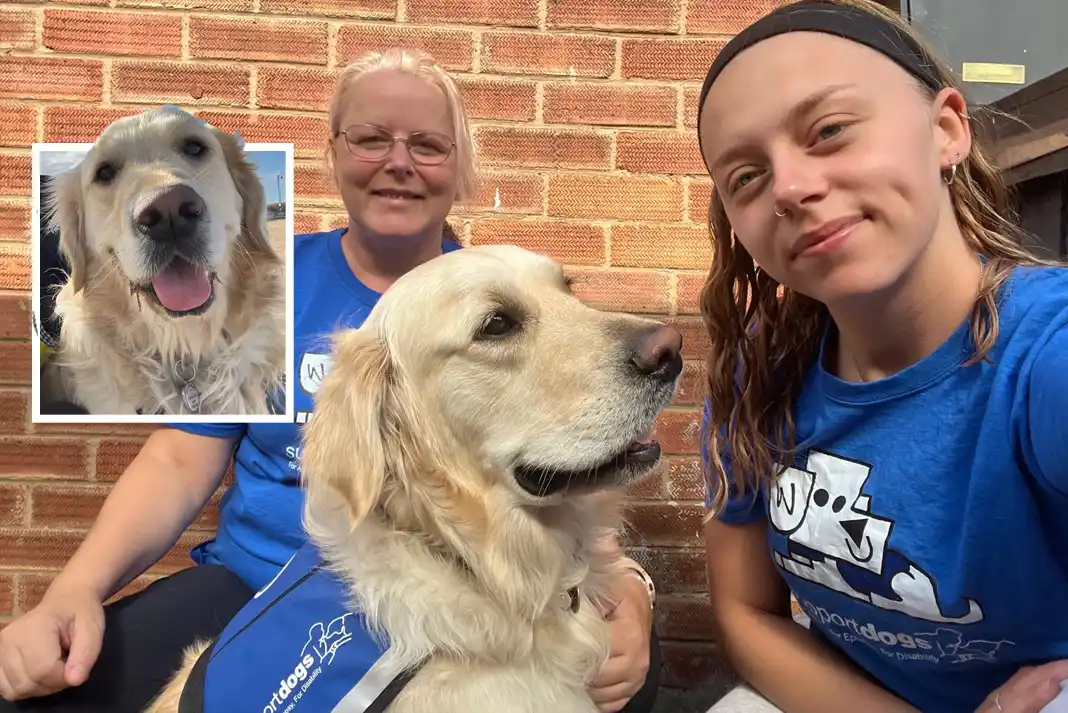
Daughter of disabled former nurse from Arnold is taking to the skies to raise cash for Support Dog charity

Sophia Hollis was approaching her 10th birthday when her mum collapsed in the bathroom during a suspected stroke.

Two and a half years later mum Anita, of Arnold, was diagnosed with idiopathic Ataxia, a neurological disorder which affects balance and walking, speech, swallowing, vision and hearing. She also has small fibre neuropathy, which affects sensations in the hands and feet.

Anita, now 51, was diagnosed in late 2015 and the condition forced her to leave her nursing job after 20 years.

She now uses a wheelchair, walking sticks or a mobility scooter.

Anita, who worked at Queen’s Medical Centre for five years and spent 15 years in community nursing, found herself increasingly isolated and anxious to go out on her own, finding her local shop’s aisles too narrow to navigate in her mobility scooter.

She was once even made to feel that a supermarket security guard suspected she was drunk, after her condition caused her to fall into a freezer, coupled with slurred speech.

Sophia, a 22-year-old veterinary medicine student at the University of Nottingham, is preparing to tackle Support Dogs’ first-ever mass Skydiving Day

But she has been given a new lease of life, after having her pet dog Oliver trained by the national Support Dogs charity.

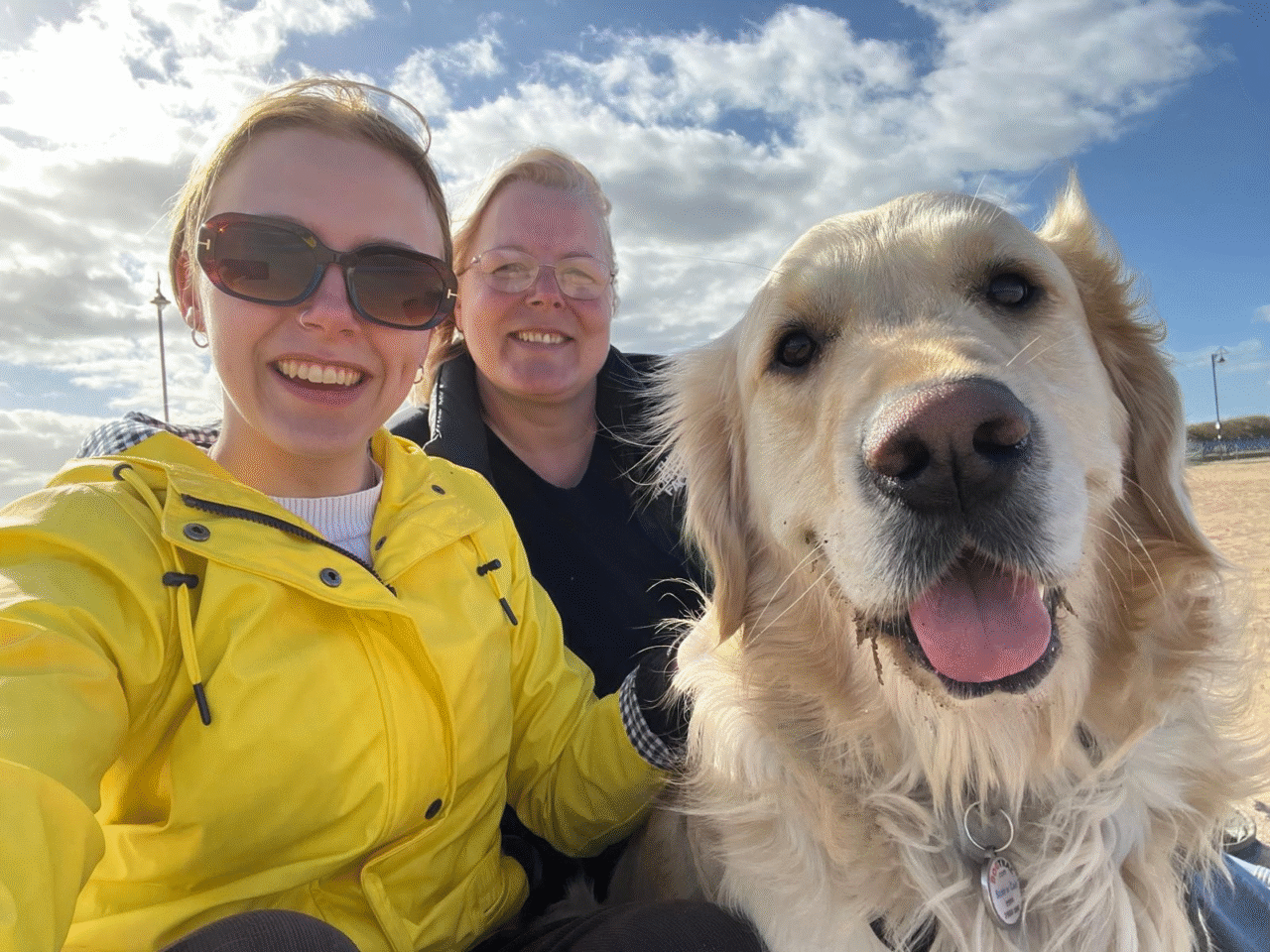
Not only is the handsome Golden Retriever undergoing training as a disability assistance dog to help Anita to live more independently, being out and about with Oliver in his blue Support Dogs jacket signals to others that Anita has a disability.

Anita said: “Oliver has been trained to push door access buttons, empty the washing machine, take my socks and trousers off, fetch the post, tidy toys and does an alert bark if I end up on the floor.

“I take him everywhere now, which is brilliant.

“Support Dogs saves the NHS so much money, but gets no help with funding.”

Now her daughter, Sophia, a 22-year-old veterinary medicine student at the University of Nottingham, is preparing to tackle Support Dogs’ first-ever mass Skydiving Day, which takes place at Langar Airfield in Notts on September 20.

Sophia, who also organised a bake sale in aid of Support Dogs at Arnold’s Major Oak pub last month, admitted she was “terrified” at the thought of jumping out of a plane at 10,000ft and up to 120mph.

Anita added: “I think she’s crazy!”

But Sophia said: “I’ve seen such progress in Oliver – when we take him into town to get more experience, people really react to him pressing disabled access buttons and how calm he is.

“It’s absolutely brilliant to see other people’s reactions.

“It’s given my mum a huge amount of confidence, knowing he’s there. His skills have come on incredibly.”

She added: “When Oliver went for his initial training with Support Dogs, he stayed with volunteers for a month – they must be so motivated.

“The fact training is all funded through the charity means my mum is able to access that support she wouldn’t be able to otherwise. She’s always known about Support Dogs, but didn’t realise how rewarding it would be to work with them. They really are changing lives.”

Rita Howson, chief executive at Yorkshire-based Support Dogs, said: “We rely heavily on donations from fantastic fundraisers like Sophia and we’re so proud that Oliver is helping to make a huge difference to her and her mum. Good luck, Sophia and all our other brave skydivers!”

Anyone wishing to sponsor Sophia can do so at www.justgiving.com/page/sophia-hollis-1

To find out more about Support Dogs, please visit www.supportdogs.org.uk or call 0114 2617800.

Police in Woodborough say it’s no joke to hoax after false call about knife fight in village

Police in Woodborough have launched an investigation after a hoax 999 call was made n the village.

Officers said calls like this “divert resources from other potentially serious incidents”.

Police were called to Lingwood Lane around 7.30pm on Tuesday, September 2 following reports later found to be false that two men were fighting with knives.

After attending the scene and carrying out investigations, officers believe it to have been a hoax call.

Inspector Steven King, local inspector for Gedling borough, said: “This type of call can waste valuable police time and divert resources from other potentially serious incidents.

“Inquiries will continue to find who was responsible for this call and we won’t hesitate to prosecute anyone found to be wasting the time of our emergency services.”

Almost 10,000 people have now shared their views on future of local government

Almost 10,000 people across Notts have now shared their views on the future of local government.

The survey, launched to gather public feedback on what matters most to local people and organisations, is to help shape new authorities’ priorities. 

The six-week survey – which is open until 11pm on Sunday 14 September – is being led jointly by all nine councils in Nottingham and Nottinghamshire.

The decision to launch a local government reorganisation process was taken by central government, who wrote to local authorities in February formally asking them to submit proposals to create new structures of ‘unitary authorities’ – which is a single tier of local government responsible for all local services in an area.  

The Government said the aim is to create more efficient and effective local government, potentially leading to streamlined services and cost savings.

Currently, council services in Nottingham and Nottinghamshire are delivered differently, depending on where you live.

In Nottinghamshire local services are currently delivered under what is known as a ‘two-tier’ council structure. Nottinghamshire County Council oversees county-wide services such as social care, education, and road maintenance. While several smaller district and borough councils are responsible for more localised services, including waste collection, and leisure centres. 

Nottingham City Council operates as a ‘unitary authority’, meaning it provides all council services within the city of Nottingham. 

Under LGR, all nine existing local authorities would be abolished, to create new unitary councils with a higher population of residents. 

It is being proposed that two new unitary councils should be created for Nottingham and Nottinghamshire to replace the current nine. 

Two core options are currently being considered: 

A new unitary authority combining Nottingham, Broxtowe, and Gedling, with a second new unitary authority for the rest of Nottinghamshire; Mansfield, Ashfield, Newark and Sherwood, Bassetlaw and Rushcliffe. This is known as 1b.

A new unitary authority combining Nottingham, Broxtowe, and Rushcliffe, with a second new unitary authority for the rest of Nottinghamshire; Mansfield, Ashfield, Newark and Sherwood, Bassetlaw and Gedling. This is known as 1e.

At this stage, no final decision has been made on a single option, and some councils could still explore additional proposals alongside the two core options currently being considered. 

Nottingham City Council is one of those councils and is currently working up a boundary review option. This looks at the current boundaries, the communities within them and the services they access to see if they work well or whether new boundaries may work better.

A spokesperson for the nine councils said: “This is an important opportunity for local people to help shape the future of local government in Nottingham and Nottinghamshire. 

“We are taking a single approach to engagement to ensure we capture a consistent and representative view on what is the biggest shake-up of local government in over 50 years. 

“We want to understand what matters most to people and ensure that any future changes reflect the needs and priorities of our communities. We encourage everyone to take a few minutes to complete the survey and have their say.” 

The views of people shared in this survey will feed into the development of final proposals, which must be submitted to government by 28 November 2025. 

Government will then review proposals before making a final decision on the LGR option for Nottingham and Nottinghamshire – as well as other council areas across England – in the Summer of 2026. 

The survey will be open until 11pm on Sunday 14 September and offers anyone with an interest in Nottingham and Nottinghamshire, from residents to businesses, the opportunity to learn more about LGR and share their views.  You can access the survey online www.lgrnotts.org 

5 surfaces that are best for working on diamond painting kits

Diamond painting can feel much more enjoyable with the right setup.

The surface chosen makes a big difference in how easy it is to place the diamonds, stay organised, and stay comfortable during longer sessions. The best surface creates stability, prevents slipping, and supports a smoother workflow from start to finish.

Different surfaces suit different needs, whether someone wants a large area to spread out materials, a portable option for flexibility, or a setup that helps reduce strain. By exploring the most practical choices, anyone can create a workspace that feels more efficient and comfortable for their projects.

  1. Flat, clean table surface for stability and ease of diamond placement

A flat table gives a steady base for diamond painting. The smooth surface helps each drill sit neatly on the canvas without slipping or shifting. This reduces mistakes and makes the process more efficient.

A clean table also prevents dust or small debris from sticking to the adhesive canvas. Even small particles can affect how well the drills stay in place. Therefore, wiping the surface before starting helps keep the artwork neat and consistent.

Placing all tools and trays on a wide, uncluttered table makes it easier to stay organised. The extra space allows the canvas to lie flat, which avoids folds or creases that can disrupt placement.

Many people use a table for projects such as diamond mosaic art because it supports long sessions without discomfort. A stable surface also works well with accessories like light pads or storage containers, which further improve the workflow.

  1. Adjustable easel to reduce neck strain while working

An adjustable easel can make diamond painting more comfortable by lifting the canvas closer to eye level. This prevents the need to bend the neck forward for long periods, which often causes stiffness or discomfort.

Most easels allow the user to tilt the surface at different angles. This flexibility helps each person find a position that feels natural and reduces pressure on the shoulders and back.

A raised surface also improves the visibility of the canvas. Clearer sight lines mean less leaning forward and fewer awkward postures during detailed work.

Many easels fold flat for storage or transport. This makes them practical for artists who want a workspace that adapts to both home and travel needs.

Using an easel encourages better posture and allows longer sessions without as much strain. For those who spend hours placing drills, this simple tool can make the process easier and more sustainable.

  1. TV tray table combined with a light board for portability and illumination

A TV tray table gives a steady and compact surface that suits small projects like diamond painting. It folds flat, so it can move from one room to another without effort. This makes it practical for people who do not have a permanent craft space.

Adding a light board on top of the tray helps the user see symbols on the canvas more clearly. The light passes through the fabric, which reduces mistakes and saves time. This setup works well in rooms with low light or during evening hours.

The combination also supports comfort. A tray table sits at a height that fits most chairs or sofas, so the user can work without leaning too much. The light board remains stable on the flat surface, which keeps drills and tools in place.

This approach balances portability with function. The tray can be stored away quickly, while the light board provides the clarity needed for detailed work. Together, they create a simple yet effective workspace.

  1. Large 6ft crafting table for ample workspace and organisation

A large 6ft crafting table gives plenty of room to spread out a diamond painting kit without feeling cramped. The wide surface allows the canvas, trays, and tools to sit in one place, which helps reduce clutter and makes the process smoother.

This size of table also supports better organisation. Many designs include shelves or drawers beneath the surface, so supplies can stay close at hand instead of scattered across the room. As a result, the workspace feels more structured and easier to manage.

The sturdy build of a larger table provides a stable base, which is important for keeping drills aligned on the canvas. A flat, even surface reduces the chance of mistakes and gives a more consistent result.

For those who work on larger canvases, a 6ft table prevents the need to constantly shift the project around. It allows the user to focus on detail without interruption, which makes the whole activity more efficient and enjoyable.

  1. Smooth, non-porous surface to prevent diamonds from sticking or slipping

A smooth, non-porous surface gives the best base for diamond painting because it does not trap dust or fibres. This keeps the canvas clean and reduces the chance of stray particles sticking to the adhesive layer. As a result, the diamonds stay in place more easily.

Surfaces such as glass, polished wood, or laminated tables work well. They create a flat and even area that supports the canvas without causing folds or bumps. This makes it easier to press the drills firmly onto the glue.

A non-porous material also prevents diamonds from sliding away. Unlike fabric or textured surfaces, it does not catch or absorb anything that could weaken the adhesive. Therefore, the workspace stays tidy and the project remains more manageable.

In addition, a smooth table or board is simple to wipe clean after each session. This reduces mess and keeps tools ready for the next use. A consistent surface helps maintain steady progress with fewer interruptions.

Conclusion

Choosing the right surface helps keep the canvas flat, the drills secure, and the workspace organised. A stable base also reduces mistakes and makes the process smoother.

Flat tables, portable boards, and adjustable desks each offer different benefits. For example, a firm desk supports accuracy, while a lap desk provides comfort in smaller spaces.

Surfaces that resist movement and give enough room for trays, tools, and drills allow the project to progress with less frustration. This balance of comfort and stability supports both beginners and experienced crafters.

By selecting a surface that suits their space and habits, anyone can create a more efficient and enjoyable diamond painting experience.

‘Despicable’ Arnold child rapist who filmed abuse is jailed

A ‘despicable’ child rapist from Arnold has been jailed for 13 years this week.

Carl Andrews put himself on the police’s radar after uploading indecent images of children online.

When confronted with this, Andrews admitted to owning the images, but denied doing anything else.

Not buying this, officers reviewed all his devices and discovered videos of him sexually abusing young children.

Both the victims – a boy and a girl – are believed to have been targeted during 2022 by Andrews in Nottinghamshire.

Distinctive tattoos on Andrews’ hands that were visible in the videos were used by police to link him to those crimes.

Carl Andrews put himself on the police’s radar after uploading indecent images of children online.

More than 1,400 indecent photos and videos of children were also discovered on the sexual predator’s phone and other devices.

He would go on to be charged with a range of child sex offences.

This included rape, inciting someone to engage in sexual activity, assault by touching and three counts of making indecent images of children.

Faced with the damning evidence against him, Andrews elected to plead guilty to the six separate counts on 18 July this year.

He returned to Nottingham Crown Court to be sentenced on Wednesday (3 September).

Andrews, of Charles Street, Arnold, was handed an extended sentence of 13 years in jail.

He was also put on the sex offenders’ register for life, made the subject of a sexual harm prevention order and issued with a restraining order banning him from ever contacting his victims.

PC Laurenie Haynes, of Nottinghamshire Police’s Child Abuse Investigation Unit, said: “The content we found on Carl Andrews’ devices was disgraceful and vile.

“Amongst the more than 1,400 indecent images of children were videos of Andrews himself sexually abusing and in one case raping young children.

“There are truly no words to describe how much of a heinous crime that is.

“We were able to prove it was him in the videos because of distinctive tattoos on him that were clearly visible in the clips.

“Thankfully, the evidence we gathered was sufficient to pressurise Andrews to admit what he’d done, so his victims and their families didn’t have to sit through a trial.

“Andrews is a despicable individual who belongs behind bars, so we’re pleased to see he’s now been jailed.

“Despite this, we believe there could be other victims out there, who may have been targeted by Andrews but haven’t felt able to report it yet.

“To them, we’d say please come forward. It doesn’t matter if it happened years and years ago, we will listen to you and investigate further.”

Key Benefits of Non-Standard Insurance for Holiday Homes

Holiday homes can be investments, family legacies, or part-time rentals. But owning one comes with unique risks, especially if the structure or usage falls outside the limits of standard insurance. 

Whether it’s a timber-framed cottage in the countryside or a flat-roofed coastal escape, your property needs protection that fits. If you’re unsure what that looks like, keep reading to learn why tailored cover makes a difference.

Built For Homes With Unusual Construction

Most standard insurers expect homes made from brick with a tile or slate roof. If your holiday property has timber, concrete, steel, or eco materials, it might not qualify. That’s where non standard insurance for homes comes in.

It’s designed to cover properties that don’t follow the norm, something especially common among holiday homes. This means you’re less likely to face a rejected claim just because your building doesn’t meet a rigid definition.

Protects Against Gaps In Letting Risk

Letting your holiday home, even for short stays, often breaks the terms of many regular home policies. Specialist insurance recognises the risk of theft, damage, or accidents involving guests. If something goes wrong while someone else is staying, you’re covered.

It also often includes public liability protection, which helps if a visitor is injured on the property and takes legal action.

Holiday homes are rarely occupied full-time. That leaves them open to seasonal risks like frozen pipes or undetected leaks. Many policies stop cover if a property is left empty for more than 30 days. 

Non-standard cover accounts for these gaps, keeping you protected even during long off-season stretches. You’re also less likely to face issues with cover being restricted due to a lack of regular supervision.

Tailored To Higher Rebuild Costs

Holiday homes with unique features often cost more to repair. If something happens, the rebuild price may be higher than expected. Non-standard policies allow for increased building cover limits, which is essential for properties in hard-to-reach or protected areas. This level of protection helps prevent underinsurance, which can leave you covering shortfalls yourself.

Includes Specialist Extras That Matter

Holiday homes have different priorities. Replacement locks for stolen keys or temporary accommodation for guests can all be part of the deal. These benefits are often standard in non-standard insurance.

A Smarter Safety Net For Unique Homes

Owning a holiday property brings joy but also responsibility. When the build is unconventional or the use is occasional, it’s wise to step away from off-the-shelf policies. Non-standard insurance offers more than just protection. It provides peace of mind that what makes your home special won’t become a liability.

If you care about keeping your property safe while avoiding common exclusions, it’s time to think differently about insurance.