Home Blog Page 28

Tributes paid to ‘kind and loving’ boy, 14, killed after being hit by a train in Burton Joyce

The family of a 14-year-old boy who tragically died after being hit by a train in Burton Joyce have paid a touching tribute to him.

Emergency services rushed to the railway line in on Wednesday (November 26) following reports of a person hit by a train. Sadly, the young boy was pronounced dead on the scene.

He has now been named as Joshua Travis. The British Transport Police confirmed his death is not being treated as suspicious.

The family of Josh Travis issued a statement over the weekend describing him as “a lad with an incredible energy for life’.

They said: “He had an infectious and mischievous smile, kind sparkling eyes, and so much love to give.”

Nottingham Forest also paid tribute to their former Academy player.

The Reds took to social media to pay tribute to 14-year-old Josh Travis, who was a former academy goalkeeper with the Premier League side.

Nottingham Forest wrote in an Instagram post: “Everyone at Nottingham Forest is deeply saddened to learn of the tragic passing of our former academy goalkeeper Josh Travis.

“Our thoughts are with Josh’s family and friends at this extremely difficult time.”
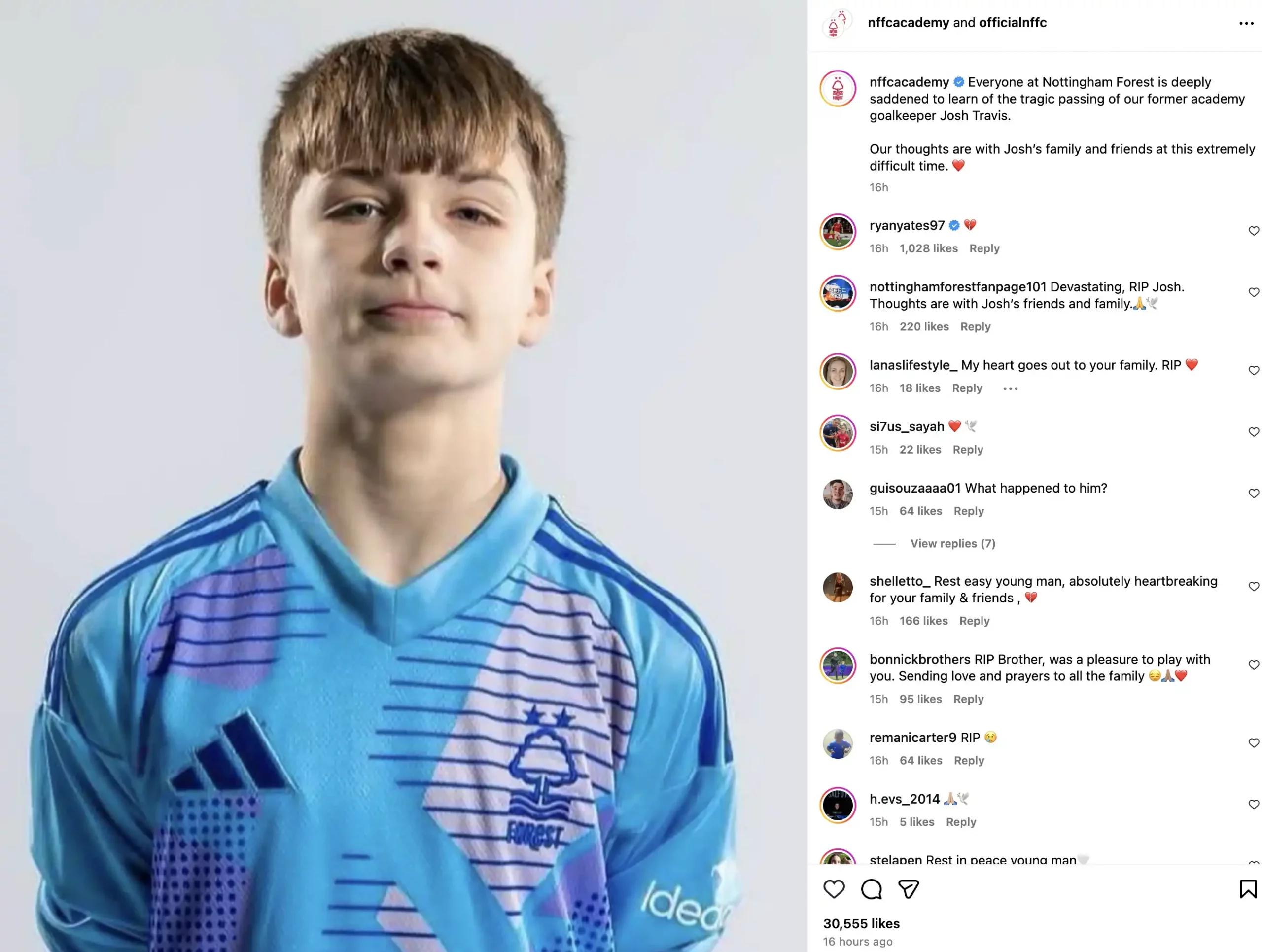
PHOTO: Instagram

Forest captain Ryan Yates also appeared in the comments section, where he wrote a heartbroken emoji in tribute.

The local MP and councillors also expressed sympathy.

Gedling MP Michael Payne said: “I am deeply saddened to learn of the tragic incident near Burton Joyce Station. My heartfelt sympathy goes out to the family and loved ones of the 14-year-old who lost their life.

“No family should ever have to endure such a devastating loss, and I know the whole community will share in their grief.

‘I want to express my sincere thanks to the first responders who attended the scene.

He added: “My thoughts remain with all those affected by this heartbreaking event. I know our community will keep the family in their hearts as they navigate this unimaginable loss.

“I have offered any support that I and my office can provide as the family and the wider community come to terms with this tragedy.”

Gedling Borough Councillors for Trent Valley Mike Adams and Sam Smith represent Burton Joyce released a statement paying tribute.

They said: “We are both deeply saddened by Wednesday’s tragic accident at the Chestnut Grove rail crossing in Burton Joyce.

“Our heartfelt sympathy goes out to the family and friends of the 14-year-old who has so sadly lost his life. No words can ease their pain, but we hold them in our thoughts at this unimaginably difficult time.

“As the village’s Councillors, we are moved by the way villagers, both those who know him from school and those from the wider community, have come together.

They added: “The crossing is now closed for an initial 21 days – which is likely be extended. There is also an open consultation on the proposed permanent closure and we encourage residents to share their views by taking part.

“Our thoughts remain firmly with all those affected by this heartbreaking event.”

14-year-old boy tragically dies after being hit by train in Burton Joyce

Get Gedling Eye on WhatsApp. Follow our channel and get a daily update Tap HERE to follow

A 14-year-old boy has been tragically killed after being hit by a train on the railway in Burton Joyce.

Officers were called to the scene on Wednesday (26) at around 7pm in response to reports that a person had been hit by a train.

Sadly, a 14-year-old was pronounced dead by paramedics called out in response to the incident..

British Transport Police yesterday issued a statement confirming the sad news.

It read: “Officers were called to the railway line in Burton Joyce, Nottinghamshire, at 7.06pm on 26 November to reports of a casualty on the tracks.

Burton Joyce station
PICTURED: Burton Joyce Station

“Paramedics also attended, and sadly a 14-year-old boy was pronounced dead at the scene. The incident is not being treated as suspicious, and a file will be prepared for the coroner.”

iEast Midlands Railway also issued a statement following the incident.

They told passengers that several services had been cancelled and delayed due to the incident.

They said: “We are sad to report that a person has been hit by a train.

“This has had a big impact on trains on the Newark Castle/Derby/Crewe and Leicester/Nottingham/Lincoln/Grimsby routes.”

Police seize haul of suspected counterfeit cigarettes from wanted car spotted on Colwick Loop Road

Police have seized around 20,000 suspected counterfeit cigarettes and arrested two suspects after stopping a car on Colwick Loop Road

The haul was recovered after information was received about a Volkswagen Golf which had earlier driven away from police and failed to stop. 

After the vehicle was spotted heading along the Colwick Loop Road, around 8.15pm on Monday (24), officers came up with a tactical plan to safely stop the Golf as it headed towards the city centre.

A short time later it was stopped. When officers searched the vehicle they found a large quantity of suspected counterfeit cigarettes on the back seats. 

Two men, aged 23 and 36, were arrested on suspicion of being in possession of criminal property.

Inspector Chris Chell, of Nottinghamshire Police, said: “This positive result shows we will continue to proactively stop vehicles believed to be involved in criminality. 

“Proactive policing of the roads is an essential weapon in our fight against crime and to help keep people safe and we will continue to do everything in our power to pursue and catch criminals travelling through Nottinghamshire.

“Stops like this one send a clear message that we do not want them on our roads.”  

Gedling Borough Council’s new contract with environmental enforcers will ‘not cost taxpayer’

Gedling Borough Council is reassuring residents that a new partnership with an environmental enforcement firm is being delivered at ‘no cost to the authority or local taxpayers’.

The new contract will see Waste Investigations Support and Enforcement Ltd (WISE) retaining a proportion of the revenue from fixed penalty notices (FPNs) issued for offences such as littering, dog fouling and fly-tipping.

The council say this approach will enable them to increase enforcement activity without diverting funding away from essential services.

The partnership is designed to create cleaner neighbourhoods, protect the local environment and improve the quality of public spaces for residents.

A Gedling Borough Council spokesperson said: “Gedling Borough Council has entered into a concession contract with Waste Investigations Support and Enforcement (WISE). Under this arrangement, WISE retains a proportion of the revenue from fixed penalty notices, meaning the service operates at no cost to the Council or local taxpayers.

“We work closely with WISE and have agreed clear operating standards to ensure that fixed penalty notices are issued fairly, consistently, and in line with our local priorities. This partnership enables us to take firm and proportionate action against environmental offences at no additional cost, helping to protect our local environment, support cleaner and safer communities, and improve the quality of public spaces for our residents.”

Pension boost for ex-miners across Gedling borough announced in Budget

Former mineworkers in Gedling borough will receive a significant uplift in their weekly pension, overturning an historic injustice and ensuring fair payouts for years to come.

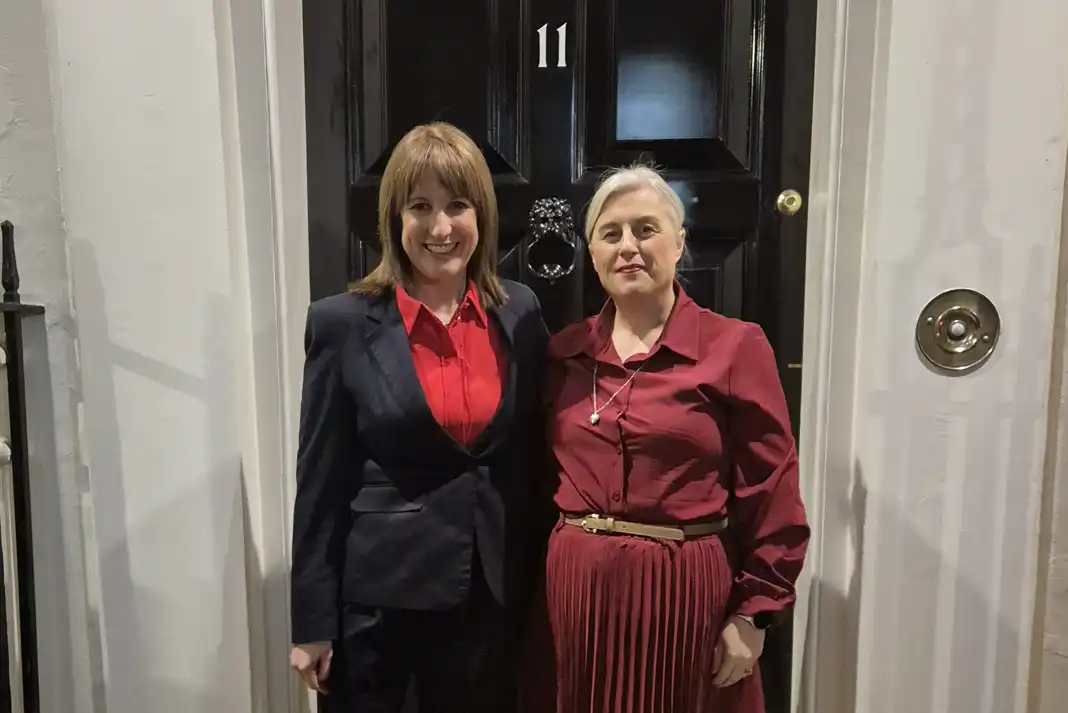
During Wednesday’s Budget Chancellor Rachel Reeves announced the government will return the £2.3bn investment reserve held within the British Coal Staff Superannuation Scheme (BCSSS) back to its members.

Following the Budget, Energy Secretary Ed Miliband confirmed that the move will mean a 41% per cent boost to the annual pensions of 40,000 former mineworkers across the UK – an average increase of £100 per week for each member.

The trustees of the scheme are expected to make the first uplifted payments to members before the end of the year, with payments backdated to coincide with when the changes were implemented to the Mineworkers’ Pension Scheme.

Sherwood Forrest MP Michelle Welsh MP welcomed the announcement, saying: “For too long former miners in Sherwood Forest have had to wait for the pension settlement they deserve.

“Today, Labour ends this injustice and delivers what is rightfully owed back to mining families.

“This is a victory for the relentless campaigning of communities here in Sherwood Forest.”

Bowls club not being included in plans to upgrade Carlton leisure centres ‘at this stage’ as proposals move forward

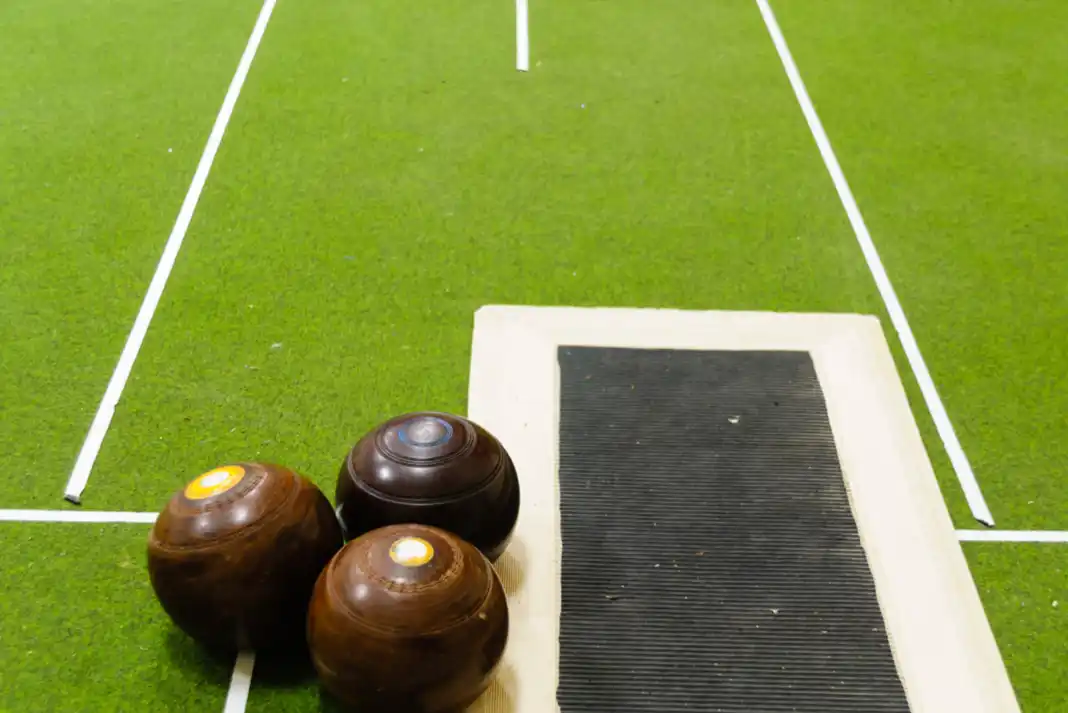
A bowls club has been told provision for their sport is not being included ‘at this stage’ as plans to upgrade leisure facilities in Carlton take a step forward.

Gedling Borough Council’s Leisure Transformation Programme has taken a significant step forward following decisions made by Cabinet on 19 November 2025. 

Work will now progress on the detailed design and business case for the Carlton Active project, which will provide a brand-new leisure, wellbeing and community hub serving Carlton and the wider borough.

The centre is being designed as a modern, energy-efficient building offering high-quality swimming, fitness, rehabilitation and community facilities including soft play and Assisted Exercise facilities. A further Cabinet decision is expected in February 2026 once the detailed work on design and costings has completed.

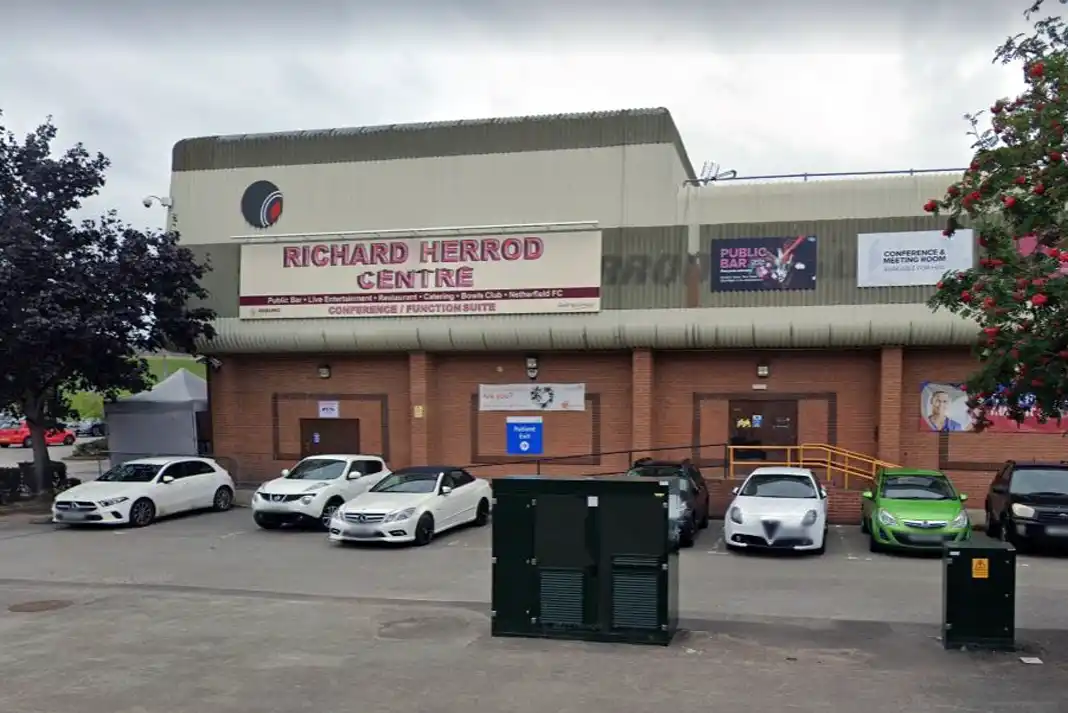
The bowls club currently play at the Richard Herrod Centre in Carlton

Cabinet confirmed that Gedling’s leisure service will continue to be delivered in-house, reflecting its strong financial recovery and consistently high performance across all centres. 

The Council confirmed proposals for Carlton Active do not include provision for indoor bowls. They say the initial decision not to provide indoor bowls facilities was based on extensive feasibility work, independent financial analysis and a very clear message from the sport’s governing body and the Club itself that only a six-rink facility would be viable.

The council spokesman said: “Unfortunately, delivering that within Carlton Active would make the project financially unachievable. 

They added: “The Council have been a huge source of support to the bowls club particularly through the Covid-19 pandemic when the club were near to closure and the Council will continue to work closely with the Bowls Club to look at other locations and options for the club going forward.

“Cabinet will also consider a petition from the bowls club about bowls provision when they make their decisions about Carlton Active in February.”

Cabinet also endorsed the long-term masterplan for Arnold’s cultural and leisure facilities as part of the Ambition Arnold programme. The proposals include transforming the Arnold Leisure Centre and Bonington Theatre into modern, high-quality facilities integrated with improvements to the town centre, public spaces and connectivity – delivery will be subject to receiving external funding.

Council hires environmental enforcement firm to clean up streets of Gedling borough

A firm specialising in tackling environmental crimes such as fly-tipping, littering, and dog fouling has been hired to clean up Gedling borough’s streets.

Under the new agreement, Waste Investigations Support and Enforcement Ltd (WISE) will act on behalf of the Gedling Borough Council to enforce against fly-tipping, littering, dog fouling, and other environmental crimes.

The aim of the partnership is to protect local communities and public spaces that have been blighted by a growing number of environmental issues, which have impacted the lives of residents who take great care and pride in where they live.

The scheme, which will be delivered at no cost to the Council or taxpayers, will see an increased presence of enforcement officers on high streets, in fly-tipping hotspots, and in areas where complaints about environmental issues have risen. WISE officers will be authorised to issue Fixed Penalty Notices (FPNs) to individuals committing offences.

Councillor David Ellis, Councillor Jenny Hollingsworth, members of Gedling Borough Council staff and representatives from WISE.

This initiative forms part of Gedling Borough Council’s wider commitment to improve sustainability, public health, and community pride.

Councillor David Ellis, Portfolio Holder for Public Protection, said: “We know how important clean and safe neighbourhoods are to our residents. This partnership allows us to take firm action against those who damage our environment, while ensuring that taxpayers aren’t footing the bill.

“The cost of cleaning up fly-tipping alone is too high, and we believe this scheme will not only be cost-neutral, but will also reduce the financial burden we currently face in clearing up environmental mess across the borough.

“Residents will see enforcement agents patrolling areas where we know there are serious issues. Quite simply, if you don’t litter, if you pick up after your dog, and if you dispose of your waste properly, you won’t even notice they’re there.”

Exhibition Organisers Should Face Pressure to Improve Sustainability Initiatives

Throughout the last decade, there has been a stark difference in the sustainability pressures placed on the glamorous, public-facing side of the events industry and the more private, business side.

Large-scale, public events, like festivals, entertainment and sporting events, have faced much more pressure to make significant sustainability changes fast. The scale and visibility of these events, paired with the increased press, put them under a spotlight for public scrutiny. With the increased interest from the public, these events made dramatic changes to their sustainability initiatives, and ultimately, it was initiated by the organisers.

What’s interesting is that, despite being in the same industry, because of the reduced public scrutiny, exhibitions and business events have been more or less flying under the radar. Should corporate events not face the same scrutiny as those enjoyed by the public?

What Progression have Exhibitions Made so Far?

Visit any event organiser’s page, and it’s clear that sustainability is a focus. Sustainability initiatives and improvements are plastered over each webpage, usually a key part of, or second to, the landing page.

Most organisers began by tracking current emissions to set a benchmark. After outlining the current impact, event organisers started making plans for future improvements, most beginning with offsetting, reducing energy-related CO2 emissions, and waste.

Though this is great progress, there still seems to be significant sustainability blind spots in the industry.

Sustainability Blind Spots

While it’s clear that effort is being taken to reduce emissions, the most obvious offenders, disposable exhibition stands, seem to be slipping under the radar. And yet, according to Better Stands, these are the stands which generate over 80% of the waste in exhibition halls.

In other areas of the event industry, one-use plastics are out. Festivals and catwalks no longer use confetti, disposable cups, straws or cutlery. Yet, disposable exhibition stands, which are much larger and generate more waste per unit, are still commonplace in exhibition halls.

Progress has been made in this area, particularly with increased awareness from Better Stands, an organisation that ranks stands based on their eco-credentials and impact. Since the Better Stands movement, some organisers have introduced regulations around recyclable stands, but few have taken the leap to reusable-only stands.

Why are Exhibitions Falling Behind?

It’s undeniable that exhibitions are slacking compared to their more public counterparts, but what is slowing down their progress?

Public scrutiny always plays a significant role in propelling sustainability changes. Exhibitions are attended more by private companies than by consumers, which means that the public is less aware of the practices at the event, and they face less scrutiny in general.

Banning disposable exhibition stands would strain relationships between organisers, contractors, and exhibiting companies. Therefore, it is easier to continue permitting their use than to deal with the fallout.

Ultimately, organisers are catering to the requirements of businesses, and businesses often want custom-built stands. Since these are the individuals paying to exhibit, organisers are wary of deterring their business.

What Should be Changed?

Controversy aside, exhibition organisers should face the same level of pressure as public event organisers to shift toward sustainable practices. It might be uncomfortable, and it might cause temporary tensions, but it is not right that only one branch of the industry is exempt from making progress. Industry standards are evolving, and it’s time that regulators, associations and organisers increase the pressure. The gap between public and corporate events won’t close on its own.

Betting firms cry wolf over tax rises while MPs call their bluff on £3bn Revenue Plan

MPs aren’t buying what the gambling industry is selling – as betting firms warn of apocalyptic job losses and shop closures, the Treasury Committee basically told them to stop crying wolf about potential tax increases.

Gordon Brown told UK media that he believes UK online bookmakers could well afford to pay for a heavier tax burden. The former PM knows the industry well – he helped modernize UK gambling laws back in 2005, and now he thinks it’s payback time.

The numbers tell the real story here – remote gambling accounted for £6.9bn in gross gambling yields for the year to March 2024, compared to £4.6bn in offline betting, according to the Gambling Commission. Online betting has taken over, and that’s where the money is.

Dame Meg Hillier, who chairs the Treasury Committee, didn’t hold back. She said online betting games extract huge amounts of money from people who get funnelled into the most addictive corners of the industry. The committee flatly rejects the industry’s claim that gambling causes no social harm.

‘We’re going to lose the whole retail business,’ Betfred’s chief executive Joanne Whittaker told the Times over the weekend, adding that it was neither ‘scaremongering’ nor ‘alarmist’ to claim that 1,300 shops and 7,000 jobs were on the line. Fred Done from Betfred claimed 300 of his shops already lose money, and even a 5% tax increase would sink 130 more.

But what they don’t mention is that shops are closing anyway. Paddy Power, owned by Flutter Entertainment, follows a full review of its high street operations, led by increasing cost pressures and challenging market conditions. So, they’re shutting 57 shops, affecting 250 jobs, while William Hill plans to close 200 stores.

The proposed tax hikes are substantial, though. The current 15% general betting duty on land-based bookmaker profits could be doubled. Remote gaming duty could also jump to 50%, which would bring in some serious money for the Treasury.

Yet, here’s something interesting – players are already voting with their feet. Many have found out that online casinos usually have way better odds than regular bookies. Smart punters now research payout rates carefully. For those seeking to maximize their returns, the best payout casinos explained by gambling expert Matt Bastock show exactly which operators give players the best mathematical edge with higher RTP rates and fairer games.

The industry keeps throwing around big numbers – and Grainne Hurst from the Betting and Gaming Council says members contribute £6.8bn to the economy and support 109,000 jobs. She claims they already face tax rates up to 80%.

International comparisons hurt their case, though. Some US states, including new market operators that are scrambling to enter, have tax rates above 50%, as does Austria. The Netherlands is set to raise its rate to 40% – so, the UK suddenly doesn’t look so harsh.

Then came the plot twist. The Autumn Statement has revealed that no tax increases will be applied to UK Gambling in the 2024 Budget. The industry dodged the bullet – for now. But the government will consult next year on restructuring the whole tax system.

The reality is that high street betting shops were dying before any tax debate started – and online gambling has won. The question isn’t whether the industry will pay more, but when and how much.

Have You Heard About Micro-Bet Slots?

A Quick Primer on What “Micro-Bet” Means

Micro-bet slots are exactly what they sound like: games that let you spin at very low stakes, often just a few pence per spin. For casual casino fans, the appeal is obvious. You get the same audiovisual punch—reels, animations, and bonus teases—without committing much per round. That small denomination unlocks longer sessions, more time with the game’s features, and a gentler learning curve. In practice, micro-betting on slots is less about chasing a single big hit and more about enjoying the rhythm of play while you figure out which titles suit your taste for pace, visuals, and volatility.

Why Micro-Bet Slots Feel So Approachable

Designers build modern slots around tight feedback loops. You press spin, get instant resolution, and receive a clear signal to continue. At smaller stakes, that feedback feels playful rather than pressured. The psychological effect is important: wins and near-misses become a form of entertainment you can sample in short bursts—on a break, during a commute, or while relaxing at home—without the sense that each decision carries heavy consequences. This is also where hit frequency matters. Games with frequent small wins sustain attention, and at micro stakes those wins stretch your bankroll so you can experience free-spin triggers, mini-games, and expanding wilds that you might otherwise miss in a short, higher-stake session.

RTP, Volatility, and Session Length

Three concepts shape the micro-bet experience. Return to Player (RTP) is the long-run percentage a slot returns to players on average; volatility describes how bumpy the ride feels; and session length is how long your chosen stake can keep you in the game. Micro-betting tends to soften volatility because each individual outcome moves your balance by less. That doesn’t change the underlying math, but it changes how you experience it. If you prefer a relaxed pace with steady feedback, look for medium-volatility titles with transparent paytables and frequent features. If you enjoy suspense, low stakes still let you experiment with high-volatility games that can go quiet for stretches and then light up in a single bonus.

Micro-Betting and the Modern Slot Feature Set

Low-denomination play pairs well with today’s layered features. Many games distribute their excitement across scatter collections, respins, and progressive multipliers that slowly ratchet up. Micro stakes buy you more “cycles” through those states, which is where much of a game’s personality lives. Even small stake sizes can qualify for jackpots or fixed-prize ladders when the mechanics permit, and they’re ideal for learning how bonus rounds scale. If a title offers a bonus buy, micro-bet players can ignore it and still see the core experience unfold through natural triggers, building familiarity before deciding whether that shortcut fits their style later.

Where to Learn the Basics Before You Spin

If you want a clear, encyclopedia-style overview of slot fundamentals—RTP, volatility bands, and why some games “feel” looser than others—GamblingNerd.com publishes neutral primers and comparisons that are easy to scan. When you’re mapping out options for real-money play and want a high-level refresher in one place, a concise guide to real-money online casinos from GamblingNerd.com can help you understand how different sites present denominations, paytables, and features. The site takes a straightforward, non-hype approach, which is useful if you’re just learning the terminology.

Across the industry, slots remain the most played category because they deliver short-cycle entertainment that fits how people actually spend their leisure time. The American Gaming Association’s annual analyses consistently highlight the format’s broad appeal and the way slot play anchors overall casino engagement; their reports are a good data-driven snapshot of player behavior and market trends (see the AGA’s latest industry report). While individual preferences vary, the macro picture is stable: easy onboarding, constant feedback, and portable stakes keep people coming back.

Trying Micro-Bet Slots the Smart Way

The best way to test whether micro-bet play suits you is to define your goal for a session. If it’s learning, pick a familiar theme and explore the paytable to see how features scale. If it’s relaxation, choose a medium-volatility title with upbeat audio and frequent mini-events that make the screen feel alive. Adjust coin value and paylines so the total per spin sits in your comfort zone, and consider setting a simple time box for the session so you stop while the experience still feels fresh. Micro-betting shines when you treat it as entertainment with boundaries, not as a race to trigger a single bonus.

One More Tip for Local Readers

If you follow Gedling Eye for local culture and weekend ideas, you already know that casual entertainment works best when it fits the rhythm of your day. Micro-bet slots align with that idea by offering quick, contained doses of play. When you discover a theme or feature set that clicks—classic fruit, mythology, sci-fi, or branded film tie-ins—save it for your next short session rather than chasing variety for its own sake. Depth with a few favourites often feels better than skimming dozens of titles once.

The Takeaway on Micro-Bet Slots

Micro-bet slots make modern slot design more approachable. By lowering the stake, they give you room to experience a game’s full feature set, experiment with different volatility profiles, and enjoy the audiovisual craft without the pressure of larger swings. If you’re curious, start with a title that matches your preferred pace, take a moment to read the paytable, and let the small stakes do their work: more spins, more features, and a clearer sense of what you actually enjoy about the genre.