Home Blog Page 27

Neighbourhood policing inspector for Gedling borough updates crime fighting priorities during October

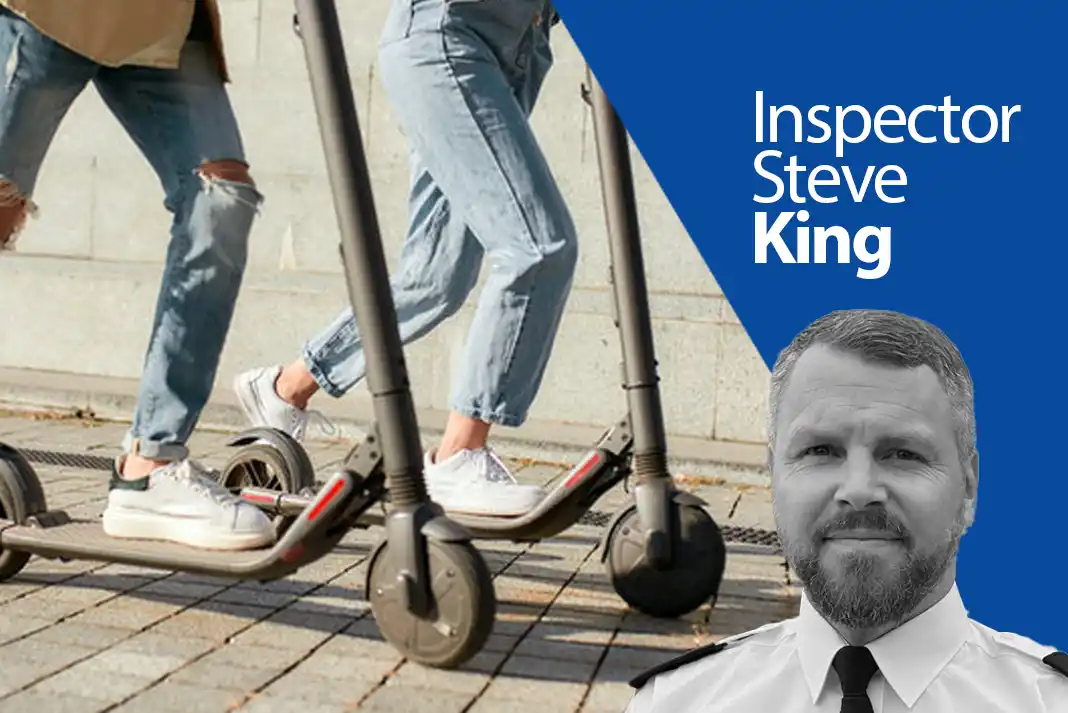
Gedling neighbourhood policing team’s new Inspector Steve King has provided an update on how they have progressed on tackling crime across the borough during November.

He said: I must begin my update by expressing my deep sadness at the tragic death of a 14-year-old boy on the railway at Burton Joyce on Wednesday, November 26.

“Words cannot capture the sorrow of such a loss, and my heartfelt sympathies go to all those affected. Burton Joyce is a close knit community, and the impact will be felt widely.

“I have been in regular contact with colleagues at the British Transport Police, who lead on rail incidents, and our local Neighbourhood Officers will continue to support them and maintain a visible presence in the area.”

Priorities

The Inspector said his team remained focused on our key priorities for Gedling borough, which include acquisitive crime such as burglary, robbery, shoplifting and theft, tackling anti social behaviour including nuisance vehicles, speeding and begging, and addressing drug offences ranging from possession to supply and cannabis cultivation.

“There have been some notable results in recent weeks,” he said.

“A prolific shop theft offender who breached their Criminal Behaviour Order was swiftly arrested and sentenced to 36 weeks’ imprisonment, demonstrating how seriously the courts treat such matters.

“Officers in Arnold stopped a vehicle and recovered an estimated £5,000 worth of stolen medicines, showing how proactive policing can deliver strong results. “

Following two burglaries in Ravenshead, Officers arrested a male after spotting suspicious vehicle activity.

The inspector said: “Detectives are progressing the investigation, and anyone with information is encouraged to call 101.”

King said burglary offences have continued to fall but vehicle crime had risen in recent weeks.

“Enquiries are ongoing, patrols have been increased, and I urge residents to secure vehicles and remove valuables. Please report suspicious behaviour so we can respond quickly.”

Anti-social behaviour reports continue to decline, and November saw further preventative work, including support from the Force’s Off Road Bike Team, targeting nuisance motorbikes.

“My message is clear: those who deal drugs in Gedling borough will be found, prosecuted, and stripped of their assets.”

“Electric bikes and e-scooters remain a concern, “said the Inspector.

“Under Operation Electro, several seizures have been made, including one case where a teenage male riding an e-scooter was found carrying a large knife. This proactive work will continue with both uniformed and plain clothes patrols.

“As Christmas approaches, I would remind the public about the legality of e bikes and e scooters. Many are illegal and pose significant safety risks. I would strongly discourage purchasing them as gifts. Guidance is available on the https://orlo.uk/rIgA9 website.

The drug enforcement operations have also continued throughout November, with warrants executed across Gedling.

The inspector said: “Investigations are progressing against identified suspects, and further action will follow where wider conspiracies are uncovered. We are working with partners to explore civil measures, such as tenancy breaches, to strengthen our response.

He added: “My message is clear: those who deal drugs in Gedling borough will be found, prosecuted, and stripped of their assets.”

Inspector King also wanted to update on some changes to local policing across the borough.

“Gedling Central, covering Arnold Town Centre, St Mary’s, Killisick, Woodthorpe, Mapperley Plains, Kingswell, Daybrook and Bonington, will now come under the leadership of Sgt Alison Riley and her team.

“Gedling North, covering Ravenshead, Linby, Papplewick, Newstead Village, Bestwood Village, Calverton and Woodborough, will now fall under Sgt Bhavuk Sharma and his team.

“Gedling South remains unchanged under Sgt Mohson Hussain.

“This realignment is part of my ongoing commitment to improving the service we provide to residents and visitors of Gedling. I want to reassure you that there will be no disruption to local policing. Our Officers remain fully committed to delivering a seamless service, with minimal impact on the community.

King finished with a festive message for residents.

“As we head into Christmas and New Year, I wish you all a safe and joyful festive season.

“Please look after yourselves and others, especially during what can be a challenging time for many. Our teams will be on duty throughout the period, and I extend my gratitude to all of our emergency services who will be away from their families to keep our communities safe.

“I look forward to continuing to serve you in 2026.”

The hidden costs of garden Structures That Rust and Fail Early

Garden structures represent a major investment for many homeowners. From pergolas and gazebos to raised beds and trellises, these outdoor features improve our living spaces and add character to our gardens. Yet these structures bring hidden costs when they deteriorate earlier than expected.

When garden structures begin to rust and break down sooner than expected, the financial impact extends far beyond the initial purchase price. Replacement, repairs, and the time spent on maintenance often add up faster than expected. In the damp British climate, where rain and humidity are constant companions, choosing materials that withstand these conditions becomes especially important.

These failures not only compromise aesthetics but can pose real safety concerns, especially for structures supporting heavy climbing plants or providing overhead shelter. Similar issues appear in real-life projects described in an example of how rust develops outdoors, where fixings degrade faster than expected in damp British weather.

For overhead or load-bearing structures, corroded fixings create direct safety risks.

Why Garden Structures Fail Early in British Weather

Weather is a significant factor in the longevity of garden structures. Many regions in Britain experience frequent rainfall and high humidity, which can accelerate the deterioration of outdoor metalwork. Temperature swings and constant moisture speed up corrosion and reduce the effectiveness of protective coatings.

Joints where screws, bolts, and different materials meet often fail first. These locations trap water, creating conditions for rust to form. Fastener corrosion at these points can quickly lead to cosmetic rust and, if left unchecked, may result in structural instability.

Corrosion increases as climates shift from rain to salt spray or polluted city air. Salty breezes in coastal towns eat away at unprotected or low-grade steel. Acidic rain accelerates metal decay in cities, while freeze-thaw cycles create cracks that allow water to penetrate.

The True Cost of Cheap Fixings 

You can always choose the fasteners that best suit the job. For exterior work, according to Fixabolt Director, Keith Hathaway, “A4 and A2 stainless fasteners are a reliable choice for exterior construction, especially when combined with a thread locking gel or rubber washer.” If you visit Fixabolt online, you can browse their selection of fasteners to find the right ones for your specific needs.

Lifecycle reviews show the real cost over time. A wooden pergola with standard bolts might need replacement more than once over fifteen years. The same structure with stainless steel fixings may cost more initially but remain trouble-free for its full lifespan, saving money long-term.

Labour and disposal costs for removing failed structures add to the total expense. Replacing outdoor features often includes both material costs and tradesperson charges, which build up over time.

Material Differences That Affect Durability

The choice of metal is highly important. Mild steel costs less but rusts quickly outdoors. Protective coatings might slow this process, but many fail within a few years under regular British rainfall.

Galvanised steel offers progress with its zinc layer protecting the steel underneath. However, this protection has limits, especially near the sea or in polluted areas. In these conditions, galvanised fixings might last several years before serious corrosion begins.

Stainless steel lasts much longer outdoors than other materials. Grade 304 stainless works well in most UK gardens. For coastal areas, Grade 316 provides better protection against salt, a point also reflected in a detailed look at metals used outdoors.

Recent UK trials comparing galvanised and stainless steel fasteners show that structures with rust-resistant fixings keep their stability and looks much longer. Homeowners in coastal and urban settings deal with fewer replacements and less maintenance when using stainless varieties from the beginning.

Warning Signs Your Garden Structure Is Failing

Early detection helps avoid expensive or unsafe situations. Rust at joints or at soil contact points often signals hidden corrosion. Timber staining and rust-filled screw holes often point toward larger hidden issues.

Corroded screws and loose bolts can make structures wobbly, signaling more serious problems ahead. In coastal gardens, this decline may appear in less than two years.

High-Risk Areas to Check First

Many trade professionals agree that spotting rust and joint movement early can help prevent accidents in the garden.

Corrosion accelerates once it begins. Moisture penetrates deeper into structures, speeding up decay. Coastal gardens may see fastener failure in as little as 18 months, while inland sites might last several years before serious problems develop.

West-facing features in the UK receive more wind and rain, often showing decay signs first.

After spotting these warning signs, it’s necessary to prevent future failures and make sure garden structure investments provide lasting strength for many seasons.

Smart Investment Strategies for Long-Lasting Garden Structures

Consider more than just the initial cost when making purchases. Smart buyers weigh purchase, maintenance, repair, and replacement costs over at least 15 years. Stainless steel garden fixings may cost more upfront but reduce or eliminate repair needs, lowering long-term expenses.

Quality fasteners save money while lowering the time spent on repeated repairs. The initial investment provides future savings, especially for larger projects or those with high exposure to elements. 

Routine Inspections That Prevent Expensive Damage

Routine maintenance makes a difference. Each spring, inspect all joints, screws, and bolts for rust stains or movement. Clear leaves and dirt from post bases to stop water from being trapped. Replace corroded fasteners with stainless steel versions suitable for outdoor use.

Check roof beams for cracks or movement after heavy rain or storms. For early signs of failure, targeted upgrades can extend structure life. Replacing key fasteners with stainless steel and reinforcing high-stress joints may prevent complete rebuilding.

Ensure all screws remain tight and watch for instability by gently testing key sections. Investigate further if rust stains appear on timber or stone. Monitor load-bearing horizontal supports for sagging.

Choosing Durable Fixings for Lower Lifetime Costs 

After storms or freezing weather, check again for movement or new cracks that might threaten stability. Material choices affect costs over time. 

Galvanised fixings cost more from the beginning but may need at least one replacement, increasing long-term costs. Stainless steel fixings tend to perform well for many years.

For garden structures facing harsh weather or supporting heavy loads, using durable materials with quality fixings is generally the most reliable option. Doing so can reduce expenses, keep maintenance low, and protect both property and safety for many seasons.

Choosing durable fixings is one of the simplest ways to extend the life of any garden structure and avoid the hidden costs of early deterioration. By understanding how weather, materials, and routine maintenance influence long-term performance, homeowners can make decisions that protect both safety and investment. Prioritising stainless steel and checking for early signs of corrosion keeps outdoor features stable for years. With the right choices today, your garden structures stay stronger, safer, and easier to maintain through every season.`

Why Institutions Choose OTC Desk for Crypto Trading

When institutional players step into the Bitcoin market, they look for a balance of liquidity, precision, and privacy — a combination that public exchanges can’t always offer. That’s why many turn to a Bitcoin OTC platform when they need to move serious capital without sparking price swings or attracting unwanted attention.

For traders handling large allocations, the ability to execute efficiently and discreetly becomes more than a preference; it becomes a strategic necessity.

Bitcoin OTC Trading Explained

At its core, Bitcoin OTC trading enables buyers and sellers to negotiate large Bitcoin transactions directly, rather than routing those orders through a public order book. Instead of exposing intent to the entire market, institutions work with an OTC desk that sources liquidity from private networks, professional counterparties, and liquidity providers. This direct settlement model helps reduce execution risk, especially when trades involve six or seven figures. It also gives traders more control over timing, settlement options, and pricing, making OTC an attractive route for large-scale operations.

Bitcoin OTC vs Exchange Trading — What Is the Difference for Institutions?

The contrast between Bitcoin OTC and exchange trading becomes obvious the moment an institution attempts to move substantial size. On exchanges, large orders often cause visible liquidity gaps, driving up costs through slippage. Even breaking trades into smaller chunks can alert bots and competing traders, creating front-running issues. OTC desks eliminate that problem by keeping orders off the public radar and matching large blocks at agreed-upon prices. For institutional desks that value predictability, this difference can amount to significant savings and far cleaner execution. Meanwhile, settlement flexibility allows organizations to buy Bitcoin OTC in a way that aligns with their treasury, custody, or compliance requirements.

Advantages of OTC Trading Bitcoin — Why Institutions Choose OTC

The advantages of OTC trading Bitcoin become especially clear when dealing with scale:

  • Deeper liquidity for large trades. OTC networks tap into private liquidity pools that are not visible on exchanges, enabling massive block trades without market disruption. This ensures that institutions receive stable pricing even during volatile market cycles. For traders who prioritize execution efficiency, this direct access to OTC liquidity for Bitcoin can be a game-changer.
  • Reduced price slippage and better cost control. When large trades hit an order book, the price often shifts against the trader — sometimes dramatically. OTC solves this through negotiated quotes that protect buyers and sellers from unexpected fluctuations. This approach significantly minimizes Bitcoin OTC price slippage, allowing institutions to maintain tighter control over total execution cost.
  • Flexible settlement and tailored workflows. OTC desks offer customized settlement options such as multiple fiat currencies, stablecoin transfers, and same-day clearing. This flexibility ensures that trades move quickly from execution to custody, reducing operational delays. Institutions also benefit from transparent processes that clearly outline how OTC desks work for Bitcoin.
  • Improved execution quality for strategic positions. When organizations handle Bitcoin large-volume transactions OTC, they rely on professional traders who manage execution timing, liquidity sourcing, and confidentiality. This human-supported model blends algorithmic precision with market expertise, delivering strong OTC trading benefits for institutions while avoiding the constraints of automated exchange systems.

Institutions choose an OTC desk for crypto because it lets them operate at scale without compromising on privacy, price stability, or execution quality. For any organization handling meaningful Bitcoin exposure, OTC isn’t just a convenience — it’s a strategic weapon that helps maintain efficiency in an increasingly competitive market.

Roadworks and closures planned for Gedling borough this week

Take a look at the roadworks and closures scheduled for Gedling borough’s roads for the week beginning November 24.

Make sure to plan your journey and check before your travel as these planned works could affect you. 

Main Street, Burton Joyce
06 December – 06 December
Road closure for public Christmas event
Responsibility for event: Nottinghamshire County Council

Arnold Lane, Gedling
03 December – 04 December
Roadworks, Delays possible for prepairs
Responsibility for works: Nottinghamshire County Council

Buxton Avenue, Carlton
03 December – 04 December
Roadworks, Delays possible
Responsibility for works: Nottinghamshire County Council

Cavendish Road, Carlton
03 December – 05 December
Roadworks, Delays possible
Responsibility for works: Nottinghamshire County Council


Farnsfield Avenue, Burton Joyce
04 December – 05 December
Roadworks, Delays possible
Responsibility for works: Severn Trent Water

Marsham Drive, Arnold
03 December – 05 December
Roadworks, Delays possible
Traffic management: Traffic control (give & take)

Moor Lane, Woodborough
08 December – 09 December
Roadworks, Delays possible
Responsibility for works: Nottinghamshire County Council

Moor Road, Papplewick
02 December – 03 December
Roadworks, Delays possible
Responsibility for works: Openreach

Oxclose Lane, Arnold
03 December – 04 December
Roadworks, Delays possible
Traffic management: Lane closure
Responsibility for works: Openreach

Sherbrook Road, Arnold
02 December – 05 December
Roadworks, Delays possible

Four signs a brand aligns with your wellness values

Experts say authenticity matters. Consumers are raising questions about ethics, transparency, and the authenticity of business science. Now there are more than price tags. Ethics, openness, and corporate performance are being questioned.

Modern customers reject hollow promises and greenwashing. They want proof that morals are more than Instagram hashtags. Is it so complicated? It’s simpler than one might believe if they know where to look. Subtle and overt cues are used. Certain brands just feel appealing. The challenge is understanding why.

  1. Transparent Ingredient Sourcing

Trust doesn’t sprout from beautiful packaging. It comes from knowing exactly what’s inside the product and where those ingredients originated. Moonbarguy stands as a useful example here. Take a look at HHC flower at Moonbarguy and observe the extensive information they provide about its origins, cultivation methods, and purity standards. Brands that detail their suppliers or share the story behind every key ingredient offer something rare: genuine evidence of quality control and a commitment to wellness values that go beyond the cliché. Shoppers can spot vagueness instantly now (the age of  “proprietary blends” has passed). If honesty is evident everywhere, from website Q&As to product labels, alignment is likely.

  1. Ethical Labour Practices

Fair salaries are reflected in corporate policies, which are readily available for everyone to read. Instead of hiding behind corporate doublespeak, explaining working conditions clearly shows that workers are paid properly, respected, and safe, demonstrating a brand’s goals. Does certification matter? What certification proves living wage compliance? Why not let employees tell their own tales instead of leadership platitudes? Community projects and transparent workforce well-being measurements help brands show they care. A lack of detail typically conveys a different message than PR.

  1. Environmental Responsibility

This extends beyond the use of hemp bags and recycled cardboard boxes. Instead of just being “eco-friendly,” firms that eliminate waste throughout the supply chain, choose low-impact shipping options, or invest in renewable energy for their production facilities demonstrate true environmental responsibility. Third-party audits post information online, and some brands establish ambitious carbon reduction objectives, while others remain silent. Why accept minimally compliant companies? Leaders don’t disguise sustainable initiatives behind marketing. Sceptics who read the fine print late at night can verify their outcomes, while competitors make hollow claims.

  1. Social Impact Programs

Actions matter more than hashtags every time. Tokens won’t change lives, but focused programs, run year after year, might just shift entire communities forward instead. Donations are a start, yet sustained partnerships demonstrate a commitment that runs deeper than seasonal charity drives. Relationships with local charities, long-term scholarships set up for disadvantaged youth, or support provided during times of crisis say more than any temporary, splashy pledge ever could manage alone. Where brands measure their outcomes publicly rather than hiding failure behind closed doors, greater trust follows inevitably (everyone makes mistakes occasionally, but transparency wins patience). There’s strength in sharing lessons learned along the way.

Conclusion

Meaningful brand alignment is not an unachievable standard that only large corporations can achieve. It reveals itself every day through visible action coupled with clear words. No rational person would doubt it after five minutes’ research, online or offline. The strongest brands live out wellness values openly without resorting to empty virtue-signalling tactics favoured by copycats hoping nobody inspects closer beneath slick graphics or hollow mission statements taped on office walls across town somewhere distant from actual decision-making moments that count most for health-conscious consumers everywhere keenly watching who delivers substance over style daily, not just when cameras roll briefly before fading away again soon after purchase fades too quickly into memory.

Image attributed to Pexels.com

Gedling Borough Council decide who they want to merge with

Three different proposals have now been submitted to government for consideration

Three different proposals have now been submitted to government for consideration – known as 1b and 1e, and Bii.

Provided they meet the government’s criteria set out earlier in the year, these proposals will all go forward for a government-led statutory consultation in the new year.

This is a mandatory element of the LGR process, before the Secretary of State can make a final decision on which option will be taken forward in the region.

All three proposals are available to view on the lgrnotts website, which was set up by the nine councils in Nottingham and Nottinghamshire earlier in the year.

A spokesperson for the councils said: “This is a significant milestone for LGR in Nottingham and Nottinghamshire in what will be the biggest change in local government for over 50 years.

“It has taken a lot of work to get to this point, and we are proud of everyone who has supported us to get here. The diversity of our geography and politics has meant no single option could be agreed upon, and three proposals have been submitted by seven of the nine councils for government to consider – two have chosen not to support any option.

“The proposals reflect what each council believes is best for our communities, and future sustainability, reflective of the distinctions that define Nottingham and Nottinghamshire.

“Irrespective of our preferences, we remain committed to working together on the chosen outcome for the region – now it is over to the government to decide which go forward to consultation and then implementation.”

Here’s a breakdown of what option each council has supported:

Bassetlaw District Council
Gedling Borough Council
Mansfield District Council
Newark and Sherwood District Council
1e
Nottingham City CouncilBii
Nottinghamshire County Council
Rushcliffe Borough Council
1b

Ashfield District Council’s Cabinet resolved to not express a preference for a single option – a position that reflects the profound geographic, economic, and social distinctions within Ashfield, Nottingham, and Nottinghamshire. They stressed that this was not a lack of commitment to reform or collaboration, and that regardless of the Government’s final choice, they would ensure active, positive involvement in implementation.

Members at Broxtowe Borough Council resolved not to support any of the proposals. Instead, they agreed to submit a Potential Impacts Assessment on the impact of LGR on Broxtowe residents and to write to the Secretary of State highlighting that the Council was not against Local Government Reorganisation in principle, but to call for the process to be halted in order for it to be considered more fully.

The decision to launch the LGR process was taken by central government, who wrote to local authorities in February formally asking them to submit proposals to create new structures of ‘unitary authorities’ – which is a single tier of local government responsible for all local services in an area. The aim is to create more efficient and effective local government, potentially leading to streamlined services and cost savings.

Currently, council services in Nottingham and Nottinghamshire are delivered differently, depending on where you live in the county.

In Nottinghamshire local services are currently delivered under what is known as a ‘two-tier’ council structure. Nottinghamshire County Council oversees county-wide services such as social care, education, and road maintenance. While several smaller district and borough councils are responsible for more localised services, including waste collection, parks and open spaces, and leisure centres.

Nottingham City Council operates as a ‘unitary authority’, meaning it provides all council services within the city of Nottingham.

Under LGR, all nine existing local authorities would be abolished, to create new unitary councils with a higher population of residents.

It is being proposed that two new unitary councils should be created for Nottingham and Nottinghamshire to replace the current nine.

Now that final proposals have been submitted, government is expected to review submissions before making a final decision on the option that will be taken forward for Nottingham and Nottinghamshire in the Summer of 2026.

Gedling Lotto results: Winning numbers for Saturday, November 29, 2025

There is a chance to win up to £25,000 every Saturday when you play Gedling Lotto.

You just need to match six numbers to win the £25,000 jackpot.

We now publish the winning numbers after each Saturday night.

THIS WEEK’S WINNING NUMBERS (29/11/25)

0 4 6 1 7 2

How does Gedling Lotto work?

Gedling Lotto is a weekly lottery draw that raises money for good causes across Gedling Borough. All good causes supported by the lottery will benefit the Gedling Borough and its residents.

Play the lottery, support Gedling Borough – it’s that simple!

From every £1 ticket you buy, 60p will go to local good causes in the Gedling Borough and improve our community.

Some of the many causes to benefit from the Lotto include:

  • Arnbrook Primary School
  • Arnold Swimming Club
  • Gedling Play Forum
  • Gedling Conservation Trust
  • Lambley Village Cricket Club

Tributes paid to ‘kind and loving’ boy, 14, killed after being hit by a train in Burton Joyce

The family of a 14-year-old boy who tragically died after being hit by a train in Burton Joyce have paid a touching tribute to him.

Emergency services rushed to the railway line in on Wednesday (November 26) following reports of a person hit by a train. Sadly, the young boy was pronounced dead on the scene.

He has now been named as Joshua Travis. The British Transport Police confirmed his death is not being treated as suspicious.

The family of Josh Travis issued a statement over the weekend describing him as “a lad with an incredible energy for life’.

They said: “He had an infectious and mischievous smile, kind sparkling eyes, and so much love to give.”

Nottingham Forest also paid tribute to their former Academy player.

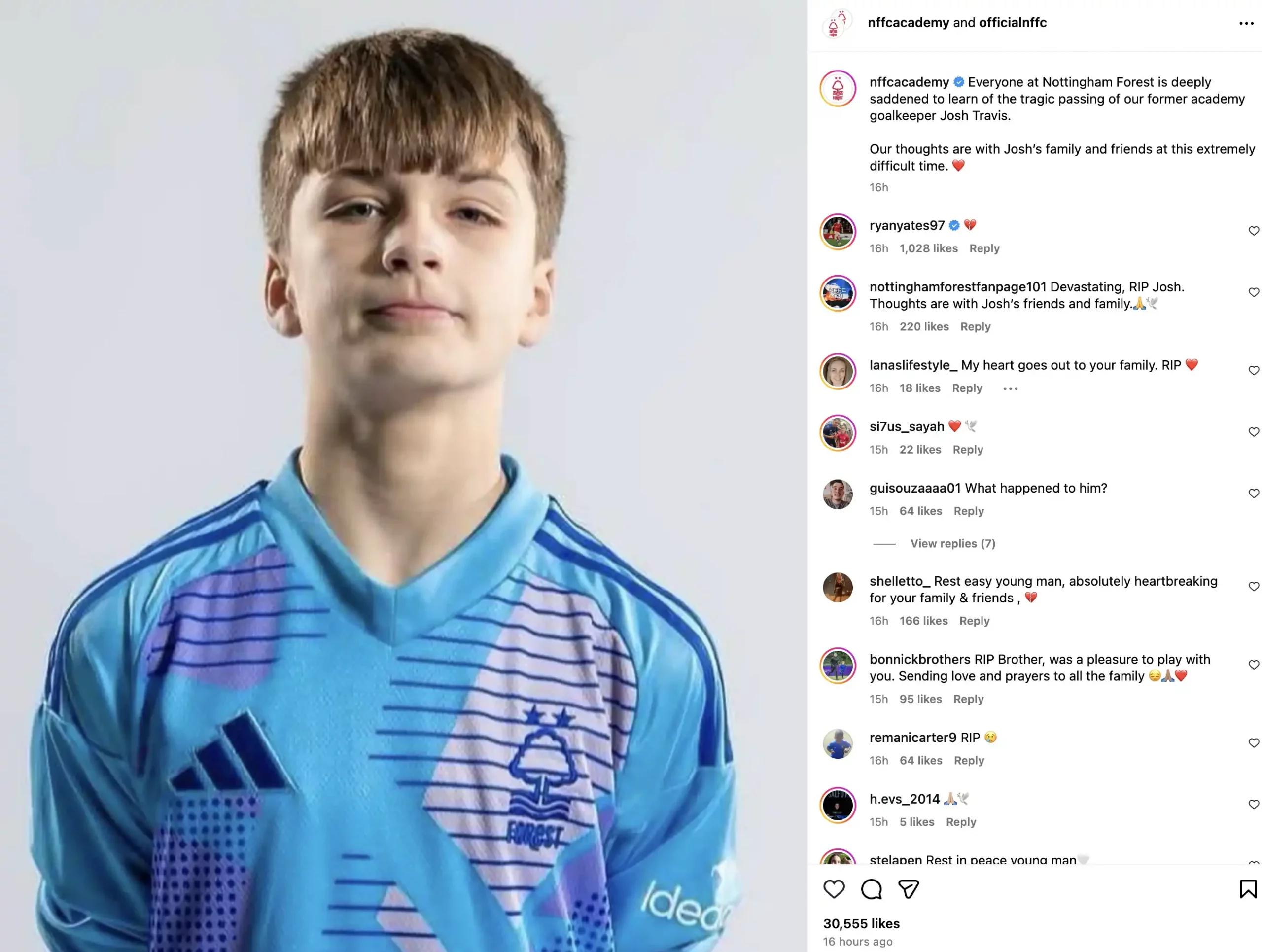
The Reds took to social media to pay tribute to 14-year-old Josh Travis, who was a former academy goalkeeper with the Premier League side.

Nottingham Forest wrote in an Instagram post: “Everyone at Nottingham Forest is deeply saddened to learn of the tragic passing of our former academy goalkeeper Josh Travis.

“Our thoughts are with Josh’s family and friends at this extremely difficult time.”

PHOTO: Instagram

Forest captain Ryan Yates also appeared in the comments section, where he wrote a heartbroken emoji in tribute.

The local MP and councillors also expressed sympathy.

Gedling MP Michael Payne said: “I am deeply saddened to learn of the tragic incident near Burton Joyce Station. My heartfelt sympathy goes out to the family and loved ones of the 14-year-old who lost their life.

“No family should ever have to endure such a devastating loss, and I know the whole community will share in their grief.

‘I want to express my sincere thanks to the first responders who attended the scene.

He added: “My thoughts remain with all those affected by this heartbreaking event. I know our community will keep the family in their hearts as they navigate this unimaginable loss.

“I have offered any support that I and my office can provide as the family and the wider community come to terms with this tragedy.”

Gedling Borough Councillors for Trent Valley Mike Adams and Sam Smith represent Burton Joyce released a statement paying tribute.

They said: “We are both deeply saddened by Wednesday’s tragic accident at the Chestnut Grove rail crossing in Burton Joyce.

“Our heartfelt sympathy goes out to the family and friends of the 14-year-old who has so sadly lost his life. No words can ease their pain, but we hold them in our thoughts at this unimaginably difficult time.

“As the village’s Councillors, we are moved by the way villagers, both those who know him from school and those from the wider community, have come together.

They added: “The crossing is now closed for an initial 21 days – which is likely be extended. There is also an open consultation on the proposed permanent closure and we encourage residents to share their views by taking part.

“Our thoughts remain firmly with all those affected by this heartbreaking event.”

14-year-old boy tragically dies after being hit by train in Burton Joyce

Get Gedling Eye on WhatsApp. Follow our channel and get a daily update Tap HERE to follow

A 14-year-old boy has been tragically killed after being hit by a train on the railway in Burton Joyce.

Officers were called to the scene on Wednesday (26) at around 7pm in response to reports that a person had been hit by a train.

Sadly, a 14-year-old was pronounced dead by paramedics called out in response to the incident..

British Transport Police yesterday issued a statement confirming the sad news.

It read: “Officers were called to the railway line in Burton Joyce, Nottinghamshire, at 7.06pm on 26 November to reports of a casualty on the tracks.

Burton Joyce station
PICTURED: Burton Joyce Station

“Paramedics also attended, and sadly a 14-year-old boy was pronounced dead at the scene. The incident is not being treated as suspicious, and a file will be prepared for the coroner.”

iEast Midlands Railway also issued a statement following the incident.

They told passengers that several services had been cancelled and delayed due to the incident.

They said: “We are sad to report that a person has been hit by a train.

“This has had a big impact on trains on the Newark Castle/Derby/Crewe and Leicester/Nottingham/Lincoln/Grimsby routes.”

Police seize haul of suspected counterfeit cigarettes from wanted car spotted on Colwick Loop Road

Police have seized around 20,000 suspected counterfeit cigarettes and arrested two suspects after stopping a car on Colwick Loop Road

The haul was recovered after information was received about a Volkswagen Golf which had earlier driven away from police and failed to stop. 

After the vehicle was spotted heading along the Colwick Loop Road, around 8.15pm on Monday (24), officers came up with a tactical plan to safely stop the Golf as it headed towards the city centre.

A short time later it was stopped. When officers searched the vehicle they found a large quantity of suspected counterfeit cigarettes on the back seats. 

Two men, aged 23 and 36, were arrested on suspicion of being in possession of criminal property.

Inspector Chris Chell, of Nottinghamshire Police, said: “This positive result shows we will continue to proactively stop vehicles believed to be involved in criminality. 

“Proactive policing of the roads is an essential weapon in our fight against crime and to help keep people safe and we will continue to do everything in our power to pursue and catch criminals travelling through Nottinghamshire.

“Stops like this one send a clear message that we do not want them on our roads.”