The Music Maker Competition is run by Carlton Male Voice Choir as a way of giving something back to help encourage talented young musicians and the first preliminary takes place at 7.30 pm on Saturday April 27 at St Judes Community Hall, 405 Woodborough Road, Nottingham NG3 5HE.
Chris Coats, Carlton MVC’s Chairman said: “We have been delighted with the response to the competition and the 12 musicians selected to take part are performing at a high standard. They include singers and a range of instrumentalists playing across a wide range of musical genres. The audience are in for a treat because as well as hearing from these talented young musicians, Carlton MVC will also perform. We have priced the tickets deliberately low at just £5 or £9.99 for three to encourage music lovers to come to the events and show their support for these young performers.”
Head Judge mezzo-soprano Katharine Dryden said “The contestants are competing for two prizes. The first is the Music Maker Prize. As well as winning £750, the winner will earn the right to perform at Carlton MVC’s Festival Concert at Nottingham’s fabulous Albert Hall on Saturday 22 June. The second prize, new this year, is £500 and is the Constance Shacklock Memorial Prize for the performer with the most potential. Constance Shacklock was a world renowned opera singer who had a strong Nottingham connection having been born in Sherwood, Nottingham. I was fortunate to have been taught by Constance in the early part of my career.”
Pictured: Previous winners clockwise from top left Benjamin Staniforth (2022), Magnus Hawker-French (2020), Konya Kanneh-Mason & Nathan Holroyd (2018) and Lydia Messan (2019) of the Music Maker Competition (Courtesy of CMVC)
Katharine is joined on the judging panel by Kadiatu Kanneh-Mason, David Machell, Roger Holland and Andrew Atkinson.
The best three performers from the two preliminaries (April 27 and May 18) will compete in the competition final on Saturday June 8.
Previous winners include many talented musicians including Konya, Braimah and Isata Kanneh-Mason.
There will also be a collection at the two preliminary heats and the final in support of fantastic Nottingham charity Footprints. Further information about Footprints can be found on their website – Footprints CEC – Conductive Education
These are the latest applications to have been submitted to and validated byGedling Borough Council this week.
The round-up of the latest plans that the council’s planning officers validated and published in a quiet week (w/e 19/4/24) with only eight validated applications published which include tree works, new signage and new dwellings from across the borough.
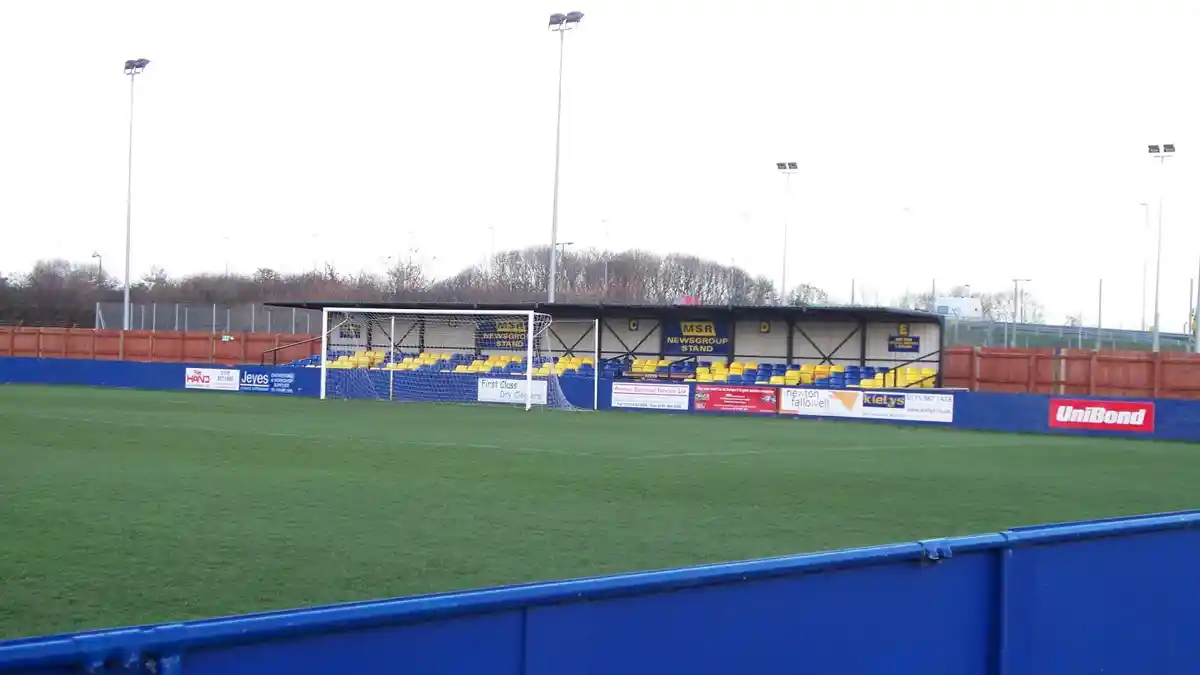
Liversedge had once again been instructed by the league to play this fixture at an alternative venue to their home ground at Clayborn due to ongoing pitch issues. Consequently, their magical mystery tour of ‘home’ matches took them to Ingfield Stadium, the home of Ossett United in West Yorkshire. A healthy number of Carlton supporters had made the journey, buoyed by the teams very impressive home win against Ossett only two days earlier.
Carlton’s management team made two enforced changes to the side which had played Ossett. Mamadou Sylla Diallo replaced Greg Tempest who was struggling with illness and Alex Hardwick returned in place of Nat Watson who has returned to Shirebrook following the completion of his loan spell. I’m sure everyone at Carlton would send their thanks to both Nat and Shirebrook as he was simply unplayable at times over the last few weeks and a delight to watch.
The match was played out in the type of weather we have all become accustomed to this season with lashing winds and rain affecting conditions. Carlton started brightly and had a good chance to take the lead on eight minutes. A nice passing move along the edge of the box involving Niall Hylton and Niall Davie fed Hardwick who shot just over the crossbar. A few moments later Alex Howes also had a good chance but his effort went well wide.
The next chance fell to Lamin Manneh to struck the ball well but saw his effort punched away by the Liversedge goalkeeper Louis Hood. Liversedge became more involved in the game as the half went on and looked to build on strong runs from their impressive left back, Jeremie Milambo.
It was Carlton who took the lead on 34 minutes. The unfortunate Eddie Church could only manage to head the ball into the roof of his own net when attempting to defend an excellently delivered, Lamin Manneh corner. Church’s half went from bad to worse soon after when his goal bound effort was cleared off the line by Khyle Sargent following some nice interplay by Liversedge in the Carlton penalty area. As good as the clearance was the striker should have scored.
Liversedge had a further chance to equalise before half time. A fortunate deflection saw the ball drop to Milambo whose low driven shot was expertly saved by Felix Annan.
The second half started in a similar manner. Annan made a decent save soon after the restart and Dan Brown was on hand with a good block to deny a goal bound effort as Liversedge searched for an equaliser. At the other end Sylla Diallo had a good shot from distance well saved by Hood.
The game continued in a frantic, end to end fashion but it was clear that the Carlton players were visibly tiring following their efforts of recent days. Liversedge began to dominate midfield and Jack Carr drew two more fine saves from Annan. Carlton did have a chance to extend their lead on sixty-three minutes. Substitute Micah Jebbison battled well to win the ball down the right-hand side and his trickery released the ball to Lewis Druro whose fine cross just evaded Davie on the stretch at the back post.
Liversedge equalised on sixty-nine minutes when a high ball was knocked down into the path of Sam Essien who scored from close range.
Carlton almost retook the lead moments later when a miskick presented the ball to Alex Hardwick who stuck the ball brilliantly on the half-volley from outside the box, only to see it hit the underside of the crossbar and away to safety.
A fine double save from Liversedge keeper Hood, first from Davie at the edge of the box and then from Jebbison close range effort kept the scores level.
Liversedge got the decisive breakthrough on 85 minutes and it was a breakaway goal worthy of winning any game. A coming together around the half-way line saw the ball drop to Carr who drove towards two Carlton defenders before smashing the ball into the net at an angle from the edge of the box to the delight of the handful of ‘home’ fans in attendance. Liversedge managed the last five minutes of regulation time and the additional five minutes of injury time well and while Carlton huffed and puffed they struggled to offer much of a threat as the game drew to a close.
Carlton Town: F Annan, D Adegbola, L Durow, D Brown, K Sargent (P Dearle 71), M Syla-Diallo, L Manneh (M Jebbison 59), A Howes, A Hardwick (J Seaton 73), N Davie, N Hylton. Unused subs: D Freeman, Z Hill
Goals: Eddie Church og 34; Samuel Essien 69, Jack Carr 85
Patchy cloud and sunny spells are forecast this morning. This afternoon cloud will increase, becoming often cloudy, but some sunny intervals will still occur, and it will remain dry. Feeling rather cold. Breezy along the coast. Maximum temperature 12 °C.
Tonight will see patchy cloud but also clear spells, these especially across western areas. Mainly light winds with temperatures falling close to freezing in rural areas. Minimum temperature 1 °C.
The Met Office forecast that tomorrow will be mostly cloudy, with a chance of a little drizzle at times. Any bright intervals will be limited and most likely across eastern areas. Light winds and feeling rather chilly. Maximum temperature 11 °C.
Tyres will always wear down over time no matter what you do. However, if you live in a relatively rural place on the edge of a big city, such as Gedling or Radcliffe-on-Trent, close to Nottingham, then you can face the worst of both worlds. Rural B-roads and country lanes tend to contain plenty of debris including anything from fallen branches to cut-down hedgerows. Conversely, when heading into the city – or even using a bypass, such as the A6211 – your tyres can encounter spilt loads, rough surfaces and even cracked tarmac. In the city centre, things can be even worse with plenty of potholes to negotiate. All in all, such problems take their toll on tyres.
To deal with short tyre lifespans, motorists should begin by adjusting their driving style. In wet conditions, try pulling away in second gear, not first. This will mean your car is less susceptible to wheel spinning which, in turn, will help to preserve tyre tread. Simply being more gentle when accelerating from stationary will help your tyres, too, something that owners of both manuals and automatics can do without much effort.
Consider rotating your tyres, too. This is a good idea because most front-wheel driven cars in the UK have one set which will wear down quicker than the others. All you need to do is find a compatible pair to replace your rear set and have a tyre fitter move the ones at the back to the front for you. In today’s fast-paced world, finding the right professional assistance for tyre rotation or purchasing new tyres can be challenging and intimidating. Fortunately, ordering tyres is an easy process at DAT Tyres – they offer a range of premium brands known for their durability, helping to extend the lifespan of your tyres.
Another good tip is to stop driving so fast. When you accelerate so that you’re always close to the car in front, you will inevitably have to brake more often. Not only does more frequent braking place tyres under strain but it can also lead to you needing to brake harder. When you are close to traffic ahead of you, it is harder to see what is going on ahead. As such, drivers who tailgate tend to react at the last moment when they see brake lights ahead going on. By holding a gap, you can preserve your brake pads and your tyres in one fell swoop.
To summarise, treat your tyres more gently to help preserve them. Avoid hazards on the road by holding back a little more than you currently do so you’re less likely to damage them or wear the tread down prematurely.
A man who was was more than three times over the drink-drive limit when he crashed into an oncoming car in Ravenshead and seriously injured two young women has been jailed.
A drink-driver who caused a head-on crash on a country road has been jailed.
Officers from Nottinghamshire Police’s Roads Policing Unit were alerted to an incident in Main Road, Ravenshead, around 6.15pm on 17 May 2023.
Reaching the scene soon after, the team found two cars had been involved in a collision, with debris scattered across the road and significant damage to both vehicles.
PICTURED: The scene of the crash in Ravenshead (PHOTO: Notts Police)
Roadside breath tests revealed one of the drivers, Richard Miller, was more than three times over the legal drink-drive limit.
Miller, who was driving his Ford Galaxy in the direction of Blidworth, immediately admitted he had misjudged a bend near the junction with Robin Hood Way.
The Galaxy ended up on the wrong side of the road where it collided with a Ford Fiesta.
Two women were travelling in the Fiesta and had to be cut from the vehicle by firefighters before being taken to hospital.
One victim suffered broken ribs while the other woman was left with head and spinal injuries. Both continue to be impacted by the crash and the driver has not got behind the wheel of a car since.
Miller failed a roadside breath test, recording a sample of 110 micrograms of alcohol per 100 millilitres of breath. The legal limit is 35 micrograms.
The 55-year-old, of Springwood View Close, Sutton-in-Ashfield, was jailed for a total of 14 months when he appeared at Nottingham Crown Court on Wednesday (17 April).
He had earlier pleaded guilty to drink-driving and two counts of causing serious injury by dangerous driving.
Detective Inspector Kate Savage, of Nottinghamshire Police, said:
“This case serves as a stark reminder that those who drink and drive are never in control of their vehicle and are selfishly putting the lives of other road users at risk.
“The two victims simply happened to be in the wrong place at the wrong time. Both suffered nasty injuries which could have been much worse. The collision has had an ongoing impact on their lives.
“Nottinghamshire Police takes offences like this very seriously and we will continue to do everything in our power to take people like Miller off our roads.
“Our work is ongoing all year round to stop drink and drug-drivers before they have the chance to cause serious harm. We will keep the pressure up and continue our work to educate and enforce wherever we can.
“If we have reason to believe you are driving under the influence of alcohol or drugs we will follow you, we will pull you over, and we will ensure you are prosecuted to the fullest extent of the law.”
If you suspect someone could be driving while under the influence of alcohol or drugs, don’t take a chance, report it, either by calling the police on 101, or 999 if there is an immediate risk to life or property. You can also call Crimestoppers anonymously on 0800 555 111.
Catch-up Screenings: Bob Marley- One Love (12A)– Bonington Cinema, Arnold
Fri 19 – Sat 20 Apr, Various Times £6.80pp
Bob Marley: One Love celebrates the life and music of an icon who inspired generations through his message of love and unity. On the big screen for the first time, discover Bob’s powerful story of overcoming adversity and the journey behind his revolutionary music. Produced in partnership with the Marley family and starring Kingsley Ben-Adir as the legendary musician and Lashana Lynch as his wife Rita.
“Kingsley Ben-Adir is a beautifully faultless Bob Marley in One Love biopic” Metro ★★★
Directed by Reinaldo Marcus Green With Kingsley Ben-Adir, Lashana Lynch 1hr 44 mins // US 2023
Oscar Catch-up Screenings: Oppenheimer (15) – Extra Screenings Added – Bonington Cinema, Arnold
Fri 19 – Sat 20 Apr, Various Times £6.80pp
Written and directed by Christopher Nolan (Dunkirk, Inception, Interstellar), Oppenheimer is an IMAX®-shot epic thriller that thrusts audiences into the pulse-pounding paradox of the enigmatic man who must risk destroying the world in order to save it.
“Cillian Murphy dazzles as the destroyer of worlds.” Telegraph ★★★★★
“A masterfully constructed character study from a great director operating on a whole new level.” Empire ★★★★★
Guardian ★★★★ Independent ★★★★
Nominated for 13 Academy Awards including Best Picture, Best Actor (Cillian Murphy) and Best Director (Christopher Nolan)
Winner of 7 Academy Awards including Best Picture, Best Actor and Best Director
Directed by Christopher Nolan With Cillian Murphy, Emily Blunt 3hrs // USA 2023
Sunday Sessions: Ashley Westlake – The Pit, Newstead
These gigs will be free as always but this year we will be passing a bucket around so please remember to bring a couple of quid in cash for the artists.
Bonington Players… Home, I’m Darling – Bonington Theatre, Arnold
Wed 24 – Sat 27 Apr, 7:30pm £9.00pp
The Bonington Players are pleased to announce that, following sold-out seasons at the National Theatre and in the West End, and a national tour, we are proud to bring Laura Wade’s Olivier Award-winning comedy to the Bonington Theatre.
How happily married are the happily married?
Every couple needs a little fantasy to keep their marriage sparkling. But behind the gingham curtains, things start to unravel, and being a domestic goddess is not as easy as it seems!
Mastering the art of presentation can significantly elevate your professional presence, allowing you to communicate ideas clearly and persuade audiences effectively. Success in this skill set enhances career prospects, strengthens professional relationships, and can lead to more opportunities for influence and leadership. This article provides essential tips and practical advice for delivering presentations that not only inform but also inspire and engage. We will delve into understanding your audience, structuring your presentation effectively, and other key aspects that contribute to compelling communication.
Understanding Your Audience: Tailoring Your Message for Maximum Impact
Successful presenters excel not just because of their eloquence or the depth of their knowledge, but because they finely tune their message to resonate with their audience. Start by researching who will be in your audience. What are their interests, professional backgrounds, and levels of expertise? What might they be hoping to gain from your presentation? This insight allows you to craft a message that speaks directly to their needs and expectations. Use language that aligns with their professional levels, incorporate examples that are relatable to them, and adjust your delivery style to maintain engagement. By focusing on the audience’s perspective, you ensure that your presentation is relevant and compelling, making it more likely that your listeners will leave with a lasting positive impression.
Structuring Your Presentation: Key Elements of a Compelling Narrative
A well-structured presentation is akin to a well-written story. It needs a clear beginning, middle, and end, with each part flowing logically into the next. Begin with a strong introduction that outlines the topics you will cover and what the audience can gain from listening to you. This sets the expectation and captures interest right from the start. The body of your presentation should be divided into manageable segments, each focusing on a key point supported by facts, figures, and real-life examples to enhance credibility and retention. Conclude with a powerful summary that reinforces the main points, and if applicable, a call to action. This structure not only helps in maintaining the clarity of your message but also aids in keeping the audience engaged throughout your presentation.
Feedback and Continuous Improvement: Learning from Each Speaking Opportunity
Effective presenters understand that every speaking opportunity is a chance for growth. Incorporating feedback is crucial for continuous improvement in your presentation skills. After each session, seek out opinions from peers, mentors, and audience members. Specific questions about clarity, engagement, and the usefulness of the content can provide invaluable insights. Presentation training often emphasises the importance of acting on this feedback to refine your techniques. Additionally, consider recording your presentations to self-review your performance. This can reveal habits that need adjustment, such as overuse of filler words or ineffective pacing. Regularly updating your skills through structured bespoke presentation training can also provide new techniques and perspectives, keeping your approach fresh and effective.
Designing Engaging Visual Aids: Tips for Effective Slide Creation
Visual aids can dramatically enhance the impact of your presentation, but only if they are well designed. Start by ensuring that each slide is focused on a single main idea. This clarity prevents confusion and keeps your audience’s attention directed where you want it. Use high-quality images and graphics that reinforce your message; these are more effective than dense text in capturing and maintaining viewer interest. Keep the design clean and consistent with a professional colour scheme and standardised fonts. Tools and software are an integral part of presentation skills training, where you learn to utilise features that enhance the visual appeal without distracting from the main message.
Mastering Verbal and Non-Verbal Communication: The Pillars of Persuasion
Effective communication in presentations extends beyond the words you choose to the manner in which you deliver them. Verbal skills involve not only clear articulation but also the use of a dynamic tone to emphasise key points and keep the audience engaged. Varying your pitch and pace can help maintain interest and convey enthusiasm for the subject matter. Non-verbal communication, on the other hand, can subtly underscore or undermine your spoken message. Eye contact, posture, and gestures all play critical roles in conveying confidence and credibility. Presentation skills training workshops often highlight the power of non-verbal cues in engaging an audience, teaching techniques to control body language and use it to your advantage. By mastering both verbal and non-verbal skills, you can deliver your message more effectively, ensuring it resonates with and influences your audience.
Engagement Techniques: Keeping Your Audience Interested and Active
Maintaining audience engagement throughout a presentation is crucial for effective communication. One key technique is to involve the audience directly. This can be through interactive elements such as Q&A sessions, live polls, or small group discussions. These interactions not only make the audience feel part of the presentation but also provide immediate feedback on their level of understanding and interest. Another effective strategy is the use of storytelling, where real-world scenarios or anecdotes are woven into the presentation to illustrate points vividly and memorably. Advanced presentation skills training often includes methods for crafting stories that connect emotionally with the audience, making the content more relatable and impactful. By employing these techniques, you can ensure that your presentation remains compelling from start to finish, leading to greater engagement and retention of information.
Mobility is a critical component of community life. It enables access to essential services, supports social interaction, and fosters a sense of belonging. However, for many community groups, especially in smaller or under-resourced areas, providing adequate transportation can be a challenge.
This must-have guide explores an array of practical, affordable solutions that can help enhance mobility for community groups, helping everyone from local youth clubs to senior clubs get where they need to go without breaking the bank.
Assessing the Need
The first step in enhancing mobility for community groups is to assess the specific needs of the group. This might involve understanding the number of people who require transportation, their typical destinations, and the frequency of travel.
For instance, a senior centre might need regular weekly transport to local supermarkets and monthly outings to cultural events, while a youth sports team may require transport to other towns for weekend matches.
Carpooling and Ride-Sharing
One of the most straightforward and cost-effective solutions is to organise a carpooling or ride-sharing system. This can be as simple as setting up a WhatsApp group or a shared online calendar where community members can volunteer to drive others.
Not only does this reduce transportation costs, but it also promotes a sense of community as members interact and help each other.
Leveraging Local Business Sponsorships
Another effective strategy is to partner with local businesses for transportation support. Businesses can sponsor a vehicle or contribute towards fuel costs in exchange for advertising opportunities, such as logos on a minibus. This can be a win-win situation; community groups gain mobility, and businesses receive local brand exposure.
Community Minibuses
Purchasing or leasing a community minibus is another excellent option. While this may require initial capital, the long-term benefits can be substantial. Minibuses can be used for various group activities, providing reliable transportation that’s always on hand when needed.
For groups looking to make this investment more affordable, considering a used minibus can be a smart move. Outlets like The Minibus Centre offer a range of used vehicles that can fit tight budgets without compromising on quality or safety.
Government and Non-Profit Grants
There are often government and non-profit grants available specifically aimed at improving community transport. These grants can be used to fund the purchase of a vehicle, subsidise operational costs, or even support the establishment of a transportation program.
It’s worth dedicating time to research and apply for these grants, as they can cover substantial costs and significantly enhance a group’s operational capabilities.
Volunteer Drivers
Utilising volunteer drivers is another economical way to manage community transportation. Volunteers can use their vehicles or drive community-owned vehicles.
It’s important, however, to ensure that all volunteer drivers are properly vetted and insured, and that their vehicles are safe and well-maintained. Offering to cover fuel costs can also be a good incentive for volunteers and can help expand the pool of available drivers.
Scheduled Service Days
Implementing scheduled service days is a strategic approach that can greatly optimise both costs and efficiency for community groups requiring transportation.
Establishing set days for transport — such as Tuesdays and Thursdays for grocery shopping, medical appointments, or other errands, and Saturdays reserved for community gatherings or leisure outings — ensures that vehicles are used at full capacity on those specific days.
This method not only maximises the use of the transportation resources but also allows community members to better organise their schedules, knowing exactly when transport options are available. maintenance, making transportation projects more sustainable over the long term.
Digital Solutions for Route and Schedule Optimisation
The adoption of digital tools can significantly enhance the management of community transportation.
Modern technology offers sophisticated apps and software designed to streamline route planning and scheduling. These digital solutions help in plotting the most efficient routes, minimising driving time and reducing fuel consumption. For example, GPS technology can adjust routes in real time to avoid traffic congestion and road closures, ensuring timely arrivals and departures.
What’s more, these handy tools can facilitate the coordination of multiple vehicles and destinations, optimising the entire transportation schedule to meet the community’s needs more effectively. The bottom line? Embracing these kinds of digital solutions leads to a more effective use of resources, aligning with the goals of both cost reduction and improved service delivery in community transport programs.
Education and Training
Finally, providing members with basic car maintenance and safe driving courses can help ensure that vehicles last longer, and trips are safe. This education can also empower more community members to become drivers, increasing the flexibility and availability of transportation options.
Improving mobility doesn’t require massive budgets or cutting-edge technology. Instead, it’s about making smart, sustainable choices leveraging community resources and fostering collaboration.
Whether it’s through utilising existing vehicles more efficiently, harnessing the power of technology, or tapping into local networks for support, there are numerous ways to enhance transportation in a cost-effective manner.
With a little creativity and community spirit, mobility can be significantly improved, enriching the lives of all community members, and ensuring that transportation barriers do not hinder the vibrant community life.
The Met Office forecast a chilly day ahead for Gedling borough residents, especially in the northerly wind. Early cloud breaking to allow some brighter spells, but also a few sharp showers, these easing later in the day. Maximum temperature 13 °C.
Tonight will see any lingering showers soon dying out, with long clear spells developing. Strong winds gradually easing. Becoming chilly, especially in the west, where a ground frost is possible. Minimum temperature 1 °C.
It is expected to be dry on Saturday, with sunny spells for most. Perhaps a little more cloudy later in the day. Winds mostly light, but with temperatures below average. Maximum temperature 12 °C.