


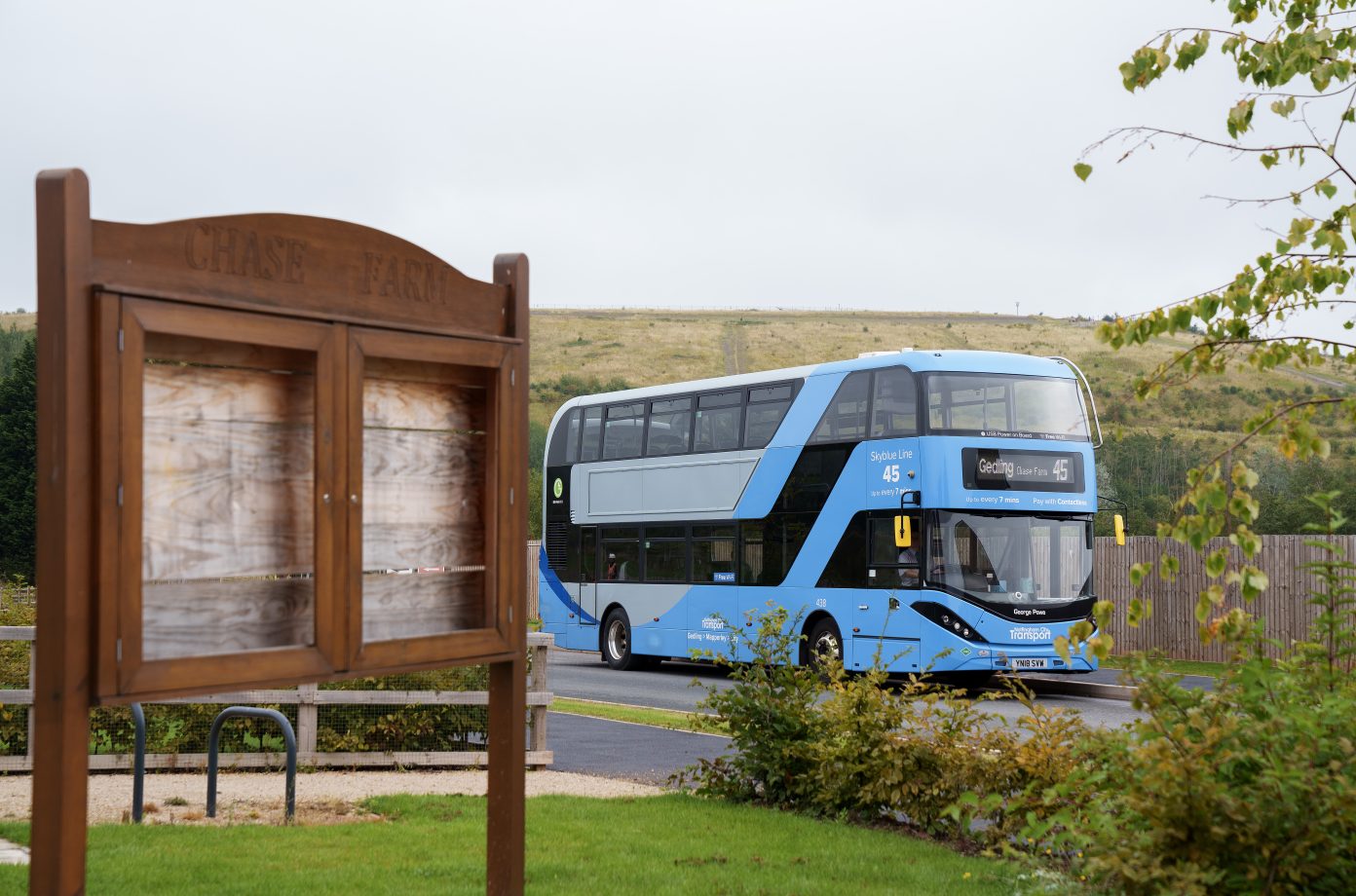

Residents in Gedling and Mapperley could soon see more electric buses on local roads under plans for a £9.1 million investment in Nottingham City Transport’s fleet.
The proposal, which has been recommended for approval by the East Midlands Combined County Authority (EMCCA), would fund 17 new electric double-decker buses for NCT’s Pink 28 and Sky Blue 60 routes, both of which serve communities in Mapperley, Gedling and the growing Chase Farm development.
If approved, the project would represent the second phase of Nottingham City Transport’s move towards a fully electric fleet, replacing older diesel vehicles with cleaner, quieter buses while expanding charging infrastructure at the operator’s Parliament Street depot.
What it means for Gedling and Mapperley
The Sky Blue 60, which connects Nottingham city centre with Mapperley and Chase Farm, would be one of the key beneficiaries of the investment. The route plays an increasingly important role in serving new housing growth in Gedling Borough, particularly around the expanding Chase Farm development.
Meanwhile, the Pink 28 serves major commuter corridors linking the city centre with Beechdale and Bilborough, with both routes expected to operate entirely with the new electric vehicles.
The scheme is designed to cut emissions along busy routes including Woodborough Road and Shelford Road, key transport corridors used daily by thousands of residents travelling to and from Mapperley and Gedling.
£3.1m requested from EMCCA
The total project cost is estimated at £9.09 million, with Nottingham City Transport funding almost two-thirds of the scheme itself.
EMCCA has been asked to contribute £3.1 million, while NCT would provide the remaining £5.99 million.
The money would fund:
- 17 new electric double-decker buses
- 12 additional charging points at the Parliament Street depot
- New traffic signals to support depot operations
- Further electrification works to support the growing zero-emission fleet
The business case sets aside approximately £8.23 million for the buses themselves and a further £860,000 for charging infrastructure.
Building on earlier investment
The latest proposal follows an earlier phase of depot electrification that introduced 19 electric double-decker buses into service.
Should the second phase go ahead, Nottingham City Transport would operate a total of 36 electric double-deckers, marking a significant shift away from diesel vehicles across parts of the network.
Cleaner air for communities
One of the main aims of the scheme is improving air quality by removing older diesel buses from the roads.
The routes pass through Nottingham’s Air Quality Management Area before serving suburban communities including Mapperley and Gedling, meaning local residents could benefit from lower emissions alongside quieter bus journeys.
The business case also highlights lower fuel and maintenance costs associated with electric vehicles, although assessors have requested more detail on the overall carbon savings before final approval is granted.
Approval still required
The scheme has already secured backing from EMCCA’s Investment Panel, but final funding approval has not yet been confirmed.
Before money can be released, Nottingham City Transport must provide additional information, including updated carbon assessments, governance arrangements and procurement plans for the proposed traffic signals.
If funding is approved, work is expected to continue through 2026 and 2027, with the new buses entering service during summer 2027.