


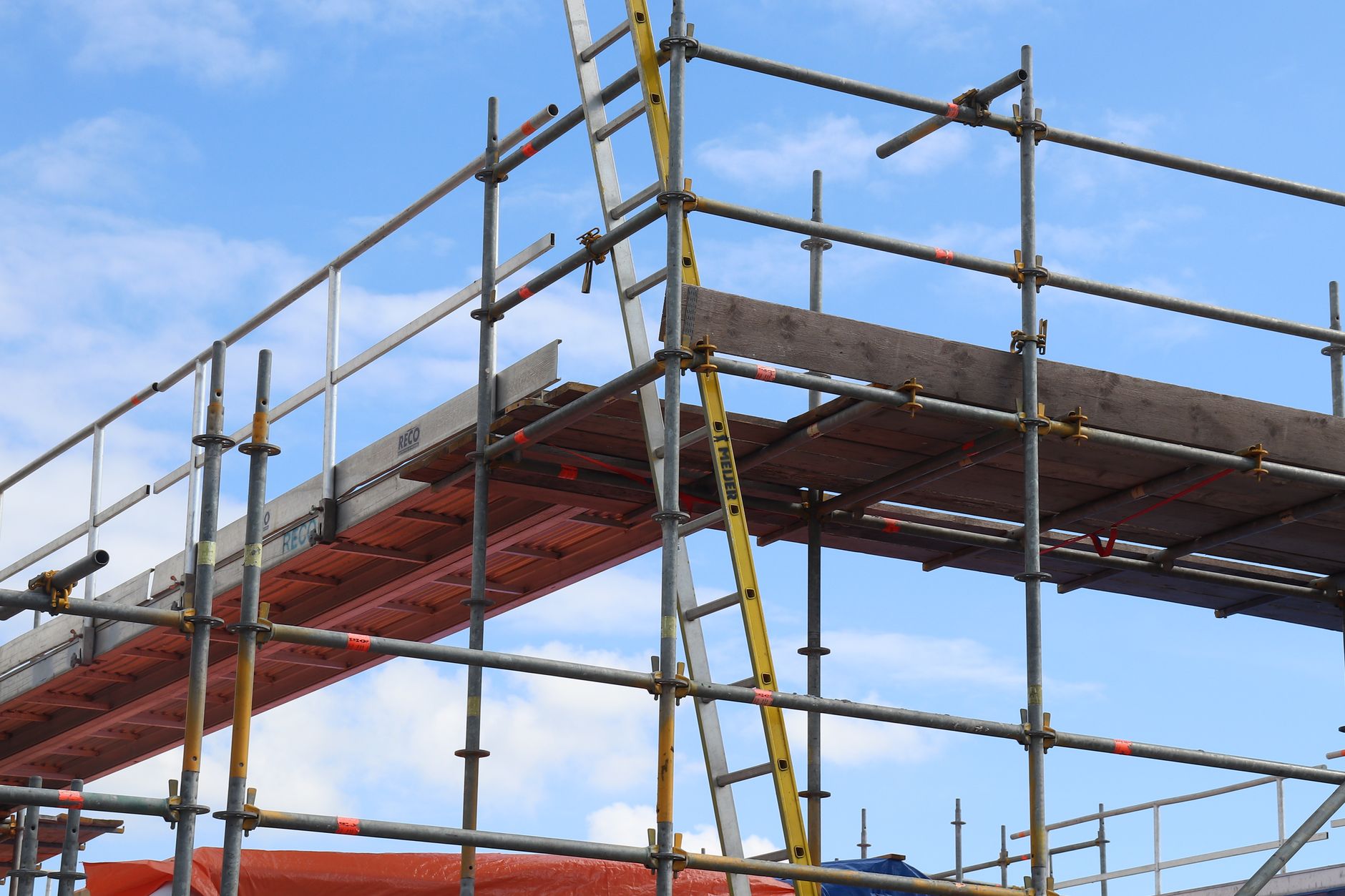

Commercial buildings don’t maintain themselves. Whether it’s crumbling render on a city-center office block or a blocked downpipe on a multi-storey retail unit, repair and maintenance work in Leeds demands safe access to height that can be put in place quickly—and scaffold tower hire fits squarely into that planning.
Getting workers up high is only part of it; the real challenge is doing that within tight site constraints, without turning the area below into a hazard for staff or the public. Scaffold towers are modular, mobile, and quick to assemble, which makes them a natural fit for the busy, varied environments Leeds contractors work in day after day. If you’re a site manager, a building owner, or a maintenance contractor, understanding what scaffold tower hire actually brings to a project will sharpen your planning on every job. The right access solution cuts both your risk and your overall project time—and that’s easy to see once you’ve used one.
Why Scaffold Tower Hire Makes Commercial Repairs Faster and Safer
Commercial repair work in Leeds can involve window replacement, facade repairs, roofing work, cladding, and other tasks that require safe access at height. For commercial renovation work that involves different heights and access points, scaffold tower hire in Leeds for commercial building projects gives contractors the flexibility to use tower setups suited to different areas of the site. This makes it easier to match the access equipment to the specific demands of the project. It can also help teams work more efficiently when different parts of the building require different working heights or platform sizes.
Scaffold towers can be assembled where they are needed and moved to another part of the building as work progresses. This can help reduce delays on projects where teams need to complete several repair or maintenance tasks across different areas. They also provide a stable platform for operatives, tools, and materials, which can make work at height more practical than using ladders for longer or more involved tasks. For commercial contractors, choosing the right tower can support both safer access and a more efficient workflow on site.
Access to Hard-to-Reach Areas Without Delay
One of the most persistent headaches on commercial maintenance jobs is access lag, the gap between arriving on site and actually being able to work safely at height. Ladders create that lag because they’re only suitable for the briefest tasks and don’t give you a stable platform for tools, materials, or two workers operating side by side. Scaffold towers close that gap fast. You erect them at the exact point of work, adjust the height to match the area you need to reach, and your operatives step straight onto a firm, level deck. That matters especially on Leeds’ commercial properties where facades can be uneven, ground conditions vary, and neighboring structures leave limited room to maneuver. Modern aluminum towers have adjustable base plates and a range of outrigger configurations, so an angled pavement or a narrow service lane doesn’t stop your team from setting up safely. And because the tower moves on castors when needed, repositioning along a long facade takes minutes rather than the half-day a fixed scaffold would take up. You stay productive from the first hour.
Reducing Work Stoppages on Active Commercial Sites
Active commercial sites—offices, retail premises, and warehouses still in use—can’t simply shut down for a maintenance job. Tenants and businesses need to carry on, which means your access equipment has to fit around them. Scaffold towers are compact enough to set up in a specific zone, leaving the rest of the site running. You can cordon off a single bay, complete the work, dismantle the tower, and move on without disrupting the broader site for days at a stretch. Fixed scaffolding doesn’t offer that. It locks in a large footprint for the duration of the contract, often blocking access routes, deliveries, or car park spaces in ways nobody planned for. A scaffold tower, by contrast, arrives on a standard van, takes up minimal storage space when it isn’t in use, and can be hired for exactly the days your project demands, no more. For Leeds maintenance contractors working under tight commercial leases and client pressure, control over site impact is genuinely worth sweating over.
Types of Maintenance Work: Scaffold Towers Support in Leeds
Scaffold towers aren’t one-trick equipment. Across Leeds, commercial maintenance teams use them for a wide range of repair tasks, and the common thread is the need for a stable elevated platform that can be positioned precisely and moved as the work progresses. Knowing which jobs benefit most from tower hire helps you plan your hire period accurately and avoid paying for access equipment that sits idle.
Facade Cleaning, Repairs, and Repointing
Brick and stone facades on Leeds’ commercial buildings take a beating from the region’s weather. Repointing, crack repairs, and high-pressure cleaning all demand close, sustained contact with the wall surface—something a ladder can’t provide safely for anything beyond a couple of meters. A scaffold tower lets your operative stand at a comfortable working height with both hands free, tools within reach, and enough room to move laterally without climbing down and relocating every few minutes. Repointing is particularly well-suited because the work is slow and methodical; your operative needs a stable deck, not a precarious foothold. Facade cleaning requires similar access but also needs the platform to carry the weight of a pressure washer alongside the worker. Scaffold towers are rated for these combined loads when you select the right configuration. On heritage commercial buildings in Leeds city center—of which there are many – the precision a scaffold tower provides is also far less likely to cause incidental damage than rushed ladder work.
Roof Maintenance and Guttering Work
Guttering repairs and roof-edge maintenance are among the most common commercial call-outs in Leeds, particularly after autumn and winter when debris accumulates and joints fail. Both tasks put operatives at or near the roofline, which is where fall risk peaks. A scaffold tower positions your team just below the eaves at a height you can set precisely, with guardrails on three sides of the working platform to stop a stumble from becoming a serious incident. The truth is, you don’t need a full roof scaffold for most guttering jobs. A single tower, repositioned along the building perimeter as work progresses, covers a typical commercial terrace or retail unit efficiently. Flat-roof inspections and minor repairs also benefit because a tower gives safe access to the roof edge without the operative needing to walk on exposed surfaces unnecessarily. So on jobs where height is the main variable and the work itself is relatively contained, tower hire is often both the safest and most cost-effective access choice Leeds maintenance contractors have available.
How to Choose the Right Scaffold Tower Setup for Your Project
Choosing the wrong scaffold tower configuration wastes time and money. It isn’t just about picking the tallest option; the shape of your site, the nature of the repair, and the load your team needs the platform to carry all feed into the right decision. Getting this right at the planning stage means fewer surprises on site.
Matching Tower Size and Configuration to Your Repair Scope
Scaffold towers come in a range of platform heights, widths, and load ratings, and the first step is mapping those specs to your actual job. A simple guttering repair on a single-storey commercial building calls for a very different configuration than a sustained facade repointing job on a four-storey office block. Platform height is the most obvious variable; you need your working deck at a height that puts the repair area comfortably in front of your operative, not overhead. Width matters too: narrow towers suit tight alleys and restricted footpaths, but broader platforms are better when operatives need to work side by side or carry bulkier materials up to height. Load rating is something contractors sometimes underestimate — you need to account for the weight of your operative, their tools, and any materials or equipment on the deck at the same time. Check the manufacturer’s rated load for the specific tower configuration you hire, and don’t exceed it. Ground conditions matter too; soft or uneven surfaces require appropriate base plates and outriggers to keep the tower stable throughout the job.
Working with Leeds Hire Companies to Plan Installation
A good hire company does more than drop off equipment. Honestly, the conversation you have before delivery often determines how smoothly the job runs. When you explain your project scope, they can recommend the right tower height, suggest appropriate accessories such as stabilizers or stairway frames, and flag any site-specific factors that might affect setup. Be specific when you make your inquiry: give them the working height you need, describe the ground surface, mention any overhead obstructions, and say whether the tower needs to move frequently during the job. That information lets them match the right specification to your project from the start. It’s also worth asking about delivery lead times, particularly for larger commercial jobs in Leeds where you may need multiple towers or a longer hire period. Many hire companies offer next-day delivery for standard configurations. But don’t overlook the training question: all operatives who assemble and use a scaffold tower should hold a valid PASMA (Prefabricated Access Suppliers’ and Manufacturers’ Association) certificate, confirming they understand safe assembly, inspection, and use. A reputable hiring company will flag this as a standard requirement rather than leave it to chance.
Conclusion
Scaffold tower hire gives commercial maintenance teams in Leeds a fast, flexible, and safe way to reach heights across a wide range of repair tasks—from facade repointing to guttering work to roof-edge inspections. The ability to erect a stable working platform quickly, move it as the job demands, and dismantle it without disrupting the broader site makes towers the practical choice for most commercial maintenance contracts. Choosing the right configuration from the start and working closely with your hiring company to plan the setup correctly will determine how smoothly the job runs. For most contractors, the question isn’t really whether to hire a scaffold tower—it’s making sure you hire the right one for what your specific project actually needs.