
Ancient tradition brought back to life with huge new barrow on edge of Calverton

A giant burial mound has appeared in the countryside outside Calverton, bringing back a tradition not seen in the Midlands for thousands of years.

Standing six feet high on the edge of the village, the newly-constructed barrow is the first of three planned for a new memorial park that aims to revive one of Britain’s oldest forms of remembrance.

The structure has been created by funeral directors A.W. Lymn and specialist builders Sacred Stones at the new Nottinghamshire Memorial Park, a 27-acre site off George’s Lane.

When completed, the three earth-covered mounds will become the Midlands’ first dedicated barrow site and provide more than 800 niches for ashes.



Barrows were once used across Britain to honour the dead, with many dating back to the Bronze Age. While ancient examples still dot the landscape, newly-built barrows remain a rare sight.

Matthew Lymn Rose, managing director of A.W. Lymn and the fifth generation of the family business, said seeing the first mound emerge from the ground had been an emotional moment.

“This is an exciting first for the Midlands and we’re incredibly proud to see the first barrow rise out of the ground,” he said.

“We can’t wait to welcome people on site and give them the opportunity to explore these remarkable structures for themselves.

“A lot of thought and hard work has gone into creating something that reintroduces ancient traditions to the 21st century. We hope it will offer families a beautiful and meaningful way to celebrate a life well lived.”

The project comes as cremation continues to be the most popular funeral choice in the UK. With increasing numbers of families opting for cremation, the developers say the barrows will provide a permanent place where loved ones can visit, reflect and remember.

An open day is planned for 10 October 2026, giving members of the public the chance to step inside the structures ahead of their official opening in April 2027.

Visitors will be able to explore both the exterior and interior of the man-made mounds and learn more about the inspiration behind the project.

Mr Lymn Rose believes changing attitudes towards funerals are driving demand for new approaches to remembrance.

“People are increasingly informed about their funeral options and more confident exploring alternatives,” he said.

“Many families want arrangements that reflect their values, beliefs and budget rather than a standard package. Recreating something from ancient times offers a unique and special way to commemorate a loved one.”

Enquiries have already been received from people interested in purchasing niches within the barrows, offering an alternative to scattering ashes or keeping them at home.

Founded in Nottingham in 1907, A.W. Lymn has grown into one of the UK’s largest independent funeral directors, operating 36 funeral homes across the East Midlands.

The new memorial park will also mark the company’s first family-owned cemetery development.

OPINION: “Let’s follow the evidence before making an irreversible decision over Richard Herrod Centre”

Last week, Gedling Eye published an opinion piece by Councillor Henry Wheeler setting out his views on the proposed Carlton Active leisure centre replacement project.

You can read the original article here.

In response, Ian Summerscales, Director of Gedling Indoor Bowls Centre Limited, has contributed the following article on behalf of the bowls club...

We want to make one thing absolutely clear from the outset: we are not opposed to investment in leisure facilities in Carlton or elsewhere in Gedling. We recognise that many of the borough’s leisure facilities are ageing and that the Council faces difficult decisions about the future of its leisure estate.

However, we would urge all parties to step back from the political arguments and focus instead on the evidence, including properly scrutinised assessments of demand for indoor bowls facilities in the borough and the wider conurbation.

If Carlton Active is the right solution for Carlton, then the Council should be able to demonstrate that clearly and convincingly. It should also be possible to explain why the loss of indoor bowls facilities is unavoidable without relying on what we believe to be flawed data. Equally, if there are alternative ways of delivering improved leisure provision that offer better value for residents, those options should be fully considered before any irreversible decision is made.

As a bowls club, our objective is not to prevent investment in Carlton. Rather, it is to ensure that both the future of leisure provision and the future of indoor bowls in Gedling are considered properly, fairly and in the best interests of local residents.

In his recent article for Gedling Eye, Councillor Wheeler suggested that opposition councillors have failed to propose alternative approaches to Carlton Active. This is simply not the case. For example, a proposal was put to Gedling Borough Council’s Cabinet that, rather than spending millions of pounds on consultants and a further £30 million on demolition and new-build costs, work could be commissioned at a significantly lower cost to repair and maintain the existing swimming pools at Carlton Forum, alongside more modest investment at the Richard Herrod Leisure Centre.

Councillor Wheeler appears to treat demolition and rebuilding on the Richard Herrod site as a foregone conclusion. Yet it is notable that, according to an item published by Gedling Eye earlier this week, internal demolition work has already begun despite planning permission still awaiting approval. To many, this creates the impression of predetermination and raises questions about committing substantial expenditure before central government has decided whether to issue a Section 24 notice that could halt the project.

The central question should be straightforward: what facilities are needed, what can realistically be afforded, and how should public money be invested to achieve the best outcomes for residents? Nobody is advocating “sticking-plaster” solutions. Rather, the argument is for the careful and prudent use of taxpayers’ money.

Funding for Carlton Active is expected to come from a combination of reserves, the sale of an unspecified capital asset, and substantial borrowing that council taxpayers will ultimately repay over the next 40 years. It is notable that Councillor Wheeler made no reference in his article to the long-term financial burden that such borrowing could place on future councils and local taxpayers.

Concerns surrounding sewage leaks affecting the swimming pool at Carlton Forum must also be addressed as a matter of urgency, particularly given that any replacement facility on the Richard Herrod site remains several years away from completion.

We would therefore urge a pause in the current proposals and ask all political parties to work together in finding solutions that provide high-quality leisure facilities while making prudent use of public money.

Finally, while the Council has been diligent in attempting to identify alternative accommodation for Gedling Indoor Bowls Club, none of the options proposed to date have proved affordable. We have demonstrated that the club’s operation at the Richard Herrod Centre was, and could continue to be, self-financing. As a result, we would welcome further discussions with the Council about the possibility of securing a smaller, sustainable facility that would allow indoor bowls to continue serving local residents in the future.

Free climate crisis film screenings coming to Gedling borough – and Chris Packham is urging people to watch it

Residents are being invited to attend a series of free film screenings in Gedling borough aimed at sparking conversations about climate change and its impact on local communities.

The People’s Emergency Briefing, which has already been screened thousands of times across the UK, brings together leading scientists to explain the climate and nature crisis and what it could mean for everyday life.

Three showings are planned across the borough over the coming weeks, with all screenings followed by a community discussion.

They will take place:

  • Arnold Community Centre, Saturday August 22 at 1.30pm
  • LOCO Youth Centre Netherfield, Monday August 24 at 7pm
  • The Willowbrook, Gedling, Thursday September 3 at 7.30pm

Free tickets for the events, along with details of other Nottinghamshire screenings, are available via the organisers’ Linktree page.

The documentary combines expert analysis with reactions from members of the public in a format inspired by TV show Gogglebox. It also features familiar faces including Dragon’s Den star Deborah Meaden and comedians Jennifer Saunders and Adam Buxton.

Wildlife broadcaster Chris Packham, who appears in the film, said: “I’d encourage people everywhere to attend a screening of The People’s Emergency Briefing.

“It creates exactly the kind of honest local conversation we now urgently need, both about what these changes mean where we live, and about what we can do together to address them.”

The events come after another summer of high temperatures, while flooding remains a concern for many residents across parts of Gedling.

Volunteer Kay Head, who has helped promote the screenings locally, said: “The effects of the climate crisis are here now, right on our doorstep.

“I’ve helped with quite a few film screenings now and people leave feeling energised and hopeful. I think they appreciate being told the truth in such a direct way.”

Organisers say the post-film discussion sessions are designed to give people a chance to share their thoughts, ask questions and explore actions they can take in response to the issues raised.

Local councillors and Gedling MP Michael Payne have also been invited to attend and hear residents’ views.

David Eminson, from Gedling Climate Change Group, said: “We want to bring this film to as many local people as possible.

“Only then can informed discussions with each other and our elected representatives create the necessary changes needed to tackle this crisis. Everyone is very welcome.”

One aim of the documentary is to encourage support for a parliamentary petition calling on the Government to hold a UK-wide briefing on climate and nature risks.

The petition passed 100,000 signatures last week, meaning it will now be considered for debate in Parliament.

You can book tickets HERE

Gedling students celebrate GCSE success as schools report record-breaking results

Students across Gedling Borough celebrated their GCSE success after schools reported strong performances, record-breaking results and inspiring stories of resilience on results day.

Schools across Arnold, Carlton and Mapperley praised pupils for their hard work, with many now preparing to move on to sixth form, college, apprenticeships and further education.

Redhill Academy celebrates outstanding achievements

The Redhill Academy said it was “incredibly proud” of its Year 11 students after another successful year of GCSE results.

Headteacher Mike Hardy praised pupils for their hard work, resilience and contributions beyond the classroom through sport, performing arts, Duke of Edinburgh, mentoring and volunteering.

Among the highest achievers were Amy C, Amelia H, Charis H and Adam BA, who between them amassed an impressive 18 grade 9s, nine grade 8s and four grade 7s.

Mr Hardy said: “I am incredibly proud of all our students and the results they have achieved. This shows a great deal of hard work, resilience and talent.”

Christ the King pupils shine

At Christ the King Catholic Voluntary Academy in Arnold, students also had plenty to celebrate.

The school reported that 67.5% of students achieved grade 4 or above in both English and maths, while 42.2% secured grade 5s or above in the key subjects.

More than 72% of students achieved five or more GCSEs at grade 4 or above, while 24 students gained at least five grades between 7 and 9.

Among the standout performers were Amelie Burton, Daniel Rajchel and John Stevenson, who each achieved ten GCSEs at grades 7 to 9.

Kitty Dickinson, Benjamin Knowles, Isaac Lee and Maia Ritoridis each secured nine GCSEs at grades 7 to 9.

Headteacher Jo Love said: “Results day is an important opportunity to celebrate not simply the grades our students receive, but the hard work, perseverance and determination that have brought them to this point.”

Record-breaking year at Carlton Academy

The Carlton Academy described this year’s results as the best in the school’s history.

Nearly 20% of students achieved grades 7 to 9 in both English and maths, while 53% gained grades 5 to 9 and 71% achieved grades 4 to 9.

Leading the way were Luca Bordea, Tober Khalid, Jeevan Dunkel and Yiming Zang, who each achieved ten grade 9s and one grade 8.

Abbey Turnbull balanced preparation for British Swimming Nationals, where she achieved a top 5 national position

Other notable performances included Belle Bacon, who achieved eight grade 9s and three grade 8s, while Dylan Laing secured five grade 9s, four grade 8s and a Level 2 Distinction.

The school also highlighted the determination of Scarlett Brennan, who achieved eight GCSE passes despite battling leukaemia during her studies.

Head of School Gary Hillyard said: “Their tireless effort and resilience has resulted in amazing successes and has set them up for their next steps.”

Oakwood Academy posts best-ever outcomes

The Oakwood Academy also celebrated its strongest GCSE results to date.

More than 65% of students achieved at least a grade 4 in English and maths, while 45% secured grade 5 or above in both subjects.

Top-performing student Oliwia Pozniak achieved three grade 9s and five grade 8s, while Jakub Maryniec gained a grade 9 and six grade 8s.

The school paid tribute to Lillie Mae Hall, who achieved excellent results despite being diagnosed with a brain tumour during her time at the academy.

Students collectively secured 23 top grades, including grade 9s and distinction stars across a range of subjects.

Headteacher Andrew Gilbert said: “We are delighted that so many students have excellent results, reflecting their ability, effort and commitment.”

Congratulations across Nottinghamshire

Nottinghamshire County Council congratulated students across the county as they collected their results.

Councillor Simon Wright, Cabinet Member for Education and SEND, said: “You should be incredibly proud of your hard work and commitment getting to today.”

Students are now considering a range of next steps, including sixth forms, colleges, apprenticeships, T Levels and Higher Technical Qualifications.

Across Gedling, the message from schools was clear: behind every grade lies a story of commitment, determination and achievement, with hundreds of young people now preparing for the next chapter of their education and careers.

Gedling set to get £87k boost in bid to get rough sleepers off streets by Christmas

Gedling Borough is set to receive £87,131 as part of a major Government drive to help end rough sleeping and get people off the streets by Christmas.

The cash forms part of a nationwide £442 million funding package announced by Prime Minister Andy Burnham, aimed at providing emergency accommodation and support services for people sleeping rough across England this winter.

New accommodation and support schemes will be rolled out in the coming months, with councils working alongside charities, health services and community groups to help people find stable housing and rebuild their lives.

PICTURED: A homeless man on the streets (PICTURE: Deposit)

Gedling’s share of the funding comes as ministers unveil plans to offer everyone experiencing rough sleeping a route off the streets by Christmas.

Announcing the scheme, Mr Burnham said: “No-one should have to bed down in a doorway or outside a station.

“I won’t accept it. That’s why my first instruction as Prime Minister was to end rough sleeping. And it’s why today we’re getting started with a national drive to get everyone in for Christmas.”

The Government says the funding will not only provide immediate accommodation but also help deliver more than 1,000 long-term homes over the next three years, backed by intensive support for those at risk of homelessness.

Housing Secretary Angela Rayner said the investment would help thousands of people “leave the streets behind, move into secure homes and get the support they need to rebuild their lives”.

Local authorities across England are receiving funding, with councils in areas facing the greatest pressures receiving the largest allocations.

The Government will also host a national summit this autumn, bringing together leaders from business, charities, faith groups and public services to support efforts to end rough sleeping.

An additional £8.4 million has been set aside for community and homelessness organisations, with ministers saying local partnerships will be central to delivering lasting solutions.

Research from homelessness charity Crisis suggests preventing 40,000 people from becoming homeless for a year could save taxpayers around £370 million.

The Government says guidance is being issued to councils to help ensure support is in place before winter, including specialist provision for women experiencing rough sleeping and those fleeing domestic abuse or sexual violence.

The Quiet Shift in How Britain Gambles Online: Paying by Phone Bill, and the Limits Baked In

Since credit cards were banned and stake caps arrived, the way people fund a flutter has changed. Here is what mobile billing does, and does not, let you do.

Online gambling in Britain looks very different from five years ago. The rules have tightened in stages, and the way people put money into an account has moved with them. Since April 2020 no licensed operator has been allowed to accept a credit card, full stop. Then the regulator went after the games themselves, capping online slot stakes at £5 a spin, and £2 for players under 25. Those two changes, more than any advert or welcome offer, have reshaped what a night on the slots actually looks like.

With cards off the table and e-wallets required to block credit, players have leaned on methods that draw only from money they already have. Debit cards, bank transfers and prepaid options do most of the work. One route that keeps coming up is charging a deposit straight to your mobile phone bill or pay-as-you-go credit: no card details entered, no bank login, just a confirmation on your handset.

It is popular for a reason, and it comes with a hard limit built in. Speaking to Casinos.com, which sets out options for depositing via mobile billing and how they compare, one payments analyst said: “The appeal is speed and privacy. You’re not handing over card numbers, and the deposit’s small by design. The catch is that it’s deposit-only, so winnings never come back to your phone bill, and anyone treating it as a way to spend little and often should keep an eye on how quickly those top-ups add up.”

That ceiling is not something the casino chooses. Charge-to-mobile payments sit under the UK’s payment rules, which hold them to a daily cap of £40 and a monthly ceiling of £240, with many sites keeping deposits to somewhere between £10 and £30 a day. When credit cards were banned in 2020, campaigners warned that paying by phone contract was effectively borrowing by another name, and the debate over where that line sits has not gone away.

Operators are doing more watching in the background too. Between August 2024 and March 2025 the Gambling Commission ran a pilot of frictionless financial risk assessments, quiet credit-reference checks on the highest-spending accounts, meant to spot people heading into trouble before it shows. The regulator has been careful to call these risk assessments rather than blanket affordability checks, but the direction is clear: more friction for big spenders, fewer hurdles for everyone else.

For the average player, the upshot is simple. Loading a casino account from a credit card is gone. Deposits now come from money you actually hold, in amounts the system keeps deliberately modest, and the biggest spenders can expect a check they will not always notice. Mobile billing fits neatly into that world: small, quick and capped, which is much of why it has stuck around.

None of it removes the need for a bit of care. We have reported before on how easily everyday scams and money traps catch people out, and the same common sense applies to any account you top up, whether by phone or by card. Setting your own deposit limit before you start, rather than after, remains the simplest guard against a small habit turning into a costly one.

The bigger picture is a market that has traded easy credit and open-ended stakes for tighter limits and slower money. Whether that makes gambling safer or simply quieter is a question the next round of reforms will test. For now, the phone in your pocket has become one of the more tightly controlled ways to place a bet, and for a lot of players, that is exactly the point.

Council chiefs expect ‘no delays’ to Richard Herrod Centre demolition despite planning setback

The demolition of a landmark leisure centre should not be delayed despite a planning setback, council officials have said.

Gedling Borough Council has been pushing forward with its £30 million ‘Carlton Active’ project – a scheme which will see a new, modern leisure centre built in Carlton.

The project involves the Richard Herrod Centre and Carlton Forum Centre being knocked down to create the new space on the site of where the Richard Herrod currently sits.

The Richard Herrod Centre’s legacy dates back several decades, from the dry ski slope on site from the 1960s until the 1990s, to being the home of the Gedling Indoor Bowls Club from 1987 until 2026.

It was also used as a vaccination centre during the Covid-19 pandemic.

In late July, the borough council submitted formal plans to itself which outlined its intention to knock the site down, with demolition documents indicating the start goal of September 28, and the completion date expected in either November or December this year.

PICTURED: An artist’s impression of the planned Carlton Active leisure centre

But Gedling planners concluded last week that prior approval of the demolition is required, meaning the council needs to provide extra information on the means of demolition before it can start tearing the structure down.

Documents say “insufficient information” over the means of demolition was put forward, and extra information on the dust management, air pollution, harm prevention of protected species, and an assessment of the risks to surrounding resident properties, is needed.

This means no demolition works can take place at the Richard Herrod site until these are submitted.

Despite the previously-indicated September start date for demolition works, the council’s most recent planning documents say demolition works are planned to start “before the end of August”.

Gedling Borough Council said on Monday (August 17) that this minor planning setback “should not result in any delays to the project”.

A spokesperson said: “Officers continue to work towards demolition commencing as soon as the remaining requirements have been satisfied.

“The next step is for the council, delivery partner and contractor to submit the additional information requested. This includes ecological mitigation information, demolition method statements and environmental management measures.”

They say enabling works and the internal stripping of the centre “continues”, with “significant progress” already made for demolition preparation and that an updated demolition programme is due.

Recently unveiled plans say ‘Carlton Active’ would have a smaller footprint than the current centre and would be built further south on the site.

Drawings revealed the ground floor will include an eight-lane swimming pool, a teaching pool, changing rooms, a café, a soft play area, a community room and a studio with power-assisted equipment and toilets.

Its first floor would house the gym, two studios, changing and toilet facilities and the pool’s spectator area.

However, the ‘Carlton Active’ project has been met with much criticism, after the borough council decided to not include an indoor bowls facility within the new centre.

Such a facility was originally considered in plans, with its removal effectively displacing Gedling Indoor Bowls Club.

Councillor Henry Wheeler (Lab), portfolio holder for lifestyles, health and wellbeing at the council, previously said a six-rink bowls facility in the plans would add between £5.6 million to £7.7 million to capital costs, leaving a yearly subsidy of around £500,000.

Ian Summerscales, a director at the club, previously said the lowest priced relocation option would have cost around £2 million to £3 million to take over an industrial unit, refurbish it and cover bills.

How many empty units across our high streets in Notts?

With the British high street scene being squeezed over recent years, some Nottinghamshire towns have a high number of vacant units – but is the picture improving?

More and more people are shopping online, businesses are struggling with market conditions, and retail units are being left to gather dust.

The retail options on high streets nationwide are also shifting, where Britain has lost almost 1,800 pubs and bars since 2016, whilst the number of tobacco and vape shops jumped from 245 to nearly 2,200 in the same timeframe, according to the government.

Statistics from the Local Data Company in 2023 found one in seven shops sit empty nationwide, with North East high streets particularly constricted, sitting at one in five.

Since January 2015, 6,871 bank and building society branches have closed, according to Which?, leaving noticeable empty shells within our town centres.

The government has been introducing some measures in recent years, allowing local authorities to try claw back the once bustling shopping strips in their areas.

Since 2024, it has been pushing forward with High Street Rental Auctions (HSRAs), new permissive powers for councils that requires landlords to rent out continually vacant units to local businesses or community groups. Some Nottinghamshire authorities are implementing it.

This August, the government announced it would also be giving councils more control over the number of vape and betting shops on high streets, along with pubs, social clubs and venues getting a 20 per cent cut to their business rates, starting next year.

The Local Democracy Reporting Service asked each Nottinghamshire borough and district council to provide its retail unit vacancy rates in its largest two towns – and towns in the north of the county appear to be the most empty.

Town and areas with the most retail units empty

  • Worksop, Bassetlaw’s largest town, currently has a high number of retail units lying empty, with a vacancy rate of 17.12 per cent at March 2026 – this has improved since 19.86 per cent in March 2025.
  • Mansfield town is close behind, with 17 per cent of shops vacant.
  • While Calverton, in Gedling, is classified as a village, its growing size in recent years has earned the local jibe of ‘Calver-town’, with 16 per cent of retail units sitting empty, according to the council.
  • Stapleford has 14 per cent of its retail units’ overall floor space unoccupied, according to Broxtowe Borough Council, who choose to calculate vacancy rates this way.
  • In Sutton town centre, in the Ashfield district, there is a vacancy rate of 13.2 per cent.
  • Newark town’s empty shop unit rate sits at 12.02 per cent.
  • Mansfield Woodhouse currently has 12 per cent of retail units sitting empty.
  • Arnold, which has the largest town centre in Gedling Borough, has a retail vacancy rate of 10.6 per cent.

Towns and areas where the retail scene is performing better

  • Beeston’s vacancy rate, calculated based on the percentage of overall retail floor space that is empty, is four per cent, meaning it has a 96 per cent occupancy rate and is the highest in the borough.
  • Bingham, in Rushcliffe, has a five per cent vacancy rate.
  • Retford, in Bassetlaw, has a vacancy rate in its retail spaces of 5.44 per cent as of March 2026, down from 8.16 per cent in March 2025.
  • West Bridgford, Rushcliffe’s largest town, has a six per cent vacancy rate.
  • Mapperley Plains, while a suburb on the Gedling and Nottingham border, has a vacancy rate of 8.6 per cent, according to Gedling Borough Council.
  • Ollerton, the second largest settlement in the Newark and Sherwood District has a vacancy rate of 9.57 per cent.

What are the councils doing to boost the retail scene and footfall in their towns?

Ashfield

Ashfield District Council adopted HSRAs as a new power last September, which it says has meant some landlords are “actively searching” for new tenants, with some selling their empty units.

The authority has brought in a shop front grant for Sutton town centre and Stanton Hill to improve internal and external aesthetics.

Bassetlaw

In Bassetlaw, the success in bringing down its vacancy rates has been partly due to it being an early adopter of the HSRA initative, its ‘Discover’ campaigns for Worksop and Retford to increase footfall, free business support and small growth grants.

There has also been more money towards shop fit-out grants of up to £15,000 to attract new businesses as part of the government’s Pride in Place funding, which enabled seven empty units to be brought back into use in Retford, Worksop and Harworth and Bircotes.

Broxtowe

Beeston has had recent investment in its night-time economy, particularly for the council-owned Square.

Stapleford has benefitted from investment from the £21 million Towns Fund, which is still yet to finish. The new Pencil Works project is expected to further increase footfall.

The council was also an early adopter of the HSRA programme, where three empty units in Stapleford have been brough back into use and the vacant Old Rock property was the first premises in England to be taken to auction.

Gedling

Gedling Borough Council has developed the Ambition Arnold Visionary Masterplan to increase footfall in the town.

An outline business case and design work for a new leisure centre, theatre and library has also been put forward, which will be delivered subject to whether grant funding is available.

Mansfield

Mansfield is undergoing various regeneration projects, with improvements to its market place, its streets, the Mansfield Connect project on the site of the former Beales building and food hall plans for the former BHS site.

There are also new homes being created on White Hart Street – a site which accounts for a lot of empty business space – which Councillor Charles Hammersley, portfolio holder for planning and growth at Mansfield District Council, said will bring “new energy into Mansfield”.

He said: “We recognise that the sight of empty shops can generate some negativity, and we are actively engaging with property owners to find out how we can work together to make better use of these spaces. We will be sharing some more details about this project soon.”Newark and SherwoodCllr Claire Penny, portfolio holder for sustainable economic development at Newark and Sherwood District Council, said the authority is “bringing back to life” the empty M&S store, “transforming the visitor offer” at Newark Castle, has “saved” the Buttermarket and has “revamped” Newark’s parks and playgrounds.She says the authority has transformed 14 Market Place, has delivered free-to-attend events and, in partnership with Newark College, has a new construction college and the Air and Space Institute.In Ollerton, the council is improving links between Forest Road and Rufford Avenue and bringing a “cinema offer” into the town.

Why Are Young Entrepreneurs Turning to Alternative Lending?

Starting up a new business in the UK today requires speed and flexibility, but traditional banks often fail to match this pace. Young entrepreneurs frequently face significant barriers when they try to secure capital through traditional channels. High street banks usually demand years of trading history or substantial personal assets, which new founders simply don’t have.

This mismatch is forcing a generation of young business owners to look elsewhere for financial support. They need immediate access to capital to fund inventory and hire talent. Read ahead to see how this shift is changing the startup market and why traditional banks are losing ground.

Why Traditional Bank Loans Fail New Founders

High street banks operate on legacy systems that move slowly. For a young entrepreneur who needs to grab a market opportunity, waiting months for a loan decision isn’t realistic. Traditional institutions require piles of paperwork and complex forms, which creates unnecessary delays for fast-moving startups. This slow pace can cause a new business to miss out on vital supplier deals or key staff hires.

Furthermore, traditional lenders rely heavily on valuable assets, personal networks and long-standing track records. Young founders often lack these established relationships and wealthy backers. Without property or significant savings to pledge as security, securing a traditional bank loan becomes almost impossible for a modern startup. Banks often refuse to look at the future potential of a digital business, focusing only on past performance.

Alternative Lenders Assess Risk Differently

Alternative lenders view business potential through a different lens. They use modern data analytics to assess the health of a company instead of relying solely on old credit histories or physical assets. This allows them to make decisions in days or even hours, which matches the fast tempo of new enterprises. They can look at online sales data and cash flow patterns to understand the true health of the business.

Many modern founders look to alternative options for support. For example, getting a quote for a business loan from Lovey only takes a few hours. All they do is provide unsecured business loans, and their process is optimised for exactly that. This simple process gives entrepreneurs the freedom to see what funding is available without damaging their credit rating or wasting their time with back-and-forths.

Main Advantages of Alternative Capital for Startups

The growth of alternative funding is driven by clear advantages that align with modern business needs. Younger founders value speed and transparency over traditional brand names that offer slow service. They want to know exactly what they will pay without hidden fees or surprise clauses.

There are several reasons why alternative funding suits new companies:

  • Minimal paperwork requirements save valuable time during the setup phase.
  • Flexible repayment terms adjust according to seasonal business revenue.
  • Fast approval times allow companies to capitalise on immediate stock discounts.
  • Unsecured options mean founders don’t have to risk their personal property.

These features give young business owners the agility they need to survive in competitive markets. They can invest in inventory, hire staff, or launch marketing campaigns without waiting for a traditional board approval. This access to funds helps them compete with older, more established corporations.

All in All

The financial world is changing because young entrepreneurs demand efficient services. Traditional banks no longer hold a monopoly on business funding, and their slow processes are pushing innovation elsewhere.

Alternative lending provides the speed and realistic assessment that modern startups need to thrive in the UK. As more founders choose these modern options, the reliance on high street institutions will continue to decline.

Burton Joyce pump track plans gain backing from local youngsters

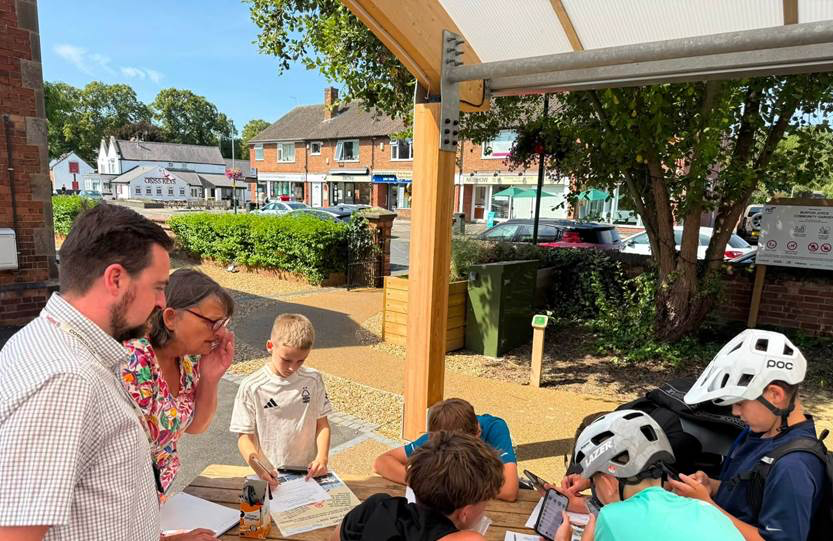
Plans for a new pump track in Burton Joyce have taken a step forward after young people in the village gave the idea a thumbs up.

Conservative councillors Sam Smith and Mike Adams joined Burton Joyce Parish Council at a consultation event to gather feedback on proposals for a pump track at Poplars Sports Field.

The session revealed strong support for the project, with the councillors and parish council now looking at potential funding opportunities to help make it a reality.

A pump track is a purpose-built circuit designed for bikes, scooters and skateboards, allowing users to build momentum through a series of rollers and bends.

Any scheme would still need to go through the normal planning process and public consultation before work could begin.

Speaking after meeting local youngsters, councillors Smith and Adams said there was a clear demand for more facilities aimed at young people.

They said: “We want to see more opportunities for young people in Burton Joyce. There is a clear need to expand the facilities available and give young people somewhere positive, active and enjoyable to spend their time.

“At a time when so much of young people’s lives is increasingly spent online, providing opportunities to get outdoors, be physically active and socialise with friends is more important than ever.

“It was fantastic to speak directly with local young people and see the enthusiasm they had for the possibility of a pump track. The consultation was really positive and showed just how much interest there is in having something new and exciting available locally.”

The councillors said a pump track could provide a dedicated space for cycling, scooting and exercise, while also giving young people a safe place to meet friends.

They added: “Frankly, we would much rather see young people enjoying a modern outdoor facility than sitting around on a bench in the Co-op car park because there is nowhere else for them to go.”

While the project remains at an early stage, discussions are now focused on securing funding.