


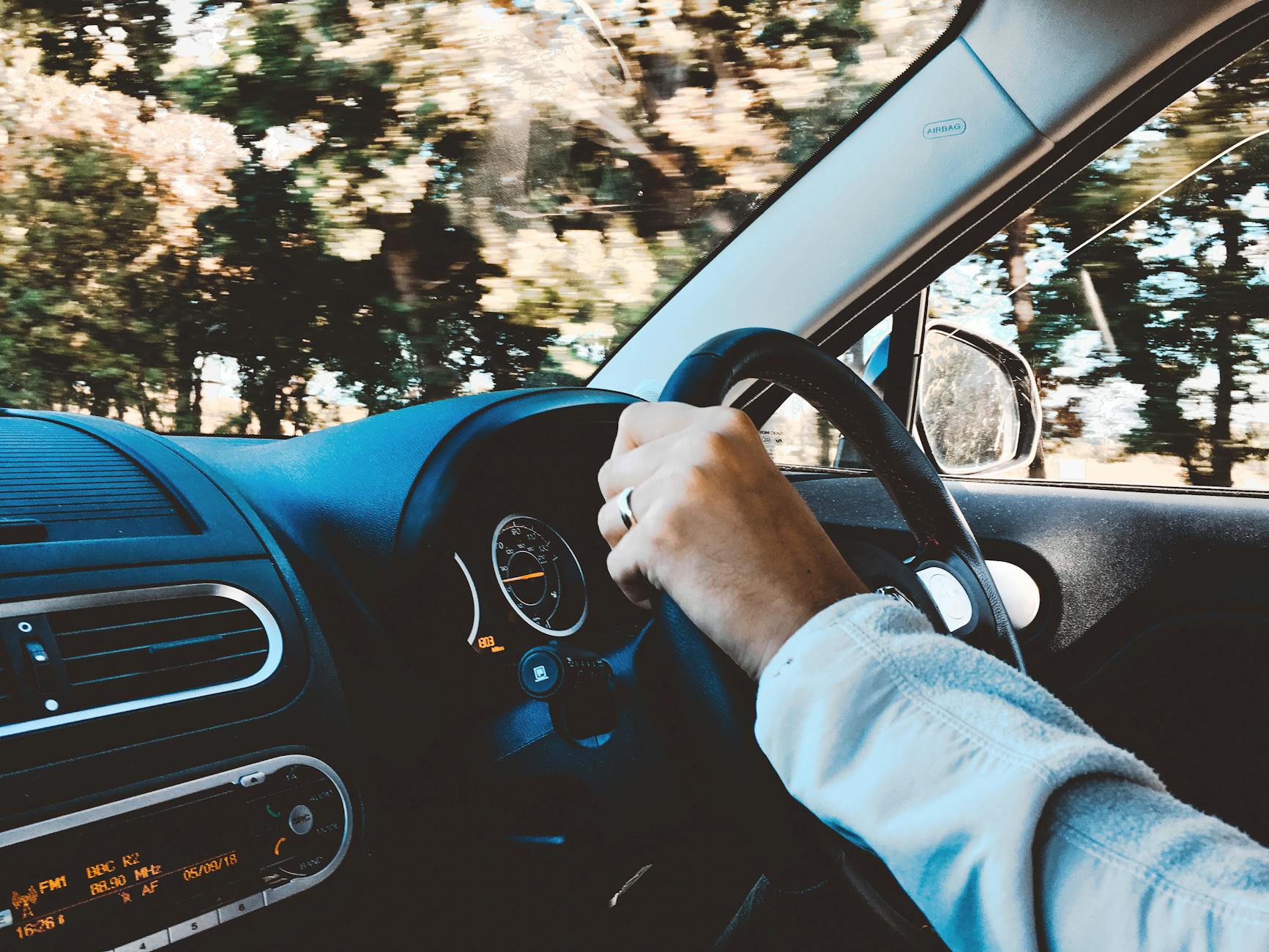

Learning to drive in 2026 involves more than just not stalling. With busier urban centres and stricter assessment standards, the hardest five manoeuvres are the ones that test your spatial judgement and continuous observation under pressure. This post will show you how to handle these five tricky manoeuvres on your practical test. Read on to find out more.
1. Parallel Parking
Universally dreaded by learners (and even many experienced motorists!), parallel parking requires you to reverse into a space about two car-lengths behind a parked vehicle. This demands perfect timing with your steering: if you turn too early, you hit the curb, whereas if you turn too late, you’ll end up stuck in the road. Modern cars often have thicker pillars for safety, which can create larger blind spots. Learners must rely on a mix of physical observations and camera sensors (if your car has them).
2. Pulling Up On the Right & Reversing
Introduced to reflect the real-world delivery culture, this manoeuvre involves crossing the path of oncoming traffic to park on the right-hand side of the road, then reversing for two car lengths. You are technically driving against the flow of traffic, and the reverse part is challenging as you are looking out of the “wrong” side of the car, and your mirrors will show the curb from an unfamiliar angle. Observation is key, so you want to practice in your own car with learner drive insurance for financial protection.
3. Forward Bay Park (& Reversing Out)
While it sounds easier than reversing in, many learners find this manoeuvre harder because of the swing required to get straight into a narrow bay. You have very little room to adjust once you are in, but the hardest part is reversing out into a busy car park aisle where your vision is blocked. Accuracy is vital as you must finish between the lines without shunting (moving back and forth) too many times.
4. Reverse Bay Park
Reverse bay parking requires you to drive past a parking bay and reverse into it, usually at a 90-degree angle. It is all about reference points, and many learners lose track of where their rear wheels are in relation to the white lines. Once mastered, this is actually safer than the forward bay park, as you get a much better view when driving out.
5. The Emergency Stop
Though technically an exercise, the emergency stop is one of the most high-stakes moments of a driving test and a test of reaction times and vehicle control. In 2026, most cars have ABS (Anti-Lock Braking System), but you still need to demonstrate that you can stop the car instantly without losing control or skidding. Don’t forget to do a full 360-degree blind spot check after the stop before moving again.
These are the five manoeuvres that you will want to master ahead of your test. With practice, you can build your confidence and abilities so that you will be in a strong position to pass.