Home Blog Page 2

Gedling Residents Are Asking About Casino Sites in the UK – Here’s What the 2026 Market Looks Like

Gedling borough has never had a casino of its own, and that has not changed the fact that plenty of its residents spend part of their evening looking at the wider market anyway.

A night out in Nottingham city centre costs more than it did two years ago, and for people in Carlton, Arnold, Netherfield and the villages around them, staying in with a phone or a laptop has become the default rather than the exception. That habit is what sends most local searchers looking for the best casino sites in the UK straight to Google: not a specific brand, but a starting point for working out what is actually licensed, regulated and worth the time. It is a similar picture out in Calverton, Burton Joyce and Lambley, where the nearest licensed casino floor is a car journey into Nottingham city centre rather than anything on the doorstep, which is exactly why the online market fills the gap for most people.

The market behind that search is bigger than it looks from the outside. The regulator’s newest annual figures, published last week, put the remote casino, betting and bingo sector at 8.3 billion pounds in gross gambling yield for the year to March 2026, up 6.9 percent on the previous twelve months, inside a total market worth 17.5 billion pounds. Betting shop numbers keep falling, down another 3.6 percent this year, while the online side keeps growing. That shift explains why a borough with no casino of its own still generates steady interest in the topic: the industry moved indoors, onto a screen, years ago, and Gedling residents are as likely to be part of that shift as anyone else in Nottinghamshire.

What to check before signing up

Anyone comparing any of the UK casino sites that turn up in a quick search should do a handful of basic checks first, and none of them take longer than a couple of minutes. A genuine operator carries a Gambling Commission licence number somewhere in its footer, and that number should match an entry on the regulator’s public register, not just a badge that looks official. Deposit limits, time-out tools and a working self-exclusion option through GAMSTOP are standard on any site actually built for the UK market, not an optional extra. Payment processing should run through recognised UK banking rails rather than obscure e-wallets, and welcome offers need terms that are readable in plain English, not buried three clicks deep. Withdrawal times are worth checking too; a licensed operator with nothing to hide will publish how long a payout typically takes rather than leaving that detail for a support chat after the account is already funded.

The checks on customers have been changing too, not just the checks customers should be making on operators. Financial risk assessments for high spenders are being rolled out in stages this year, replacing some of the old document-upload checks that irritated regular players without catching much. The regulator’s own pilot data suggests the overwhelming majority of customers, including anyone who places an occasional bet or spends a modest amount regularly, will never trigger one; the assessment is aimed at a small group of high spenders showing signs of financial difficulty, and it runs in the background through credit reference data, without fanfare, rather than asking someone to upload a payslip. It is a reminder that the regulated end of this market looks quite different now to how it looked five years ago, mostly for the better.

Anyone finding that gambling is taking up more time or money than intended does not have to sort it out alone. Free, confidential support is available around the clock through a national charity that works independently of the industry it advises people about, and using it costs nothing and requires no referral from a GP or anyone else.

A borough that still spends its evenings carefully

Gedling residents are not unusually cautious or unusually reckless about any of this; the searches coming out of the borough track the national pattern closely, rising in the evenings and at weekends the same way they do everywhere else. What tends to separate a good experience from a bad one is not luck but preparation: knowing the licence is real before the first deposit goes in, knowing the limits are set before a bad night rather than after one, and treating the whole thing as entertainment with a fixed budget rather than a plan to make money back. None of that is complicated, but it is easy to skip when a sign-up offer is flashing on screen.

Gedling Eye’s own community pages this year have carried plenty of examples of the borough looking after its own, from more than 2,300 pounds raised by Carlton schoolchildren for a local children’s charity to the volunteers who keep the borough’s smaller events running on donated time. The same instinct, applied to a casino account rather than a fundraiser, is just knowing when to log off and stick to the number you started with. That is a smaller, quieter kind of local story than a fun run or a mural, but it is the one most households in the borough will actually live out on a Friday night.

East Midlands trains used by thousands of Gedling commuters get major £60m makeover

Passengers travelling by train from Gedling borough are set to notice a big change on East Midlands Railway services after the operator completed a major milestone in its £60 million train upgrade programme.

East Midlands Railway (EMR) has now refurbished 25 trains across its Regional and Connect fleets, with more still undergoing a transformation aimed at making journeys more comfortable, modern and accessible.

The improvements will be particularly welcome for passengers using Regional services through Nottinghamshire, including routes serving stations across Gedling borough and the wider East Midlands.

So far, EMR has completed work on 10 Class 158 trains, 12 Class 170 trains and three Class 360 electric trains.

The Class 170 trains, commonly seen on regional routes across the East Midlands, have been given a major overhaul as part of a £23 million investment. The upgraded trains now feature refreshed interiors, improved seating and tables, USB charging points, plug sockets, refurbished toilets, new flooring and upgraded passenger information screens designed to provide clearer journey updates.

Dedicated cycle storage areas have also been introduced, alongside redesigned interiors which bring the fleet in line with the railway’s newer-look trains.

Meanwhile, EMR’s Class 158 trains have received a £5 million refresh, including new seat covers, upgraded table tops, improved CCTV systems, refreshed flooring and updated passenger information technology.

The operator says the work is designed to extend the life of the trains while delivering a better experience for passengers making everyday journeys across the region.

Away from Nottinghamshire, EMR has also completed the first three refurbished Class 360 trains used on services between Corby and London St Pancras, as well as on the Luton Airport Express route.

The electric trains now feature new seating, power and USB charging facilities, upgraded luggage storage, improved accessibility features and a redesigned interior intended to create a more spacious feel.

Simon Pready, Commercial Director at EMR, said: “Reaching 25 completed trains is an important milestone for our Regional and Connect refurbishment programme and represents a significant amount of work delivered for our customers.

“These upgrades are about much more than refreshed interiors. They are about making journeys more comfortable, practical and accessible, while improving information and supporting the long-term reliability of our fleet.

“There is still more to come, with further trains currently being refurbished. We are proud of the progress made so far and look forward to continuing to deliver improvements for our customers across the network.”

The refurbishment programme is continuing across the fleet, meaning more passengers travelling in and out of Nottinghamshire can expect upgraded trains in the months ahead.

Latest Gedling borough planning applications – the schemes submitted this week

A range of planning applications have recently been submitted across Gedling Borough, covering everything from home extensions and loft conversions to commercial developments and tree works. According to the latest publicly available planning records, notable applications include:

  • 2026/0586 – Retention of outbuilding in rear garden of dwelling
    28 Arno Vale Road, Woodthorpe, Nottinghamshire, NG5 4JJ
  • 2026/0622 – Discharge of conditions 6 (CEMP), 8 (Contamination), 9 (Hard and Soft Landscaping) and 13 (Hard Surfacing Materials) of planning permission 2023/0591
    Salterford Manor, Old Rufford Road, Calverton, Nottinghamshire, NG14 6NW
  • 2026/0604DOC – Discharge of condition 11 (Boundary Treatments) of planning permission 2021/0072
    Land to the West of Mansfield Road, Redhill, Nottinghamshire
  • 2026/0605 – Installation of 1 No. BT Street Hub Unit and associated advertisement panels on either side of the unit
    Footpath Outside 27 Plains Road, Woodthorpe, Nottinghamshire, NG3 5LG
  • 2026/0606 – Two digital 75-inch LCD display screens, one on each side of the Street Hub unit
    Footpath Outside 27 Plains Road, Woodthorpe, Nottinghamshire, NG3 5LG
  • 2026/0597 – Change of use of current garage to a dwelling including installation of dormer
    15C Ranmoor Road, Carlton, Nottinghamshire, NG4 3FW
  • 2026/0599DOC – 90254-CMP-01 Mapperley Construction Management Plan Rev F
    Land Rear of Coppice Farmhouse, Mapperley Plains, Arnold, Nottinghamshire
  • 2026/0594 – Construction of a three-bedroom detached self-build infill property with three-bay garage (variation of condition)
    48 Bridle Road, Burton Joyce, Nottinghamshire, NG14 5FS
  • 2026/0595NMA – Minor repositioning of detached garages to rear of plots 16-18
    Land at Cornwater Fields, Longdale Lane, Ravenshead, Nottinghamshire
  • 2026/0596 – Installation of enclosure boards, synthetic playing surface, lighting, canopies and associated works
    Arnold Hill Campus, Gedling Road, Arnold, Nottinghamshire, NG5 6NZ

Residents can view full details and track the progress of applications through Gedling Borough Council’s planning portal HERE

Gedling Residents Are Asking About Casino Bonus Rules, Here Is What Actually Changed

Walk down Front Street in Arnold on a Saturday morning and the conversation in the queue at the post office is rarely about gambling regulation. It is about the roadworks on Mapperley Plains, the recycling centre booking system starting next January, or whether the bus timetable through Carlton has changed again.

But a handful of Gedling borough residents have been asking a more specific question in recent weeks: what actually changed with online casino bonuses this year, and does it mean anything for people who already use them.

The short answer is yes, and it is worth explaining plainly rather than leaving people to guess from marketing emails. The rules governing the best casino bonuses UK operators are legally allowed to offer were rewritten by the regulator at the start of this year, and the practical detail underneath that change looks nothing like it did eighteen months ago. For anyone in Calverton, Carlton, Gedling or Mapperley who has ever clicked “claim” on a welcome offer without reading the terms underneath it, that shift is directly relevant.

What the regulator actually changed in January

From 19 January 2026, the Gambling Commission tightened the rules on how UK-licensed operators structure promotional offers. Two things moved. First, wagering requirements, the amount of play a customer must complete before bonus funds can be withdrawn, are now capped at ten times the value of the bonus. Some operators had previously set that figure as high as fifty times, which meant a modest sign-up offer could quietly require thousands of pounds of turnover before a penny of it became real money. Second, operators can no longer run “mixed product” promotions that reward a bet on one type of gambling product with free spins or credit on a different one, a practice the regulator judged was nudging customers toward products they had not chosen to use.

Neither change bans casino bonuses outright, and neither makes every remaining offer automatically generous. What it does is set a hard ceiling on how much play a bonus can demand, which is the single detail most people skip when they scroll past the terms and conditions.

What a bonus has to show you before you accept it

The practical upshot for anyone in the borough considering one of the many UK casino bonus offers currently advertised is that the small print now has to be shorter and clearer than it used to be. A compliant offer has to disclose the wagering multiple, state it honestly against the ten-times cap, and cannot bundle in a second gambling product to sweeten the deal. If a site’s promotion still reads like it is asking for fifty times turnover, or blends a sports free bet with casino spins, that is a sign the operator has not caught up with its own licence conditions, and it is worth checking the operator against the Gambling Commission’s public register before depositing anything.

It is a smaller version of a pattern residents here already recognise. Nottinghamshire County Council has spent months explaining new booking rules for van users at the borough’s recycling centres, another case where the practical detail sat well behind the headline announcement until someone actually read it. Gedling Eye covered the changes coming to the recycling centres from January 2027 in similar terms: the rule change matters less than the specifics of how it is enforced.

The scale of who this affects is worth a mention too. National survey data from the Gambling Commission shows roughly one in six UK adults gambled online in the past four weeks once lottery-only players are excluded, a figure that has held broadly steady over the past year. That is not a niche audience. It includes people across every corner of Gedling borough, whether they are placing a weekly bet from a phone in Netherfield or checking a promotions page from a laptop in Woodthorpe.

Where people are actually checking this now

The Independent’s Games desk runs a live guide to current casino promotions that gets updated as operators adjust their terms to the new cap, which is a reasonable starting point if you want to see what a compliant offer actually looks like rather than relying on a promotional email. It will not tell you whether a bonus suits your own budget, and it should not be read as encouragement to sign up for anything. What it does do is put the wagering multiple, the expiry window and the game restrictions in one place, which is more than most operators’ own landing pages manage.

For residents across Arnold, Carlton, Gedling, Calverton and Mapperley, the sensible approach is the same one people already apply to a phone contract or an energy tariff: read the number before you agree to it. The ten-times cap is a genuine improvement on what came before, but it is a ceiling, not a promise that every offer near it is good value. Anyone unsure whether they are spending more time or money on gambling than they mean to can also get free, confidential support through GamCare or set a self-exclusion through GamStop, both of which exist specifically for that conversation.

Nothing about the January reforms changes the basic rule that has always applied locally and everywhere else: a bonus is only worth claiming if you would have been happy with the underlying game or site anyway. The new rules just make it easier to tell, before you commit, whether the offer in front of you is actually what it claims to be.

Why manual payment processes are holding back growing UK businesses

Most UK finance teams did not choose manual payment processes. They inherited them from a smaller version of the business, when a spreadsheet and one UK bank portal were enough. As UK SMEs grow, however, they often add more bank portals and UK payment rails, while the same finance team of two or three people absorbs the extra handling.

Growth rarely breaks that setup neatly. The question is not simply whether the work has become inconvenient. It is whether the existing process now limits how quickly the business can grow. That distinction matters as transaction volumes climb and familiar routines consume more of the team’s working week.

Where Manual Payments Stop Scaling

The breakpoint is rarely a revenue figure. It is usually the point at which a payment run takes longer than a working morning or requires two people to complete. Other practical markers include using more than one bank portal daily, re-keying data already held in the accounting system, and watching the month-end close slip later each quarter.

Manual payment processes tend to cope during ordinary weeks, then fail at peaks such as payroll week, quarter-end, or seasonal supplier runs. Headcount provides another useful signal. If transaction growth demands a proportional increase in accounts payable staff, the process has become the constraint.

At that point, finance team efficiency is not primarily about asking people to work faster. The workflow no longer fits the volume passing through it.

How Manual Handling Breaks Across UK Payment Rails

A growing UK business rarely stays on one payment rail. It gradually accumulates Bacs, Faster Payments, CHAPS, Direct Debit, and international transfers, each with different portals, formats, timings, and validation rules. This fragmented bank connectivity creates repeated handling. payment automation exists because bank portals were designed mainly for occasional instructions, not growing volumes of multi-rail batch submissions.

Bacs, Faster Payments and CHAPS in Practice

Bacs works to a multi-day processing cycle, so timing errors carry consequences. If a mis-keyed batch is found after the submission deadline, the intended payment date has effectively been lost. Correcting the file will not restore the original timetable.

Faster Payments solves a different problem: urgency. However, when staff type each instruction into a portal, volume becomes the cost driver. Fifty modest supplier payments require far more handling than one high-value transfer, despite carrying less total value.

CHAPS offers same-day settlement, but approval delays can push an instruction beyond the bank’s cut-off. That matters for time-sensitive property or supplier payments. Direct Debit collections create work in the opposite direction because failed payments must be identified, chased, and potentially re-presented.

Cross-Border Payments on SEPA and SWIFT

SEPA and SWIFT instructions introduce additional beneficiary fields, bank identifiers, references, and payment-purpose data. Portals do not always validate that information consistently. As a result, an instruction accepted at entry can be rejected later, returning the issue to the employee who originally keyed it.

This makes international expansion disproportionately awkward for a manual finance function. The team is not simply processing more payments. It is managing more data requirements across more interfaces, often without a shared view of payment status.

Rejections, duplicated work, and unclear references then make supplier queries harder to resolve, particularly when several banks sit between the accounting record and the beneficiary

Weak Controls, Thin Audit Trails and Fraud Risk

A bank portal login provides permission to move money, but it is not a complete control framework. Where access is shared or loosely managed, evidence of who prepared, approved, amended, and submitted an instruction can become scattered across recollections, inboxes, spreadsheets, and screenshots.

Who Approves, Who Executes, Who Checks

Small finance teams often give one employee responsibility for building, checking, and sending a payment file. This creates a segregation-of-duties weakness, regardless of the employee’s experience or trustworthiness. A payment approvals workflow should make preparation, authorisation, and submission distinct, visible events.

Manual handling also produces a thin audit trail. An approval might sit in an email thread, while the final figures appear in a later spreadsheet and proof of submission remains inside a bank portal.

Consequently, reconstructing why a payment was made can take hours. Human error is also harder to locate because the records do not show precisely where the instruction changed.

How Invoice Fraud Slips Through

A common weak point is an emailed request to update a supplier’s bank details. If the recipient changes the record without checking through a separate, trusted contact route, the next legitimate invoice can send funds to the wrong account. National Crime Agency guidance on invoice fraud stresses independent verification and stronger processes for payment-detail changes.

Spreadsheets and email attachments create another payment security exposure because full account details become available to anyone with file or mailbox access. Card information taken by phone and entered into a virtual terminal creates a further handling risk, particularly when the process sits outside documented controls.

These gaps exploit routine work performed without consistent verification.

The Real Cost Is Your Finance Team’s Time

Bank charges and processing fees appear clearly in the ledger. The larger hidden costs lie in the work skilled employees cannot complete while keying payments. Cash flow forecasting, aged-debt follow-up, supplier-term negotiations, and spend analysis all lose time when accounts payable work consumes the week. Holiday or sickness also becomes a payment risk when process knowledge rests with one person.

Reconciliation Is a Second Bottleneck

Manual effort does not end when money leaves the account. Someone must retrieve statements from each bank portal and match transaction lines against the ledger. That reconciliation workload rises with transaction volume, even if payment preparation becomes faster.

Errors discovered at this stage are particularly disruptive because the funds have already moved. Correcting one mistake can involve contacting the supplier, sending another payment, recovering an overpayment, and posting an adjusted ledger entry.

Poor references create a similar problem: the payment is correct, but neither side can identify it quickly. Therefore, fixing submission without addressing statement retrieval and matching leaves much of the workload intact.

What Automation Cannot Take Off Your Plate

Some payments should retain manual judgement. Non-standard instructions, one-off transactions, and first-time beneficiaries need scrutiny rather than automatic treatment. Exceptions also require someone who understands the supplier relationship and accounting context.

Changing the process brings work of its own. The accounting system must connect correctly, payment data needs consistent fields, and approval permissions must reflect real responsibilities. Historic supplier records may contain incomplete information that technology cannot safely resolve by assumption. Cost and disruption also matter where transaction volume remains low.

The realistic aim is not to remove people from payment decisions. It is to reduce repetitive keying and matching while preserving informed review for unusual or higher-risk cases.

Deciding When Manual Stops Being a Choice

Manual payment processes hold growth back when transaction volume, payment rails, and control requirements exceed what spreadsheets and individual bank portals were built to manage. The pressure then appears in delayed runs, repeated data entry, fragile approvals, slow reconciliation, and less time for cash flow planning.

The practical test is not company revenue. It is whether runs still fit into one sitting, approvals remain clearly separated, month-end stays on schedule, and rising payment volume no longer demands finance headcount at the same rate.

Thief who targeted cars in Calverton hauled before court after police swoop

A man who stole valuables from parked cars in a Nottinghamshire village has been sentenced after being tracked down by police.

Michael Clifford, 42, was arrested by neighbourhood officers investigating reports of thefts from vehicles in Calverton. Police linked him to two incidents in which items including earrings and electrical goods were stolen after vehicles were broken into.

Clifford, of Park Road, Calverton, was charged with two counts of theft from a vehicle and one count of vehicle interference before being remanded in custody.

He appeared before Nottingham Magistrates’ Court on Tuesday (September 15), where he admitted the offences.

Magistrates handed him a community order with a rehabilitation requirement and ordered him to pay fines and compensation.

Police said the thefts had caused concern among local residents and welcomed the court outcome.

Sergeant Zoe Connellan, from Gedling’s neighbourhood policing team, said: “We know a series of thefts from cars caused concern in Calverton, so officers have been working hard to investigate the incidents.

“We identified Clifford as a suspect and arrested him. He had little choice but to plead guilty in court and has now been sentenced by magistrates.

“I hope members of the community welcome these efforts and would continue to urge them to take some simple measures to avoid becoming a victim of vehicle crime.”

Woman found dead after urgent search by police is identified as missing 28-year-old Holly Whittaker

A body discovered in Nottingham city centre has been confirmed as that of a Mapperley woman who had been missing for almost two weeks.

Police launched an urgent search for 28-year-old Holly Whittaker after she was last seen in the Mapperley area on September 4.

The search came to a tragic end on Tuesday afternoon (September 15) when officers found the body of a woman near Queen’s Road in Nottingham city centre.

Holly has now been formally identified by police.

Detective Chief Inspector Claire Gould, of Nottinghamshire Police, said specially-trained officers are supporting Holly’s family following the devastating discovery.

She said: “Our specially-trained officers are supporting Holly’s family at this difficult time, following yesterday’s tragic development.

“While the circumstances are still being investigated, at this time, we are not treating her death as suspicious.

“We would like to thank everyone who came forward with any information or shared our public appeals since Holly was first reported missing.

“A file will now be prepared for the coroner as our investigations continue.”

Police inquiries remain ongoing as officers work to establish the full circumstances surrounding Holly’s death.

These are the old factories that built Netherfield

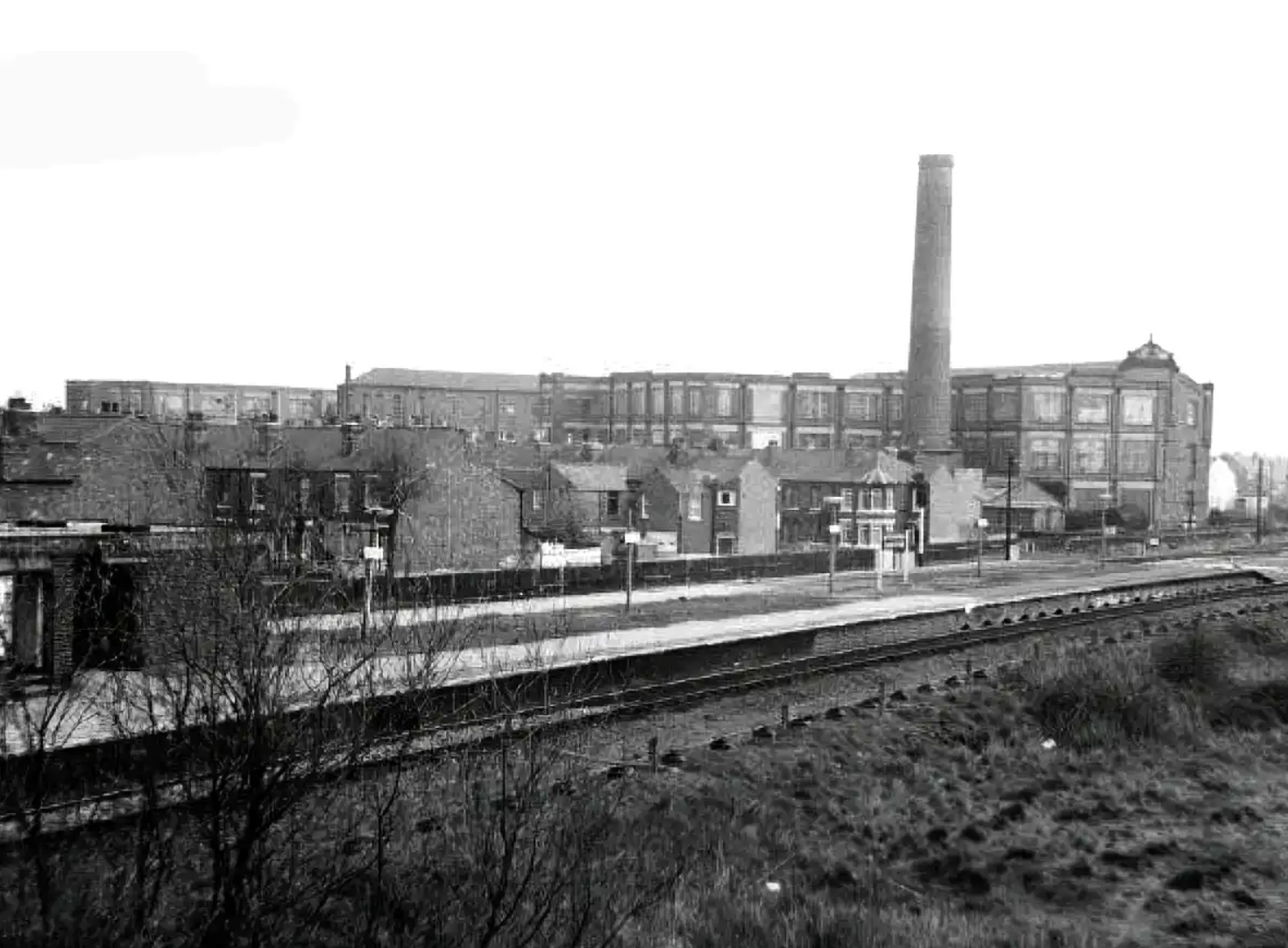
Today, many people know Netherfield as a residential community on the eastern edge of Nottingham. But for much of the late nineteenth and twentieth centuries, the town was a bustling industrial centre, where the sound of factory whistles and steam locomotives shaped daily life.

The story of Netherfield is inseparable from the factories that helped turn a small rural settlement into a thriving working-class town.

Before the arrival of industry, Netherfield was little more than agricultural land known as the “Nether Field” of nearby Carlton. Development was slow until the railway age transformed the area. The construction of major railway lines and marshalling yards during the nineteenth century brought workers, housing and investment, creating ideal conditions for manufacturing businesses to establish themselves.

By the end of the Victorian era, several major factories had been built in Netherfield. Manufacturers were attracted by inexpensive land, excellent rail connections and a plentiful supply of water from the Sherwood sandstone aquifer beneath the area. These advantages allowed businesses to transport raw materials and finished goods efficiently while powering their operations.

Among the most important employers was the Britannia Cotton Mill, commonly known as Bourne’s Mill. The factory became one of the largest workplaces in the town and was particularly notable for employing large numbers of women. Local women who worked there became affectionately known as “Bourne’s Angels”, a nickname that remains part of Netherfield’s industrial folklore. The mill provided generations of families with secure employment and played a significant role in the social life of the community.

Furniture manufacturing was another key industry. Lawrence’s furniture factory helped establish Netherfield’s reputation for skilled craftsmanship, producing products that contributed to Nottinghamshire’s wider manufacturing economy. Alongside furniture making, Shaw’s Printing Works became another significant local employer, reflecting the diverse range of industries that found a home in the town.

The growth of these factories transformed Netherfield dramatically. The population increased from just a few dozen residents in the mid-nineteenth century to thousands by the early twentieth century. New schools, churches, shops and public services followed. Victoria Road developed into a busy shopping centre, serving not only local residents but visitors arriving by train from Nottingham and surrounding communities.

Industrial employment also helped foster a strong sense of community. Many families had multiple generations working in the same factories or on the railways. Shift patterns dictated the rhythm of daily life, while factory workers supported local sports clubs, social groups and community events. The prosperity generated by manufacturing helped establish Netherfield as an independent township with its own identity.

However, like many industrial towns across Britain, Netherfield faced significant challenges during the second half of the twentieth century. Changes in manufacturing, increasing competition and the decline of Britain’s traditional industries gradually eroded the town’s industrial base. The railway marshalling yard closed in 1970, and by 1985 all of Netherfield’s major factories had ceased operations.

The sites once occupied by mills, printing works and railway infrastructure have largely been redeveloped for housing and modern commercial uses. Yet the legacy of those industries remains visible in the town’s layout, its history and the memories of former workers and their families.

For many residents, Netherfield’s story is not simply about buildings that have vanished. It is about the people who earned their living there, the families they supported and the town they helped create.

These are the roadworks scheduled to take place across Gedling borough in the coming weeks

Motorists across Gedling Borough are being urged to plan ahead as a series of roadworks, closures and traffic restrictions are scheduled over the coming weeks.

A number of schemes affecting Gedling, Arnold, Carlton, Woodthorpe, Ravenshead, Calverton, Colwick and Lambley are due to get under way, with some roads set to close completely while improvement works are carried out.

Here’s the latest list…

15 September

Carnarvon Grove, Carlton

  • Road closure
  • Streetworks
  • Planned

Woodthorpe Drive, Woodthorpe

  • Diversion route in place
  • Streetworks
  • Planned

Woodthorpe Drive, Woodthorpe

  • Road closure
  • Streetworks
  • Planned

Wheatley Drive, Carlton

  • Road closure
  • Preventative maintenance patching repairs between Buntings Lane and Hemingway Close

16 September

Buntings Lane, Carlton

  • Road closure
  • Streetworks
  • Planned

Buntings Lane, Carlton

  • Road closure
  • Carriageway patching repairs between Carlton Hill and Wheatley Drive

Fleming Drive, Carlton

  • Diversion route
  • Streetworks
  • Planned

Waverley Avenue, Gedling

  • Road closure begins (runs until 18 September)
  • Streetworks

Main Road, Gedling

  • Diversion route for Waverley Avenue closure
  • Streetworks

Westdale Lane East, Gedling

  • Two-way traffic signals
  • Severn Trent Water works
  • Runs until 17 September

Rufford Avenue, Gedling

  • Give-and-take traffic control
  • Openreach works
  • Runs until 17 September

Dunstan Street, Netherfield

  • Give-and-take traffic control
  • Openreach works
  • Runs until 17 September

Main Road, Gedling

  • Two-way traffic signals
  • Assisting works at Waverley Avenue junction

Carlton Hill, Carlton

  • Multi-way traffic signals
  • Patch repair around a manhole
  • Runs until 17 September

17 September

Moor Road, Bestwood

  • Road closure begins (runs until 23 September)
  • Road marking and stud reinstatement works

18 September

Freda Avenue, Gedling

  • Diversion route
  • Streetworks

Freda Avenue, Gedling

  • Road closure
  • Streetworks

Freda Avenue, Gedling

  • Road closure
  • Remedial resurfacing works following earlier carriageway resurfacing

19 September

Gedling Road, Arnold

  • Multi-way traffic signals
  • Drainage CCTV investigations at Derby Street junction

Mansfield Road, Arnold

  • Two-way traffic signals
  • National Grid works

Lorimer Avenue, Gedling

  • Give-and-take traffic control
  • Severn Trent Water works

Mansfield Road, Daybrook

  • Lane closure
  • Vodafone works

20 September

Victoria Road, Netherfield

  • Temporary parking restrictions begin (runs until 26 September)

Victoria Road, Netherfield

  • Road closure begins (runs until 26 September)

Victoria Road, Netherfield

  • Diversion route in place during closure

Oxclose Lane, Arnold

  • Lane closure
  • Core sampling works

21 September

Mansfield Road, Daybrook

  • Road closure begins (runs until 26 September)
  • Carriageway resurfacing

Oxclose Lane, Arnold

  • Diversion route for Mansfield Road closure
  • Runs until 26 September

Sir John Robinson Way, Daybrook

  • Road closure begins (runs until 3 October)
  • Carriageway resurfacing

Mansfield Road, Daybrook

  • Diversion route linked to Sir John Robinson Way closure
  • Runs until 3 October

Road No. 1, Colwick

  • Multi-way traffic signals
  • Severn Trent Water works
  • Runs until 22 September

Colwick Loop Road, Colwick

  • Lane closure
  • Tree felling and pruning works
  • Runs until 25 September

Marshall Hill Drive, Mapperley

  • Multi-way traffic signals
  • Street lighting column replacement

Robinson Road, Mapperley

  • Give-and-take traffic control
  • Street lighting column replacement

Rowland Avenue, Mapperley

  • Give-and-take traffic control
  • Street lighting improvements

Ash Close, Burton Joyce

  • Give-and-take traffic control
  • Openreach works
  • Runs until 24 September

22 September

Coppice Road, Arnold

  • Multi-way traffic signals
  • Street lighting column replacement

23 September

Station Road, Carlton

  • Two-way traffic signals
  • Cadent Gas emergency repair works
  • Runs until 25 September

Longer-running schemes still affecting Gedling Borough

Waverley Avenue, Gedling – road closure until 18 September

Moor Road, Bestwood – road closure until 23 September

Victoria Road, Netherfield – closures, diversions and parking restrictions until 26 September

Mansfield Road and Sir John Robinson Way, Daybrook – major resurfacing programme with closures and diversions running until 3 October

Nottinghamshire’s pothole blitz sees roads repaired at record pace with 100,000 defects fixed

Drivers who were fed up with dodging potholes across the borough are now noticing a smoother ride, as Nottinghamshire County Council says it has carried out more major road improvements than any other county in England.

The authority is spending a record-breaking £182.5 million on its highways network, with around 100,000 potholes already repaired and hundreds more road schemes still to come before winter arrives.

Council bosses say the scale of work this year is unprecedented, with more than 450 road resurfacing projects planned across Nottinghamshire during 2026/27, more than double the number delivered or planned the previous year.

So far, 152 schemes have already been completed, covering everything from roads and pavements to drainage systems, bridges, street lights and traffic signals.

The county is set to see almost 638,000 square metres of resurfacing carried out this year, the equivalent of more than 56 miles of road. That’s a huge jump from last year’s programme, which resurfaced almost 20 miles.

Road resurfacing works taking place in Carlton

As well as resurfacing, a further 1.5 million square metres of road will be treated with protective surface dressing designed to help prevent future deterioration and potholes.

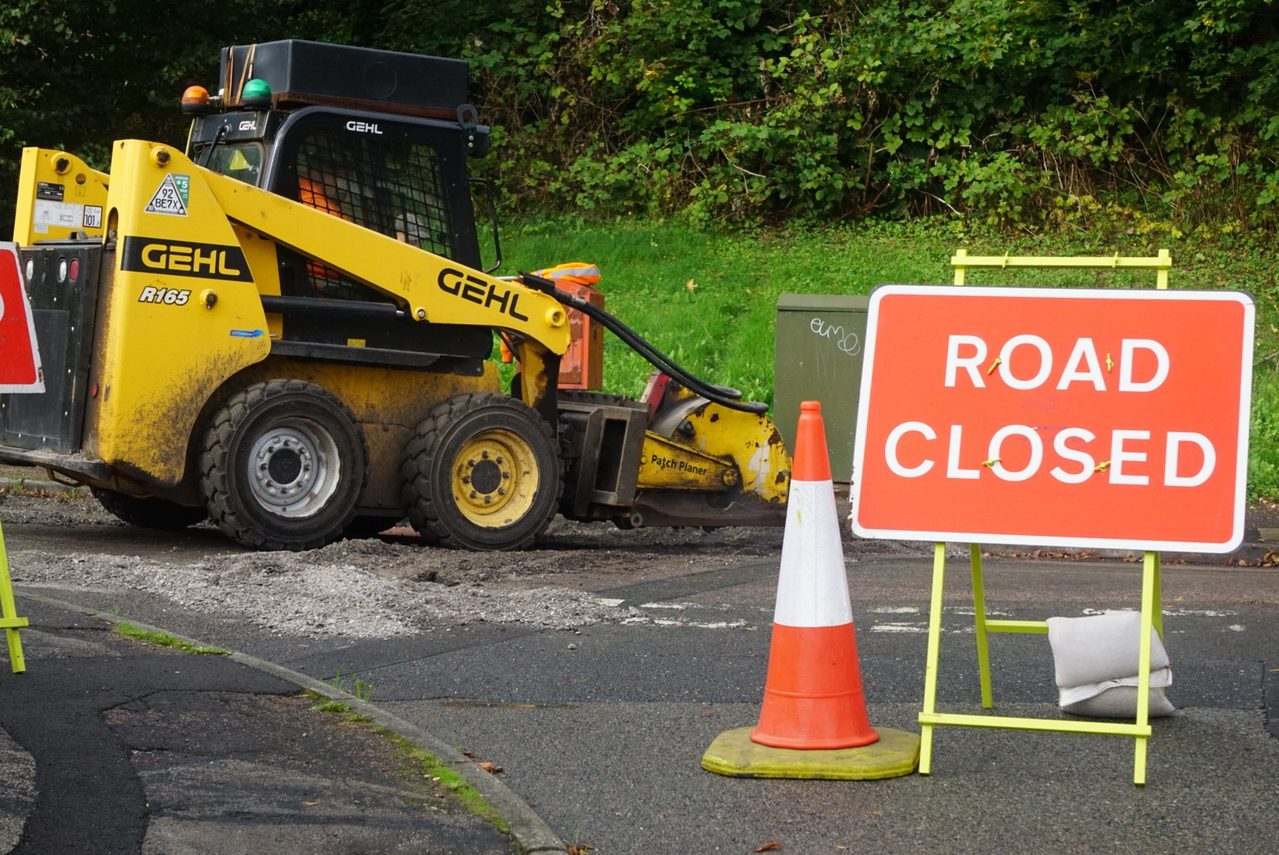
The work is being delivered by highways contractor Via East Midlands alongside a number of external firms, using a mix of resurfacing, patch repairs, preventative treatments and specialist pothole-repair machines.

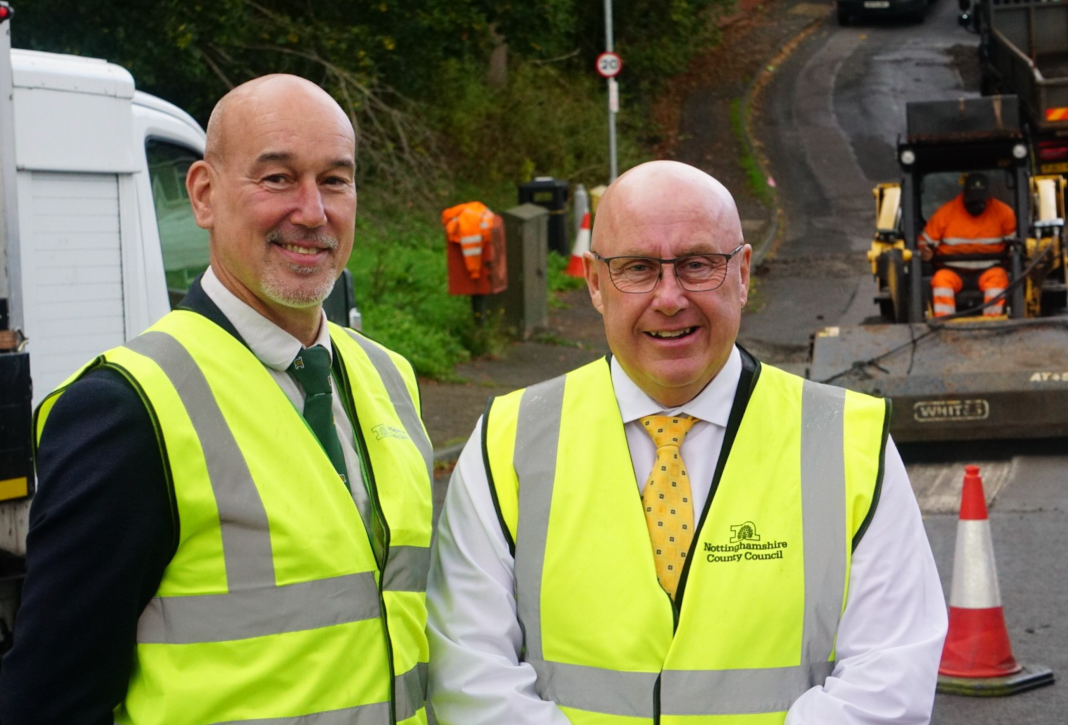
Councillor Mick Barton, leader of Nottinghamshire County Council, said the authority was taking a longer-term approach rather than simply reacting when roads fail.

He said: “We are making an unprecedented investment in Nottinghamshire’s highways because we know how important good roads are to residents, businesses and everyone who travels around our county.

“The scale of this year’s programme shows that we are not simply reacting to potholes. We are taking a much more proactive approach to improving and protecting our road network for the future.

“Around 100,000 potholes have already been repaired and there is much more work to come.”

Councillor Bert Bingham, the council’s cabinet member for transport and environment, said the work goes far beyond filling potholes.

He said: “There is much more to maintaining our highways than filling potholes. Our teams are looking after 14 different types of highway assets, including drainage infrastructure, structures, street lighting and signage, as well as the roads themselves.

“We are determined to make the most of every opportunity to improve the network and ensure Nottinghamshire is better prepared for the demands of winter.”

The highways programme will continue throughout the autumn, with the majority of resurfacing schemes expected to be completed before colder weather sets in.