

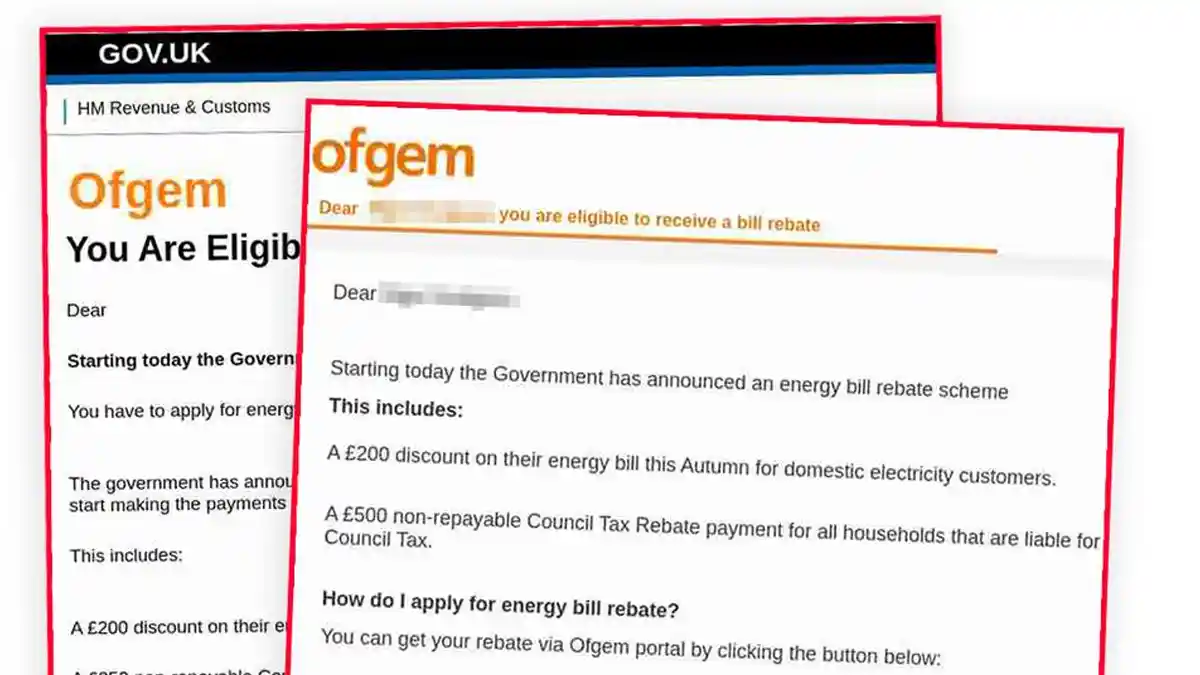

People across Gedling borough expecting the Government’s energy rebate over the coming months are being warned to watch out for scammers trying to take advantage.
Borough households will be receiving a £400 discount on their bills over the autumn and winter as part of the Government’s cost of living support.
However, scammers are now trying to take advantage by sending texts and emails that look like they are from the energy regulator, Ofgem, asking the recipient to click on a link and enter their bank details in order to receive the rebate.
There have also been reports of people being phoned by scammer with the same aim.
An Ofgem spokesperson said:“Protecting consumers is our top priority and it is alarming that vulnerable customers are being preyed upon in this way when people are already struggling so much. That’s why, as energy regulator, on top of issuing our own warnings and advice, we have asked all energy suppliers to ensure clear and up to date information on scams is easily accessible on their websites.
“We take these attempts to exploit consumers very seriously and work with the National Cyber Security Centre to prevent these malicious attacks. If people are unsure if something is a scam they should pause, check and don’t let callers push you into anything.
“Genuine organisations won’t mind you calling back; only scammers apply pressure and insist you hand over details immediately. If you have any doubts about a message, consumers should contact the organisation directly and not use the numbers or address in the message – use the details from their official website.”
Julie Webster from Mapperley contacted Gedling Eye to say she had received a scam email and was concerned vulnerable people might end up handing over their personal details.
She told us: “It was totally believable and looked like it had come from the government. How scary is that!
“My son said he had seen warnings on social media when I told him about it and insisted I delete it. If he hadn’t intervened I would definitely have fallen for the scam. Be warned!”
How to protect yourself
- If you have any doubts about a message, contact the organisation directly.
- Don’t use the numbers or address in the message – use the details from their official website. Remember, your bank (or any other official source) will never ask you to supply personal information via email.
- If you have received an email which you’re not quite sure about, forward it to report@phishing.gov.uk. Send us emails that feel suspicious, even if you’re not certain they’re a scam – we can check.
- Follow the Take Five to Stop Fraud advice:
- STOP: Taking a moment to stop and think before parting with your money or information could keep you safe.
- CHALLENGE: Could it be fake? It’s ok to reject, refuse or ignore any requests. Only criminals will try to rush or panic you.
- PROTECT: Contact your bank immediately if you think you’ve fallen for a scam and report it to Action Fraud.