


Cllr Sam Smith Conservative County Councillor and Leader of the Opposition at Nottinghamshire County Council. Here he shares his views on how Reform have handles their first year in charge of the council…
Earlier this year, while presenting their first budget in power, Reform UK Councillors repeatedly referred to governing “the Reform way”, a phrase clearly intended to signal that Nottinghamshire was now being run differently.
Twelve months into their administration, residents are entitled to ask a simple question: what exactly does “the Reform way” mean in practice?
Because so far, it appears to mean promising lower taxes in leaflets before increasing Council Tax by 3.99%. It appears to mean campaigning against borrowing before taking on another £15 million of debt. It appears to mean attacking executive pay whilst campaigning and then increasing it when in power. And, perhaps most memorably of all, it appears to mean spending £75,000 on Union flag banners while leaving roads across Nottinghamshire to crumble beneath the wheels of motorists.
One year ago, Reform entered Nottinghamshire County Council promising a political earthquake. Residents were told the boats would be stopped, waste would be cut, bureaucracy challenged, and “common sense” restored to local government. Reform presented itself not simply as another political party, but as a complete rejection of how councils had traditionally been run.
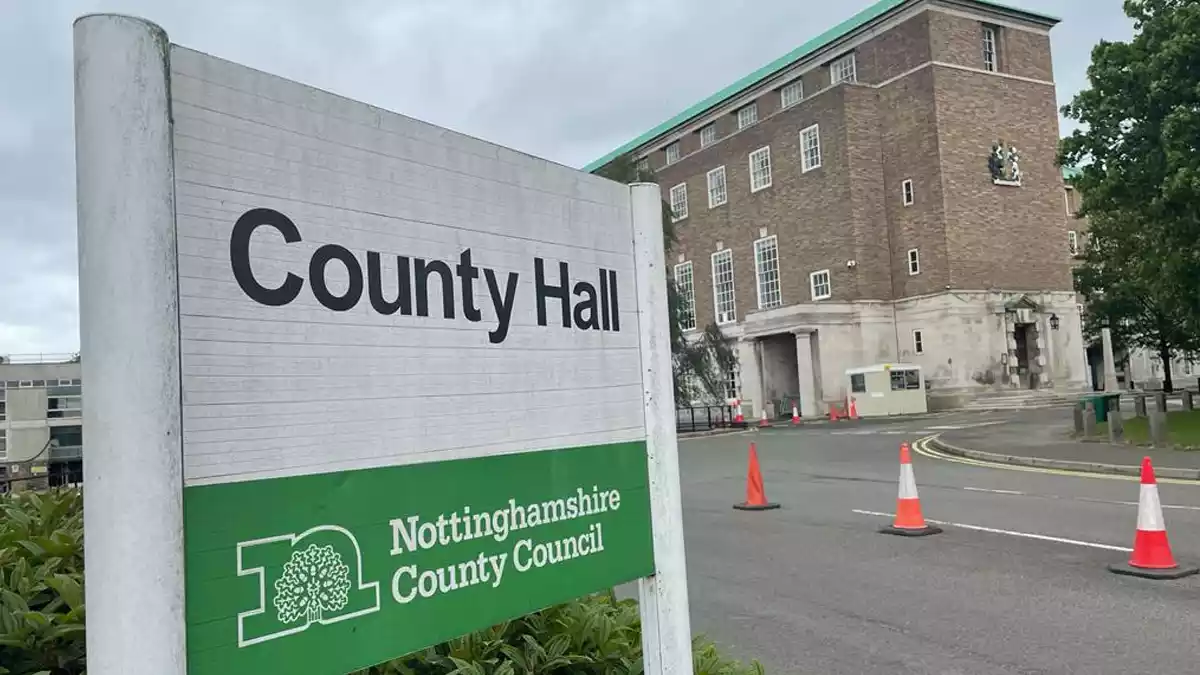
The problem is that governing a County Council is not the same as posting slogans online or delivering crowd-pleasing soundbites during an election campaign. Running a major authority requires discipline, competence, financial savvy, and serious attention to detail. Increasingly, Reform looks like a party that enjoyed campaigning far more than governing.
The clearest example is council tax. During the election campaign, Reform promised that residents would see lower bills or at least a freeze. Those promises mattered because households across Nottinghamshire are already under enormous financial pressure. Yet one of Reform’s first major financial decisions was to increase council tax by 3.99%, adding around £20 million a year onto the burden facing taxpayers across Nottinghamshire.
What makes that rise even more politically damaging for Reform is that residents were repeatedly told there was vast “waste” inside the council waiting to be eliminated. Reform spoke enthusiastically about introducing DOGE-style efficiency teams to root out unnecessary spending and transform the authority’s finances. The implication was clear: unlike previous administrations, Reform would uncover huge savings without asking taxpayers to pay more.
Yet since taking office, those much-hyped DOGE teams have quietly disappeared from Reform’s rhetoric almost entirely. Why? Because the fantasy collided with reality. The promised wave of inefficiencies has failed to materialise, meaningful savings have not been found, and the grand project now appears to have been quietly shelved. After months of talking tough about waste and bureaucracy, Nottinghamshire residents have instead ended up with higher council tax and little evidence of the transformational efficiencies Reform promised.
For many residents, that perfectly captures the contradiction at the heart of Reform. Before the election of May 2025, every difficult financial decision was treated as evidence of establishment failure. In administration, Reform quickly discovered the realities of local authority finance, but instead of acknowledging those realities honestly, they continue pretending they are somehow fundamentally different.
The same contradiction runs through their approach to borrowing. Reform campaigned aggressively against council debt, portraying themselves as defenders of taxpayers who would restore financial discipline. Yet after taking power, they borrowed another £15 million themselves. Again, councils can and do borrow responsibly for infrastructure and investment. The issue is not the existence of borrowing itself; it is the sheer political hypocrisy of attacking it, only to continue doing it in office. Apparently, this too is now “the Reform way”.
Nothing, however, has come to symbolise Reform’s confused priorities more than the now infamous £75,000 Union flag saga. Conservatives are proud of our country and proud of our national flag. Patriotism matters. But residents understand the difference between genuine civic pride and performative politics funded by taxpayers. At a time when potholes remain one of the biggest complaints facing councillors and roads across Nottinghamshire continue deteriorating, Reform chose to spend tens of thousands of pounds on banners instead. The reason this issue cut through so strongly with the public is because ordinary people instinctively recognised misplaced priorities when they saw them. That money could have repaired around 1,000 potholes across the county instead. Even national media outlets highlighted the absurdity of the decision.
Adult social care tells a similar story. Conservatives froze adult social care fees back in 2017 because we recognised the pressure facing families, care providers, and vulnerable residents. Reform has now increased those fees by £1.5 million, the first increase in nearly a decade. Once again, the issue is not whether difficult choices ever need to be made. Governing always involves trade-offs. The issue is that Reform built an entire political identity around claiming they would govern differently, only to raise charges and taxes almost immediately once elected.
Perhaps most concerning of all has been Reform’s increasingly defensive attitude towards scrutiny and accountability. Early into their administration, they attempted to ban the press from council meetings, an extraordinary move for a party that frequently lectures others about transparency and free speech. Only after legal challenge and significant criticism were journalists allowed back in. That episode revealed something deeper about Reform’s governing instincts: they appear far more comfortable demanding accountability from others than accepting it themselves.
That same instinct now appears to be driving attempts to amend the council constitution and remove supplementary questions from meetings. Supplementary questions are often where weak answers are exposed and where councillors are forced to properly defend their decisions under pressure. Attempts to curtail them give the impression of Reform Councillors increasingly uncomfortable with detailed scrutiny because too many Cabinet members appear unable to confidently answer legitimate questions about their own policies. Strong administrations welcome scrutiny because they understand accountability improves decision-making. Weak administrations try to reduce it. In other words: ‘The Reform Way’.
And then there is perhaps the most revealing promise of all. During the election campaign, Reform repeatedly invoked national immigration issues and promised voters they would “stop the boats” if elected locally. It was a slogan designed to tap into public frustration and generate headlines. But County Councils have absolutely no powers over border control, asylum policy, immigration enforcement, or Channel crossings. Reform knew that perfectly well. Yet they still used national grievances in a local election campaign because it was politically useful. That may help win votes in the short term, but it says a great deal about the kind of politics Reform practices — politics built on slogans and outrage rather than honest conversations about what local government can actually achieve.
After twelve months of Reform rule in Nottinghamshire, boats are still travelling down the Trent, Council Tax is up by £20m a year and Nottinghamshire residents are beginning to see through the branding exercise. “The Reform way” was supposed to represent competence, honesty, and change. Instead, it has increasingly become shorthand for gimmicks, slogans and most damning of all – broken promises to those that voted for them.
If this first year has shown anything, it is that there is no magical “Reform way” of governing. There is only the reality of local government, where budgets must balance, services must function, roads must be repaired, and leaders must be accountable for the promises they make.
And on that test, Reform’s first year in Nottinghamshire has been a year of chaos, contradictions and broken promises.