The road was initially expected to take 18 months to complete, with work beginning at the start of 2020.
Once complete, the new 3.8km route will help reduce congestion through Gedling village for motorists and local residents.
It has also enabled the redevelopment of the former Gedling Colliery/Chase Farm site, which includes the construction of 1,050 new homes.
Councillor Ben Bradley MP, Leader of Nottinghamshire County Council, said: “The Gedling Access Road is a major investment for Nottinghamshire and we are proud that we have made a significant amount of progress on the project despite the challenges we have faced.
“Back in March 2020 we could have halted works, as was the case with many other projects at the time. If we’d done that, the Gedling Access Road would have been many more months behind schedule, but we chose to press on, and that was the right choice.
“In the circumstances, just an extra few months on a project that’s been in the pipeline for several decades, delivered during a global pandemic, is a pretty good effort in my view and I am very proud that we are the ones delivering this for people in Gedling.
“The road will make a huge difference to motorists who will notice faster journey times, and local residents, who will benefit from less congestion through Gedling Village and for the further investment it will unlock in the area.”
“I want to thank local residents for their patience and understanding about the project. We are really looking forward to completing the scheme soon, and delivering its benefits for local people and Nottinghamshire as a whole.”
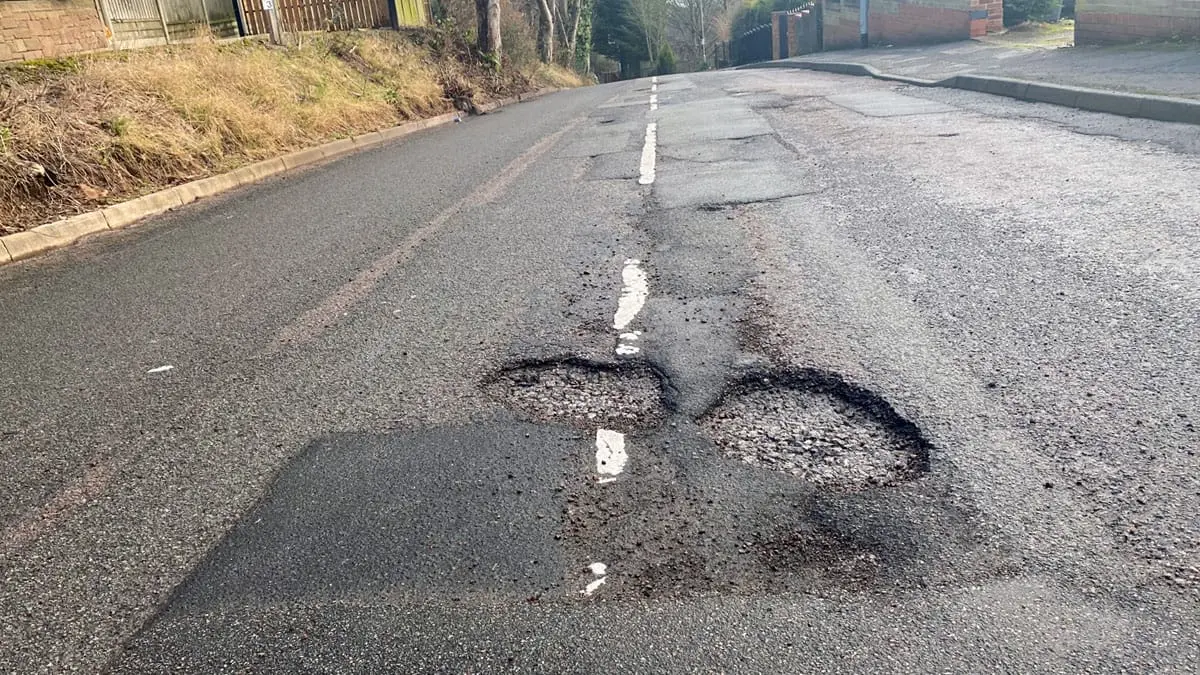
A Freedom of Information (FOI) request to the authority found60,769 potholes were fixed by the Nottinghamshire County Council across Gedling borough between 2016/17 and 2020/21.
During this period Arnold South division received the most repairs with 17,132 between 2016 and 2021.
The Gedling borough area with the fewest repairs was Newstead, with 5,555
Gary Wood, head of highways and transport on the council, said: “In May 2021, we announced we would be setting up a cross-party highways review panel to look at all aspects of our highways maintenance.
“This includes road inspections, improvement programmes and funding, maintenance treatments, and repair techniques.
“All our current repair techniques, including those used to fill potholes, are under review by our highways review panel.”
Below are the figures for Gedling borough, including the total number of potholes repaired between 2016 and 2021.
Nottingham City Transport has announced plans to raise bus fares in a bid to ‘help balance the books’.
The bus operator, which serves Gedling borough, said it will be increasing some single trip and day ticket prices for the first time in 2.5 years due to increased operating costs and reduced government COVID funding for the bus industry.
The fare increase will come into force from Sunday, October 31.
The firm announced thatall Easyrider Everyday, Easyrider Anyday and multi-day ticket prices on the NCTX Buses app prices are frozen and won’t be affected by the rise.
The Under 19 all day ticket, Grouprider, Network Rider, Park & Ride Return fare and Outer Area fares will also be frozen at their current prices.
A spokesman for Nottingham City Transport said: “NCT’s fares remain competitive with other local operators and in line with neighbouring cities of Derby and Leicester.
“Fares for journeys in Nottingham apply when paying by cash, contactless, on the app or a Robin Hood Pay As You Go Card.”
Nottinghamshire County Council will push forward with plans to build a multi-million-pound office building near Linby – but has shaved about £7 million off its overall investment plan.
The council revealed its £27.74 million Investing in Nottinghamshire programme weeks before the start of the pandemic in 2020, with a flagship £14.7 million building at Top Wighay Farm at the centre of the plans.
The proposals were then put on hold and a review launched after the start of the pandemic. The authority then published a new hybrid working strategy earlier this year.
Now the review has re-confirmed the full scale of the plans, including libraries potentially moving into other council buildings and the authority co-locating services with other Nottinghamshire councils.
The review says the council will still progress with the Top Wighay Farm building, in what it says will set a “benchmark” in meeting the authority’s carbon-neutral targets.
The council has confirmed the Top Wighay building cost has increased by £1 million to £15.7 million due to “rising construction costs”, but the review has cut about £8 million off the plan overall in other areas.
Councillor Keith Girling (Con), chairman of the economic development and asset management (EDAM) committee, told the Local Democracy Reporting Service the new building is “not going to be cheap”.
However, he insists running costs over time will recoup money and provide a “fit for purpose” building.
He said: “In terms of Top Wighay, we’re still going ahead with it because it’s strategically in the right place.
The building will be part of the Top Wighay development, where work began last year
“We know we will be beaten with a stick that it’s going to cost a lot of money, that it should be spent elsewhere, but we’ve got places used by parents and young kids that are not ideal.
“In some places, the floor is starting to go. We’ve got to put things right.”
Cllr Girling added “nothing is off the table” when it comes to reviewing the council’s estate and the sale of assets.
This recouping of cash was cited by finance committee chairman Cllr Richard Jackson last week as a method of reducing the authority’s long-term borrowing.
But the EDAM chairman insists one of the areas that will not see closures is libraries, though the council is looking into the possibility of some being relocated into other, local authority-led buildings.
This, he says, will help to save costs and make many county-wide buildings “multi-functional”.
It comes alongside potential plans to move some council services in Mansfield into a potential public services hub, planned by Mansfield District Council as it looks to move into the town centre.
Cllr Girling says the hub is something the county council would “very much like to be a part of”, allowing the authority to release buildings for sale elsewhere in the county.
“It’s incumbent on us to look into everything and see how we can reduce our outgoings. It’s about how we start recouping our money,” he added.
“It’s a lot of toing and froing, but eventually it will end up with services being delivered from places where they should be delivered from.
“We deliver some really serious services, and we need to be delivering them from buildings that are fit for purpose. Where we can, buildings will be multi-functional.”
Documents due before the EDAM committee next week show the plan will now cost about £20.9 million, down from its original £27,744,140 price.
The committee is recommended to review and approve the updated Investing in Nottinghamshire plan when it meets on November 2.
Avid fans of Wetherspoons pubs across Gedling borough have joined with other customers across the UK to compare the amount of chips they serve with meals.
The Facebook group Wetherspoons Paltry Chip Count is made up of more than 94,000 people, who all dedicate their time to sharing details of the amount of chips they’ve received when eating in the chain’s many pubs.
And, of course, a number of Gedling borough residents are in the group and have taken part in the rankings – and it’s a mixed bag at best.
The Free Man, on Carlton Hill, is a popular one, with many talking about the large number of chips they serve with the meals.
Jessica Corbett posted: “45 chips at The Free Man in Nottingham.
“Nice hot temperature, crispy on the outside, fluffy on the inside. No super long bois [sic] , the lengths are pretty consistent apart from your few crispy ends which I rather enjoy regardless. This ‘Spoons is a keeper”
IMAGE: Facebook/Jessica Corbett
Bek Jarvis wrote: “The Free Man’. Mmmm, lovely steak but was so obsessed with counting the ’32’ chips I had been very generously given, I didn’t realise they had forgotten to put onion rings, peas and tomato on the plate!
IMAGE: Facebook/Bek Jarvis
The Woodthorpe Top in Mapperley was another one mentioned by reviewers.
Taylor Hartung wrote: “The Woodthorpe Top 25 chips look banging tbf but not happy about there only being 25 though.”
Chips served at The Woodthorpe Top (IMAGE: Facebook/Taylor Hartung)
Chris Bills aslo visied and was impressed by the number of potato treats on his plate:
“A respectable 20 chips at The Woodthorpe Top.”
PICTURED: Chips served in the Ernehale in Arnold (IMAGE: Facebook/Chris Bills)
Leah Holden was impressed by the chip portion being served up at the Ernehale pub in Arnold.
She wrote: “28 chips today from the Ernehale.”
(IMAGE: Facebook/Leah Holden)
To make the most of the publicity this ever-growing Facebook group has been getting recently, the owners have set up a JustGiving page so that viewers can donate money to support foodbanks while comparing their chip portions.
In a post made on October 19, they wrote: “Hello fellow chip counters, keep up the good work.
“I thought we could try to do some good with our new-found fame, and I’ve opened a fundraiser to raise money for Fairshare, the hunger and food waste charity.
“I’m suggesting a donation of 10p (or whatever you can afford) per chip you receive on your next meal in ‘Spoons.”
The Conservative MP took to social media to defend his actions after receiving ‘unpleasant comments’ on some platforms like Facebook and Twitter.
Mr Randall wrote: “We all want to see clean rivers and seas, but I hope that it might help add a bit of clarification on why this amendment wasn’t suitable.
“The vote last week was whether or not the House of Commons should accept a particular amendment that came from the House of Lords.
“Amendment 45 concerned storm overflows. Storm overflows are used to protect properties from flooding to prevent sewage from overflowing into streets and homes.
“In a combined sewer system, the system carries both surface water (for example run-offs from highways) and foul water from homes and industry into one pipe, which is them treated at a water recycling centre. During a storm or heavy, prolonged rain, the flow into the combined sewer can cause it to be overwhelmed.
“The storm overflows release excess storm water into rivers or the sea when this happens. If this didn’t happen, the water would flow back up the system and flood homes.
“Section 141A in Amendment 45 would have placed a duty on sewerage undertakers in England and Wales to demonstrate progressive reductions in the harm caused by the discharges of untreated sewage.On the face of it, this is very attractive. But there were two problems with it: the amendment came with no plan on how it might be delivered and there was no impact assessment. Nor do we know the cost.
“The Government took the view that it would have been irresponsible to put this into the Bill without a detailed plan, signing a blank cheque on behalf of bill payers.
“The cost of eliminating storm overflows entirely would potentially be enormous,” said Mr Randall.
“Much of our sewerage system is Victorian. Preliminary estimates for costs have ranged from £150,000,000,000 (the equivalent of the schools, policing and defence budgets put together) to £650,000,000,000 (on a par with the cost of the pandemic response). This is a massive cost that would ultimately be borne by bill payers. You will , I hope, understand if I baulk at writing a blank cheque on behalf of consumers when I don’t know the cost or the trade off with other water industry priorities.”
The Gedling MP went on to highlight other measures included in the Bill that would help reduce river pollution.
He said a there would be a new duty on water companies to publish information (within 1 hour) of the commencement of an overflow, its location and when it ceases.
Water companies would also produce drainage and sewage management plans which would set out how the company will manage and develop its drainage and sewerage system over a minimum 25-years and how storm overflows will be addressed through these plans.
The MP said there would also be a new duty on government to produce a report setting out the actions that would be needed to eliminate storm overflow in England and the costs and benefits of such action
He added: “A majority of MPs, including me, voted in favour of taking a range of steps to address storm overflows, together with a legal duty on government to produce detailed and costed plans for reducing and eliminating storm overflows entirely.
“I hope this is useful in helping constituents see through some of the pernicious spin that has surrounded some of the commentary on this vote.”
MPs based across Gedling borough this week voted on amending a bill that currently allows raw sewage to be discharged into rivers and seas.
An amendment proposed to the Environment Bill would have legally compelled water companies to reduce their discharge of raw sewage into rivers and seas.
The bill, intended to revamp the UK’s environmental regulations post Brexit, currently allows raw sewage to be discharged into the country’s waterways.
Data from the Environment Agency shows that raw sewage was dumped into British waters over than 400,000 times in 2020.
George Eustice, the environment secretary, recommended that MPs reject the proposal – and it was voted down on Wednesday night.
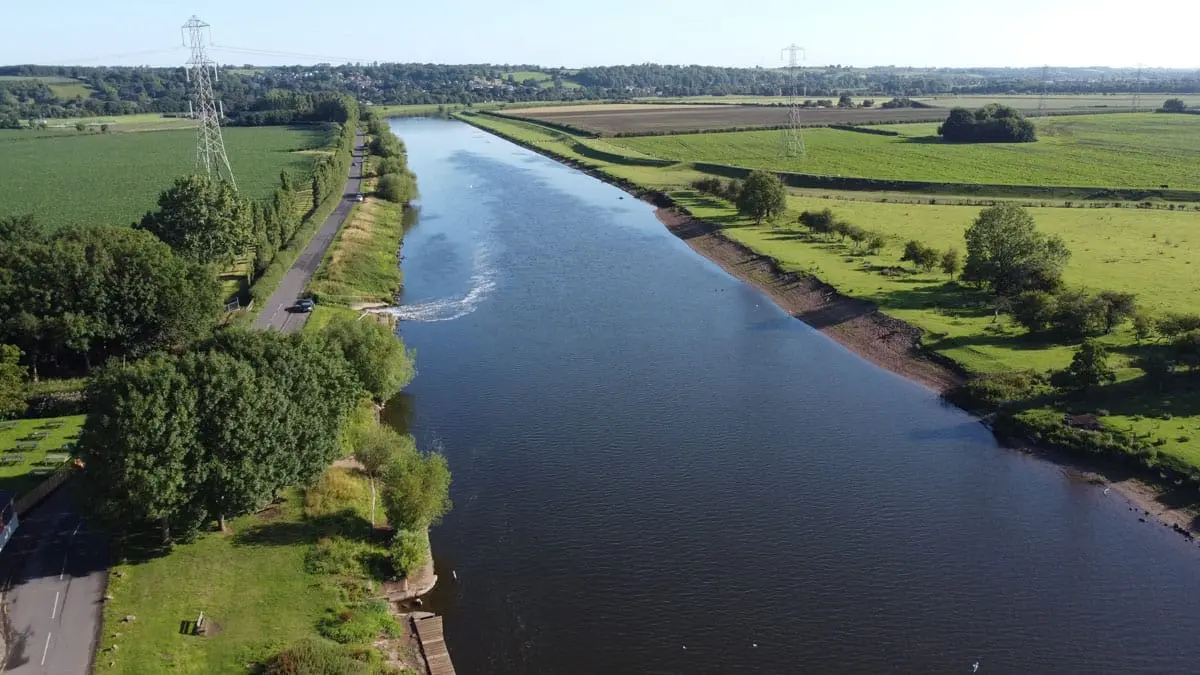
PICTURED: River Trent
The amendment was indeed defeated – by a margin of 268 MPs to 204.
Gedling MP Tom Randall and Sherwood MP Mark Spencer voted against making the amendment.
Nottingham East MP Nadia Whittome voted for the Lords amendment.
Hugo Tagholm, a spokesperson for the Surfers Against Sewage organisation, said the Tories’ opposition to the amendment “beggars belief”, stating:
“Why wouldn’t they want water companies to have a legal obligation not to pollute our rivers and ocean with sewage, for example?
“It beggars belief and hardly shows a commitment to be the greenest government ever.
“It’s time for more ambitious thinking and law that builds protected nature back into public ownership rather than leaving it to the ravages of shareholder interests.”
Police officers were called out last night following reports of a large fight in Gedling in which a man was reportedly stabbed.
Officers say his injuries aren’t believed to be life-threatning or life-altering.
A 30-year old man has now been arrested.
The incident happened in Main Road and the area was cordoned off near the Gedling Inn, with the road being closed to traffic overnight.
A smaller cordon was put in place this morning and traffic was again allowed to pass through the village.
Detective Inspector, Pam Dowson, of Nottinghamshire Police confirmed that police had been called out to the village.
She said: “Officers were called to reports of a large fight on Main Road, Gedling at around 10pm yesterday (October 22).
“Having arrived swiftly at the scene, officers located a man who had sustained what is alleged to be stabbing related wounds.
“His injuries are not believed to be life-threatening or life-altering.
“A 30-year-old man has been arrested in connection with this incident for affray and inquiries remain ongoing
The scene earlier this morning (IMAGE: Gedling Eye)
“A scene remains in place while we gather further forensic evidence and work with any local businesses or residents who may have CCTV footage.
“Incidents that involve knives will be dealt with effectively, with our specialist knife-crime teams working hard to thwart the impacts of carrying knives and offensive bladed weapons across Nottinghamshire, tackling knife-crime is a top priority.
“If anyone has any information that could help the investigation should call 101 quoting incident 780 of 22 October.”
A spokesperson for Gedling Inn posted a statement on their Facebook page earlier today.
They wrote: “Last night we had a serious incident happen at the Gedling Inn.
“We are co-operating with the police and luckily all our staff are safe.
Police have cordoned off parts of a road in Gedling after reports of an overnight incident.
Main Road had been entirely blocked off to traffic but it is now open again despite a cordon remaining in place.
Buses had also been diverted but are again running through the village.
The cordon is in place across the road from the Gedling Inn pub.
A section of the pub car park was also cordoned off.
A spokesperson for Gedling Inn posted a statement on their Facebook page:
They wrote: “Last night we have had a serious incident happen at the Gedling Inn.
“We are cooperating with the police and luckily all our staff are safe.
“We will update as we have any more information.”
One resident, who didn’t wish to be named, told our reporter. “There were a lot of emergency vehicles here last night. My bus was diverted up Shearing Hill. Something serious has gone off.”
New figures have revealed that 60,769 potholes were repaired across Gedling borough over the past five years.
A Freedom of Information (FOI) request to Nottinghamshire County Council found 476,043 potholes were repaired countywide between 2016/17 and 2020/21, with 100,074 fixed in the most recent financial year.
This is a 64 per cent rise on the 61,063 repairs undertaken by the authority in 2016/17.
Figures show 2018/19 was the most prominent year for damaged roads, with 114,517 repairs completed in 12 months. A further 92,952 repairs were conducted in 2017/18 and 107,437 were made in 2019/20.
Roads in the Newark and Sherwood district were the most frequently visited by Via East Midlands, the council’s highways contractor, with 147,752 potholes repaired over five years.
The Muskham and Farnsfield division racked up the highest total by ward area, at 30,904, which is more than the 28,437 repairs conducted across the entire borough of Rushcliffe over the same five-year period.
There were a further 39,732 repairs in Broxtowe, 46,248 in Ashfield, 48,590 in Mansfield, 60,769 in Gedling and 104,515 in Bassetlaw between 2016 and March this year.
Councillor Bruce Laughton (Con), deputy leader of the authority, represents Muskham and Farnsfield, the ward with the most repaired potholes in Nottinghamshire.
He told the Local Democracy Reporting Service: “One of the reasons why I’ve got more potholes than everybody else is because I’ve got more roads, it’s the second-largest rural division in the county.
“It’s an issue we work through with regular reporting, and the maintenance of potholes was a significant issue on the doorstep at the last election.
“Having more potholes than Rushcliffe comes as a huge surprise, but I have my parishes trained well and working all the time to feed information to Via East Midlands.
PICTURED: Potholes on Oakdale Road (IMAGE: Gedling Eye)
“We recognise it’s an issue right across the whole county, we’ve got to do something about it as there’s no doubt the electorate will hold us accountable if we don’t sort it out.”
The FOI also revealed the authority spent £21,426,727.42 on reactive pothole and patching repairs during the five-year period, equating to about £45 per job.
Analysis in the Asphalt Industry Alliance (AIA) annual local authority maintenance survey found that, on average, pothole repairs conducted by councils in England in 2020/21 cost £55.90 per job.
Planned works cost about £41.68 on average, but this figure rose to £70.45 for reactive repairs.
The level of council spending has sparked alarm from opposition councillors, who describe the authority as doing repairs “on the cheap”.
Cllr Lee Waters (Ash Ind) represents Hucknall South in County Hall.
He said: “Unfortunately, because of strategic, political decisions taken by the county council, our workers have the reputation of dodgy, cowboy builders. These figures prove they are being forced to do jobs on the cheap.
“Let me be clear, I’m not criticising council workers here, nor the sub-contractors they use. It is the process they use to fix potholes.
“That’s why we have the worst roads in the country.”
The Conservative administration created its ongoing, cross-party highways panel as one of its first actions following May’s election victory.
The panel meets regularly and has since requested independent reviews be undertaken by both the Local Government Association and an independent consultant.
Members of the committee are currently looking to see whether different methods could be used to improve the way roads are repaired countywide.
Gary Wood, head of highways and transport on the council, said: “Since 2016, we have repaired over 476,000 defects including potholes to keep roads and pavements safe for the travelling public. But in addition to this, we have invested over £70 million in road resurfacing schemes throughout the county.
“We remain committed to ensuring the best value for money and the best standard of repairs to our highways.
“In May 2021, we announced we would be setting up a cross-party highways review panel to look at all aspects of our highways maintenance.
“This includes road inspections, improvement programmes and funding, maintenance treatments, and repair techniques.
“All our current repair techniques, including those used to fill potholes, are under review by our highways review panel.”
The council was asked how many potholes it repaired on more than one occasion during the five-year period, and how many requests were made to fix the same pothole following a previous repair job.
The authority could not provide this information but stated it finds the “failure rate is very low” for its repair jobs. It added many cases of potholes reappearing are “due to the existing material around the area where the initial pothole was repaired subsequently failing”.
However, Cllr Tom Hollis (Ash Ind), independent spokesperson on the transport and environment committee, questioned the council’s response.
He said: “We find it very hard to believe the council doesn’t hold the figures for revisiting potholes. We’ve asked for this on multiple occasions and been told this data is unavailable.
The data did, however, reveal the number of general requests for pothole repairs countywide has been on a gradual rise since 2016.
A total of 9,990 requests were made to the authority in 2016/17, rising to 13,011 in 2017/18. By March this year, it rose to 14,875 over 12 months.
In total, 63,693 requests were made for potholes to be repaired over the five-year period, with Newark and Sherwood again at the top of the list with 13,095.
A further 10,995 requests were issued in Ashfield, with Rushcliffe residents requesting slightly fewer at 10,079.
Broxtowe residents made 9,391 requests, with 8,101 in Gedling, 6,568 in Bassetlaw and 5,464 in Mansfield.
The outcome of the cross-party highways panel is expected to be reported to the transport and environment committee in the coming months, outlining what the authority will do to fix what councillors describe as its “broken roads”.