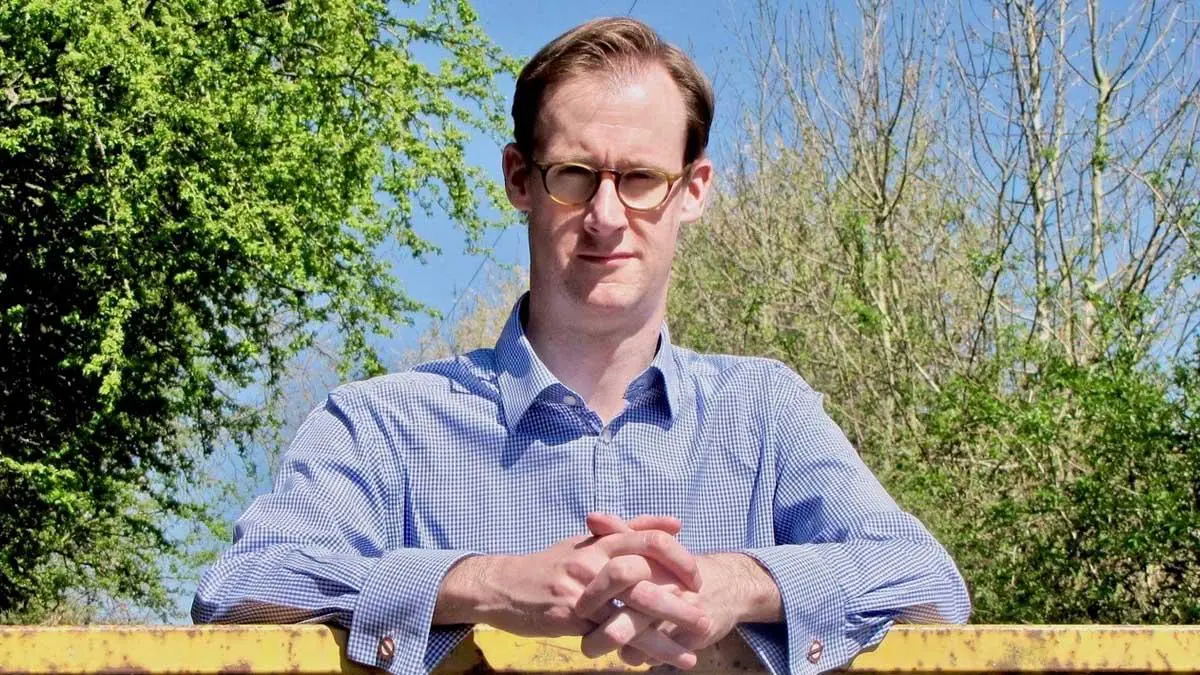
Gedling MP Tom Randall was invited to sewage treatment works in Stoke Bardolph this week so he could learn about how the company is using cutting-edge technology to recycle waste into green energy.
The MP was joined on his visit by Trent Valley councillors Sam Smith and Michael Adams.
The trio were given a personal tour of the works following a major investment at the site, which now boasts a brand-new Thermal Hydrolysis Plant (THP) – allowing teams to convert sewage into green gas and electricity more efficiently.
The new plant, which is part of a wider £45m investment at the site, sits alongside a gas-to-grid facility, which will help to decarbonise the region’s gas supply.
This major upgrade, coupled with other renewable generation sources at the site, including wind turbines, solar panels and a crop conversion plant, means the amount of green energy generated at the works is enough to power 22,000 homes for a year.
Mr Randall praised Severn Trent for their work.
He said: “It’s been fascinating to learn about their renewable energy projects and the investment they’ve made, as they continue on their net zero journey.”
Leah Fry is head of bioresources at Severn Trent and was part of the team that hosted the MP and councillors.
She said: “The new technology we’ve got in place here means we’re able to treat waste more efficiently than ever before, while decarbonising the local gas network for homes and businesses in the area.”
Hundreds of staff at Nottingham’s main hospitals remain unvaccinated with just a week to go until the mandatory deadline – but the number is falling, hospital directors said.
The compulsory vaccine for NHS staff is a “demanding issue” at Nottingham University Hospitals Trust (NUH), which runs the Queen’s Medical Centre and Nottingham City Hospital, and is already facing significant pressure in other staffing and performance areas.
In an NUH board meeting on January 27, Chief People Officer Neil Pease said 281 members of staff who are unvaccinated had returned a form explaining their reasons for not having the jab.
But only about half of unvaccinated staff had so far returned their forms, he said, suggesting that more than 500 staff in total remain without a jab.
This means uptake has improved significantly since January 12, when trade union Unison told the Local Democracy Reporting Service that around 1,600 members of its 15,000 NUH staff remained unvaccinated.
In December the government brought in a new rule requiring all patient-facing health and social care workers to be fully vaccinated – meaning they need to have had at least two doses, or face losing their jobs.
Any frontline staff who have had no jabs must get a dose by 3 February to allow for the gap required before the second jab ahead of the 1 April deadline.
Health Secretary Sajid Javid said this week that the Government is “reflecting” on its vaccine mandate policy as it faces increasing pressure to scrap the rule.
Neil Pease, Chief People Officer, said during the meeting: “Staff had until close of play yesterday to return a form to us to set out what their intentions are for staff who are unvaccinated.
PICTURE: LDRS
“From the forms we have had back so far, we have got 71 staff stating they will not have the vaccine. We’ve got 100 who are undecided, we’ve got 23 who are telling us they are medically exempt and we have got 87 who believe their role is out of scope.
“That represents about half of the forms that need to be returned.
“We have got quite a lot of staff coming forward saying their role doesn’t come into contact with patients therefore they are exempt. Each one of those claims is being thoroughly looked through.
“We don’t want to lose one member of staff and we are doing everything within our power to help people and support them.
“This is a massive problem everywhere but given the size of NUH, this has been the most significant undertaking I think I have ever been involved with.”
He added that nearly all doctors are vaccinated at the trust.
Rupert Egginton, Chief Executive, said: “The numbers that Neil has quoted are much lower than we were seeing a few weeks ago, so that is a great relief in that regard.”
He added the issue over mandatory staff vaccinations was “one of the most demanding issues for us at this moment in time for the trust”.
He said: “It is highly impactful legislation and we have a very short timescale for implementation from the time we received the detailed guidance through to the date when the first vaccines need to be administered.
“We have to be respectful that this is a personal choice.
“Our HR team are organisation a heroic amount of work to support this action in the trust.
“We have been running sessions for our staff to support and we have tried to create as much access to expert advice and guidance as we can including needle phobic clinics and specific clinics for BAME communities.”
Michelle Rhodes, Chief Nurse, added that she believes a “handful” of midwives won’t take the offer of a vaccination.
The midwifery unit at NUH, which is rated ‘inadequate’ by the CQC, is currently scrambling to employ more staff to hit recruitment targets.
Ms Rhodes: “Yesterday we had four midwives definitely not taking up the vaccination.
“What we’ve got to be careful about is those people who have genuinely made their mind up and said no, it is not for us to harass and push them.”
Eric Morton, Chair, added: “I can’t remember something like this in the NHS previously that’s had such an impact on staff, staffing and HR departments.”
A new cemetery could be built near Calverton if a planning application is approved.
Plans have been submitted to Gedling Borough Council to create a new burial ground on land off George’s Lane outside the village.
The plans have been submitted by A W Lymn – one of the UK’s largest funeral directors.
In documents provided to the council as part of the planning process, the applicant has outlined their vision for the site.
They say they plan to “create a multi-functional cemetery capable of supporting a variety of burial options, respecting the character of the site’s rural context and enhancing the potential of the site for wildlife”.
PICTURED: Plans reveal where the proposed cemetery would be located
As part of the cemetery plans, a single storey ‘Solid Lox Post & Beam’ timber facilities building is also proposed to be constructed adjacent to a new site access point along with parking facilities.
The proposals also state that visual screening of the site from the adjacent residential properties and golf course would be put in place.
The application and all related documentation can be viewed on Gedling Borough Council’s website HERE
MP for GedlingTom Randall is urging people in the borough to get involved in a nationwide tree-planting campaign marking the Queen’s platinum jubilee.
Every part of the UK has been invited to plant a network of leafy avenues, copses, woodlands or single trees in honour of the monarch’s 70 years of service in June.
MP Mr Randall said: “Everyone in Gedling borough can get involved in Planting a Tree for the Platinum Jubilee in celebration of The Queen’s 70 years of service to the Nation.
“Whether you are a seasoned gardener or a complete novice, you will be guided through the process of planting trees so that they survive and flourish for years to come.
“Individuals, Scout and Girlguiding groups, villages, towns, schools and businesses in Gedling can play their part to enhance our environment by planting trees during the official planting season between now and March.
PICTURED: Gedling MP Tom Randall is urging people to get involved in a tree planting campaign for the Queen’s Platinum Jubilee
“Tree planting will commence again in October 2022, through to the end of the 2022 Jubilee year.”
Individuals wanting to take part can purchase tree saplings from a recommended nurseries. Schools and community groups in the borough can apply for free saplings from the Woodland Trust.
The planting of new trees across the United Kingdom may take the form of:
Individuals planting trees on their private land.
Corporates and businesses planting trees on their land and creating tree planting projects with employees.
Platinum Jubilee Community Planting projects for youth groups, Parishes, Residents’ Associations.
A Platinum Jubilee Avenue of medium-sized or large trees ideal for cities, large estates, new housing developments and parishes.
A Platinum Jubilee Copse on private land or land allocated by the County or Council.
A Platinum School Tree: on school grounds involving students and teachers.
You can find out more details about the campaign HERE
Sainsbury’s stores across Gedling borough will continue to ask their staff and customers to continue face masks – despite the mandatory covering rule ending today (27)
The Government will now no longer legally mandate the wearing of face masks in shops and on public transport, a proof of vaccination or a recent negative test will also no longer be needed to enter nightclubs and larger venues.
However, Sainsbury’s, which has shops in Arnold, Mapperley and Colwick, has revealed it will still be encouraging both shoppers and employees to mask up while in stores.
But Morrisons, which has a store in Netherfield, said it would continue to follow the latest guidance by not expecting shoppers to put on a face covering.
Aldi, Lidl, Tesco and Asda are yet to confirm their plans for a mask policy in store.
A Sainsbury’s spokesperson told MailOnline: “Safety remains our highest priority. From Thursday, we’re asking our customers and colleagues in England to continue to wear a face covering in our stores if they are able to.
Plan B rules end
All the following Plan B restrictions come to an end today:
Mandatory Covid passports for entering nightclubs and large events has now ended, though organisations could choose to use the NHS Covid pass if they wished
People will no longer be advised to work from home and should discuss their return to offices with employers
Face masks will longer be mandated, though people are still advised to wear coverings in enclosed or crowded spaces and when meeting strangers
Secondary school pupils no longer have to wear face masks in classrooms and government guidance on their use in communal areas will be removed “shortly”
It’s very clear: the NHS is in crisis this winter. But in fact, the NHS struggles to cope every winter.
This winter crisis is not new; it has been brewing for years. But this year it seems far worse, because the Covid-19 pandemic has exposed and amplified what many of us already knew: the NHS is no longer able to cope.
The Pandemic has shown us many things but perhaps most stark of all it has shown us that poverty kills; that social and economic deprivation leads to a much greater likelihood of serious illness leading to hospitalisation and death. The poorest in our society are twice as likely to die from Covid-related disease.
Covid has, however, also laid bare the effects of 10 years of austerity measures, introduced in 2010, making us much less able to respond to times of increased demand on the NHS.
I’ve been a GP in the Carlton area for 30 years and I’ve never known things to be so bad.
The NHS used to be a source of great pride to me, as quality and quantity of health provision in this country rose year after year and was second to none. But that has all changed. I am very proud of my colleagues who work within the NHS, but I am increasingly concerned about the level of service we are able to offer.
What does an NHS in crisis look like?
Right now we’re seeing 1000 respiratory admissions to hospital every day, mostly Covid related:
Hospitals wards and emergency departments are overwhelmed with 999 Ambulances failing to meet their urgent call 18 min response time;
Patients are waiting for hours at A&E just to be seen, and, once admitted it’s not unusual for patients, even those who are seriously ill, waiting on trolleys in hospital corridors overnight;
Staff absences are running at around 10%, twice the normal level, through illness and the need to self-isolate;
Nursing and support staff are leaving in their droves, many though physical and mental ill health, with nurse vacancies across the NHS running into many thousands;
There are currently six million people on hospital treatment waiting lists, up from 1.2 million pre-Covid.
GP numbers have decreased sharply too, as doctors give-up and choose to retire early or change to less demanding, less stressful jobs. Five years ago we were promised an extra 5000 GPs would be recruited; in that same time the number of GPs has actually fallen by almost 2000. And district nurse numbers have decreased by 50% over the last 10 years. Only a few years ago, waiting time for a GP appointment was 1-2 weeks; now it can be as long as six.
Sadly, this should not come as a surprise, the signs have been there for years. What we’re now seeing is a toxic mix of annual winter pressures, an unprecedented Covid pandemic and the toll of years of underfunding of the NHS.
Make no mistake, patients are dying as a result of delayed tests and missed diagnoses including delayed cancer diagnoses and restricted access to hospital investigations and urgent treatments. A few years ago, my practice was criticised for requesting too many cancer investigation appointments for patients. We were, apparently, one of the highest referring practices in Nottingham. We were also the practice with the lowest rates of “late cancer diagnosis”. You can’t have it both ways!
We are seeing longer waits for orthopaedic procedures, for example hip or knee replacements, likely in excess of two years now, causing high levels of pain and immobility and an increasing number of patients resorting to private health care, at great personal cost.
Mental health services provision is woeful with many desperately ill patients, both adults and children, waiting months for psychiatric or psychological help.
In the last decade we’ve seen significantly reduced NHS funding, averaging at just a 1% increase per annum, against a background of rising costs, making each year a net reduction in funding.
Across the NHS we have fewer doctors and nurses compared to the rest of Europe. For example, for every 1000 of the population, the UK has 8 nurses, Germany has 12. We have 3 doctors, Germany has 4.5.
All this begs the question: is the NHS being prepared for privatisation? Think about it. If the NHS fails, private providers step in. We’re already seeing it in places, both in general practice and in hospitals. We will shortly be at the point when the public will be asking, even demanding change!
So what can we do to save our NHS?
Yes, of course, we need greater funding, that’s a given. And we need it now. But I want to take a deeper, longer term look at what we, as a society can do, to both take the pressure off the NHS and promote greater health within the population.
The Pandemic has clearly shown that “health” doesn’t happen in isolation; it depends on the economy, the environment and education. The poorest people in our communities were more likely die for a reason. Our health starts in our homes, in our schools, in our workplaces and in our communities, long before we see a doctor. And, ultimately, our health is intrinsically connected to our planet.
Our health is a human right, which means everyone has the right to live in dignity and in safe housing, with fulfilling jobs and access to a socially connected community and natural green spaces. This requires us to be able to choose a healthy lifestyle by feeling “in control” of our lives.
We need to renew our national approach, to focus not just on the “prevention of ill health”, but instead focus on the “creation of health”, for everyone, everywhere to be able to live a healthy and dignified life. We need the creation of health to be a national government priority, but it also needs to be our local priority, right here in Gedling borough and across our county. To borrow a phrase from a recent book by Nigel Crisp, “health is made at home, hospitals are for repair”.
But the opportunity for a healthy life is not the same for everyone – those at the top of society live the longest and in the best health; those at the bottom the worst. Because our social circumstances (so-called ‘social determinants of health’ – where we are born, live, grow, work and age) are the largest predictor of our health and how long we live creating a healthy society requires reducing that health gap or ‘health inequities’ (the unfair/avoidable ‘health gap’ between those at the bottom and top of society).
Health inequities have a significant social and economic cost to society. Globally, a child born in Sierra Leone can expect to live to 50, but a child born in Japan will live to 84. This health gap might not be so great in the UK but it does exist!
Children in the poorest parts of our society are twice as likely to die by the age of five than children in the most affluent parts of the country. Across England, avoidable mortality (deaths through accidents, substance abuse, and suicide for example) is three times greater in our poorest communities. Life expectancy had already stopped increasing in the UK for some before Covid struck. But life expectancy has now actually decreased by a further 1.5 years because of Covid. It’s even greater – up to six years – as a Covid by-product, due to suicide, drug poisoning and socio-economic inequality.
Within the Gedling borough area, the gap in life expectancy between the richest and poorest groups is 8.6 years for men, and 6.7 years for women, meaning a man in Netherfield can expect to die eight years earlier than a man in Burton Joyce, and have an even greater disparity of healthy-life expectancy, meaning he would also spend more of his life living with ill health. So, yes, of course, as a nation we need to Build Back, but not just build back better, we need to Build Back Fairer!
(PHOTO: Deposit Photos)
Building back “fairer” requires the political will to address socioeconomic inequalities in food, security, housing and education to allow everyone, everywhere, our human right to choose a healthy life. Each step has an impact on the next and can improve the situation overall. For example, if you improve local public transport, the bus service to take one example, people are more able to access jobs and healthy food, they are less likely to use private transport, so they walk more, keep to a healthier weight, rely less on local fast food outlets, our streets are quieter and safer, there is less environmental pollution, less respiratory disease, less demand on the NHS, less hospital admissions, people live longer, free of chronic illness and live longer. Everyone, everywhere!
And in the process of doing so, if we reduce the health gap everyone, everywhere benefits. We need to convince those at the top that reducing the health gap is in everyone’s interests; it’s not about reducing us all to an average, it’s about raising the bar for everyone, improving everyone’s chances to achieve good health, equally.
What Covid has done is provide us with the proof we needed that not only are these measures simply fair, they are also in everyone’s interests – we all benefit if everyone, everywhere is healthy, right up the social ladder – even those at the top!
So what can we do in Gedling that would make a difference?
Lots is being done locally through the health services and by Gedling Borough Council to tackle the “causes” of ill health, which is fantastic, for example smoking cessation services, access to exercise and so on, but we could all do much more to tackle the social determinants of health – the “causes of the causes” of ill-health – and that’s what needs to change.
Here in Carlton and surrounding areas, the local GP practices have successfully brought Citizen’s Advice services and specialist mental health services for young people to our practices; it’s important to treat their mental ill health, but it’s also vital to deal with the housing crisis and financial debt that might be causing it!
Providing drug addiction services to people is important; but if we can improve housing, jobs and education, it means we are less likely to be stressed, struggling mentally, and prone to substance abuse, be it drugs or alcohol or smoking. We would be dealing with the “causes of the causes” of ill-health.
We could emulate other cities across the country, including Manchester, and become a Marmot City. Professor Sir Michael Marmot, the London-based world leading expert in health inequities, has been working with the Manchester Mayor, Andy Burnham to tackle the causes of the causes of ill-health across greater Manchester. And across the United Kingdom there are a growing number of towns and cities joining in the wave of action to transform the way we live, and the way we approach healthcare. We could join this wave of action and be part of something really remarkable.
We could start by recognising the need to do things differently, to build our community based on social fairness, to reduce inequalities of income and wealth and to promote an economy that puts the achievement of health and wellbeing at the heart of local government strategy. We could develop our community to respond to the climate crisis at the same time as achieving greater health equity. We can campaign for greater resources from central government to more our deprived areas.
PICTURED: Carlton GP Dr Ian Campbell
We could make locally contracted services focus increasingly on preventing problems such as homelessness, school exclusions and low educational achievement; tackle food poverty, debt, poor health and unemployment, before outcomes deteriorate further. We could commit to providing healthy living and working standards for all our residents, including quality of employment, housing, transport and the environment. And we could be encouraging residents to challenge employers, businesses, service providers and local authorities that don’t meet these standards.
One example would be making sure our local companies recruit locally, use local supply chains, protect their local environment, and ensure a minimum income for healthy living.
We should focus on young people and provide support for early years settings in more deprived areas, extend interventions to support young people’s mental health and wellbeing at school and at work, with the ambition for all our young citizens, 18–25 years old, be offered in-work training, employment or post-18 education.
And we should extend those recommendations out to adult health care, housing, transport, employment, social care, and environmental health.
But this is just the start. Ambitious ideals, sure, but if we all want it, it’s achievable. Other countries that already focus on health equity have fared better during the Covid-19 pandemic, with fewer infections and deaths and more stable economies. We need to be brave and choose to give everyone, everywhere, a fair opportunity to have a healthy, fulfilled and long life.
Here in Gedling borough, and across Notts, we need develop a new movement, a new priority, to work hard to enable everyone to live with dignity, as the message is now clear. Your health, my health, everyone’s health and everyone’s future, is intimately linked, and one depends on the other.
It’s in everyone’s interest that we do so.
Dr Ian Campbell is a GP at Jubilee Park Medical Practice
We are always looking to feature local voices in Gedling Eye so if you have an idea for an article contact news@gedlingeye.co.uk
Drivers in Gedling borough are being reminded of major changes happening to the Highway Code later this week.
The rules are being introduced on January 29.
The new rules have been split into three main categories and have been introduced to improve safety for pedestrians, cyclists and horse riders.
The first change is to the “hierarchy of road users”; a concept brought in to rank those who are at a higher risk in the event of an accident.
It is no surprise that pedestrians top the group, as they can cause the least harm on the road but are highly vulnerable in an accident.
According to the Highway Code hierarchy, those higher in the list must be vigilant of all those lower in the list.
Drivers of any vehicles deemed to be more dangerous, such as buses and HGVs, must now be extra careful on the roads.
The new Highway Code hierarchy is as follows:
Pedestrians
Cyclists
Horse Riders
Motorcyclists
Cars/taxis
Vans/minibuses
Large passenger vehicles or courier vehicles like buses and HGVs
The next rule change is aimed at horse riders and cyclists too. If a pedestrian is waiting to cross at a junction and a driver is turning, they must give way to the pedestrian.
The updated guidance for people cycling about positioning themselves includes:
riding in the centre of their lane on quiet roads, in slower-moving traffic and at the approach to junctions or road narrowings
keeping at least 0.5 metres (just over 1.5 feet) away from the kerb edge (and further where it is safer) when riding on busy roads with vehicles moving faster than them
This Graphic shows how the Highway Code will change in relation to drivers and cyclists taking effect from next Saturday
Next is the Dutch Reach; a safe way of opening your car door from the inside. If you are the driver, you must now reach across your chest with your left arm to open the door rather than using the hand nearest the door.
Finally, mobile phones are not allowed to be used at any point while at the wheel, including when stuck in traffic and when stopping at red lights. Taking photos and videos, scrolling through a playlist and playing games will also be prohibited.
The only exception to these changes is if you need to use your phone to pay for goods at a drive-through or paying for a toll, but only while the car is stationary.
Roads Minister, Baroness Vere, said: “I’m proud to say we have some of the safest roads in the world, but I’m determined to make them safer still for everyone.
“These updates to The Highway Code will do just that by bringing the rules into the 21st century, encouraging people to respect and consider the needs of those around them, and ensuring all road-users know the rules of the road.”
McDonald’s has announced plans to launch a chicken Big Mac in the UK.
However, the new burger – which is set to hit restaurants across Gedling borough in the coming days – will only be available for a few weeks.
The fast-food giant has confirmed the new burger will feature on menus at 1,300 UK restaurants from February 2.
Gedling borough has two McDonalds restaurants based in Arnold and Netherfield.
Its pilot launch follows the success of the Chicken Big Mac in Australia, but fans only have until 15 March to try it.
“It’s one of McDonald’s MOST requested menu items and it’s finally here – featuring two 100% chicken breast patties in a crispy coating, a slice of cheese, lettuce, pickles and the deliciously world-famous inimitable Big Mac sauce between the iconic three-layered bun”, a statement said.
The chicken Big Mac is 50p more expensive than a classic Big Mac, but prices vary between branches. The chicken Big Mac also has more calories at 544kcal compared to a Big Mac which is 508.
It’s £4.09 for the sandwich and £5.59 for the medium meal, which comes with chips and a drink.
The iconic Big Mac has featured on the menu since 1974 in the UK and the double Big Mac is returning on the same day (Feb 2) next month.
A man has been charged after a report of sexual assault on a child at a supermarket in Woodthorpe.
It was reported to have happened at Tesco Express, in Mansfield Road on Sunday, January 16, 2022.
Matthew Harrison, of Kenrick Street, Netherfield, has been charged with assaulting a girl under 13 by touching.
PICTURED: Nottingham Magistrates’ Court
The 32-year-old appeared at Nottingham Magistrates’ Court on Friday (January 21) and was remanded in custody.
Detective Sergeant Stephen Dalby, of Nottinghamshire Police, said: “We treat reports such as this extremely seriously and the young girl is being supported by specially trained officers.
“I am pleased we have been able to bring a charge so quickly in this case and our investigation continues.”
Speeding drivers were caught as police carried out checks in Burton Joyce and Carlton after concerns were raised by residents.
Gedling South Neighbourhood Policing teams have been taking part in the operation over the past few days.
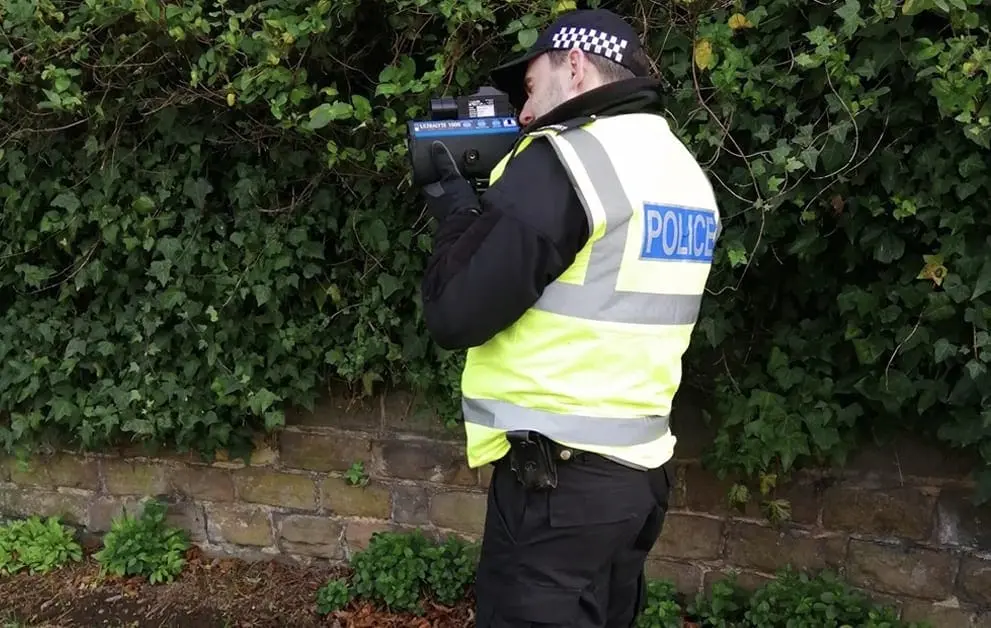
PICTURED: A stock picture of a police officer hunting for speeding motorists (IMAGE: Notts Police)
Officers have been positioned on the A612 Burton Joyce between the hours of 1930pm – 2100pm following a number of reports regarding speeding.
Speeds in excess of 50 mph were registered in the 40 mph area. A total of 9 traffic offence reports have been issued to drivers within the last 48 hours.
During patrols at school finishing time, officers have spotted a vehicle that was failing to maintain lane discipline in the Carlton area.
A police spokesman said: “The vehicle was stopped and the driver provided a positive roadside breath test for excess alcohol. The driver was arrested and subsequently charged and bailed to court.”