


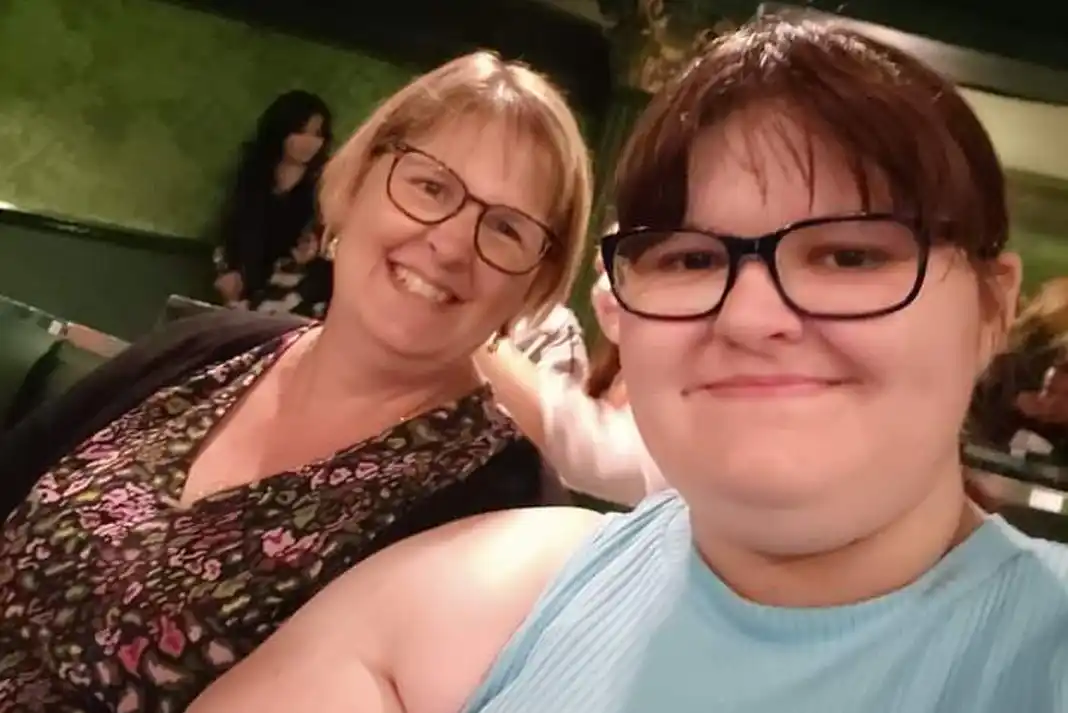

A Mapperley woman was able to harm herself despite being on 24/7 watch at a mental health hospital, an inquest has heard.
Sophie Towle was in her bed on Fir Ward, at Sherwood Oaks Hospital in Mansfield, run by Nottinghamshire Healthcare NHS Foundation Trust, when she caused an injury to a pre-existing leg wound on May 12, 2024.
She died two weeks later from a blood clot in her lung, brought on partly by immobility she suffered due to the pain in her leg after the incident.
During the Monday, October 13 sitting of the ongoing inquest hearing at Nottingham Coroner’s Court, assistant coroner Alexandra Pountney heard evidence from staff at Sherwood Oaks on the day Sophie was able to hurt herself.
The 22-year-old had been at Sherwood Oaks for around two weeks, after being transferred back to the facility from a hospital in Doncaster on April 25, 2024.
On the afternoon of May 12, she left her room to go to the nurse’s office, to ask for two of her restricted items – a pen and a crossword book, so she could do puzzles.


The items were restricted as they could be used for self-harm.
Sophie had a history of self-harming by inserting items in her leg wound, which had been open for a number of months.
In her evidence, nurse Whitney Levy, who gave Sophie the crossword book and pen, told the inquest she weighed this up as a ‘positive and appropriate risk’.
Ms Levy said that Sophie had told her she felt safe with the items, and that she would prefer to do the crossword in her room as opposed to the communal area due to her feeling uncomfortable with other patients on the ward, which Ms Levy accepted.
This was because Sophie had had “relatively good day” with regards to high-risk behaviour, and wasn’t exhibiting signs of distress, such as looking at her leg wound, Ms Levy said.
Ms Levy added that she recognised the risk, so briefed the healthcare assistant who’d accompanied Sophie to the office that Sophie needed to be watched carefully with the items.
She did not document this in Sophie’s progress notes on the hospital’s log system, the inquest heard, but admitted she should have done.
She told the coroner: “It’s very easy for communication to get lost.”
Sophie went back to her room and did the crossword puzzle on her bed, the inquest heard.
At 5.30pm, nurse Levy, who was meant to be observing Sophie, had yet to take her allocated break due to how busy the ward was.
She found a staff member to cover her observations and left the post.
At 6pm, this employee switched with another healthcare assistant, Egbejimba Remi Henry, who was a bank member of staff.
This means he was not permanently based at Sherwood Oaks, and instead worked where needed amongst hospitals run by Nottinghamshire Healthcare NHS Foundation Trust.
Mr Henry told the inquest he sat down ‘on the chair that the previous member of staff was sat on’, in Sophie’s bedroom doorway.
At some time in the next half-an-hour, he witnessed Sophie, who was sitting on her bed opposite him in the bedroom, put a teddy bear on her leg.
He says that when he couldn’t see what she was doing with her hands, he stood up, and suspicious of what she was doing, looked to his side to call another health care assistant over.
By the time he looked back, he told the court, he could see an empty pen cartridge on the floor.
Sophie had inserted the ink container of the biro into the wound on her leg.
When the healthcare assistants went into the room, they sounded the alarm and an ambulance was called.
Sophie later told a different healthcare assistant that she had been able to do what she did because Mr Henry looked away, the inquest heard.
Mr Henry told the court that this was only for a couple of seconds, adding that he had also looked away shortly before the incident, when another healthcare assistant who was sitting behind him in the corridor started speaking to him, to tell him that he needed to cover Ms Levy’s duty – which he was already doing.
Ms Pountney questioned how Sophie would have been able to dissemble the pen, peel back the pre-existing dressing on her leg and insert the pen so far into the wound that it was not visible to the naked eye, if Mr Henry had only looked away for a matter of seconds.
“If you were watching her closely, you would have noticed those three parts of the process,” she said.
Mr Henry was qualified to observe Sophie but had never met her before and had little to no knowledge of her self-harm history.
That evening, he had noted the word ‘self-harm’ in a handover briefing regarding all 17 patients on the ward, but he had no idea of Sophie’s patient management plan, nor of any reports on her preceding 24 hours prior.
Nurse Levy told the inquest that she had given Mr Henry an observation handover sheet, but he said that was “not true” and said that he had no details about Sophie’s risk.
He also denied being aware that Sophie had a tendency to stick items into her leg wound, that she hid her hands under her duvet covers to conceal her self-harming, and that she was in possession of the pen and crossword pad when he started his observation.
The coroner asked him whether he was able to effectively carry out his observations if he didn’t know Sophie and her risks.
He replied: “No.”
Nurse Levy said that while she believed she had provided those covering her observation shift with a handover sheet, it did not mention the pen and crossword book and she admitted it should have done.
She said she did not know whether the handover sheet mentioned Sophie’s tendency to hide her hands, and that in hindsight, there should have been plans in place to mitigate against that risk.
This could have included making sure Sophie did the crossword at the desk in her room rather than on her bed, or removing the duvet covers while she was doing it.
The inquest, which began on Monday, October 6, continues.



Such a sad story. I hope lessons are learned
It’s a sad situation for anyone to be in, but as someone who has experienced this place and knew the girl , the blame that’s been pushed onto people is unfair, they haven’t spoken about how hectic wards get or the amount of patients that manage unsafe actions in a matter of seconds. They aren’t speaking about things that would have contributed to the situation that were unavoidable in terms of Sophie herself and her own behaviours that many people tried to help over time. There’s nothing in this that explicitly says the reason for the clot, just a presumption due to immobility, people that knew her have already tried to come forward and say there was next to no difference in her mobility and that the things that put her at risk for a clot were apparent long before the incident of s3lf-harm. Think people just need to be more mindful about throwing blame about when they don’t know the extent of what happens in these places or didn’t know the difficulties around Sophie herself.