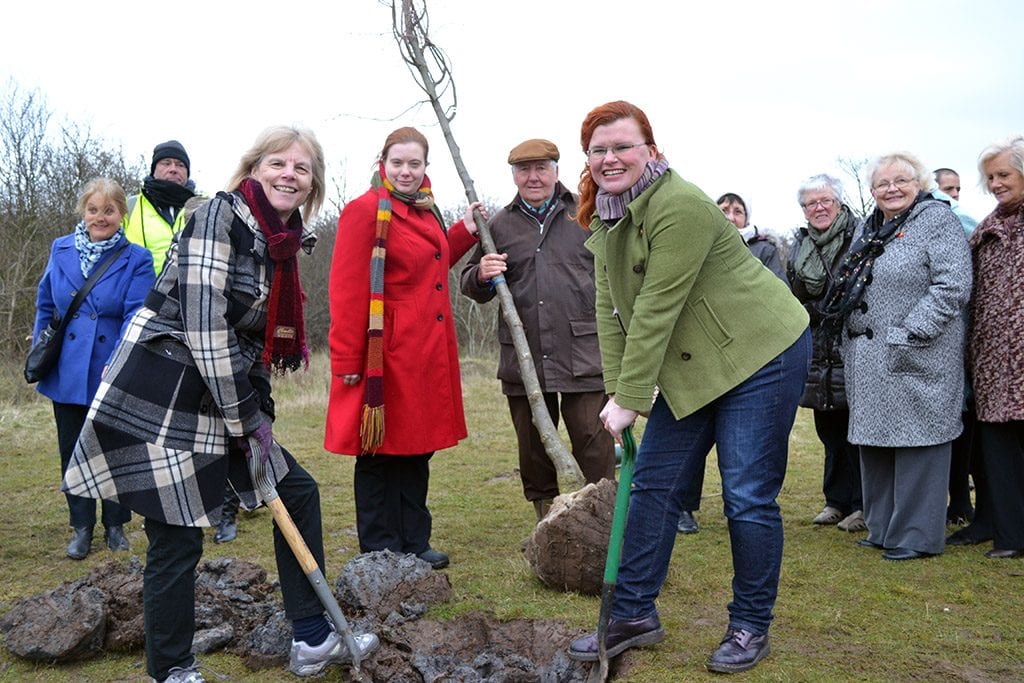
A group of ladies from across the borough braved the cold yesterday to plant a tree in Gedling Country Park to mark International Women’s Day.
Councillor Roxanne Ellis, who has been leading Gedling Borough Council’s promotion of International Women’s Day, was joined by Sarah Manton, president of Nottingham City Women’s Institute and Gedling-based members of the group to plant the tree to mark the occasion. Fellow Cllr Peter Barnes and rangers from Gedling Country Park were also on hand to lend support.
TREE-MENDOUS: President of Nottingham City WI Sarah Manton and Cllr Roxanne Ellis, from Gedling Borough Council, organised a tree planting to mark International Women’s Day. Gedling members of the Institute, rangers from Gedling Country Park and Cllr Peter Barnes also lent a hand.
Council tax bills in Gedling borough will remain frozen for the third year running, it was agreed at a budget meeting tonight.
Gedling Borough Council also rubber-stamped plans to fund a new visitor’s centre at Gedling Country Park and give a pay increase to all but the most senior members of staff.
BUDGET: Councillors tonight agreed to freeze council tax in Gedling borough
The council also announced it faced further reductions in the money it receives from central government – amounting to £2.4 million. This is on top of a £1.9 million cut in government grants that has already taken place.
John Clarke, Leader of Gedling Borough Council said: “In recent years, we’ve grown accustomed to having to deal with cuts in government funding but this latest financial settlement has hit us especially hard.
“Over a nine-year year period, we’ve had £4.3 million less to spend on Gedling residents, equivalent to a massive 49% cash reduction. We don’t like it but our approach has always been to concentrate on the money we have left rather than focus on what has been taken away”.
Since 2011, the council has been successful in delivering £4.2 million of savings and plans to invest in a new visitor centre, toilets and play facilities at Gedling Country Park; create new cemetery land at Carlton Cemetery and replace the artificial football pitch at Redhill Leisure Centre.
Free swimming sessions and a free period of bulky waste collections, along with a range of activities to create new homes and jobs were all part of a wide ranging agenda debated by Gedling councillors.
Also approved is a pay review of all but the most senior members of staff, to bring the pay of Gedling employees closer to the average pay of other councils.
John Clarke added: “Despite funding cuts, we remain ambitious for Gedling residents and are doing everything possible to kick-start the building of more houses and the creation of more jobs. We’re also continuing our good work to support the most vulnerable in society and create a more compassionate Gedling.
“This extends to treating our own staff more fairly in terms of what we pay them which at the moment is significantly below what other Councils pay and what they deserve to be paid. We want the very best for Gedling residents and we can’t achieve that if we continue to pay the worst”
Our new resident folklorist and historian, Frank E. Earp shares the story of a brutal murder in Colwick Woods…
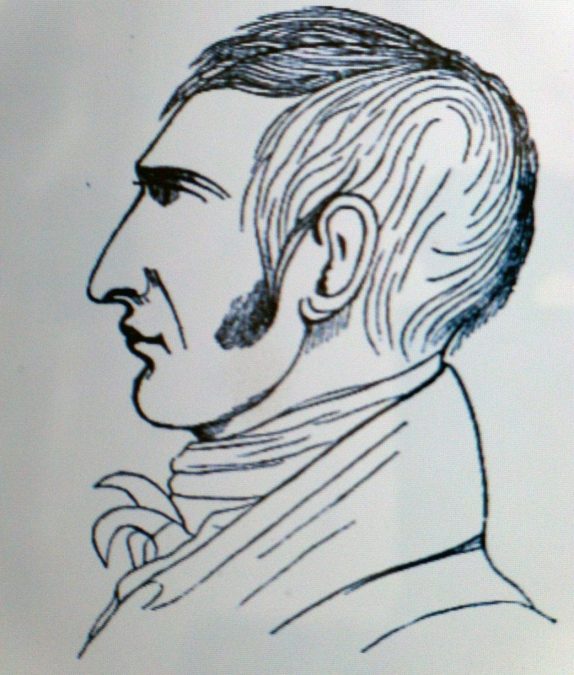
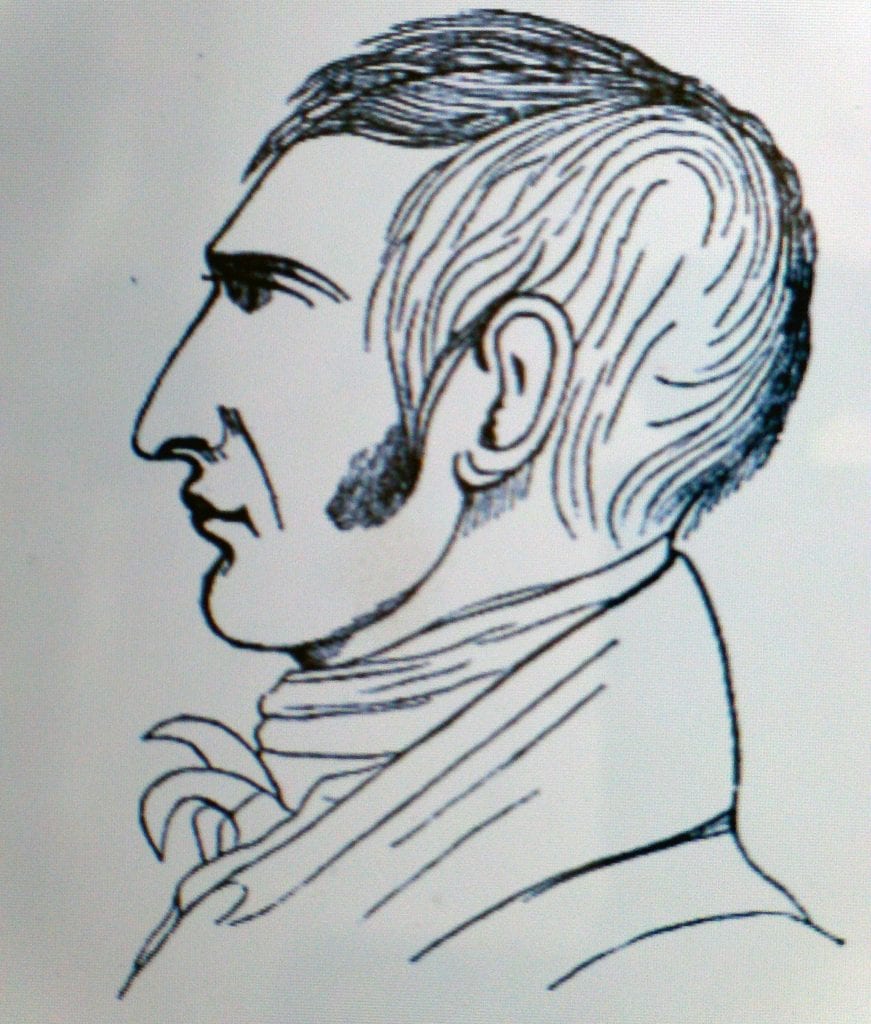
The name of Nottingham man William Saville is writ large in the annals of criminology and social history. It holds against it the direct responsibility for the deaths of at least 21 individuals and the serious injury of many more. However, Saville was no mass-murderer. His crime was the murder of his wife and three children. It was the circumstances of his public execution outside Nottingham’s Shire Hall on Aug 8, 1844 which led to the unforeseen deaths and mutilations of his other victims. It also led directly to the change in the local authority’s policy towards public hangings and indirectly influenced attitudes regarding capital punishment.
KILLER: William Saville
Saville’s whole life is one of tragedy from beginning to end and makes an excellent case study for any budding criminologist or physiatrist. William Saville was born in Nottingham around 1815, into a life of abject poverty. His mother died in 1817, so William and his siblings were left in the care of their father Thomas Saville. Although Thomas Saville had a good job as a warehouse-man, he was a drunken bully who frequently spent his hard earned money on Saturday night drinking in the inns and public houses around the City. Such was his addiction to alcohol and other vices, that he often did not return home until well into the following week; the children were thus left to fend for themselves. It is reported that they slept on straw covered only by rags and would have gone hungry most days if not for the kindliness of neighbours.
During this period, William was a sickly child and due to the unsanitary living conditions developed what was then termed as a “scald head”. In an attempt to cure his condition he was sent to Basford Workhouse. Here William’s health rapidly improved; however, his behaviour is recorded as being unacceptable with bouts of extreme violence. For a time he attended Sunday School but not long enough to learn to read or write. On leaving the Workhouse, William first became a farm servant and later a stocking-weaver. Again, his behaviour is described as being far from creditable.
William Saville married in 1835 and between and 1844 his wife bore him 3 children. The marriage was not a happy one. At his trial Saville claimed that his wife, who was a few year his senior, had tricked him into marrying her with promises of money and by getting him drunk; however, the reality of the situation was the fact that like his father, William was a violent drunkard who frequently beat and kicked his wife, even whilst heavily pregnant. Contemporary accounts describe him as being shiftless and an accomplished liar. William was most content when others paid for his drink and would enjoy their company until it was his turn to pay. In 1837, William was convicted of stealing a coat and sent to prison for three months. During the time of his marriage the family lived at no fewer than 14 houses in Nottingham and surrounding districts as well as addresses in Southwell and Derby. For a few months William even took to the roads and lived as a vagrant.
In the early spring of 1844 William Saville persuaded his wife that it would be better for her and the children to put themselves into the workhouse. This done, he then, under the pretext of being a single man, entered the services of Robert Sutton a stocking weaver in Radford. During this short period of employment, William is described as being an inveterate liar, full of swagger and pretence and prone to bouts of violence and foul language. He boasted of his family’s achievement and how he had a strong desire to immigrate to America. It was noticed that when first starting his new employment, William had but one set of clothing. By the time of his trial a few months later, he had amassed a whole wardrobe. How he had acquired his new clothes is only to be imagined. It certainly was not through his legitimate earnings as most of these were spent on his Saturday night drinking sessions.
From his first day at work William directed his attentions towards a young female colleague by the name of Elizabeth Tate. Using an old-fashioned word appropriate for the time, William began to ‘court’ Elizabeth still under the pretext that he was a single man. Although Elizabeth was later to insist that she rejected his advances and was deeply suspicious of William’s intentions and status, the situation does not seem to be entirely one-sided. William’s intentions certainly seems to have been one of marriage.
From the reports it seems that soon after his family had entered the Workhouse, William was in the habit of sending them a weekly package containing ‘half a pound of sugar, an ounce of tea and four pence’. It is stated that the sugar and tea were to buy his wife’s silence and the money intended for the children. William dutifully packed these gifts on Sunday mornings, but the practise ended after a few weeks. Elizabeth Tate witnessed one such ritual and asked who the parcel was for. William replied that it was for an old woman in Arnold to whom he had promised to make that present every week and that he would continue to make it as long as she lived. It is not clear from the records as to where William conducted his parcel packing or if Elizabeth was the soul witness to the event. Certainly, the arrival of the parcel would have been noted by the staff at the workhouse. If as seems likely William packed his gifts during his free time on Sunday mornings and the two were alone together, Elizabeth Tate would have been complicate in events which were to follow.
It is likely that Williams wife was aware of his intentions towards Elizabeth and with the regular parcels suddenly stopping after a few weeks she threaten to expose him as a married man. The stage was now set for murder.
Come away to Colwick wildwood, Come away to Colwick Lane: As we wandered there in childhood, Let us wander there again. Edward Hind, 1853.
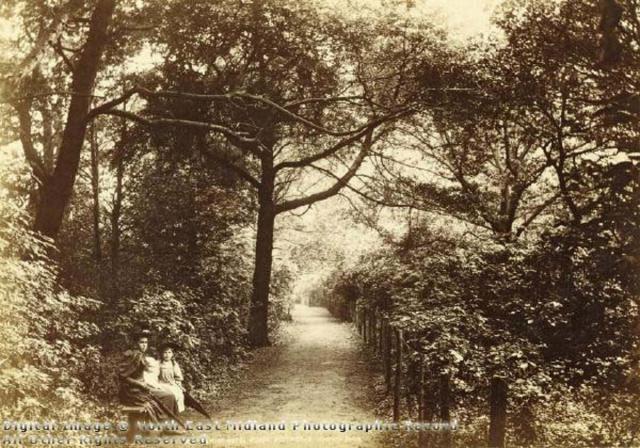
It is hard to imagine a more picturesque spot anywhere so close to the City of Nottingham than Colwick Woods; however, in May of 1844 a small spinney on the western edge of the Wood was to become the scene of a horrific murder. Did this discourage the throng of visitors who flocked to Colwick to enjoy the wood in their leisure time? The answer is no! Hardly had the blood dried on the grass, when in a bazaar and macabre ritual, literally thousands of people descended on the scene of the murder, collecting souvenirs of grass, brushwood and bark from the tree under which the murder took place. From that day forth, the site became known as ‘Saville’s Spinney’ after the murder victims, Anne Saville and her three children, two boys and a girl, aged seven, five and four.
MURDER: Colwick Woods was where the Saville family were murdered. Picture: Picture The Past
Real or imaginary, unrequited or encourage, the relationship between William Saville and Elizabeth Tate had reached a crisis point. At least for one party, William Saville, the ‘sticking point were his wife and three children languishing in a Nottingham Workhouse. Whatever passed between husband and wife on those days in May before that fateful day must remain forever a mystery. However, it is clear that a meeting was arranged between the two for the 21st of that month. Perhaps it was under the pretext of an outing, a brake from the Workhouse routine, or as some accounts would have it a visit to William Saville’s relations who lived on Station St. in Arnold, that Anne Saville and the children were lured to meet William under a tree in a spinney in Colwick Wood. Whatever the supposed purpose of the meeting, it is clear that William had murder on his mind. He was carrying a ‘cut-throat razor’ in his pocket. By his nature, his work colleagues had declared that rather than Saville his name should have been ‘Savage’ and savage he was that afternoon in May. He used the appropriately name razor to viciously cut the throats of all four members of his family.
Covered in his victim’s blood, William Saville beat a hasty retreat back along the little path that led into the spinney. It may have been that he would have gotten-away with his crime and perhaps gone to America with Elizabeth Tate. However, Saville was unaware that there had been an eyewitness to the events. Here, as all accounts of the case state, ‘legend’ enters the story, – and this account will be no different. An errant unnamed local schoolboy had decided to play truant that spring day and indulge in the boyish sport of ‘bird nesting’. By some quirk of fate and the fact that he had spotted a nest in the very tree under which the murder took place, sometime earlier he had climbed high into it branches. Not wishing to be discovered he had remained silent when Anne and the children arrived. No report gives details of events which followed the arrival of William Saville, but it is clear that he witnessed every savage stroke of the razor. The boy was clearly traumatised by the events as it is stated that ‘it was a long time before he dared to come down from his lofty perch’. History does not record what happened next, however it is a matter of fact that the boy reported the crime and William was quickly apprehended.
With William Saville in custody at the Shire Hall (now the Galleries of Justice Museum) news of the murder reached the public and the case reached celebrity status, – as indicated in the bazar events at the murder scene mention earlier. By the 1st June accounts of the murder were being published in local newspapers as far afield as Carlisle. With all of the evidence collected and an eye-witness present at the scene the outcome of the subsequent trial was inevitable. William Saville was found guilty of the murders of his wife and children. The judge donned his ‘black cap’ and 29 year old William Saville was sentenced to be ‘hung by the neck until dead’. The date set for the execution was the 7th August. No one knew it at the time, but this would be a day that was to shock and horrify the good citizens of Nottingham more than the murder of the innocent victims of Saville’s crime.
Quite how the William Saville case achieved such notoriety is unclear, but events at the trial seem to have attracted a large attendance in the public gallery. Certainly, this was to be a foretaste of things to come. I have not been able, or have had time to trace official court records of the time and cannot give a blow by blow account of the trial. However, from accounts available all those mentioned so far, – including Elizabeth Tate and other fellow works from Sutton’s factory, – gave evidence for the prosecution. The chief witness of course must have been the little boy ‘up the tree’. Saville himself is said to have conducted himself with some degree of dignity throughout the trial.
Saville’s guilt for the crime was without doubt and the judge passed the appropriate sentence of death by hanging. The date for the execution was set for Wednesday 7th August, -some accounts give 8th It is hard to imagine now, but public hangings were very much still the ‘order of the day’ at this time and the old adage that; ‘justice must not only be done but seen to be done’, still prevailed. In Nottingham the site for the gallows was on the very steps of Shire Hall. Evidence of this can still be seen today. Square holes, now filled with blocks of stone, mark the spot where the scaffold frame supporting the gibbet once stood.
Although the time of the execution had been set for 8 am, crowds had already started to gather in the narrow road in-front of Shire Hall, – High Pavement, – the evening before. By early morning, eyewitnesses to the event report seeing a seething mass of humanity crammed together in the narrow confines. Occasionally the crowed would let-out a collective groan and sway a little; otherwise it is reported as being calm. This was no mob baying for blood, but simply the curious come to see a man die at the end of a rope.
“Eight was the hour of execution, but every available space was occupied long before it arrived. Occasionally, there came a cry from the mighty surging mass that a man, woman, or youth, was fainting, or being crushed to death; and if the sufferer was fortunate enough not to be entirely bereft of strength, he or she was lifted up, and permitted to walk or creep to the extremity of the crowd on the shoulders of the people”.
Just before 8 am Saville was led out onto the scaffold and the halter placed around his neck. According to eyewitnesses, the whole affair took around three minutes; “When the bolt was removed and the body fell, the immense crowd of many thousands of men, woman and children began to move away….” Official records state that no barricades had been put into place to safely control the crowd. The sudden surge into movement was like a dam bursting. The confines of the narrow street funnelled the crowed along, forcing individuals to move in the direction of the mass. Many, who had been standing for hours found it difficult to walk and were swept off their feet and carried along. Whilst those in the centre were carried along, those around the edges were pressed tight against the walls of the houses on either side and began to stumble and fall. The occupants of the houses, who had also been watching the execution, now franticly began to yell warning from the windows or to open their doors to relive the pressure. Amongst these individuals was the Lord Mayor, pioneering pit owner and Liberal Councillor Thomas North.
“The inhabitants, at the windows on each side the street, observed the overwhelming rush, and foreseeing the consequence, screamed out to those in the rear to stay their progress. The mayor was especially active, and though the almost threw himself out of his window for the purpose of staying the fatal advance….”.
But these efforts were too little too late. The ‘head’ of the mass had already reached the even narrower ally of Garner hill with its steep flight of steps leading down to Narrow Marsh. Forced into this side street, disaster overtook the crowd as the bodies of men women and children tumbled down the stone steps. It was all over in minutes.
Quite how the William Saville case achieved such notoriety is unclear, but events at the trial seem to have attracted a large attendance in the public gallery. Certainly, this was to be a foretaste of things to come. I have not been able, or have had time to trace official court records of the time and cannot give a blow by blow account of the trial. However, from accounts available all those mentioned so far, – including Elizabeth Tate and other fellow works from Sutton’s factory, – gave evidence for the prosecution. The chief witness of course must have been the little boy ‘up the tree’. Saville himself is said to have conducted himself with some degree of dignity throughout the trial.
Saville’s guilt for the crime was without doubt and the judge passed the appropriate sentence of death by hanging. The date for the execution was set for Wednesday 7th August, -some accounts give 8th It is hard to imagine now, but public hangings were very much still the ‘order of the day’ at this time and the old adage that; ‘justice must not only be done but seen to be done’, still prevailed. In Nottingham the site for the gallows was on the very steps of Shire Hall. Evidence of this can still be seen today. Square holes, now filled with blocks of stone, mark the spot where the scaffold frame supporting the gibbet once stood.
Although the time of the execution had been set for 8 am, crowds had already started to gather in the narrow road in-front of Shire Hall, – High Pavement, – the evening before. By early morning, eyewitnesses to the event report seeing a seething mass of humanity crammed together in the narrow confines. Occasionally the crowed would let-out a collective groan and sway a little; otherwise it is reported as being calm. This was no mob baying for blood, but simply the curious come to see a man die at the end of a rope.
“Eight was the hour of execution, but every available space was occupied long before it arrived. Occasionally, there came a cry from the mighty surging mass that a man, woman, or youth, was fainting, or being crushed to death; and if the sufferer was fortunate enough not to be entirely bereft of strength, he or she was lifted up, and permitted to walk or creep to the extremity of the crowd on the shoulders of the people”.
Just before 8 am Saville was led out onto the scaffold and the halter placed around his neck. According to eyewitnesses, the whole affair took around three minutes; “When the bolt was removed and the body fell, the immense crowd of many thousands of men, woman and children began to move away….” Official records state that no barricades had been put into place to safely control the crowd. The sudden surge into movement was like a dam bursting. The confines of the narrow street funnelled the crowed along, forcing individuals to move in the direction of the mass. Many, who had been standing for hours found it difficult to walk and were swept off their feet and carried along. Whilst those in the centre were carried along, those around the edges were pressed tight against the walls of the houses on either side and began to stumble and fall. The occupants of the houses, who had also been watching the execution, now franticly began to yell warning from the windows or to open their doors to relive the pressure. Amongst these individuals was the Lord Mayor, pioneering pit owner and Liberal Councillor Thomas North.
“The inhabitants, at the windows on each side the street, observed the overwhelming rush, and foreseeing the consequence, screamed out to those in the rear to stay their progress. The mayor was especially active, and though the almost threw himself out of his window for the purpose of staying the fatal advance….”.
But these efforts were too little too late. The ‘head’ of the mass had already reached the even narrower ally of Garner hill with its steep flight of steps leading down to Narrow Marsh. Forced into this side street, disaster overtook the crowd as the bodies of men women and children tumbled down the stone steps. It was all over in minutes.
A mumtrepeneur is expecting her unique baby gift business to go from strength-to-strength after teaming up with one of the country’s biggest baby brands.
Secret Stork, which is run by mum-of-one Julie Hunkin, from Woodborough, recently announced they are to go into partnership with Early Years’ Boutique – one of the UK’s biggest baby gift businesses.
It’s a great achievement for Julie, who only launched her business last year after giving birth to her son, Toby.
SUCCESS: Julie Hunkin, from Woodborough, has launched her own online baby gift business
Secret Stork, which sends out gifts to parents throughout their child’s first year, is now expecting to gain hundreds of extra customers after their products began featuring on the hugely popular Early Years’ Boutique website and online store.
Julie, who runs the business from her home in the village, said: “This tops off an already successful first year for Secret Stork.
“The business was born not long after my first child. While at home and on maternity leave it was so exciting to receive surprise gifts in the mail from all the baby companies I’d signed up to.
“This gave me the inspiration to provide a service for new mums to receive luxury personalised gifts tailored just for them and their baby.”
She added: “The business is really gathering momentum and we even reached the finals in the ‘Best Product’ category at the national Mumpreneur UK awards last year.”
Emma Smyth, from The Early Years Boutique, told Gedling Eye she was delighted to be teaming up with Julie.
She said: “We are so excited to be working with Secret Stork, they are the next big thing to hit the baby gifts market. Watch this space”.
You can learn more about how to sign up with Secret Stork at their website: www.secretstork.org.
Gedling borough residents are being warned about door-to-door salesmen who are visiting properties in the area and attempting to sell unlabelled fish.
Those who have so far been visited by the salesmen have described the unlabelled fish as unfit to eat.
Trading standards are urging people in the area to visit a reputable established trader instead of buying food off the doorstep from cold callers.
Tim Watson, from Trading Standards, said: “This type of scam involving door-to-door fish sales is a growing national problem. We advise that the best place to buy fish is from a reputable fishmonger at an established shop or stall.”
“Doorstep sellers also tend not to offer customers cancellation rights or provide a receipt to allow them to seek a refund if they are not satisfied with the goods.”
Anyone who has been approached by fish sellers in this manner should contact the Citizens Advice Consumer Service on 03454 04 05 06.
An Arnold theatre is joining the fight to fund a permanent memorial for a local boxing legend by holding a charity screening of a critically-acclaimed documentary about the sport.
Bonington Theatre is to screen the Oscar-winning film When We Were Kings next month to help raise cash for the Bendigo Memorial Fund which will use money raised to create a permanent memorial in the city for the 19th century prize fighter.
The screening of the film, a 1996 documentary about the famous “Rumble in the Jungle” heavyweight championship match between Muhammad Ali and George Foreman, will take place on April 15, at 7.30pm.
Money from the tickets, which cost £8, or £4 for under-18s, will go into the fund which trustees hope to one day be able to use to pay for a statue of Bendigo in the city centre.
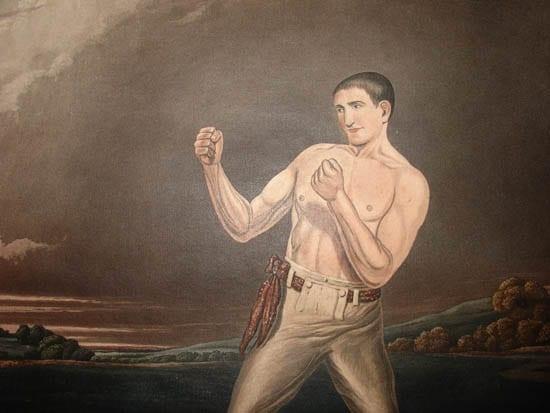
WORLD FAMOUS: AN artist’s impression of 19th century boxer Bendigo
Bendigo was born into poverty in the slums of Nottingham, but his physique and agility as a boxer brought him huge success. He is credited with inventing the ‘Southpaw’ stance, ensuring his legacy lies within the fabric of boxing forever.
His outspoken character and record in the ring attracted a massive fan base, including Sir Arthur Conan Doyle, who wrote a verse to the fighter, titled Bendigo’s Sermon.
Alan Dawson, who is one of the trustees for the memorial fund, said the world-famous boxer deserves a fitting memorlal in the city centre.
He said: “Despite being written about and his name being known the world over, Nottingham’s only recognition to Bendigo is a weathered and damaged ceramic statue above an old public house in Sneinton and a civic plaque which marks the building that is on the site of his birthplace.
“Bendigo deserves better recognition than this. He deserves a permanent public memorial that is fitting of his legacy. The story of Bendigo is inspiring not only to the people of Nottingham but the world over.”
The project has not been set a target date, however a forthcoming website and media updates will keep followers updated as the project develops.
Films, talks and a host of special events are being planned across Gedling borough to celebrate this year’s annual International Women’s Day.
FILM NIGHT: A special screening of Suffragette will take place at Bonington Theatre to mark International Women’s Day
Lots of council-run and community-run events will be taking place throughout the month that everyone, both women and men, can get involved with and enjoy.
The Bonington Theatre, Arnold, will be hosting an evening of special guest speakers and a screening of Suffragette, a film about the women’s movements of the early 21st century, on Wednesday, March 2. Rowena Edlin White from the Nottingham Women’s History Group and Nan Sloane from the Centre for Women in Democracy will be giving talks before the film.
Other events during the month include free swimming and racket sports for teams with women at Gedling Borough Council leisure centres and informative displays in the foyer of the Civic Centre.
The council are also supporting community-run events including a charity craft fair ran by Mansfield and District Soroptimists, a creative writing workshop ran by New Writers UK and a Nottingham Roller Derby open day where women can find out how to get their skates on.
On Saturday, March 12, the Mayor of Gedling’s chosen Charity We R Here is holding an event at Richard Herrod Centre to celebrate women who have overcome adversity and Gedling members of Nottingham Women’s Institute will plant a commemorative tree in Gedling Country Park on Tuesday, March 8.
Councillor Roxanne Ellis, who’s leading the promotion of IWD said: “This month will be the biggest ever celebration of International Women’s Day here in Gedling and we’re delighted with the diverse range of events taking place. Whilst celebrating women, we do encourage all the family to get involved too.”
Find out more about International Women’s Day 2016 and all the events happening in the Gedling borough by visiting www.gedling.gov.uk/iwd
A Netherfield-based karate instructor wants his local community to start getting a kick out of the sport by inviting them to take part in free training sessions at his new dojo near Colwick.
James Martin, of Meadow Road, is to put on the free Sunday morning training sessions for fellow Netherfield residents at his Bunbu Ryodo Karate Academy, on Little Tennis Lane, in the hope of getting them interested in one of the world’s most popular sports.
CELEBRATION: James Martin celebrates the opening of his new dojo in Colwick
As well as attracting Netherfield residents, James, who is one of the Midland’s most successful karate instructors, is also keen to get people from across Gedling borough involved and taking part in the martial art at his new academy which opened its doors recently.
James said: “My new dojo has direct links to the national team and we also have a full-time school here”
“We want to attract children, adults and elite athletes from across the whole of Gedling to the new academy. No experience is necessary. Anyone can join up.”
For more information about free Sunday training or to join Bunbu Ryodo Academy, call James on 07861 761304 for more details.
Police investigating the discovery of a man’s body in Gedling Country Park over the weekend have confirmed his identity.
DISCOVERY: A body was found at Gedling Country Park, on Saturday morning
Officers were called to the park, on Spring Lane, just after 9.20am on Saturday (27).
The death is not being treated as suspicious and officers are now in the process of contacting family members.
Following the discovery leader of Gedling Borough Council, Councillor John Clarke released a statement on behalf of the council.
He said: “We understand that the police have now identified the body of the man found at Gedling Country Park and the family have been informed. On behalf of everyone at Gedling Borough Council I would like to offer our condolences to the family and our thoughts are with them at this very difficult time.”
Arnold Town Ladies went into their home fixture with league leaders Long Eaton full of confidence following their battling displays in the away game and recently against Mansfield.
With a full squad to pick from, manager Andy Ingle was spoilt for choice knowing that competition for places can only help a club grow.
With players returning following the last midweek game, the home side started with Emily Hallam in goal, with the back four welcoming back Chay Davey alongside Claire Potter, Charley Norman and Tina Potter. The midfield saw Risa Naisbitt make her home debut next to the captain Jenny Lorimer and Jay Willows. The forward line saw Natasha Leach return to the line up with Molly Parker and Chloe Jordan.
Long Eaton kicked off with the wind against them. It was certainly blowing a gale but as much as Arnold tried they couldn’t capitalise on the advantage. The closest they came was when a long range effort from Jenny Lorimer cannoned off the underside of the crossbar for the second game in succession. Every attempt to get the ball forward saw the wind carry the ball through to the keeper or out of play. Natasha Leach did well holding up the ball and showed her strength but unfortunately had to be replaced by Elli Leathen after 20 minutes. A really hard fought first 45 minutes where neither team created too many decent chances and was more of a physical battle with both teams standing strong.
The half time team talk praised the work ethic, desire and commitment shown by the young home team and that if they wanted it a draw was well in their sights if not more. However there is a saying about football being a game of 2 halves and today was a perfect example.
Arnold kicked off the second half and within 35 seconds found themselves 1-0 down. Having lost possession they gave away a free kick on the edge of the box. With wind assistance the ball was smashed past the helpless Emily Hallam. A real blow in which they never recovered from as 2 minutes later the lead had been doubled when a corner from the left was met unmarked at the back post and slotted in to make it 2-0.
3-0 followed soon after with a lack of communication resulting in three Arnold players going for the ball and it deflecting in. Changes had already been made with Jay Willows replaced by Lottie Swinscoe at the break, and Chay Davey was unable to run off an ankle injury so Ciara Button came into the centre of midfield and Risa Naisbitt dropped back into centre back.
Long Eaton were well and truly on top now and within the first 17 minutes of the second half had made it 5-0 leaving Arnold completly shell-shocked. It would have been more if it hadn’t been for keeper Emily Hallam who pulled off a ‘worldie’, tipping the ball over the bar whilst at full stretch diving to her right.
A bad second half but with the average age of this squad still being much lower than many of the oppostion it is fair to say that whilst effort and ability are often matched, experience and maturity are usually the part that’s missing but with time will certainly develop. Losing 5-0 to a team 9 points clear at the top of the league is nothing to be depressed about especially when you have witnessed the improvements over the last few months by all the players. Two home night matches to come in March where hopefully the side will bounce back and finish the season strongly.
Subs unused: Chloe Stocks, Emily Nelis
ArnoldTown under 18s gained their first point of the season with a thrilling 2-2 draw at home to Bingham Town U18’s. Goals from Tammie Lacey and Narla Wilkes put them 2 up at the break, however the strong wind helped the visitors level the game in the second half.