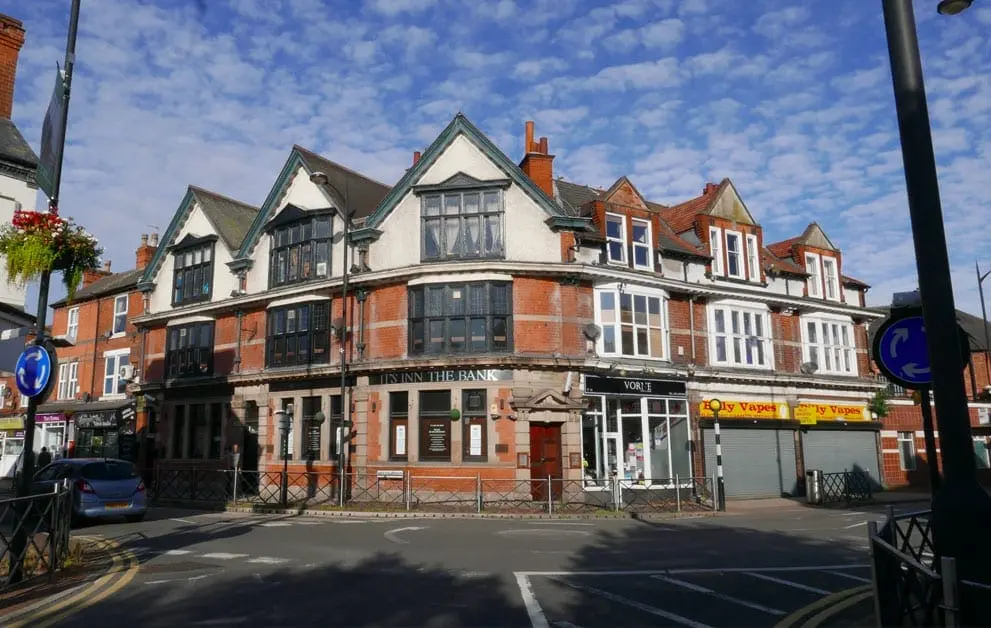
Police are hunting a callous burglar who stole charity boxes from a pub in Netherfield – including a collection for Ukraine.
A man distracted a member of staff at It’s Inn the Bank in Victoria Road, Netherfield, before stealing two collection boxes which contained cash for the Ukraine appeal and in aid of a stroke unit.
It happened at around 2.20pm yesterday (15).
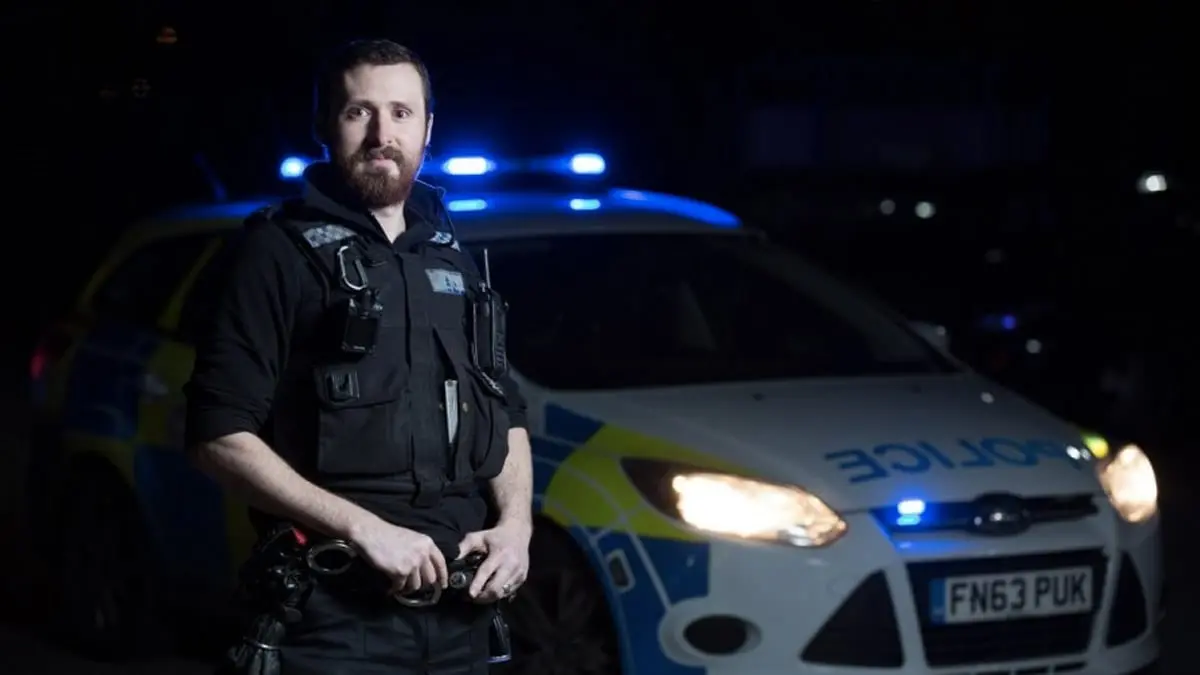
Sergeant Rebecca O’Connor, of the Gedling neighbourhood policing team, said: “We are pursuing a number of lines of enquiry, including checking CCTV footage, to trace the man responsible for this despicable burglary.
Police are appealing for information
“It’s very sad that someone would stoop so low as to steal cash donated to worthy causes and given by kind-hearted people to help others.
“This was a heartless and callous theft and we are determined to catch this offender as soon as possible and bring him to justice.
“To help us with our ongoing enquiries I would urge anyone with information about the burglary or the person responsible to please get in touch with the police as soon as possible.”
Anyone with any information, or who has any CCTV or dash-cam footage, is asked to call 101, quoting incident number 489 of 15 March 2022, or call Crimestoppers anonymously on 0800 555 111.
Thousands of households in Gedling borough will receivea council tax rebate of £150 this springas part of a package of measures designed to combat the cost of living crisis.
The payment is intended to ease the financial strain caused by factors such as the energy price cap rise, which comes into effect from April.
Rishi Sunak announced the measures at the start of February, on the same day that Ofgem confirmed the major hike to the price cap.
Here’s everything you need to know about the rebate, from who is eligible to receive it to when the payment will be made.
When will the rebate be paid in Gedling borough?
If you are eligible and pay your council tax by direct debit then you will receive your payment directly in April.
For those who are eligible and do not pay council tax via direct debit, Gedling Borough Council will be writing to them to explain what to do to get their payment. People are being urged not to call Gedling Borough Council to chase their payment as it will be made payment as soon as possible.
The council is urging residents to inform people not online about the quicker direct debit payment so they can get someone to sign them up and receive the £150 payment as swiftly as possible
Who is eligible for the payment?
Properties that are your main home and banded A-D or Band E with a disabled relief are eligible.
Second homes and unoccupied properties are excluded.
Gedling Borough Council is responsible for paying the one-off £150 Council Tax Energy Bills Rebate to households in bands A-D but the government has set the rules for the scheme and local authorities have to follow these rules.
What if I am not eligible?
A fund has been provided to Councils to help lower income households who may not qualify for the Energy Bill Rebate. This will include households are on lower incomes or in receipt of the Council Tax Reduction Scheme (CTRS) and who are in higher than band D property.
More information is available on the council’s website HERE
Dr Ian Campbell has been a GP in Carlton for 30 years. Here he has his say on the Ukrainian refugee crisis – and it’s potential impact on the NHS
Just as it seemed we might, just might, be emerging from the worst of the Covid-19 pandemic, we were hardly expecting the new threat of a war in Europe, not only in Ukraine, but perhaps further afield across the continent too.
And with several million people having already fled Ukraine to escape the violence much attention has been given to the acute refugee crisis we now face across Europe. Millions of people, men women and children, who have had to leave behind everything they possess, now face a bleak, uncertain future. The United Kingdom is rightly opening its doors to allow some people at least to take refuge here. But can we cope?
The NHS, both hospitals and General Practice, is already struggling to cope with the consequences of the Covid-19 pandemic and years of financial restraint. Do we really have the capacity to meet even more demand from hundreds of thousands of new, desperately in need refugees? Yes, it might challenge our resources even more, but could we morally, compassionately or humanely, do anything else?
A few years ago we at Park House Medical Centre were among the first Practices in Nottingham to welcome some new patients, recently arrived from Syria, some of the first refugees to arrive in the UK during the really difficult years of the Syrian refugee crisis, from 2011 .
But a “refugee crisis” is nothing new. 2000 years ago hundreds of thousands of people were forced to flee Palestine (which included Syria). King Herod was on a mission to kill all new born males. And in the early 20th century millions fled their homes all across Europe, to escape the brutality of the First World War as ruling European families settled their personal disagreements by sending millions of innocent young people to the battlefields.
Ukrainian refugees have fled the country following the invasion by Russia (PHOTO:YouGov)PICTURED: Carlton GP Ian Campbell
And once again, just 20 years later, in the late 1930s and 1940s there were refugees in all corners of the world, as people of all cultures and all religions tried to escape the ravages and brutality of World War Two, instigated by political leaders fuelled by heinous religious bigotry and an insatiable hunger for power over others. Sadly, as we can now see, people today are still fleeing murderous political leaders, and some, only some, will find sanctity in the UK. And while I don’t know how many people will come here from the Ukraine, we can be sure that some will find their way to Nottinghamshire and to Gedling.
Gedling borough has a bigger refugee “problem” than you might realise. There are many refugees already living amongst us, having escaped various conflicts and persecution, and many have been fortunate to find work, education, homes and maintain good health. There are others however who have not been so fortunate, who remain in state organised accommodation, often living in cramped, squalid conditions, living on the breadline, coping with physical and mental ill health, and unable to escape the impoverished conditions in which they have to live. Men, women and children, who’s only desire is to live a safe, healthy life, in peace.
As a GP I’ve looked after refugees from different areas of the world, Syria, the Balkans, parts of Africa, and indeed many of our older patients were themselves once refugees from war torn Europe 80 years ago. Frightened, ill, destitute and often severely traumatised by their experiences they are often desperately in need of shelter, medical care and compassion when they arrive.
Some patients, including young children we’ve cared for have had horrific injuries from bombings, shootings and gas attacks. But war related injuries are just a part of it. Often they have chronic ill health, untreated because of lack of access to, or inability to pay for, healthcare. Mental ill health is very common too, as individuals cope with the psychological trauma of what they have seen, experienced, or lost. And although the NHS has never been under more pressure than it has of late, we should open our doors and offer them the help they so desperately need, and deserve.
In my experience the refugees I have been fortunate enough to get to know have been, without exception hugely appreciative of the welcome they have received in this country. There is a fantastic book, “This is where I am”, written by Karen Campbell (yes, a relative, my sister in law), described when it was published just a few years ago, as “one of the best books of the year”, which really brought home to me how difficult life for a refugee can be, and why no one would do it by choice. Drawing on her husband’s, my brother’s, real life experience of working with refugees, helping them to integrate into British society, Karen portrays vividly and movingly the real desperation they feel. They don’t come here by choice. They come because they have no choice.
A senior politician once said that the way a national government treats refugees, is a measure of how they would treat us, the common people, if they could. We need to ensure our government listens to the caring and compassionate voice of the British people. Many have said we should not “stand idly by” and do nothing. I agree. We should offer friendship and support to desperate people from wherever they might come. And we should offer them a chance to rebuild their lives, and live amongst us as valued members of society. I hope that one day we might never see this type of incident ever again.
But until such time as it stops, our Practice is proud to say “Refugees welcome here”.
May we all be able to look forward to a peaceful, safe and hopeful future.
Here is an update on the number of coronavirus cases recorded across Gedling borough in the past seven days.
Across the borough, 664 new Covid-19 cases were recorded in the week up to March 15.
This showed an increase of 34, with 630 cases being reported in the seven-day period covering up to March 14.
Health Secretary Sajid Javid said on Monday that a rise in infections was to be ‘expected’ following the easing of coronavirus restrictions in England.
“We are now open as a country and there’s more social mixing, but there’s nothing in the data at this point in time that gives us any cause for concern,” he told Sky News.
The number of Covid-19 patients with symptoms serious enough to be placed in mechanical ventilation beds has yet to show signs of an increase, figures show.
But the number of people with Covid-19 in hospital in England has climbed back above 10,000, with all regions now recording a steady rise in patients.
A total of 10,576 people were in hospital as of 8am on March 14, up 19 per cent week-on-week, according to NHS England.
The last time the number was above 10,000 was almost a month ago, on February 15.
The total dropped to nearly 8,000 towards the end of February, but has been rising again in recent days.
Patient levels in England are still some way below the peak reached at the start of this year during the Omicron wave of infections and well below the peak of the second wave in January 2021.
An Arnold police officer has been recognised by Nottinghamshire Police after helping finally snare a violent robber who has been on the run for over a decade.
Ambrose O’Neill, dubbed ‘The Running Man’, skipped his 2008 trial over an attack on an antiques dealer and his wife at their home. He was sentenced to eight years in prison in his absence but spent years at large.
He was finally brought to book in January last year after a team of police officers and staff picked up O’Neill’s case and made it their unflinching mission to get him in cuffs.
Now, the team have been rewarded at Nottinghamshire Police’s annual Force Awards, scooping the One Team (Operational award).
The team put in hours of dedicated work, including working extended hours in their free time, to follow up every thread of intelligence – and it paid off.
“The media portrayed him as someone who was laughing at cops,” recalled PC James Gill, who played a pivotal role in capturing O’Neill.
“As soon as we saw those reports, he became our number one priority.”
The brutal crime took place in 2007 when O’Neill knocked on his victim’s front door in Seagrave, Leicestershire, posing as a pizza delivery man.
When the 67-year-old victim opened the door, O’Neill pushed him over, punched him in the face and demanded he open a safe, threatening to kill him. The man’s wife was also pushed to the ground and kicked in the face.
But O’Neill ultimately left empty-handed and was later arrested.
O’Neill attended the first day of his trial at Leicester Crown Court but then went on the run.
Despite extensive enquiries across the country, he was not located and O’Neill remained at large having not served any of his eight year sentence.
That was until late 2020 when new intelligence linked O’Neill to Lincolnshire.
Thus, Operation Gladiolus was launched, with PC Gill, a response officer based at Jubilee House, and his colleague PC Andy Ryback playing an instrumental role in tracking down the wanted man.
Chief Inspector Chris Pearson, who nominated the team for the One Team award, described the team’s work as truly inspirational.
He said: “Having been approached by PC Gill, PC Ryback started a thorough investigation into O’Neill, balancing the extensive and complicated enquiries alongside his usual day job at Gedling.
“He volunteered to work additional hours in his own time to develop the intelligence case around O’Neill and sought assistance from colleagues across the organisation based in Force Intelligence, RTIU and Financial Investigation.
“He also liaised with colleagues in both Lincolnshire and Leicestershire Police to obtain a full understanding of the enquiries that had already been completed in the hunt for O’Neill.”
A number of enquiries were carried out but there was no footprint of O’Neill at all, showing that it was a well-planned and executed evasion of justice.
“He had effectively disappeared from all the places you would usually leave a trace of yourself,” said Insp Pearson. “This naturally caused significant distress for the victims.”
The breakthrough came when enquiries led the team to a property in Lincolnshire.
Ch Insp Pearson said: “PC Ryback produced a thorough briefing pack of his findings and the ‘Rota 3’ team at Gedling volunteered to return to work on a rest day to travel to Lincolnshire and detain O’Neill.”
Recalling the day the team honed in on O’Neill, PC Gill said: “We arrived at work at 2am in the morning and all sat around the briefing table. There were maps and detailed explanations of what was expected from each individual, because absolutely nobody wanted this to go wrong.
“It was a tense atmosphere but really exciting nonetheless.”
The team arrived at the address at 4.20am and successfully detained O’Neill.
Describing the moment they arrested him, PC Ryback said: “Hearing the words ‘we’ve got him’ after all this work was a really, really satisfying moment.”
Ch Insp Pearson said the team fully deserved the recognition they received at this year’s Force Awards ceremony, which was held on 9 March.
He said: “It is clear that the operation would not have been a success had it not been for the collaborative working and extensive enquiries carried out by PC Ryback, PC Gill, Gedling Rota 3 and the wider colleagues.
“Each of them played a part in order to work as a team and it was a real pleasure to see the hard working, enthusiastic nature of all of the police officers and staff involved in this operation.
“Their ‘can do’ attitude effectively meant that they carried out more extensive, detailed enquiries than had ever been done in the hunt for O’Neill and it was no surprise to me that this approach eventually paid off.”
A television documentary highlighting some of the winners at this year’s Force Awards was broadcast on Saturday night (12 March).
Highlights include the dramatic moment officers finally brought justice to the door of a criminal after more than a decade on the run, the terrifying moment officers put their own lives on the line to save a man covered in petrol, and a look at some of the people with one of the most difficult jobs you can imagine – investigating some of the most serious and devastating collisions on our roads.
The Care Quality Commission (CQC) has told leaders at Priory Hospital Arnold that they must make further improvements to the quality of services following an inspection in December.
CQC carried out an inspection of the hospital, which provides acute mental health services for men and women, to follow up on concerns from a previous inspection where the service was rated as inadequate and placed into special measures.
Following the latest inspection, the service has been rated inadequate overall. The ratings for safe and well-led remain inadequate, responsive and effective remain requires improvement. The rating for caring has moved up from requires improvement to good. Two warning notices were issued due to risks identified with safe care and treatment and good governance.
Craig Howarth, CQC’s head of hospital inspection for mental health and community services, said: “During our latest inspection of Priory Hospital Arnold, whilst we found staff were caring, kind and hard-working, improvements were still needed to ensure people were being cared for in a safe and secure environment.
“We remained concerned that procedures to minimise risks were not always followed which placed people at risk of harm. We heard a patient had come to harm as their risk assessment hadn’t been followed, leading to delays in staff carrying out observations.
“There had been another incident where a patient tried to harm themselves with a plastic bag which was a restricted item on the ward. Staff had not followed the patient’s risk assessment and did not search the patient on their return from a visit off the ward.
PICTURED: Priory Hospital in Arnold
“It was also concerning that despite rotas showing enough staff were available across the hospital, staff gave examples of when a lack of staffing had impacted on patient care and safety. Also, the multidisciplinary team met each morning to discuss risk with some staff from the wards however, it wasn’t clear how this information was passed to all ward staff. Despite the measures in place, the risks to patients were not reduced and there was evidence of incidents of harm to patients.
“However, we were pleased to see the provider had made some progress in removing and addressing ligature risks and substantial work had been done to remove panelling and edges on doors and wardrobes in several rooms. Despite this, we found further ligature risks in patients ensuites which had not been identified by the provider.
“We will continue to monitor this service and if insufficient improvements are made, we will use our enforcement powers further to ensure people receive appropriate and safe care.”
Inspectors found:
The absence of any monitoring of the impact of known risks to patients’ mental and physical health could have led to serious harm.
Staff did not always act to prevent or reduce risks to patients. The multidisciplinary team met each morning to discuss risk with some staff from the wards however it was not clear how this information was passed to all ward staff.
Patients said there were sometimes not enough staff and this made them feel unsafe.
Staff did not have easy access to clinical information, and it was not always easy for them to maintain high quality clinical records – whether paper-based or electronic
However, inspectors also found:
Patients said staff were polite, respectful and knocked on their bedroom door before entering. They said staff respected their dignity and privacy.
Staff understood how to protect patients from abuse and the service worked well with other agencies to do so. Staff had training on how to recognise and report abuse and they knew how to apply it.
The provider had undertaken work to remove potential ligature anchor points. They removed wardrobe doors and completed work on panelling and corners of doors to remove potential ligature anchor points.
Staff had completed and kept up to date with their mandatory training. The mandatory training programme was comprehensive and met the needs of patients and staff and additional training such as ligature risks and relational security had been added.
A spokesperson for the Priory Hospital Arnold said: “We are disappointed that the hospital remains in special measures, although the fact that five of the seven conditions placed on the hospital after the previous inspection have been removed shows that significant progress has been made.
“We are working closely with the CQC and others to make the other necessary improvements. We have reassessed our staff deployments to ensure the right staff are available whenever they are required. We are continually improving our risk identification and assessment policies, which in the main are working well.
“The ligature point referred to in the report was the result of maintenance work taking place to improve the site and has subsequently been removed. A nurse now inspects all maintenance work after completion for potential impact to patent safety to prevent this happening again.
“The CQC note in their report that we have recruited the psychologists needed to provide a full range of treatments, they started the week of the inspection. We are pleased that the regulators recognised the improvements made to achieve a ‘good’ rating in the ‘caring’ category.”
The report will be published on the CQC website on 15 March.
Locals are calling on a council to invite a popular construction worker to officially open the Gedling Access Road (GAR) next week.
Paul Southward has become a big hit with people in Gedling after being given responsibility for making sure they can safely cross the GAR construction site over the past two years.
He opens the gate allowing people to safely cross the construction site from Lambley Lane park into Gedling Country Park.
Paul was today presented with a photo and a printout of kind comments posted on social media from local people who have praised him for being ‘a true gentleman’.
His last shift at the crossing will be on Friday and a family member said the news had ‘upset him’.
David Colyer was the photographer who carried out today’s presentation and praised Paul’s efforts.
He said: “For the past two years Paul has ensured our safe passage across the road construction site onto Gedling Country Park.
“Last week I took a picture of Paul and posted it on social media and the response was very positive.
“Today I gave Paul a framed photo and a printout of the likes and comments.
PICTURED: Construction worker Paul Southward (PHOTO: David Colyer)
“He tells me that he is an agency worker and does not know if he is working next week.
“He has not even been invited to the grand opening and I think he should be the one to open the new road.”
Others were quick to agree on social media.
Imogen Burgess wrote: “He’s always there with a friendly greeting and smile! He’s great!”
Peter Davies said: “Paul is my choice to open the road. Forget the ‘celebrities ‘”
Andrea Palmer posted: “I saw him today, friendly and helpful as usual. It would be fantastic if he could open the road.”
A new live blog has been set up to cover a Gedling family’s efforts to take in Ukrainians who have fled war in their home country.
It will follow their attempts to use the UK government’s humanitarian sponsorship scheme to provide Ukrainian refugees with sanctuary in Britain.
The blog has been set up by Nottingham Trent Student Union’s Platform Magazine.
The family of four from Gedling plan to remain anonymous to protect the privacy of any refugees they may take in as part of this process.
The family has space to accommodate a parent and their children or up to two adults.
They are willing to pay travel costs from anywhere in Europe and any visa applications fees as well as support their guests financially for as long as they need.
The earliest posts in the live feed below will detail the key developments between March 1, when the humanitarian sponsorship scheme was announced, and March 9, when this article was made live.
From March 9 onwards it will be updated whenever there is a new detail to cover as part of this story.
Platform hopes the last post will be about refugees arriving safely at the family’s home… whenever that might be.
The live blog can be read below…
iFrame
About to go out but back about 9pm in case you need anything else.
The Gedling borough cafes, pubs, takeaways, sandwich shops and chippies which have earned three five-star food hygiene ratings in a row have been revealed.
Scores on the Doors hands out an ‘Elite’ award for businesses which show real consistency in this field – achieving three five-star ratings for ‘very good’ food hygiene in a row.
Their pubs across the UK have been hit with the price hike where the price of a pint has gone up by 10p except in London where the price rise is 20p.
A Wetherspoon spokesperson said: “Occasionally Wetherspoon does increase the price of its drinks. We always aim to keep our prices as competitive as possible.
“Prices on drinks in the majority of our pubs have increased by an average 10p from Tuesday March 1, with an increase of 20p in pubs in and around London.
“This represents an average two per cent increase in the majority of Wetherspoon pubs and four per cent in pubs in and around London.
“We believe that our drinks offer still represents great value-for money.”
Wetherspoon is known for its cheap prices and the price hike will come as a blow for Brits who are already worrying about the cost of living crisis.
Food shops, fuel, energy bills and National Insurance are among the things going up in April.