


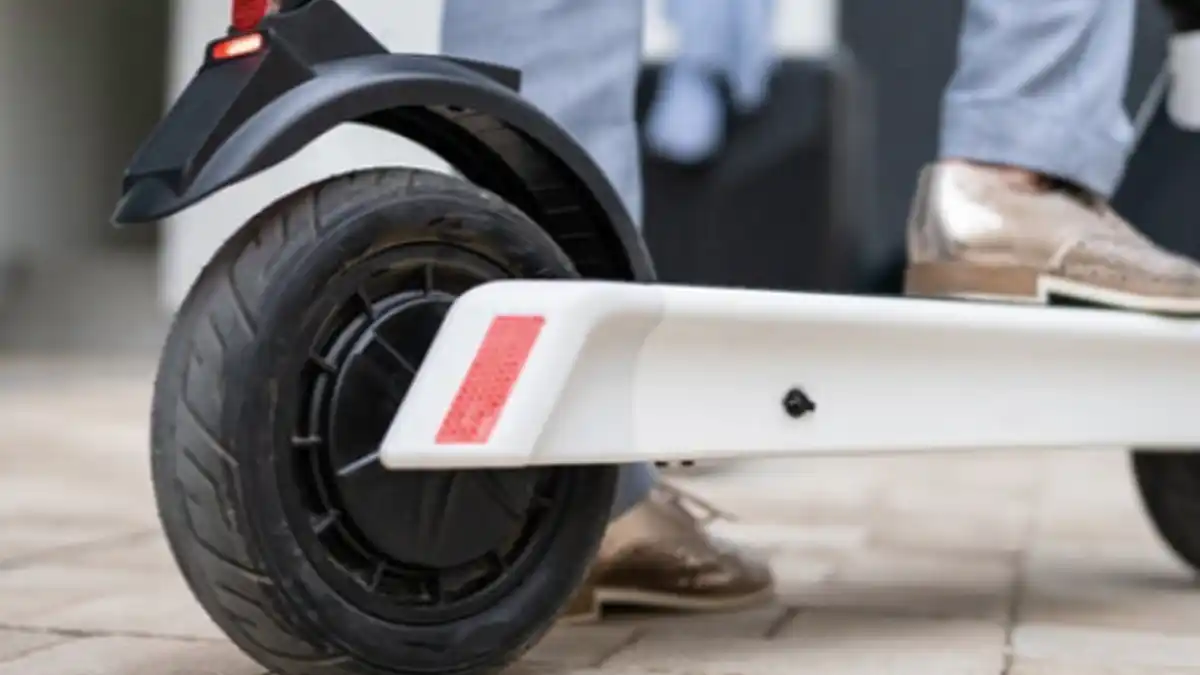

A Nottingham research team says compulsory training similar to a driving test for e-scooter riders could help hire schemes improve safety and increase public acceptance.
Dr Petya Ventsislavova, a senior lecturer in the Department of Psychology at Nottingham Trent University (NTU), recently led research into e-scooter safety through a series of studies.
The full report, titled ‘Still the new kid on the transport block! Assessing e-scooter legislation knowledge and illegal riding behaviour’, was produced by Dr Ventsislavova alongside Thom Baguley, Josceline Antonio, and Daniel Byrne.
According to the research, recent crash data indicated the number of incidents involving e-scooters has been rising nationwide, with 1,437 casualties in incidents involving e-scooters in 2022 compared with 1,352 during the previous year.
Meanwhile, the studies concluded both riders and non-riders “exhibited insufficient knowledge concerning e-scooter regulations across a range of different riding scenarios”.
“A big percentage of people seem to not know the rules, around 50 per cent,” Dr Ventsislavova told the Local Democracy Reporting Service.
“It does not seem a lot, but it is, because when it comes to other modes of transport, for example with cars, you are expected to know the rules.
“This is a novel mode of transport and I don’t think it was taken with the seriousness it deserves, because at the end of the day they are still motorised vehicles.
“That is why we are advocating for a better education and compulsory training.
“Not just multiple-choice questions, with some information when you hire it, but actual training on how to operate them and how to perceive hazards, so very similar to the driving test.”
As scooters are legally classed as motorvehicles, they can only be ridden on roads and in cycle lanes.
It remains illegal to ride privately-owned e-scooters in a public place. Only ones part of a scheme such as the Superpedestrian trial that took place in Nottingham city centre can be ridden in public.
A DfT spokesman said: “We will consult in due course on the detail of possible regulations, including minimum rider ages and maximum speeds, this will provide vital information to help shape next steps.”