


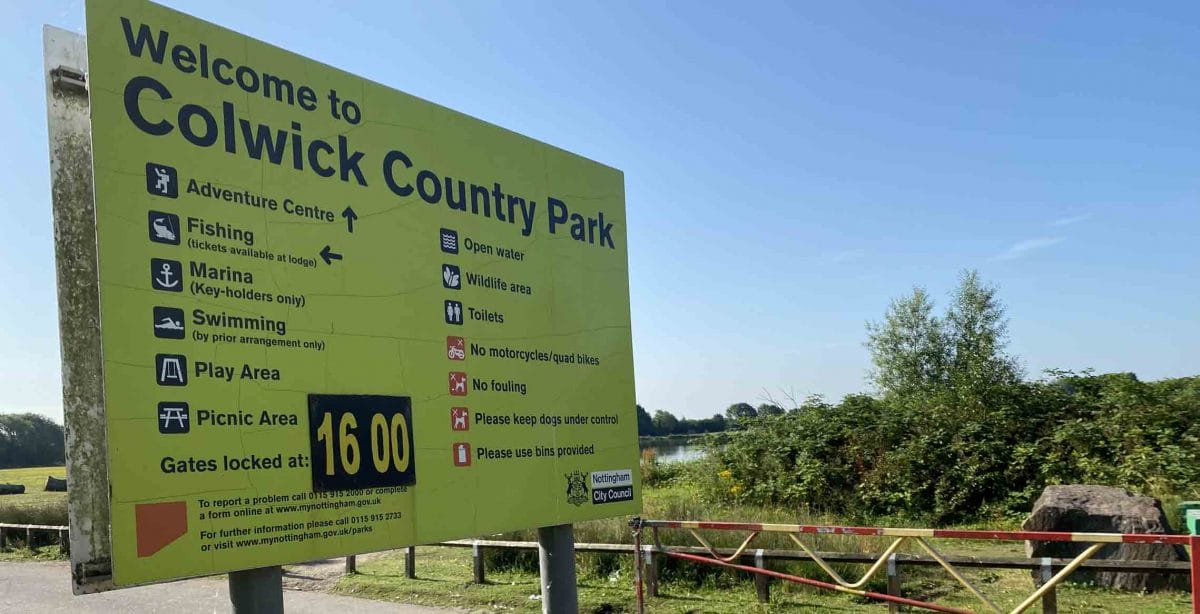

A warning has been issued after Nottingham City Council confirmed there are currently positive cases of bird flu at Colwick Country Park.
The UK is currently facing its largest ever outbreak of bird flu with cases confirmed across the country since the start of November.
Colwick Country Park currently has positive cases of bird flu on site in wild birds.
The public is advised not to touch or pick up any dead or sick birds that they find at the site. If anyone finds dead swans, geese or other dead wild birds, such as gulls or birds of prey, they should report them to the Defra helpline on 03459 33 55 77.
Councillor Neghat Khan, the city council’s portfolio holder for Neighbourhoods, Safety and Inclusion, said: “We need to be clear that these are preventative measures and there is no immediate risk to human health.
“Signage has been erected at Colwick Country Park to warn visitors of the presence of bird flu at the site.”
Although the risk to human health from the virus is very low, people can catch bird flu via direct contact with a live or dead bird carrying the virus or via direct contact with bird faeces from a bird carrying the virus.
Humans cannot catch bird flu via airborne particles.
The council say avian influenza is in no way connected to the COVID-19 pandemic, which is caused by the SARS-CoV-2 virus and is not carried in poultry or captive birds.

To help stop the spread of disease, the Government introduced new housing measures last month which means that anyone keeping chickens, ducks, geese or any other birds is now legally required to keep them indoors and to follow strict biosecurity measures. If people do not do this, the disease could kill their birds and they could be fined.
Nottingham City Council is also contacting all farm visitor attractions in the city to remind them of the order.
Key advice for poultry keepers includes to:
- House or net all poultry and captive birds to keep them separate from wild birds
- Cleanse and disinfect clothing, footwear, equipment and vehicles before and after contact with poultry and captive birds – if practical, use disposable protective clothing
- Reduce the movement of people, vehicles or equipment to and from areas where poultry and captive birds are kept, to minimise contamination from manure, slurry and other products, and use effective vermin control
- Thoroughly cleanse and disinfect housing on a continuous basis
- Keep fresh disinfectant at the right concentration at all farm and poultry housing entry and exit points
- Minimise direct and indirect contact between poultry and captive birds and wild birds, including making sure all feed and water is not accessible to wild birds.
Bird keepers should report suspicion of disease in England to Defra Rural Services Helpline on 03000 200 301. Keepers should familiarise themselves with avian flu advice which can be found on the gov.uk website.
This order is a legal requirement so anyone in possession of poultry or captive birds – whether it be a couple of chickens in a garden coop or a poultry farm – must follow its conditions.
Although it is optional for people with less than 50 poultry or captive birds to register their birds with Defra, we are advising people to register so they get regular updates on this order.
For further information search “avian influenza” at GOV.UK and to register poultry visit www.gov.uk/guidance/poultry-registration.