A registered sex offender is back behind bars after threatening a BBC radio presenter and breaching a strict court order that prohibited him from deleting messages on his phone without permission.
Michael James, aged 57, has convictions for sexual offences dating back to 1993 – including against children – and been subject to multiple Sexual Harm Prevention Orders.
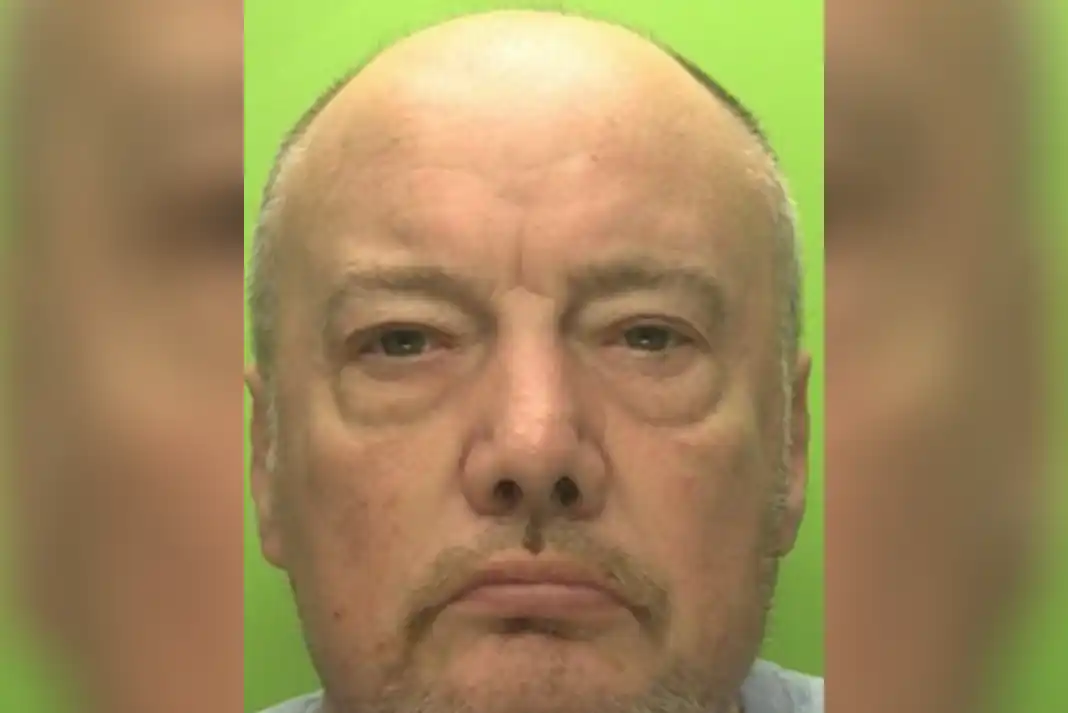
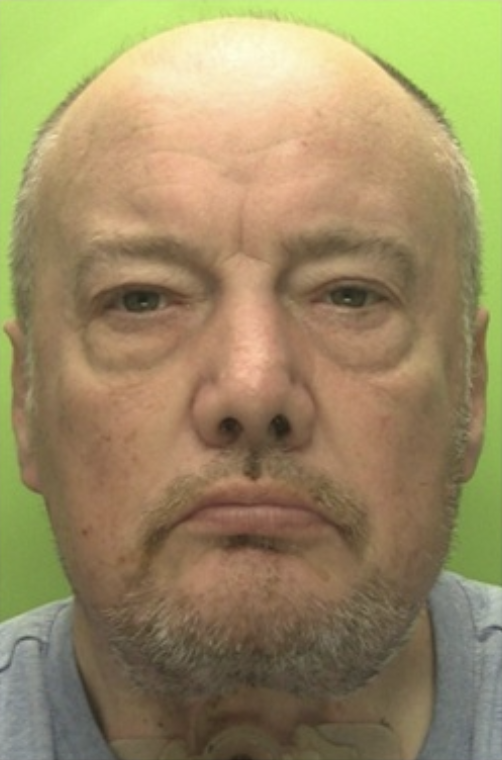
PICTURED: Michael James (IMAGE: Notts Police)
In April 2021, he was jailed for two-and-a-half years for sending his probation officer a video of a sex act and committing an act outraging public decency at a bus stop in Nottingham.
Upon his release, he was made subject of a prevention order with 11 strict conditions, with one stating he “must not delete any electronic messages from any electronic communication device without the express permission of a representative of the Chief Constable for the respective police area”.
On November 21 last year, officers visited his address after it was reported he had sent a threatening and offence message into BBC Radio Nottingham that had been racially aggravated and aimed at one of the station’s presenters.
He was arrested and taken into custody, where checks found he had deleted a number of WhatsApp messages sent to the radio station from his device.
James, of Frobisher Gardens, Daybrook was subsequently charged with sending a communication threatening death or serious harm and breaching a Sexual Harm Prevention Order.
He pleaded guilty to both offences and was jailed for 40 weeks after appearing at Nottingham Crown Court on Tuesday (17).
Sergeant Elizabeth Williams, of Nottinghamshire Police, said: “James has an appalling criminal record and had multiple spells behind bars.
“As a result, he is on the sex offenders register for life and made subject of a Sexual Harm Prevention Order, which are designed to protect the public from individuals like James.
“As he has just found out to his cost, these orders have real teeth, and the courts take a very dim view of those who flout them in any way.
“The judicial system has also made it clear that the right to freedom of expression does not extend to sending grossly offensive and threatening messages and the abuse James subjected the presenter to was simply unacceptable.
“I am pleased James is back behind bars and he should be in no doubt about what will happen to him if he commits any further offences of this kind in the future.”
Gedling MP Michael Payne has joined the fight to save an Arnold pub after staff got in touch to share fears about its future.
Mr Payne took to social media over the weekend to share the news that The Ernehale pub is facing the threat of being sold and closed by owners Wetherspoons.
He has now written a letter to brewery bosses calling for a meeting to discuss their proposed closure plans and ‘explore any alternatives to avoid the closure’.
PICTURED: Gedling MP Michael Payne
The MP said: “Losing Arnold’s Wetherspoons would result in job losses for local families, leave yet another vacant building in the heart of Arnold and our local community would lose an affordable venue where many elderly residents come together to meet friends.
“I’ve now written to the Chairman and Chief Executive of JD Wetherspoon plc urging them to reconsider any decision to sell off and close The Ernehale in Arnold.”
The MP has also created a petition and has called on the public to back the campaign to save the pub from shutting its doors for good.
He wrote: “Let’s send a strong message from Arnold’s community to JD Wetherspoon plc urging them to reconsider their decision and keep Arnold’s Wetherspoons open.”
Devastated members of a long-standing bowls club are fearing for its future after a council refused to U-turn on plans to exclude it from a new leisure centre.
Gedling Indoor Bowls Club’s future has been vulnerable since September 2025 after Gedling Borough Council decided to no longer include it in its plans for a new leisure centre in Carlton.
This ‘Carlton Active’ project involve a new centre being built on the Richard Herrod site and could include an eight-lane swimming pool and teaching pool, a 100-station gym, community rooms and a café.
Members of the bowls club – which opened in 1987 and is based in the Forum Leisure Centre – have been protesting for months to safeguard the club’s future. But in a meeting on Thursday (February 19) the council has confirmed its stance to exclude the bowls from the new centre remains unchanged.
The decision, the authority says, is due to “significant affordability, design and deliverability risks” and a required “significantly larger” footprint would likely result in the “highest-demand” facilities such as the swimming pool or gym being removed or reduced.
The council is continuing its offer of “non-financial” support to the club to look for relocation options.
But the club’s board of directors plans to continue fighting to ensure the bowls club has a secure location from which it can continue to operate. Its current lease runs out on April 30.
Speaking to the local democracy reporting service (LDRS), Jenny Higgins, a director at the club, said it would be taking a “two-pronged” approach going forward, putting pressure on the council to help find the group a new spot and work with their legal advisers.
She said: “A lot of people are very angry. A lot of people are completely and utterly distressed about it.
“I know myself and fellow directors will continue to fight – we’re not going to give up.”
Ms Higgins says the cost to refurbish a venue to accommodate a bowls hall is around £3 million.
She said: “The biggest issue is time and money we don’t have. The time we’ve got to [find the money] isn’t there.
“If they’d been open and honest with us back last February when we asked the question whether indoor bowling was still an option we could have probably got some grants, fundraising and sponsorship by then.”
The director added that because of this, she was “not very confident” about the club’s future at this stage.
The bowls club has around 320 members aged between 25 and 92 and runs 2,200 sessions each month, including for bowlers with disabilities.
Group members are “devastated” at the prospect their club could cease to exist, where it has acted as a “lifeline” for members who experience mental health difficulties and isolation while promoting physical activity for older members and those with disabilities.
Ms Higgins was diagnosed with cancer in 2024 and missed most of the 2024/25 season as she was receiving treatment.
While her diagnosis is “looking positive” now, she told the LDRS: “One of the things that’s helped me recover was being determined to get back onto the green in September 2025 as I finished chemotherapy.
“Knowing I could try get back to some sort of level of bowling ability, play with my friends, be competitive, have a laugh and not think about the fact I’ve had this diagnosis hanging over my head.
“Without that to come back to, I don’t think my health would have improved as much as it has, physically and mentally.”
The long-standing club has offered mental respite for some players, with 65-year-old Len Knight, who has been a member for 25 years, previously telling the LDRS in September it was an “outlet” for his depression and anxiety.
He said: “The people at the bowls club understood my problem. They would listen to me. I could talk to them. It was more of a community that brought me back.”
Speaking at Thursday’s meeting, Councillor Henry Wheeler (Lab), portfolio holder for lifestyles, health and wellbeing, called the club “part of the fabric” of the community but reiterated the council’s financial risk.
He added: “The equality impact assessment recognises the importance of provision for older residents and those with conditions.
“Carlton Active responds with a fully accessible design and a dedicated exercise suite which uses power-assisted equipment, designed to support all adults, those with long-term health conditions, those undergoing rehabilitation.
“[The club’s] lease comes to a scheduled end on the 30th April, 2026, which has been known to the club for some time – this is not sudden or premature termination, it is not an eviction, it is a natural point of transition.”
Leader of the council, John Clarke (Lab), questioned whether Nottinghamshire County Council could help find a new home for the bowls, adding: “I think we do owe the bowls club… this game is disappearing across the country and we don’t want to be part of that, but we can’t finance this.
“If there’s any way forward we can apply pressure to get somewhere, there must be buildings, then we can assist Gedling bowls to carry on.”
Two petitions have been set up since September to save the club in council plans, with one having more than 1,000 signatures.
Earlier council documents said both existing leisure centres faced more than £2 million in backlog works and require a yearly subsidy of around £545,000. The new wider project is currently estimated to cost just under £30 million.
If you’re tired of waiting days for sportsbook payouts or dealing with blocked bank transfers, crypto casino platforms have changed the game completely. The best sites in 2026 now combine full-service sportsbooks with huge casino game libraries, letting you bet on 30 to 50+ sports using Bitcoin, Ethereum, or dozens of other cryptocurrencies. Your deposits land instantly, and withdrawals clear in minutes instead of the week-long wait you’d face at traditional bookmakers.
The advantages for sports bettors are straightforward. You get odds margins sitting at 5 to 6% compared to the 7 to 8% standard at old-school fiat sportsbooks, which means better value on every single wager. Add in live in-play betting, bet builder tools, and cash-out features funded by crypto, and you’ve got a setup that traditional platforms can’t match. This guide covers five crypto casinos that excel in sports betting while packing thousands of casino games on the side, all selected for odds quality, payout speed, bonus fairness, and licensing standards.
How We Selected the Best Crypto Casino Sites for Sports Betting
Our team tested integrated crypto casino sportsbooks throughout January and February 2026, putting each platform through the same evaluation process. We measured sports coverage depth, tracked odds margins across major leagues, tested live betting performance, verified crypto payout times, and analyzed bonus terms line by line.
Our selection focused on five specific areas:
Sportsbook depth and market coverage: Total sports offered, betting markets per event, live in-play options, bet builder availability, cash-out features
Odds competitiveness: Measured margins across major sports, preferring platforms consistently under the 7 to 8% industry average
Cryptocurrency support and payout speed: Number of accepted cryptocurrencies, deposit and withdrawal processing times, transaction fees, withdrawal limits
Sports betting bonuses: Dedicated sportsbook welcome offers, free bet promotions, rakeback on sports wagers, and wagering requirement fairness
Platform reliability and licensing: Regulatory status, SSL encryption, uptime performance, mobile optimization, customer support availability
Best Crypto Casino Sites for Sports Betting Enthusiasts
After testing dozens of platforms, these five stood out for sports bettors who want the full crypto casino experience:
JB Casino
BiggerZ
BC.Game
CasinOK
JackBIT
Best Crypto Casino Sites for Sports Betting – Detailed Profiles
JB Casino
Sportsbook Coverage: 35+ sports plus 17 eSports options; 150 to 270+ betting markets per major fixture; live in-play betting with live tracker, stats, and expert tips
Odds Competitiveness: Basketball margins at 5.28%, football at 5.8%, and eSports at just 4.7%, consistently below the 7 to 8% industry average
Welcome Bonus: Multi-deposit sports welcome package with deposit boosts and free bets across first four deposits; 20x wagering requirement
Cryptocurrency Support: 130+ cryptocurrencies accepted including BTC, ETH, SOL, USDT, XRP, DOGE; instant crypto withdrawals; fiat also supported via Visa, Apple Pay, Google Pay
Company Overview: Since opening in 2025, JB Casino has built a crypto-first site that stands out for pricing and market depth. Major fixtures get 150 to 270+ betting markets with odds margins well below traditional bookmakers. The platform includes a bet builder, cash-out options, and a daily high-roller contest where top bettors earn up to 50% of their daily wagers in BCD tokens. JB Casino also packs 10,000+ casino games from 80+ providers, including JB’s top slots, and serves as Principal Partner of the Barbados Royals cricket team.
Best For: Value-conscious crypto sports bettors seeking the lowest odds margins and deepest market coverage across 35+ sports and 17 eSports
Standout Feature: 130+ cryptocurrency support paired with industry-leading odds margins (5.28% basketball, 4.7% eSports) and 150 to 270+ markets per fixture
BiggerZ
Sportsbook Coverage: 20+ sports with strong eSports tournament support; pre-match and live in-play betting; thousands of daily markets across football, basketball, tennis, and eSports
Rakeback System: Automatic 5% daily rakeback on all casino and sports wagers with no opt-in required; weekly bonuses up to 500 USDT; monthly rewards up to 1,000 USDT
Welcome Bonus: 150% match up to 1,500 USDT on first deposit; promo code WO; 40x wagering within 14 days
Casino Library: 5,800+ games from 50+ providers, including Pragmatic Play, Evolution, Play’n GO, and NetEnt; 350+ live dealer tables
Cryptocurrency Support: Crypto-exclusive platform; 11 major cryptocurrencies (BTC, ETH, USDT, LTC, DOGE, XRP, ADA, BNB, TRX, BCH, USDC); instant deposits and withdrawals; zero transaction limits; Anjouan Gaming Commission license
Company Overview: BiggerZ opened in 2025 as a crypto-exclusive casino and sportsbook run by CDK PLAY INC Limitada under an Anjouan Gaming Commission license. Built mobile-first, every sportsbook feature runs smoothly on smartphones without losing functionality. BiggerZ applies 5% daily rakeback automatically to all casino and sports wagers with no opt-in or threshold needed, making it rewarding for regular sports bettors. Combined with weekly and monthly bonuses, players access up to 1,500 USDT in monthly bonus potential on top of daily rakeback.
Screenshot
Best For: Mobile-first sports bettors who want automatic daily rakeback on every wager without opt-ins or complex promotion requirements
Standout Feature: 5% daily rakeback on all sports and casino bets applied automatically, plus up to 1,500 USDT in combined monthly bonus rewards
BC.Game
Sportsbook Coverage: Full sportsbook with pre-match and in-play betting across major sports, including football, basketball, tennis, cricket, MMA, and eSports; one unified wallet across casino and sportsbook
Odds and Features: Competitive odds with bet builder tool, cash-out options, and combo bets; live match tracker and real-time statistics on major events
Welcome Bonus: 470% up to $4,000 + 400 free spins across four deposits; 40x wagering; 30-day expiry; separate sports-specific promotions available
Casino Library: 10,000+ games including provably fair BC Originals (Crash, Plinko, Dice, Limbo, Blackjack); Zero Edge program returning 100% house edge as wagering-free $BC tokens
Cryptocurrency Support: 150+ cryptocurrencies accepted; withdrawals in 5 to 10 minutes; Curaçao eGaming license (No. OGL/2024/1353/0918); active since 2017
Company Overview: BC.Game has run since 2017 under a Curaçao eGaming license and delivers one of the most established integrated casino and sportsbook experiences in crypto gaming. The platform covers major sports with pre-match and live in-play betting through a single wallet system that lets players switch between casino games and sports wagers without friction. BC.Game’s provably fair BC Originals and Zero Edge program, which returns 100% of house edge as wagering-free $BC tokens, adds extra value for players who split time between sports betting and casino gaming.
Best For: All-round crypto gamblers who want a unified wallet for casino and sports, backed by 150+ cryptocurrencies and eight years of operation
Standout Feature: Single-wallet pairing across 10,000+ casino games and a full sportsbook, plus the Zero Edge program returning house edge as wagering-free $BC tokens
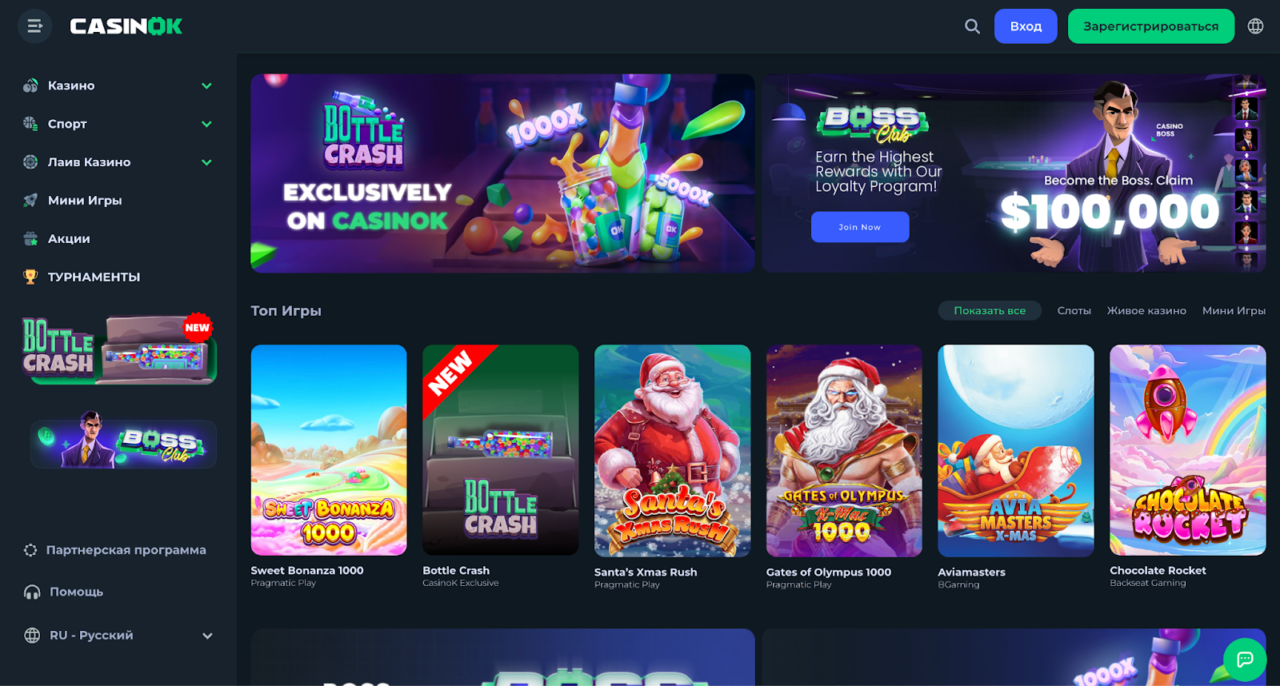
CasinOK
Sportsbook Coverage: 32+ sports, including football, basketball, tennis, American football, golf, ice hockey, snooker, badminton, and water polo; eSports covering League of Legends, Dota 2, and Counter-Strike; live betting section with multi-view for following multiple events at once
Sports Welcome Bonus: 125% match up to $2,000 in free bets on first deposit; minimum $20 deposit; 20x wagering requirement with 3 selections per ticket at minimum odds of 1.40
Unique Features: StreamBet feature allowing live betting during slot streams; up to $20,000 cashback; Boss Club loyalty program with 10 levels offering up to $100,000 in cash at the top tier
Casino Library: 7,000+ games from providers including Pragmatic Play, Hacksaw Gaming, Nolimit City, Play’n GO, NetEnt, Betsoft, and Evolution
Company Overview: CasinOK opened in 2025 as a crypto-only casino and sportsbook run by Ryker B.V. under a Curaçao Gaming Authority license. The platform covers 32+ sports with competitive odds (football margins 6.4 to 8.3%, basketball around 7%) plus a live betting section with multi-view for tracking several events at once. CasinOK’s StreamBet feature lets players place live bets during slot streams, bridging casino and sports entertainment uniquely. The Boss Club loyalty program rewards dedicated players across 10 levels, with the top tier offering up to $100,000 in cash.
Best For: Sports bettors who value deep market coverage across 32+ sports with unique engagement features like StreamBet and a highly rewarding loyalty program
Standout Feature: StreamBet feature for live betting during slot streams, combined with a 10-level Boss Club loyalty program offering up to $100,000 in cash rewards
JackBIT
Sportsbook Coverage: 30+ sports plus eSports and virtual sports; 75,000+ pre-match events and 82,000+ live events; bet builder, cash-out, and live HD streaming on selected matches; Twitch pairing for eSports
Sports Welcome Bonus: 100% no-risk first bet up to $100; minimum $20 parlay with 4+ selections at odds of 1.40+ each; free bet stake not returned, but winnings are cash; 3+1 FreeBet ongoing promotion (place 3 combo bets, get 1 free bet worth 15% of total value); 10% bet insurance on losing parlays
Rakeback System: VIP rakeback from 5% up to 30% based on tier level; no wagering requirements on rakeback; 500-point minimum threshold to claim
Casino Library: 7,000+ games from 90+ providers, including Pragmatic Play, Hacksaw Gaming, Evolution, and NetEnt; 200+ live dealer tables; daily slot tournaments with 1,000 free spins prize pool
Cryptocurrency Support: 20+ cryptocurrencies accepted (BTC, ETH, USDT, SOL, DOGE, LTC, XRP, BNB, ADA, XMR, SHIB, and more); instant withdrawals typically under 10 minutes; no KYC for standard transactions; Curaçao eGaming license (No. OGL/2024/1800/1049); operated by Ryker B.V.; launched 2022
Company Overview: JackBIT opened in 2022 and runs under Ryker B.V.’s Curaçao eGaming license, the same operator behind CasinOK. The sportsbook covers 30+ sports with 75,000+ pre-match and 82,000+ live events, making it one of the most comprehensive crypto sportsbooks around. JackBIT’s no-KYC registration and instant crypto withdrawals (typically under 10 minutes) appeal to privacy-focused bettors, while the wager-free rakeback system rewards sports activity at up to 30%. Native Twitch pairing for eSports betting and a bet builder added in 2025 strengthen the sports experience.
Best For: Privacy-focused sports bettors who want no-KYC access, wager-free rakeback up to 30%, and one of the largest live event counts in crypto sports betting
Standout Feature: 82,000+ live betting events with Twitch-paired eSports streaming, wager-free rakeback up to 30%, and no-KYC instant crypto withdrawals
Factors to Consider When Choosing a Crypto Casino for Sports Betting
Odds Margins and Pricing
Crypto sportsbooks don’t all price their odds the same way. Margins range from 4.7% up to 8% or more, depending on the sport and platform. Lower margins translate to better value on every bet you place, so take time to compare odds across several sites before settling on one. Even a 1 to 2% difference adds up over hundreds of wagers.
Live Betting and Streaming Quality
Live in-play betting is where crypto sportsbooks really shine. Odds refresh every few seconds, and bet settlement happens instantly. Look for platforms offering live match trackers, real-time stats, and HD streaming on selected events. The best sites let you cash out on live bets and provide multi-view options for monitoring several matches at the same time.
Sports-Specific Bonuses vs Casino Bonuses
Many crypto casinos focus their welcome offers on casino play rather than sports betting. Check whether the platform offers dedicated sportsbook bonuses like free bets, risk-free first wagers, or sports-specific rakeback. Confirm how sports bets contribute to wagering requirements too, since some bonuses only count casino wagers toward clearing.
Withdrawal Limits and Processing Speed
Crypto payouts beat fiat hands down for speed, but withdrawal limits vary quite a bit between platforms. Some cap weekly withdrawals at $5,000 to $25,000, while others offer unlimited options. If you’re a high-volume bettor, go for platforms with higher limits and instant processing so your bankroll doesn’t get stuck waiting.
Unified Wallet and VIP Program Access
The best integrated crypto casinos let you fund both casino games and sports bets from one wallet, with a single VIP program tracking all your activity. Platforms with separate wallets or split loyalty systems cut down the main benefit of an all-in-one site. Make sure sports wagers contribute fully to VIP progress and rakeback calculations before you commit.
Final Thoughts
Choosing the right crypto casino for sports betting in 2026 comes down to matching platform strengths with your betting style. Compare odds margins across the sports you bet on most, since even small differences compound dramatically over time. Check whether the sportsbook offers dedicated sports bonuses and confirm your preferred betting markets get solid coverage with live in-play options and cash-out features.
Start with smaller deposits to test payout speed and reliability before you scale up your bankroll. Go for platforms offering a unified wallet for both casino and sports betting, with one VIP program rewarding all your activity. Read bonus terms carefully to understand exactly how sports wagers contribute toward clearing requirements. The five platforms covered here all deliver on speed, odds quality, and crypto convenience, but your best choice depends on which features matter most for your betting approach.
A housing developer has announced a new collaboration with Jigsaw Homes Group to deliver 43 much-needed affordable homes at its flagship Linby Meadows development.
This collaboration marks a significant milestone for the ambitious 763-home development in Linby. The project, supported by Nottinghamshire Country Council, will offer a vibrant mix of two-, three-, and four-bedroom homes, maisonettes, and apartments.
The scheme will also introduce new parks, sports facilities, wildlife corridors, and safe pedestrian and cycle routes, as well as a brand-new primary school.
Garnet Fazackerley, Operations Director of Development at Jigsaw Homes Group, said:“As a significant housing development providing new homes via a Section 106 agreement, this scheme demonstrates how planning policy can meaningfully deliver both quality new homes for sale and much‑needed affordable housing.
“We’re proud to join forces with Vistry to provide properties that offer comfort, security and opportunity for local people. Our partnership is about more than bricks and mortar – it’s about supporting communities and creating green, welcoming spaces for everyone.”
Gedling councillors are appealing for urgent road repairs after a busy main Nottinghamshire road was left littered with ‘crater’ potholes.
The dire condition of the A612 Colwick Loop Road has been showcased in a video made and shared by Conservative Nottinghamshire County and Gedling Borough Councillor Mike Adams on Facebook on Monday (February 16) calling on the County Council to repair the road in his area.
At the time of writing, the video had 34,000 views.
The junction next to the Marks and Spencer’s at Victoria Retail Park, in Netherfield, has been in a deteriorated, crumbling state for around eight, weeks according to Cllr Adams.
In January 2025 the section had temporary repairs where potholes were filled in but speaking on these quick-fixes, Cllr Adams says “you might as well pour Weetabix in it”.
He said: “It’s just deteriorated massively in eight weeks, you can’t drive over it at more than five miles per hour.
“It’s in a braking zone, making it potential dangerous because your vehicle’s out of control.”
The councillor says he has contacted highway officials at the County Council in recent days highlighting the issues and is ‘awaiting updates’.
Councillor Sam Smith (Con), who also sits on the County Council and represents the Trent Valley ward on the Borough Council alongside Cllr Adams, described the potholes as ‘craters’.
He said: “I drive that road every single day, twice a day to and from County Hall – I feel like I’ve fell through the road to Australia and back. It’s atrocious.
“People drive into different lanes to avoid them. They’re definitely category one defects where the County Council has a responsibility to fill them in within 24 hours – that’s not been adhered to.
“It’s causing damage to cars, it’s frustrating to drivers and it’s dangerous. It’s both sides – you get rattled about on the way into Nottingham and rattled about on the way out.”
Cllr Smith said policy under the previous Conservative administration at the County Council was to temporary repair roads within 24 hours but then to return within 90 days to complete a resurfacing section.
One woman, who works at Noble Electrical Contractors in Great Northern Way, said she purposely avoids the potholes in her car.
She said: “I’m going into the right lane which you shouldn’t do. It’s that bad I’d rather go round. If you have to go through it you have to go through at your slowest – even then you can hear it.
“Every time I come to this road I think ‘they’ve definitely got to have fixed it by now’… I don’t understand how this one is not [fixed].
“The weather’s not getting better any time soon, the cold makes it worse and they’re not keeping on top of it. How bad does it need to get?”
Cllr Mick Barton, whose Reform group took control of the council last year, was responding to his party’s leader, Nigel Farage, who said he wanted an “attitudinal change to the idea of working from home” at a rally in Birmingham.
Nottinghamshire County Council (NCC) currently has a hybrid working policy, meaning the work week for many staff is often split between office and home-based.
The authority is still advertising hybrid working roles on its website.
Cllr Barton said: “Here at Nottinghamshire County Council we have a working from home policy that works very well.
“We are encouraging working from the office. I totally agree with Nigel that staff are more productive working from the office. We are changing the culture.
“But the reality at NCC is that we literally do not have the desk space for everyone to be in five days a week.”
Recently, Mr Farage said: “You can’t go on the sick because you’ve got mild anxiety. But it is an attitudinal change that Britain needs.
“An attitudinal change to hard work, rather than work-life balance. An attitudinal change to the idea of working from home.
“People aren’t more productive working at home, it’s a load of nonsense. They’re more productive being with other fellow human beings, and working as part of a team.”
Cllr Sam Smith had been the leader of the council for the Conservatives before Reform took control.
Now speaking as leader of the opposition, he said his group would have encouraged more people to return to the office, arguing “no Teams message beats in-person office talking between colleagues.”
“Being in the office prevents silo working and duplication and increases productivity with better outcomes,” he said.
“Staffing working together in the office is more efficient than working from home.”
However he questioned Reform’s support for the current council policy based on a lack of office space.
“A large proportion of the council’s workforce are not deal workers and are instead out in the community supporting residents, including social care staff and youth workers,” he added.
“Both County Hall and Oak House have huge amounts of desk space and the county council has access to office space dotted around the county that can accommodate more office working than currently exists.”
Take a look at the roadworks and closures scheduled for Gedling borough’s roads for the week beginning February 2.
Make sure to plan your journey and check before your travel as these planned works could affect you.
Burton Road, Gedling 17 February – 18 February Roadworks, Delays likely Responsibility for works: Severn Trent Water
Carlton Hill, Carlton 20 February – 21 February Roadworks, Delays likely Responsibility for works: Severn Trent Water
Gedling Road, Woodthorpe 18 February – 20 February Roadworks, Delays likely Responsibility for works: Openreach Ltd
Gedling Road, Arnold 19 February Roadworks, Delays likely Responsibility for works: Severn Trent Water
High Street, Arnold 18 February – 20 February Roadworks, Delays likely Responsibility for works: Vodafone
Lime Lane, Redhill 22 February Roadworks, Delays likely Responsibility for works: Severn Trent Water
Mansfield Road North, Ravenshead 18 February – 20 February Roadworks, Delays likely from B6020 Kirkby Road/B6020 Main Road junction heading 800-metres in a Northerly direction. Responsibility for works: Nottinghamshire County Council
Station Road, Carlton 18 February – 19 February Roadworks, Delays likely Responsibility for works: Openreach Ltd
Westdale Lane West, Mapperley 21 February – 22 February Roadworks, Delays likely due to lane closure Responsibility for works: Severn Trent Water
Woodborough Road, Mapperley 22 February Roadworks, Delays likely due to lane closure Responsibility for works: Severn Trent Water
Adbolton Avenue, Gedling 18 February – 19 February Roadworks, Delays possible for carriageway pothole repairs between the junction with Westdale Lane to Newcastle Avenue junction Responsibility for works: Nottinghamshire County Council
Bank Hill, Woodborough 18 February – 20 February Roadworks, Delays possible Works location: C16 Bank Hill, Woodborough. From the 30-MPH speed limit change to the C39 Foxwood Lane/C16 Main Street junction. Responsibility for works: Nottinghamshire County Council
Church Lane, Linby 17 February – 18 February Roadworks, Delays possible Responsibility for works: Nottinghamshire County Council
Churchmoor Lane, Redhill 18 February – 19 February Roadworks, Delays possible Responsibility for works: Nottinghamshire County Council
Church Street, Carlton 17 February – 18 February Roadworks, Delays possible Responsibility for works: Severn Trent Water
Foxwood Lane, Woodborough 18 February – 20 February Roadworks, Delays possible Responsibility for works: Nottinghamshire County Council
Frederick Avenue, Carlton 18 February – 19 February Roadworks, Delays possible Responsibility for works: Virgin Media Ltd
Furlong Street, Arnold 17 February – 19 February Roadworks, Delays possible Responsibility for works: Virgin Media Ltd
Furlong Street, Arnold 20 February Roadworks, Delays possible Responsibility for works: Nottinghamshire County Council
Hanworth Gardens, Arnold 20 February Roadworks, Delays possible Responsibility for works: Nottinghamshire County Council
Howbeck Road, Arnold 17 February – 13 March Roadworks, Delays possible Responsibility for works: Nottinghamshire County Council
Lambley Avenue, Mapperley 17 February – 18 February Roadworks, Delays possible Responsibility for works: Nottinghamshire County Council
Lambley Lane, Gedling 18 February Roadworks, Delays possible
Longue Drive, Calverton 19 February – 20 February Roadworks, Delays possible from the junction with Jumelles Drive to the junction of Rowan Close
Main Street, Woodborough 18 February – 20 February Roadworks, Delays possible Responsibility for works: Nottinghamshire County Council
Oakdale Road, Carlton 18 February – 19 February Roadworks, Delays possible Responsibility for works: Nottinghamshire County Council
Shelford Road, Gedling 17 February – 18 February Roadworks, Delays possible Responsibility for works: Nottinghamshire County Council
Southdale Road, Carlton 17 February – 18 February Roadworks, Delays possible Responsibility for works: Severn Trent Water
Spring Lane, Lambley 19 February – 26 February Roadworks, Delays possible Responsibility for works: Nottinghamshire County Council
A last-ditch petition has been set up in an attempt to save an indoor bowls club heading for closure after the council confirmed its exclusion in new leisure centre plans.
The fate of Gedling Indoor Bowls Club has been in limbo since September 2025 after Gedling Borough Council decided to no longer include it in plans to replace Carlton Forum Leisure Centre and the Richard Herrod Centre with a new building.
The project would involve a new ‘Carlton Active’ leisure and community facility being built on the Richard Herrod site and could include an eight-lane swimming pool and teaching pool, a 100-station gym, community rooms and a café.
Members of the bowls club have been protesting for months to safeguard the club’s future but now council documents, released ahead of a meeting on Thursday (19), re-confirm the authority does not plan to retain indoor bowls in plans.
PICTURED: Ian Summerscales, director of the bowls club, and Kath Smith, chairman of the board of directors of the club.
This, the authority says, is due to “significant affordability, design and deliverability risks”.
Councillor Darren Maltby (Con) branded the decision a “complete and utter travesty”.
In response to the council’s re-confirmed stance, Cllr Maltby started a petition on February 14 to include a bowls facility at the new centre. At the time of writing the petition had 197 signatures.
He said: “I come from a welfare background for over 20 years and I’ve seen the impact closing facilities have on vulnerable people – not just the elderly, but also disabled people.
“It’s an inclusive sport – one of the few in Gedling, if not the only one.
“We’ve come out of lockdown where it was big on social isolation – here we’re taking a backward step. It might be their only communication with another human being and it’s taking that lifeline away.”
The bowls club has around 320 members aged between 25 and 92 and runs 2,200 sessions each month, including sessions for disabled bowlers. Its lease expires at their existing site at the end of April 2026.
At the council’s September meeting the authority offered “non-financial support” to the bowls club to look at relocation options.
Following this, a petition signed by more than 1,000 people was presented to councillors in a November meeting calling on the authority to “reinstate, retain and protect” indoor bowling in plans – the authority’s response was later confirmed for Thursday’s cabinet meeting.
Cllr Maltby added he was worried about members’ mental wellbeing if the club closed for good and added: “It’s been such an integral part of that centre, they’ve been providing revenue, it’s not like they just sit there.
“They buy food and drinks there… these are people who have paid into the system all their lives – we live in a modern age now where we can have multi-purpose rooms.”
The authority says it has assessed a potential smaller-rink bowls option instead of a six-rink facility but that “the addition of a 3-rink, 4-rink or 6-rink facility would result in a level of cost that would render the scheme unaffordable” due to the building needed clear spans, high ceilings and environmental controls if included.
Documents continue that including the bowls would require a “significantly larger” footprint which could likely result in key “highest-demand” facilities such as the swimming pool or gym being removed or reduced.
Ian Summerscales, director of the bowls club, told us an application has been submitted to have the bowls hall regarded as an asset for community value.
He said: “The council keeps saying they’ve consulted on a four-rink option, we pressed them on that. All there are is some handwritten notes.
“We wrote to the council’s leadership over a month ago specifically about a feasibility study and them being obliged to find us alternative venues. We haven’t even had an acknowledgement, haven’t had a reply – we feel like we’re being stonewalled at the moment.
“We’re devastated. It isn’t a small club, it isn’t a private club. We’ve had people in tears, I’ve been in tears myself, but we’re getting lots of support and the staff in the centre are absolutely brilliant considering they’re at risk as well.”
Mr Summerscales previously said the council had identified 18 potential sites for relocation and were “not worth the paper it’s written on” and raising the money to move into such sites was a “pipe dream”.
Earlier council documents said both existing leisure centres faced more than £2 million in backlog works and require a yearly subsidy of around £545,000, making them “unsustainable in their current form”.
Thursday’s cabinet is set to agree the closure of the Richard Herrod Centre from May 1, 2026.
The wider project is currently estimated to cost just under £30 million.
A number of plaques are being unveiled across Gedling borough next week to recognise areas that were once part of the historic Sherwood Forest in Nottinghamshire.
One of the plaques is to be unveiled on Friday (February 20) in Gedling Country Park by Mayor Kyle Robinson-Payne at 10.15am near Cafe1899. It recognises that Gedling Country Park was once one of the most eastern points of the legendary forest. Members of the public are welcome to attend the ceremony.
These are the times other plaques will be unveiled across the borough on Friday:
9.30am – Jubillee Park pavillion, Burton Road, Gedling 11am – Mapperley – Westdale Lane Community Centre, Mapperley 12pm – Arnold – The AMP
Burton Joyce unveil also reveal their plaque for Sherwood Forest at 12noon.
During the 13th Century, at the peak of the Robin Hood legend, Sherwood Forest covered about a fifth of Nottinghamshire including what is now Gedling Country Park.
Sherwood Forest was a “Royal Forest,” meaning it was a legally defined area for hunting protected by strict Forest Law, and covered approximately 100,000 acres (roughly 156 square miles), featuring a mix of woodland, heathland and villages rather than a solid, dense forest.
It was historically defined by the River Trent to the south, the Meden to the north, the Leen to the southwest, and the Doverbeck to the southeast. It shrank significantly over the centuries, particularly due to the demand for timber.